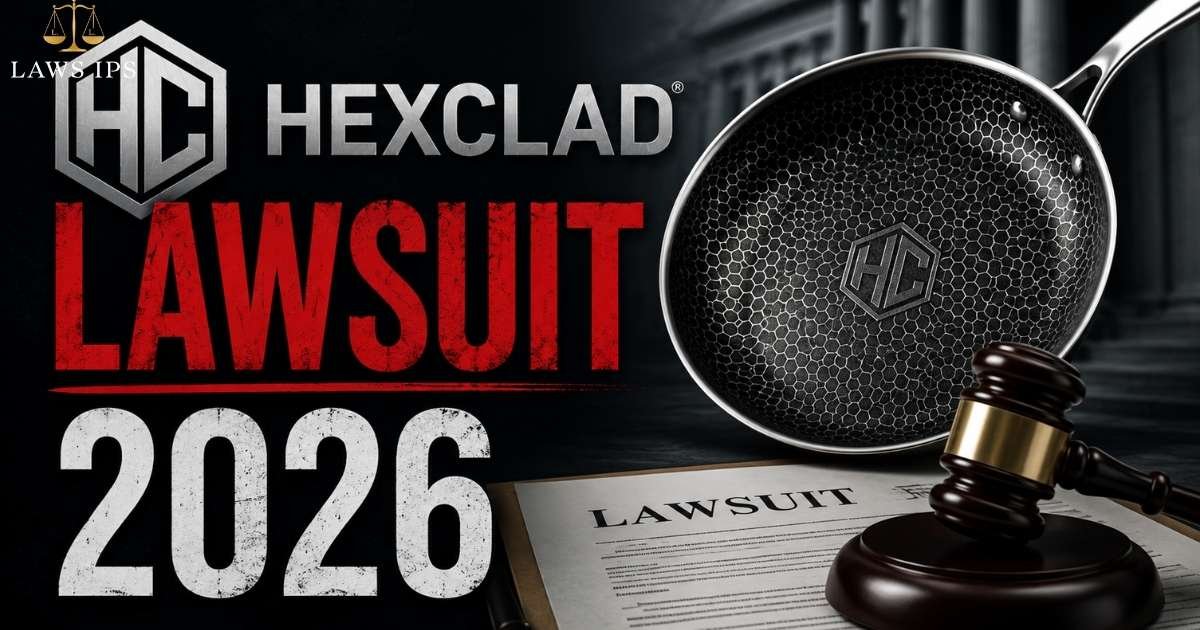

If you bought HexClad cookware between February 2022 and March 2024, you may be entitled to a cash payment from a court-approved class action settlement. The case accuses HexClad of falsely labeling its pots and pans as “PFAS-Free,” “PFOA-Free,” and “non-toxic” when independent testing indicated the products contained polytetrafluoroethylene (PTFE), a chemical that falls under the broader PFAS umbrella.
This guide breaks down every key detail, from what the lawsuit is about, to who qualifies, how much you can expect to receive, and what your next steps are as a potential claimant.
HexClad Lawsuit
The HexClad lawsuit centers on one core accusation: the company told consumers its cookware was free from harmful chemicals when the nonstick coating allegedly contained PFAS compounds. HexClad positioned itself as a premium, health-conscious alternative to traditional nonstick cookware. Its marketing prominently featured phrases like “non-toxic,” “PFAS-Free,” and “PFOA-Free,” which resonated with buyers willing to pay $150 to $400 for a single set.
Three plaintiffs, Khuschbu Didwania, Pratikkumar Patel, and Benjamin Adams, filed a class action complaint against One Source to Market LLC, the company that operates as HexClad Cookware Inc. Their argument was straightforward: consumers paid a premium because of those safety claims, and those claims were misleading.
The lawsuit alleges violations of:
- California’s Consumer Legal Remedies Act (CLRA)
- California’s False Advertising Law
- California’s Unfair Competition Law
- Breach of express warranty
- Unjust enrichment
- Negligent misrepresentation
HexClad has denied all allegations of wrongdoing. However, the company agreed to settle rather than face the uncertainty and cost of continued litigation.
HexClad Class Action Lawsuit
The case is formally captioned Cliburn v. One Source to Market, LLC d/b/a Hexclad Cookware, Inc., filed under Case No. 23STCV28390 in the Superior Court of California for the County of Los Angeles on November 17, 2023.
What makes this a class action is the sheer number of consumers affected. Millions of HexClad units have been sold since the brand launched in 2016. Rather than hundreds of thousands of people filing individual lawsuits, the class action structure consolidates all eligible claims into one legal proceeding. Every qualifying consumer becomes a “settlement class member” and receives a proportional share of the total settlement fund.
This approach is especially powerful in PFAS-related cases because the same coating appears on every product sold, making it a shared issue, not a personal one.
HexClad Lawsuit 2026
By 2026, the HexClad lawsuit had reached a critical milestone. The settlement received final court approval on March 9, 2026, from the Honorable David S. of the Los Angeles Superior Court. That approval officially moved the case into the payment distribution phase.
Here is a condensed timeline of how the case progressed:
- November 17, 2023 – Original complaint filed in Los Angeles Superior Court
- 2024 – Discovery proceedings and class certification discussions
- 2025 – Preliminary settlement approval; claim forms opened
- November 14, 2025 – Claim filing deadline for all class members
- March 9, 2026 – Final court approval of the $2.5 million settlement
- Spring to Summer 2026 – Payment distribution expected to begin
Approximately 209,712 valid claimants submitted claims before the deadline. With the $2.5 million fund distributed pro rata among all verified claimants, each person stands to receive approximately $6 on average, though the exact amount will depend on final administrative costs, attorney fees, and the processing of valid claims.
Is HexClad Being Sued
Yes, HexClad has been sued through a formal class action complaint filed by consumers in California. The lawsuit is not brought by a government agency or regulatory body. It is a private civil action initiated by real customers who purchased HexClad products and felt misled by the company’s safety marketing.
The fact that HexClad denied wrongdoing does not mean the case lacked merit. The court allowed the lawsuit to survive early dismissal motions, which signals that the judge found legitimate legal questions worth examining. Companies agree to settle class actions not as an admission of guilt, but to avoid the financial risk, time, and uncertainty of a full trial.
As part of the settlement, HexClad also agreed to stop advertising any product containing PTFE or any chemical in the PFAS family as “PFAS-Free,” “PFOA-Free,” or “non-toxic.” This is a significant outcome for consumer protection advocates.
HexClad False Advertising Lawsuit
The false advertising allegations sit at the heart of this case. HexClad’s marketing campaign was built around the idea that its hybrid stainless-steel and nonstick cookware offered a safer cooking experience compared to traditional nonstick brands.
The problem, according to the plaintiffs, is that the nonstick properties in HexClad cookware come from PTFE, the same chemical compound found in conventional Teflon-style coatings. PTFE is technically a type of PFAS. So when HexClad marketed its products as “PFAS-Free,” plaintiffs argued the company was making a claim that was factually incorrect based on the chemical composition of its own product.
The lawsuit also draws on the broader regulatory and scientific concern around PFAS. These chemicals, often called “forever chemicals,” do not break down in the human body or the environment. Studies have linked long-term PFAS exposure to cancer, hormone disruption, immune system interference, and liver damage. Consumers who specifically sought out “PFAS-Free” cookware to avoid those risks felt especially deceived.
Similar false advertising lawsuits have succeeded against major cookware and consumer goods brands in recent years, providing strong legal precedent for the HexClad case.
HexClad Coating Lawsuit
A separate but related thread of complaints involves the physical durability of HexClad’s nonstick coating. Multiple consumers report that the coating chipped, peeled, and degraded within months of regular use, far sooner than the company’s marketing suggested it would.
HexClad markets its patented hexagonal laser-etched pattern as a design feature that protects the nonstick coating and extends the pan’s lifespan. The company claims this hybrid design is more durable than standard nonstick pans. Plaintiffs contend that in real-world use, the coating fails to hold up to those promises.
Court filings include consumer photos showing visible coating damage after just three to twelve months of normal cooking use. These coating failure complaints are closely tied to the health concerns because a degraded coating means potential PFAS particles may be entering food.
HexClad Hybrid Technology Lawsuit
HexClad built its entire brand around what it calls “hybrid technology,” a laser-etched stainless-steel surface with nonstick valleys. The company partnered with celebrity chef Gordon Ramsay to market this technology as a revolutionary cooking surface that is both metal-utensil safe and chemically safe.
The hybrid technology lawsuit angle questions whether the actual performance of this patented design lived up to the premium price consumers paid. Plaintiffs argue the marketing overstated what the technology delivers, making claims about durability, safety, and nonstick longevity that the product could not consistently back up.
This aspect of the litigation overlaps with other well-known consumer product cases. Just as the Gabapentin lawsuit raised questions about pharmaceutical marketing accuracy, the HexClad case pushes back against a consumer goods company for allegedly prioritizing sales messaging over factual product claims.
HexClad Cookware Complaints
Consumer complaints about HexClad cookware fall into two main categories:
Chemical Safety Complaints:
- Products labeled “PFAS-Free” allegedly contained PFAS compounds
- “Non-toxic” marketing contradicted the presence of PTFE in the coating
- No disclosure that PTFE is considered part of the PFAS chemical family
Performance and Durability Complaints:
- Nonstick coating chipping or peeling within months of purchase
- Food sticking to the pan despite “non-stick” marketing
- Discoloration and surface degradation under normal cooking temperatures
- Premium price paid for performance that matched cheaper alternatives
Many of these complaints mirror complaints seen in the veterinary wellness space. The Vet Life lawsuit, for instance, also involved consumer trust violations where buyers paid more based on health-focused marketing that later came under legal scrutiny.
These complaints formed the evidentiary foundation of the class action. The consistent pattern of buyer experience helped establish that the problem was not with individual units but with the product category as a whole.
HexClad Settlement
HexClad and the plaintiffs reached a $2.5 million settlement agreement, which received final court approval on March 9, 2026. The settlement resolves all claims related to the false advertising of HexClad hybrid cookware as PFAS-Free, PFOA-Free, or non-toxic during the relevant class period.
Key terms of the settlement include:
- A $2.5 million common fund for all valid claimants
- Pro rata distribution among all verified class members
- A cap ensuring no claimant receives more than the actual purchase price paid
- HexClad commits to ceasing marketing claims of “PFAS-Free” or “non-toxic” on PTFE-coated products
- Residual funds after distribution go to the California Fire Foundation as the cy pres recipient
HexClad did not admit wrongdoing as part of this agreement. The settlement was reached to avoid ongoing litigation costs and provide faster compensation to affected consumers.
HexClad Lawsuit Payout
The actual payout amount per claimant is calculated using a pro rata formula applied to the net settlement fund after attorney fees, administrative costs, and court-approved expenses are deducted from the $2.5 million total.
With approximately 209,712 valid claim submissions, the current estimated average payout is around $6 per claimant. This is lower than many consumers hoped, largely because of the high number of people who filed claims.
Here is how the payout math works:
- Gross settlement fund: $2,500,000
- Minus attorney fees (typically 25 to 33%): estimated $625,000 to $825,000
- Minus administrative costs
- Remaining net fund divided among all valid claimants
It is also worth noting that no single claimant can receive more than what they actually paid for their eligible HexClad products. If the pro rata share would exceed that amount, it gets redistributed among the remaining claimants.
Payments are expected to be issued between spring and summer 2026, approximately 90 days after the March 9 final court approval, assuming no appeals delay the process.
HexClad Lawsuit Compensation
The compensation available through this settlement is cash-only. There is no product replacement, store credit, or extended warranty offered as part of the deal.
The settlement is designed to partially reimburse consumers for the premium they paid based on false safety marketing. Because the fund is fixed at $2.5 million and shared among all claimants, the individual compensation is modest, especially compared to other consumer safety cases.
For context, similar PFAS-related cookware settlements in the United States have paid between $25 and $450 per claimant depending on settlement fund size and total claim volume. The Vseebox lawsuit, another consumer electronics case involving alleged deceptive product marketing, followed a similar pro rata distribution model, resulting in similarly modest individual payouts when claim numbers ran high.
If you have documented health complications you believe are linked to PFAS exposure from cookware, consulting a personal injury attorney about individual legal options outside the class settlement may be worthwhile.
HexClad Lawsuit Eligibility
To qualify as a settlement class member, you must meet all of the following criteria:
- Purchased an eligible HexClad product – This includes pots, pans, woks, and sets that were advertised as “PFAS-Free,” “PFOA-Free,” or “non-toxic”
- Purchase was made in the United States – Purchases made anywhere in the country qualify, whether online or in-store
- Purchase occurred between February 1, 2022 and March 31, 2024 – This is the defined class period
- Submitted a valid claim form on or before November 14, 2025
Purchases made through any of the following retailers are eligible:
- HexClad’s official website
- Amazon
- Costco
- Williams Sonoma
- Any other authorized US retailer
Who is excluded: HexClad corporate officers and directors, the presiding judge and court staff, and any consumer who formally opted out of the settlement by the August 5, 2025 opt-out deadline.
HexClad Lawsuit How to Join
Important note: The claim filing window for this settlement has officially closed. The deadline was November 14, 2025, and no new claims can be submitted for this specific settlement.
If you missed the deadline, here are your remaining options:
- Monitor the case for a second distribution round – If funds remain after the initial payout, a second pro rata distribution may be made to valid claimants already on record
- Contact the settlement administrator – Call (866) 507-0323 or visit hexcladsettlement.com for case-specific inquiries
- Sign up for class action alerts – Register with consumer legal notification services to receive advance notice of new cookware or PFAS-related settlements
- Consult an attorney about individual claims – If you suffered health impacts related to PFAS exposure, individual legal options may still be available
If you were a valid claimant who submitted before the deadline, no further action is required. Payments are processed automatically once the administrator completes verification.
HexClad Lawsuit Proof of Purchase
The settlement had tiered documentation requirements based on the number of products claimed:
- 1 to 2 products: No receipt required. Claimants could self-attest under penalty of perjury that they purchased eligible products.
- 3 or more products: Proof of purchase was required.
Accepted forms of proof of purchase included:
- Original receipts (physical or digital)
- Order confirmation emails
- Amazon, Costco, or retailer order history screenshots
- Bank or credit card statements showing the purchase
- Any official document confirming the product, retailer, and date of purchase
Self-attestation without documentation was permitted for smaller claims, though it may have resulted in lower payment prioritization during the administrator’s verification process.
HexClad Lawsuit Deadline
Here is a complete summary of the key deadlines in this case:
| Milestone | Date |
| Lawsuit Filed | November 17, 2023 |
| Opt-Out Deadline | August 5, 2025 |
| Claim Filing Deadline | November 14, 2025 |
| Final Approval Hearing | March 9, 2026 |
| Expected Payment Window | Spring to Summer 2026 |
The claim filing window is permanently closed. If appeals are filed by any objecting party following the March 2026 court approval, payment distribution could be delayed by several months or longer.
HexClad Lawsuit Update
As of June 2026, the HexClad settlement has cleared its final legal hurdle with court approval in March 2026. The case is now in the administrative phase, with the settlement administrator processing and verifying approximately 209,712 submitted claims.
The most recent updates include:
- March 9, 2026 – Final court approval granted by Judge David S.
- Spring 2026 – Settlement administrator began verifying submitted claims
- Summer 2026 – Payment distribution expected to begin for verified claimants
- HexClad agreed to change its marketing – The company will stop calling any PTFE-containing product “PFAS-Free” or “non-toxic” going forward
For claimants waiting on payments, the most important step is to ensure your contact information is current with the settlement administrator. Payments sent to outdated addresses may be returned, causing delays.
Visit hexcladsettlement.com or call (866) 507-0323 for the most current status on payment distribution.
Frequently Asked Questions
What is the HexClad lawsuit about?
The lawsuit alleges that HexClad falsely marketed its cookware as “PFAS-Free,” “PFOA-Free,” and “non-toxic” when the products allegedly contained PTFE, a type of PFAS chemical.
How much is the HexClad settlement worth?
The total settlement fund is $2.5 million, approved by a California court on March 9, 2026.
How much will each claimant receive?
With approximately 209,712 valid claimants, the estimated average payout is around $6 per person after fees and administrative costs.
Can I still file a claim for the HexClad settlement?
No. The claim filing deadline was November 14, 2025, and the window is permanently closed.
When will HexClad settlement payments be sent?
Payments are expected between spring and summer 2026, approximately 90 days after the March 9, 2026 final court approval.
Do I need proof of purchase to qualify?
For 1 to 2 products, no receipt was required. For 3 or more products, proof of purchase such as a receipt or order confirmation was mandatory.
Did HexClad admit wrongdoing?
No. HexClad denied all allegations but agreed to settle to avoid the cost and uncertainty of continued litigation.
What retailers are included in the settlement?
Purchases from HexClad’s website, Amazon, Costco, Williams Sonoma, and all authorized US retailers qualify.
Did HexClad have to change anything about its products?
As part of the settlement, HexClad agreed to stop using “PFAS-Free,” “PFOA-Free,” or “non-toxic” labels on products containing PTFE.
Who are the plaintiffs in the HexClad lawsuit?
The named plaintiffs are Khuschbu Didwania, Pratikkumar Patel, and Benjamin Adams.
Conclusion
The HexClad lawsuit is a clear example of why truth in product marketing matters, especially when consumer health is part of the sales pitch. HexClad built a premium brand around the promise of safer, chemical-free cooking. The court-approved $2.5 million settlement reflects that those promises did not hold up to legal scrutiny.
For the roughly 209,712 consumers who filed valid claims before the November 2025 deadline, payments are on the way with distribution expected through summer 2026. While the individual payout of approximately $6 per claimant is modest, the bigger win is the behavioral change the settlement demands. HexClad can no longer market PTFE-coated products as PFAS-Free or non-toxic.
If you missed the claim deadline for this case, sign up for class action alerts to stay informed about future PFAS, cookware, or false advertising settlements that may still be open. Consumer protection law continues to evolve, and cases like this set important precedents for holding companies accountable for their health-related marketing claims.

Daniel Christopher is the founder and administrator of LawsIps.com. He is passionate about making legal information easier to understand through clear, well-researched, and reader-friendly content. His goal is to help readers stay informed about legal topics, court updates, consumer rights, and educational legal resources in simple language.