
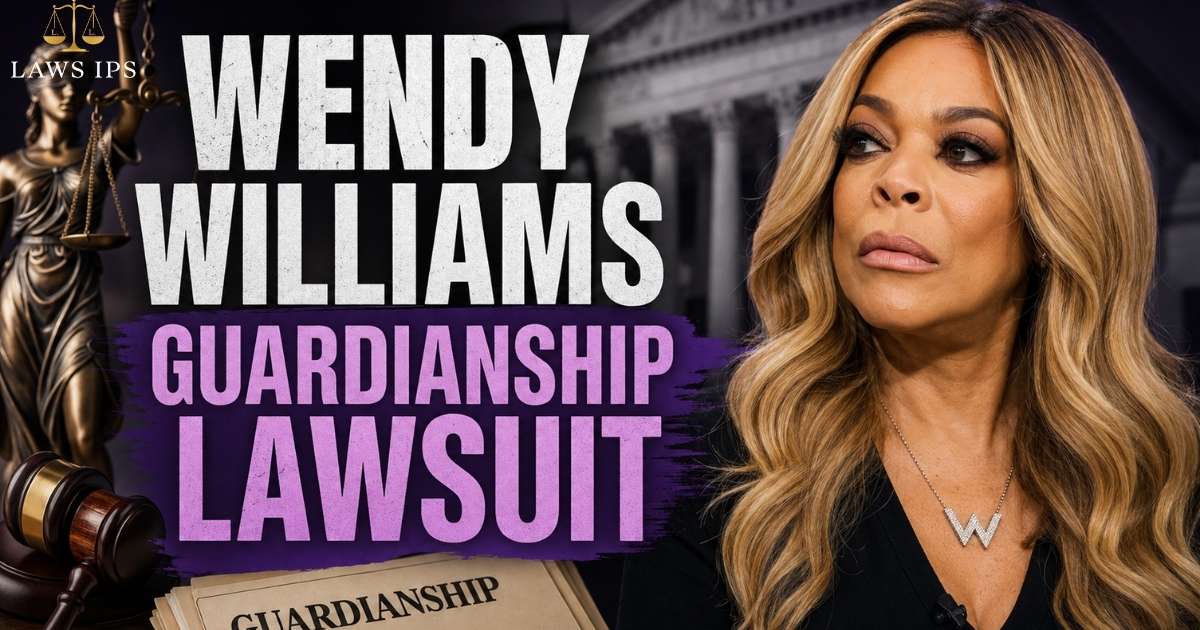

Wendy Williams built her career on saying exactly what she thought, no filter, no hesitation. Today, the woman once famous for asking “How you doin’?” is fighting for the right to answer that question for herself.
Since 2022, the former talk show host has lived under a New York court guardianship that controls her money, her medical decisions, and much of her daily life. What started as a bank’s concern over her finances has turned into one of the most closely watched guardianship battles in the country, a case now drawing comparisons to Britney Spears’ conservatorship fight.
In 2026, the story has taken a dramatic turn. New medical testing reportedly contradicts her original dementia diagnosis, her legal team is demanding a jury trial, and a separate lawsuit over a documentary is still working through the courts. This guide breaks down everything happening in the Wendy Williams guardianship lawsuit right now, who is involved, what the legal claims actually say, and what could happen next.
What Is the Wendy Williams Guardianship Lawsuit?
The Wendy Williams guardianship lawsuit refers to the ongoing legal fight over the court-ordered guardianship placed on Wendy Williams in 2022, along with the multiple lawsuits and petitions connected to it.
This isn’t a single court case. It’s several overlapping legal disputes, including:
- Wendy’s own petition to end or modify her guardianship
- A now-dismissed $250 million lawsuit filed by her ex-husband, Kevin Hunter
- An active lawsuit her guardian filed against A&E Networks and Lifetime over a 2024 documentary
- Ongoing disputes about how her finances have been managed
At the center of it all is one question: does Wendy Williams still need a guardian, or has the arrangement gone on longer than the facts support?
Wendy Williams Guardianship Lawsuit Update 2026
As of mid-2026, the guardianship remains legally active, but it is under more pressure than at any point since it began.
Here’s what changed. In November 2025, a New York neurologist reportedly found no signs of frontotemporal dementia (FTD) during a new round of testing, a diagnosis that had been the medical foundation for her guardianship since 2023. Because FTD is typically progressive and does not reverse, this finding surprised medical experts and gave her legal team new ammunition.
Key developments shaping the 2026 timeline include:
- New medical testing (late 2025): A fresh neurological evaluation reportedly found no evidence of FTD, conflicting with earlier diagnoses cited by her guardian.
- Legal team shakeup: Attorney Joe Tacopina, known for high-profile cases, joined Wendy’s defense and has pushed an aggressive strategy to end the guardianship.
- Jury trial demand: Tacopina has said that if the court refuses to lift the guardianship based on the new medical findings, he will demand a jury trial, letting a jury decide whether Wendy has capacity.
- Dismissed lawsuit: In October 2025, a judge dismissed the $250 million lawsuit Kevin Hunter filed against guardian Sabrina Morrissey and Wells Fargo.
- Documentary lawsuit continues: Morrissey’s lawsuit against A&E and Lifetime over the “Where Is Wendy Williams?” docuseries remains active, with discovery deadlines extending into fall 2026.
Court watchers expect a ruling on the termination motion sometime in the coming months, with a possible jury trial to follow if the guardian’s side prevails on the initial motion.
What Is the Wendy Williams Guardianship Case About?
At its core, this case asks whether a legal system built to protect vulnerable adults is protecting Wendy Williams, or restricting her more than necessary.
Guardianship exists for a real reason. When a person can no longer manage their own health, safety, or finances, a court can appoint someone to step in and make decisions for them. Done correctly, this protects people from scams, neglect, and self-harm. Done poorly, it can strip an adult of nearly every right they have, including where they live, who they see, and how they spend their own money.
The guardianship itself began in May 2022, after Wells Fargo froze Wendy’s bank accounts and petitioned the court, alleging she showed signs of being “of unsound mind” and was at risk of financial exploitation. A temporary financial guardianship followed. Later, a fuller guardianship was established covering both her personal affairs and her finances, tied to a diagnosis of primary progressive aphasia and frontotemporal dementia.
Wendy has consistently pushed back. She has called the arrangement a “prison,” said she feels isolated from friends and family, and insisted in interviews that she does not have dementia. The 2026 medical findings have given that argument new legal weight.
Who Is Sabrina Morrissey, Wendy Williams’s Guardian?
Sabrina Morrissey is the court-appointed professional guardian responsible for managing Wendy Williams’s personal and financial affairs.
A few key facts about her role:
- She is an attorney with no prior personal relationship with Wendy before her appointment.
- The court selected her as a neutral third party, a common practice meant to reduce the risk of family members exploiting the ward.
- Her authority reportedly covers healthcare decisions, living arrangements, and control over Wendy’s finances.
- She has defended the guardianship publicly, citing medical evaluations that found Wendy incapacitated.
- She is separately pursuing a lawsuit against A&E Networks and Lifetime, arguing the 2024 documentary exploited a vulnerable, incapacitated Wendy Williams and seeking to redirect any profits toward her medical care.
Morrissey’s continued role is now one of the most contested parts of the entire case. Wendy’s legal team and family members have questioned whether she has acted in Wendy’s best interest or held onto authority longer than the facts justify.
How Does Financial Control Work Under Wendy’s Guardianship?
Under a New York financial guardianship, the guardian, not the ward, controls bank accounts, income, and major spending decisions.
Here’s roughly how that plays out in Wendy’s case:
- Wells Fargo no longer directly controls her accounts, but her finances remain under Morrissey’s authority as financial guardian.
- Reports have described incidents where Wendy’s credit card was declined during personal trips, with someone else covering the cost.
- Any income from media appearances, endorsements, or projects would typically flow through the guardianship rather than directly to Wendy.
- Guardians are generally required to file financial reports with the court, though the underlying court records in this case have largely remained sealed.
This is one of the most emotionally charged parts of the story for the public. A woman who earned millions during her broadcasting career has, according to her own statements, struggled to access spending money for everyday needs. That gap between reported net worth and daily financial freedom is exactly the kind of tension that fuels guardianship reform arguments nationwide.
What Does the Lawsuit Against the Guardian Actually Claim?
Multiple legal actions have accused Wendy’s guardian and related parties of mismanaging her care, isolating her from family, and failing to act in her best interest.
The most significant of these was a $250 million lawsuit filed by Kevin Hunter, Wendy’s ex-husband, in June 2025. That suit:
- Named guardian Sabrina Morrissey and Wells Fargo as defendants
- Alleged abuse, neglect, and financial harm under the guardianship
- Demanded the appointment of a new, impartial guardian
- Asked the court to unseal guardianship records
- Sought $250 million in damages
A New York judge dismissed this lawsuit in October 2025. Wendy herself distanced herself from the case, telling reporters she had no involvement in it and was critical of her ex-husband’s motives.
Separately, Wendy’s own legal team has filed petitions challenging the scope of Morrissey’s authority, arguing the guardianship has become broader and more restrictive than her actual medical needs require. These petitions are not about damages. They are aimed at ending or narrowing the guardianship itself based on updated medical evidence.
Can Wendy Williams End Her Guardianship?
Yes, but only if she or her legal team can convince a judge, through medical evidence and legal proceedings, that she now has the capacity to manage her own affairs.
Ending a guardianship generally requires:
- New medical evaluation: An independent doctor must assess current cognitive and functional capacity.
- Court petition: The ward or their attorney files a formal request to terminate or modify the arrangement.
- Hearing or trial: A judge, and potentially a jury, reviews competing medical opinions and testimony.
- Ruling: The court either lifts the guardianship, modifies its scope, or upholds it as originally ordered.
Wendy’s case has already moved through several of these steps. The November 2025 neurological findings, combined with reports of a perfect score on a mental capacity test earlier in the year and a public appearance at New York Fashion Week where she appeared composed and engaged, are all being used as evidence that she has regained functional capacity. Her legal team has said it plans to press for full termination and is prepared to take the fight to a jury if the presiding judge does not agree.
What Happens to Wendy Williams’s Media Rights and Contracts?
Under the current guardianship, Wendy’s guardian holds significant authority over deals tied to her name, image, and any media projects involving her story.
This authority became a flashpoint with the 2024 Lifetime docuseries “Where Is Wendy Williams?” Morrissey initially tried to block the documentary from airing, arguing it exploited someone under guardianship for entertainment value. The documentary aired anyway in February 2024.
Morrissey later filed a separate lawsuit against A&E Networks, the parent company connected to Lifetime, claiming:
- Wendy was paid only around $82,000 for a project that generated far more in revenue
- Producers took advantage of a vulnerable, incapacitated subject
- Profits from the docuseries should be redirected toward Wendy’s long-term medical care
That lawsuit, filed in September 2024, remains active in 2026, with discovery deadlines extending into the fall. It illustrates a broader issue in celebrity guardianship cases: control over someone’s finances often extends to control over their public image and any money tied to their name.
How Does Wendy Williams’s Case Compare to Britney Spears?
Both cases involve a famous woman placed under legal control after concerns about her mental state, both sparked public “free her” movements, and both raise questions about how easily guardianships can be extended once granted.
Here are the key similarities and differences:
| Factor | Wendy Williams | Britney Spears |
| Legal arrangement | Guardianship (New York) | Conservatorship (California) |
| Started | 2022 | 2008 |
| Basis | Alleged dementia/aphasia diagnosis | Alleged mental health and behavioral concerns |
| Controlled by | Court-appointed professional guardian | Father, then professional conservator |
| Public movement | “Free Wendy” | “Free Britney” |
| Outcome so far | Still active, contested in court | Terminated in 2021 after 13 years |
The Britney Spears case fundamentally changed how the public, courts, and lawmakers think about adult guardianship. It proved that a conservatorship marketed as protective could also be used to control a person’s career, relationships, and reproductive choices. That precedent is a major reason Wendy’s case has drawn national attention rather than remaining a quiet probate matter. It has also encouraged more scrutiny of professional guardians, rather than assuming that a neutral third party is automatically acting in the ward’s best interest.
What Are Adult Guardianship Abuse Legal Claims?
Adult guardianship abuse claims typically allege that a guardian misused their legal authority to isolate, financially exploit, or otherwise harm the person they were appointed to protect.
Common types of claims in these cases include:
- Financial exploitation: Misusing or mismanaging the ward’s money or assets
- Isolation: Restricting contact with family, friends, or the outside world without medical justification
- Excessive restriction: Limiting freedoms beyond what the ward’s actual condition requires
- Failure to report: Not filing required financial or wellbeing reports with the court
- Conflict of interest: Personal or financial gain that competes with the ward’s best interests
These claims are difficult to prove because guardianship court records are frequently sealed, and the ward often lacks independent legal representation strong enough to challenge the guardian directly. Advocacy groups argue this creates an uneven playing field where the guardian’s version of events tends to carry more weight than the ward’s own statements, at least until outside pressure, like a lawsuit or media attention, forces greater transparency.
How Is Wendy Williams’s Family Involved in the Case?
Wendy’s family has been deeply and publicly divided over how her guardianship has been handled.
Key family dynamics include:
- Kevin Hunter Jr. (son): He has been one of the most vocal critics of the guardianship, alleging his mother has been isolated from family and that decision-makers have not acted in her best interest.
- Kevin Hunter (ex-husband): He filed the $250 million lawsuit against the guardian and Wells Fargo, though it was later dismissed. Wendy publicly distanced herself from his lawsuit and was openly critical of his motives.
- Alex Finnie (niece): She has attended court hearings and helped connect Wendy with attorney Joe Tacopina, positioning herself as an active advocate within the family.
- Wendy’s father: Reports describe a visit Wendy took to see him, during which her credit card was reportedly declined, an incident her family pointed to as evidence of overly restrictive financial control.
Adult children and other relatives generally have legal standing to petition a court to review or modify a guardianship, though the specific rules vary by state. That standing is legally significant here, because it means family disputes are not just tabloid drama. They can directly shape what evidence and arguments reach the judge.
What Is Wendy Williams’s Health Condition and How Does It Connect to the Guardianship?
Wendy’s guardianship was originally built on a diagnosis of primary progressive aphasia and frontotemporal dementia (FTD), both conditions that affect language, communication, and behavior.
A quick breakdown of the medical terms involved:
- Primary progressive aphasia: A condition that gradually impairs a person’s ability to speak, understand language, read, or write.
- Frontotemporal dementia (FTD): A progressive brain disorder affecting behavior, personality, and cognitive function, generally considered irreversible.
The guardianship was justified in part by these diagnoses, since both conditions can impair a person’s ability to manage complex financial and personal decisions. That is what makes the November 2025 update so significant. A new neurological evaluation reportedly found no signs of FTD, which is unusual because the condition typically does not improve over time. Her team has pointed to her sobriety, described as more than three years clean at that point, as a possible explanation for what they call her “remarkable neurological resilience.”
Medical experts remain divided, and the conflicting diagnoses are now a central issue the court must resolve. This is precisely why medical evidence, not public opinion, will likely determine the guardianship’s fate.
What Could Happen to Wendy Williams’s Estate?
If the guardianship ends, control over Wendy’s finances, property, and any future earnings would return to her directly, assuming the court finds she has regained capacity.
Possible paths forward include:
- Full termination: The guardianship ends entirely, and Wendy regains complete control over her personal and financial decisions.
- Modified guardianship: The court narrows the guardian’s authority, perhaps limiting it to specific financial matters while restoring personal autonomy.
- Guardianship continues: If the judge sides with the guardian’s medical evidence, the arrangement stays in place, likely triggering the jury trial her attorney has threatened to pursue.
- Settlement or compromise: The parties reach an agreement outside of a full court ruling, a common outcome in contested guardianship and estate disputes.
Any resolution will also need to address the pending documentary lawsuit and questions about how past earnings, including from that docuseries, should be allocated. Estate planning attorneys often point to this case as a reminder that proactive legal tools, like a durable power of attorney or advance healthcare directive, can help people avoid ending up in a contested guardianship in the first place.
Other Celebrity Guardianship Lawsuits Making News in 2026
Wendy Williams is far from the only public figure whose guardianship or conservatorship has made headlines in 2026.
Notable cases include:
- Britney Spears: Though her conservatorship ended in 2021, she remains part of the public conversation, including a reported arrest in March 2026 that reignited questions about her wellbeing and independence.
- Michael Oher: The former NFL player’s conservatorship dispute drew national attention after he alleged his adoptive family used the arrangement to profit from his story without his full understanding.
- Nichelle Nichols: The “Star Trek” actress remained under a conservatorship managed by her son until her passing, with supporters continuing to question whether the arrangement served her best interests.
- Brian Wilson: The Beach Boys co-founder has lived under conservatorship for decades, most recently managed by his family following his wife’s death and his advancing dementia diagnosis.
This pattern shows that Wendy’s case is part of a much larger legal and cultural shift. Courts, lawmakers, and advocacy groups are increasingly re-examining how guardianships are granted, monitored, and terminated across the entertainment industry and beyond.
How Does Court Oversight of Guardians Actually Work?
Court oversight is the system that requires a guardian to regularly report to a judge, proving that the ward’s health, living situation, and finances are being properly managed.
In New York, where Wendy’s case is being heard, guardians appointed under Article 81 of the Mental Hygiene Law generally must:
- File annual reports covering the ward’s health, living arrangements, social activities, and financial status
- Work alongside a court evaluator, an independent professional who assesses the ward’s needs and reports directly to the judge
- Respond to petitions from the ward, family members, or advocates seeking to modify or terminate the arrangement
- Appear at scheduled court hearings, particularly when new medical evidence or allegations of misconduct arise
This oversight system is designed to catch problems before they become severe, but critics argue it often falls short in practice, especially when court records are sealed and the ward has limited independent legal support. Reform advocates have pushed for stronger alternatives, such as supported decision-making arrangements, which aim to preserve a person’s autonomy while still offering protective assistance.
What Is the Most Likely Outcome of the Wendy Williams Case?
Based on the current evidence and legal momentum, a modification or termination of the guardianship appears more likely than an indefinite continuation, though a final resolution is not guaranteed soon.
Several factors support this outlook:
- The new neurological findings directly contradict the medical basis for the original guardianship
- Public and legal pressure has grown substantially since the Britney Spears case set a precedent for successful termination
- Wendy’s legal team has a clear, aggressive strategy and is prepared to escalate to a jury trial if necessary
- The dismissal of the $250 million lawsuit removed one major legal distraction, allowing the court to focus more directly on the capacity question
That said, guardianships are rarely undone quickly. Courts tend to move cautiously, particularly when a ward’s history includes serious health concerns. It’s realistic to expect additional hearings, possibly a full jury trial, and continued sparring over financial and media-related claims before this case reaches a final conclusion.
Frequently Asked Questions
Is Wendy Williams still under guardianship in 2026?
Yes. As of mid-2026, the guardianship remains legally active, though her legal team is actively petitioning to end it based on new medical evidence.
Who controls Wendy Williams’s money right now?
Her court-appointed guardian, Sabrina Morrissey, currently controls her financial decisions under the terms of the guardianship.
Why was Wendy Williams placed under guardianship?
Her bank raised concerns about possible financial exploitation in 2022, which later led to a guardianship based on diagnoses of aphasia and frontotemporal dementia.
Does Wendy Williams still have dementia?
Her original diagnosis included frontotemporal dementia, but a 2025 neurological evaluation reportedly found no signs of the condition, creating conflicting medical opinions.
Is Wendy Williams’s case similar to Britney Spears’s conservatorship?
Yes, both involve a famous woman placed under legal control amid health and capacity concerns, though Wendy’s is a New York guardianship rather than a California conservatorship.
Can family members challenge a guardianship?
Yes, close relatives generally have legal standing to petition the court to review, modify, or terminate a guardianship, though rules vary by state.
Will there be a jury trial in Wendy Williams’s case?
Her attorney has said he will demand one if the judge refuses to terminate the guardianship based on the new medical findings, but no trial date has been confirmed.
What happened to the documentary lawsuit against A&E and Lifetime?
That lawsuit remains active in 2026, with the guardian seeking to redirect profits from the docuseries toward Wendy’s medical care.
Final Thoughts
The Wendy Williams guardianship lawsuit is no longer just a story about one celebrity’s health struggles. It has become a real test of how the legal system handles capacity, control, and freedom for adults who cannot easily fight back on their own.
With new medical evidence in play, an aggressive legal team pushing for termination, and a documentary lawsuit still unfolding, 2026 could be the year this case finally reaches a turning point. Whether that means full freedom, a modified arrangement, or a prolonged court battle, one thing is clear. Wendy Williams’s fight has already become part of a bigger national conversation about protecting adults without stripping away their voice in the process.