
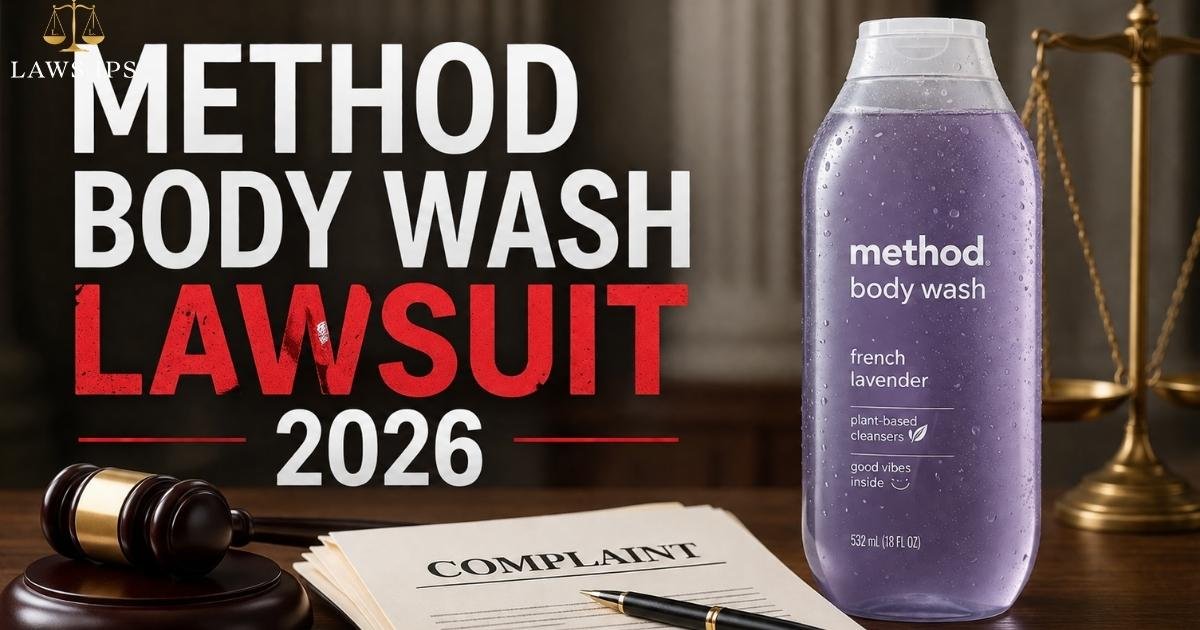

If you’ve searched for the “Method body wash lawsuit,” you’ve probably landed on pages promising an active 2026 settlement with cash payouts for anyone who ever bought the product. Here’s the important correction before anything else: that settlement already happened, and it closed years ago.
The real case is a consumer protection lawsuit against Method Products and its parent company, SC Johnson, over “non-toxic” and “naturally derived” labeling used across the Method product line, including several personal care items. It was filed in 2020, resolved in 2021 for $2.25 million, and the claim filing deadline passed on November 1, 2021. There is no open claims window right now.
That doesn’t mean the story isn’t worth understanding. The case set a real precedent for how far a brand can stretch words like “natural” and “non-toxic” before regulators and courts step in. If you use Method products, or you’re comparing “clean” personal care brands, this guide walks through what actually happened, which ingredients were at issue, what changed on the label as a result, and what your options are today.
What Is the Method Body Wash Lawsuit?
The case most people mean when they say “Method body wash lawsuit” is formally known as a class action against SC Johnson over Method’s use of the word “non-toxic” on product packaging. Method is a personal care and home cleaning brand founded in 2001 and acquired by SC Johnson in 2017.
The core allegation was simple: Method marketed a wide range of products, including hand washes, dish soap, and household cleaners, as “non-toxic,” “naturally derived,” and “plant-based,” while the actual formulas contained synthetic preservatives and other ingredients that plaintiffs argued didn’t fit those claims.
A few points worth clarifying up front:
- The official settlement’s covered product list centered on Method’s cleaning products and hand soaps rather than a specific “body wash” line item.
- Because Method sells body wash under the same “naturally derived” and “non-toxic” branding, many consumers and content sites now shorthand the entire case as the “Method body wash lawsuit.”
- Regardless of which exact SKUs were listed, the underlying legal question applies to the whole Method line: can a company call a product “non-toxic” if it contains synthetic ingredients with known irritant or allergen profiles?
How Did the Method Class Action Start?
The case didn’t appear out of nowhere. It built on earlier legal action against the brand.
Back in 2016, two separate class actions were filed against Method Products, one in the Northern District of New York and one in the Northern District of California. Both alleged that Method falsely marketed products, including its Foaming Hand Wash, Gel Hand Wash, and All Purpose Surface Cleaner, as “natural” or “naturally derived” when they actually contained synthetic ingredients.
Those early cases laid the groundwork. By 2020, a consolidated class action, formally captioned against SC Johnson in the U.S. District Court for the Northern District of California (Case No. 3:20-cv-03553), zeroed in specifically on the word “non-toxic.” Plaintiffs argued that products carrying that label had the capacity to harm people or the environment, which made the claim misleading under state consumer protection statutes.
Rather than proceed to trial, the parties reached a settlement in 2021. SC Johnson did not admit wrongdoing, which is standard in civil settlements of this kind. Both sides agreed to resolve the dispute to avoid the cost and uncertainty of continued litigation.
What False Advertising Claims Does the Lawsuit Make?
The complaint rested on a straightforward consumer protection theory: a reasonable shopper reading the word “non-toxic” on a bottle expects the product to be safe for people and the environment in a meaningful sense, not just “no more dangerous than a typical household product.”
Specific allegations included:
- Method labeled products as “non-toxic” despite formulas containing synthetic preservatives capable of causing skin and eye irritation.
- The “naturally derived” and “plant-based” language implied an ingredient profile the products didn’t fully deliver on.
- Consumers paid a premium price specifically because of the green, health-conscious positioning, meaning the alleged mislabeling had a direct financial impact, not just a reputational one.
Courts evaluating these kinds of cases generally apply a “reasonable consumer” standard. The question isn’t whether a chemist reading the ingredient list would be misled. It’s whether an ordinary shopper, without a background in cosmetic chemistry, would reasonably interpret “non-toxic” the way the plaintiffs did.
Which Method Ingredients Were at the Center of the Lawsuit?
Court filings in the case identified specific preservatives as the basis for the “non-toxic” challenge. The most frequently cited was methylisothiazolinone, sometimes shortened to MI, which appeared in several Method products. A related preservative, octylisothiazolinone, was also called out in connection with at least one product formula.
These aren’t obscure ingredients. They’re common in the broader personal care and cleaning industry precisely because they’re effective at preventing bacterial and mold growth in water-based formulas. The legal argument wasn’t that these ingredients are illegal or improperly disclosed. It was that their presence, combined with known sensitization risks, made “non-toxic” an inaccurate description.
What Toxic Chemicals Are Discussed in Connection With Method Body Wash?
It’s worth separating two different conversations here, because a lot of content online blends them together.
What the lawsuit actually challenged: the specific preservatives named above, primarily methylisothiazolinone, and the broader gap between “non-toxic” marketing language and the synthetic ingredient list.
What consumer watchdog and ingredient-safety sites separately discuss: a wider set of concerns common to sulfate-based and ethoxylated personal care formulas in general, not unique to Method and not confirmed as part of the court case. These include manufacturing byproducts like 1,4-dioxane and ethylene oxide, synthetic fragrance blends, and colorants like FD&C dyes.
Both conversations are legitimate, but they’re not the same thing. If you’re researching this specifically as a legal matter, the preservative issue is what actually went to court. If you’re researching it as a personal ingredient-safety question, the broader watchdog concerns are useful context, just not something a judge or jury evaluated in this case.
H3: Preservatives named in the case
- Methylisothiazolinone (MI)
- Methylchloroisothiazolinone (MCI), a close chemical relative often paired with MI
- Octylisothiazolinone, cited in connection with a granite cleaner formula
What Is 1,4-Dioxane and Why Does It Come Up in Discussions About Method?
1,4-dioxane isn’t an ingredient any manufacturer intentionally adds to a formula. It’s a trace byproduct that can form during ethoxylation, a manufacturing process used to make certain surfactants milder and less irritating on skin. Because it’s a byproduct rather than an added ingredient, it typically won’t appear on an ingredient label even if trace amounts are present.
The U.S. Environmental Protection Agency classifies 1,4-dioxane as likely to be carcinogenic to humans based on animal studies, and California’s Proposition 65 list includes it as a chemical known to cause cancer. New York passed a law in 2023 capping 1,4-dioxane at 2 parts per million in personal care and cleaning products sold in the state, which has pushed manufacturers across the industry toward better purification steps like vacuum stripping.
To be clear about the Method case specifically: 1,4-dioxane was not confirmed as a named allegation in the actual court complaint against Method. It’s a legitimate, well-documented industry-wide concern tied to the type of ethoxylated surfactants used broadly in sulfate and mild-cleanser formulas, and it’s relevant background if you’re evaluating any “gentle” or “sulfate-free” body wash, Method included. Whether Method’s specific supply chain adequately strips out 1,4-dioxane isn’t publicly disclosed, which is true of most personal care brands.
What Is Methylisothiazolinone and Why Was It Central to the Case?
Methylisothiazolinone is a synthetic preservative that prevents bacteria, mold, and fungus from growing in water-based products. It’s inexpensive, effective in small concentrations, and used across thousands of personal care and cleaning products, not just Method’s.
The problem plaintiffs raised wasn’t that MI is unsafe to use in general. Regulatory bodies allow it within specific concentration limits. The problem was the mismatch between using a synthetic biocide and simultaneously marketing the product as “non-toxic.”
MI also carries a well-documented allergy profile. Dermatology research has identified it as an emerging contact allergen, particularly in leave-on products, and the European Union’s Scientific Committee on Consumer Safety has issued opinions restricting its concentration in rinse-off formulas and recommending against its use in leave-on products altogether. That research is part of why the ingredient became a focal point rather than a footnote in the case.
Is Method Body Wash Actually Natural?
Not in the strict sense the pre-2021 marketing implied. Method products, body wash included, are formulated with a mix of plant-derived and synthetic ingredients, which is standard practice across the personal care industry, including brands with strong sustainability reputations.
Since the settlement, SC Johnson agreed to stop using the blanket term “non-toxic” on covered Method products. If you look at current packaging, you’ll notice more specific claims, such as “made without parabens” or “biodegradable formula,” rather than the broader “non-toxic” language that triggered the lawsuit. That shift is a direct, documented outcome of the case.
Important distinction: the settlement addressed marketing language, not the underlying chemistry. Method wasn’t required to reformulate its products or remove any specific ingredient. The company can still use methylisothiazolinone, synthetic fragrance, and other contested ingredients. What changed is what the label is allowed to claim about them.
Is Method Body Wash Safe to Use Right Now?
For most people, yes. Method body wash is regulated by the FDA as a cosmetic product, and none of the ingredients at issue in the lawsuit are banned substances. The legal dispute was about labeling accuracy, not product safety in an acute sense.
That said, “safe for most people” isn’t the same as “safe for everyone.” A few practical considerations:
- If you have a known sensitivity to isothiazolinone preservatives, patch test any new Method product before regular use.
- Fragrance is one of the most common triggers for contact dermatitis in body washes generally, not just Method’s. If you have reactive or eczema-prone skin, an unscented option from any brand is usually the safer starting point.
- Nothing about the 2021 settlement indicates a safety recall or an acute health hazard. It was a marketing dispute, not a product defect finding.
Who Was Eligible for the Method Settlement?
Eligibility applied to United States residents who purchased qualifying Method products carrying “non-toxic” labeling between May 14, 2016, and May 13, 2021, for personal use rather than resale.
Because the claims process is closed, this section is now historical rather than actionable, but it’s useful for understanding who the case was designed to compensate:
- Anyone who bought a covered Method product with the “non-toxic” label during the class period.
- Purchasers didn’t need to show any physical injury or adverse reaction. Purchase itself was enough to establish standing, since the alleged harm was financial (paying a premium for a mislabeled product).
- Both purchasers with proof of purchase (receipts, loyalty account records, UPC codes) and those without proof were eligible, though the reimbursement structure differed slightly between the two groups.
Is There a Method Body Wash Recall?
No. There has never been a government-mandated recall of Method body wash or any other Method product connected to this lawsuit. Recalls are issued by the FDA or the Consumer Product Safety Commission for safety defects, contamination, or mislabeled active ingredients that pose a health risk. This case was a civil class action over marketing language, which is a separate legal track entirely.
If you’re seeing recall claims associated with Method body wash online, treat that as inaccurate unless it’s confirmed on FDA.gov or the CPSC’s official recall database.
How Did Method’s Labeling Change Because of the Lawsuit?
This is arguably the most useful takeaway for current shoppers, since it affects what you’re reading on the shelf today, not just what happened in 2021.
As part of the settlement, SC Johnson agreed that covered Method products would no longer be marketed using the word “non-toxic.” In practice, that means:
- Packaging shifted toward narrower, more specific claims like “plant-based surfactants” or “made without phthalates” instead of a blanket safety claim.
- The brand’s broader “naturally derived” language remains in use in some contexts, since that specific phrase wasn’t the focus of the settlement’s labeling restriction.
- The case is frequently cited by legal and marketing publications as an example of the “reasonable consumer” standard being applied to green marketing claims, alongside similar cases against other household brands.
This pattern isn’t unique to Method. It reflects a broader wave of greenwashing litigation in the early 2020s, as regulators and plaintiffs’ attorneys increasingly challenged vague environmental and wellness claims that weren’t backed by defined, testable standards.
What Is the Method Body Wash Settlement Status in 2026?
Closed. To restate this plainly, since it’s the single most important fact for anyone searching this topic right now:
- The claim filing deadline was November 1, 2021.
- The opt-out and objection deadline was October 18, 2021.
- The final fairness hearing, where a judge formally approved the settlement, was held on November 16, 2021.
There is no new, active Method body wash class action as of 2026. If a new lawsuit is filed in the future, it would be a separate legal matter with its own case number, class period, and claims process, and it would need to be verified through official court records or a legitimate settlement administrator, not assumed based on this older case.
How Much Was the Method Body Wash Settlement Amount?
The total settlement fund was $2.25 million. Individual payouts were calculated based on the number of covered products purchased and the total number of valid claims submitted, which is standard for a common-fund settlement.
- Class members with proof of purchase could claim $1 for each covered product purchased, with no stated cap tied to proof.
- Class members without proof of purchase could claim $1 per product for up to 10 products, capping that category around $10 per household.
- Because the total fund was fixed at $2.25 million, actual per-person payouts depended on how many people filed valid claims. Reported payouts from that settlement round were modest, generally in the single digits to low double digits per claimant, which is typical for this size of consumer class action.
If you’re comparing this to a personal injury settlement, the numbers will look small. That’s expected. This was a consumer protection case about pricing and labeling accuracy, not a personal injury claim about physical harm.
How to File a Method Body Wash Claim
Since the claims window closed in 2021, there’s no current form to submit for this specific settlement. Here’s how to think about your options instead:
- Confirm there isn’t a new case before doing anything. Search the actual court’s public docket (PACER) or a legitimate class action tracking site like ClassAction.org or Top Class Actions for any Method filing dated after 2021 before trusting a “file your claim” page.
- If you believe you were harmed physically, that’s a different legal track. A documented allergic reaction or skin injury from a Method product would fall under individual product liability law, not the closed class settlement. That requires speaking with a personal injury attorney directly, and it isn’t subject to the 2021 case’s deadlines.
- Watch for settlement administrator scams. Because this case is well known, some sites use its name to drive traffic toward fake “claim now” forms. Legitimate settlement payments never require you to pay an upfront fee, and a real settlement administrator will never ask for your full Social Security number by email.
- Stay informed the right way. Bookmark a reputable class action tracker rather than relying on a single blog post, since case statuses and refiled claims do change over time.
Frequently Asked Questions
Is the Method body wash lawsuit still open in 2026?
No. The claims deadline for the actual Method settlement was November 1, 2021, and the case is closed.
Did Method body wash get recalled?
No. There has been no FDA or CPSC recall connected to this lawsuit or to Method body wash generally.
What ingredients did the lawsuit actually target?
Primarily methylisothiazolinone and related preservatives, cited as inconsistent with Method’s “non-toxic” marketing claims.
Is 1,4-dioxane confirmed to be in Method body wash?
It was not a confirmed, named allegation in the court case. It’s a broader industry concern tied to ethoxylated ingredients used across many brands.
How much did people receive from the Method settlement?
Payouts were capped at $1 per covered product, up to $10 without proof of purchase, drawn from a $2.25 million total fund.
Can I still file a claim for the 2021 Method settlement?
No, the filing window closed in 2021. A new claim would only be possible if a separate, newly filed lawsuit opens in the future.
Is Method body wash safe to use today?
For most users, yes. The case was about labeling language, not a confirmed safety hazard, though people with preservative or fragrance sensitivities should patch test first.
Did Method have to change its formula because of the lawsuit?
No. The settlement changed what Method could claim on its labels, not the underlying ingredients in the products.
Final Thoughts
The phrase “Method body wash lawsuit” points to a real, well-documented case, but one that already ran its course. SC Johnson settled the underlying “non-toxic” labeling dispute in 2021 for $2.25 million, agreed to drop that specific claim from its packaging, and the claims process closed shortly after.
What’s still genuinely useful here isn’t a claim form. It’s the label literacy the case leaves behind. “Non-toxic,” “natural,” and “plant-based” aren’t regulated terms with fixed legal definitions in the way “organic” is for food. They’re marketing language, and this case is one of the clearer examples of what happens when that language gets tested against a product’s actual ingredient list.
If you’re shopping for body wash today, the most reliable approach isn’t trusting front-of-bottle claims from any brand, Method included. It’s reading the ingredient list, understanding what preservatives and surfactants are actually doing in the formula, and making the call based on your own skin sensitivities rather than a marketing word.
