
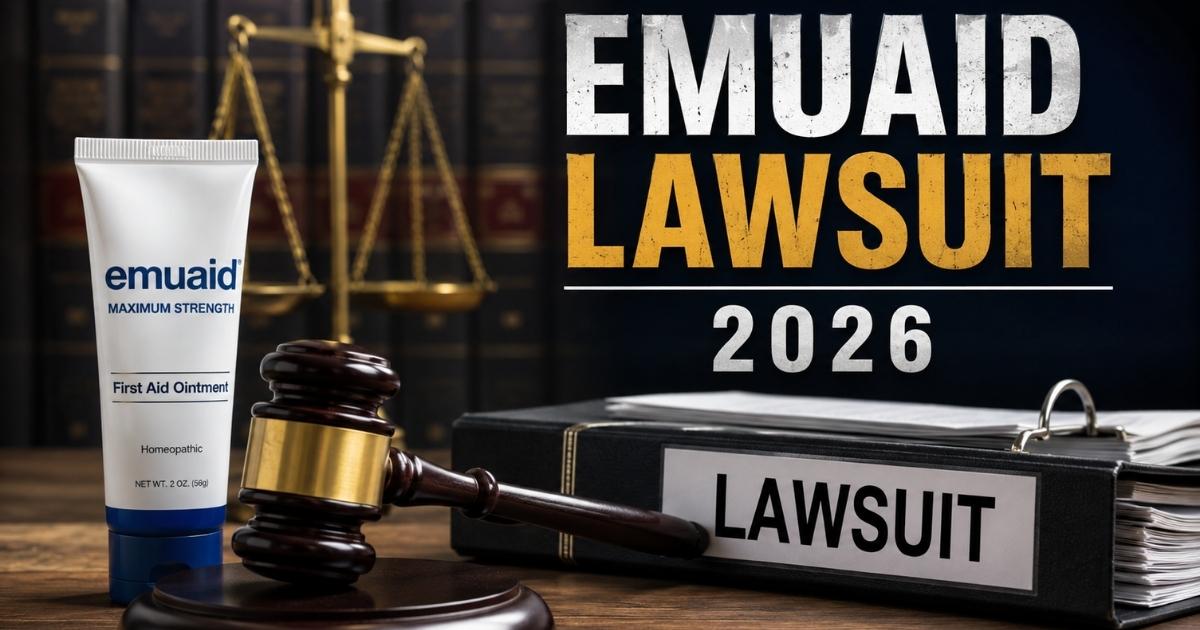

If you’ve searched “Emuaid lawsuit” recently, you’ve probably landed on a handful of articles promising huge payouts, active class actions, and looming settlement deadlines. Before you get your hopes up (or your guard down), it’s worth separating verified legal fact from recycled speculation.
Emuaid, made by Speer Laboratories, is a topical ointment marketed for skin conditions like eczema, psoriasis, fungal infections, and minor wounds. It has a loyal customer base, a shelf full of five-star reviews, and also a growing pile of consumer complaints about billing, refunds, and whether the product lives up to its marketing.
This guide walks through what is actually documented about legal action against Emuaid and Speer Laboratories, what’s still just chatter across low-quality “lawsuit” blogs, and what you should genuinely watch for in 2026 if you’ve purchased the product and feel misled.
What Is the Emuaid Lawsuit About?
There is real confusion online about what “the Emuaid lawsuit” even refers to, because more than one legal matter has been associated with the brand over the years.
The one confirmed, documented case is a website accessibility lawsuit filed in December 2020 in Pennsylvania federal court. A plaintiff named Karen Clark, who is visually impaired, sued Speer Laboratories under Title III of the Americans with Disabilities Act (ADA). Her claim was that emuaid.com could not be properly navigated using screen reader software, which shut out blind and low-vision shoppers from browsing and buying products online.
That case sought a court declaration that the website violated the ADA and a permanent injunction requiring Speer Laboratories to fix accessibility barriers. It was not a class action, it did not involve product safety or advertising claims, and it did not create any fund for consumer payouts.
Separately, a wave of newer content across marketing and “lawsuit tracker” style websites describes a very different story: a false advertising class action tied to Emuaid’s health claims. As of mid-2026, no court filing, docket number, or law firm case page independently confirms that a certified class action of this kind exists. Some of these articles read more like SEO bait than legal reporting, and several openly admit no settlement has been reached and no case name is available.
Key takeaway: The confirmed lawsuit involves web accessibility. Claims about a large-scale false advertising class action remain unverified as of this writing, even though consumer complaints about the brand are real and numerous.
Emuaid Class Action Lawsuit Explained
A class action lets a group of people with similar claims sue a company together instead of filing hundreds of separate lawsuits. For a false advertising class action against a skincare brand to move forward, a few things typically need to happen:
- A named plaintiff files a complaint describing specific misrepresentations and financial harm.
- A court certifies the class, confirming that many buyers experienced the same type of injury from the same conduct.
- Discovery and negotiation follow, often ending in settlement rather than trial.
For Emuaid specifically, this process has not reached the certification stage in any publicly verifiable court record. What does exist is a pattern of individual consumer complaints, largely centered on refund denials and unauthorized subscription charges rather than product-related class litigation.
If a genuine class action is ever filed over marketing claims, expect it to center on:
- Whether marketing language crossed the line from opinion into a specific, testable medical claim
- Whether scientific evidence supported those claims at the time they were made
- Whether pricing and subscription practices were adequately disclosed
Until a case is actually certified, treat “join the Emuaid class action now” messaging with skepticism, especially if it asks for upfront fees or sensitive financial information.
Emuaid Lawsuit 2026: Where Things Stand Right Now
As of July 2026, here’s a realistic snapshot:
- The 2020 ADA website accessibility case remains the only fully documented lawsuit tied to Speer Laboratories that shows up in court records and legal databases.
- No FDA warning letter or FTC enforcement action specifically naming Speer Laboratories or Emuaid has been publicly published as of this writing.
- The Better Business Bureau (BBB) profile for Speer Laboratories shows a meaningful volume of complaints, mostly about billing disputes, canceled orders being rebilled as subscriptions, and refund policy confusion.
- Several marketing sites are actively promoting the idea of an imminent class action and payout window, but none link to a certified case.
This doesn’t mean consumers have no options. It means the loudest claims online right now outpace what’s actually been filed and proven in court. If a real class action does get certified later in 2026, it would typically be announced through a law firm’s official case page, a court docket, or a settlement administrator site, not solely through anonymous blog posts.
Emuaid False Advertising Allegations
The underlying frustration driving all this chatter is legitimate: many buyers feel Emuaid’s marketing implies stronger, faster, or more medically proven results than the product consistently delivers.
Common allegations circulating in reviews and informal complaints include:
- Marketing language that sounds clinical or scientific without citing peer-reviewed studies specific to the finished product
- Before-and-after imagery and testimonials presented as typical results rather than best-case outcomes
- Use of terms like “clinically proven” or “doctor recommended” that some buyers feel oversell the evidence behind them
Under FTC advertising law, any company making a health-related claim is expected to have competent and reliable scientific evidence to back it up before the ad runs, not after a complaint is filed. The FTC has broadly reminded hundreds of companies selling over-the-counter drugs, homeopathic remedies, and dietary supplements of this exact obligation. That general regulatory pressure is real and industry-wide. Whether it has specifically been applied to Speer Laboratories through a formal action is, again, not publicly documented.
Emuaid Settlement: What Could Happen?
Because there is no certified class action or announced settlement, there’s nothing to file a claim against yet. That said, it’s useful to understand how settlements typically work in this space, so you can recognize whether future news is legitimate.
In comparable false advertising cases against skincare or homeopathic product makers, settlements have historically included:
- A monetary fund distributed to verified purchasers, often modest per person
- Required changes to marketing language or packaging claims
- A period of FTC or third-party monitoring of future advertising
- No admission of wrongdoing by the company, which is standard in most consumer settlements
If Speer Laboratories were to face and resolve a genuine class action, a real settlement would come with a case number, a court-approved settlement administrator, and a formal claims website, typically ending in “.com” and registered specifically for that purpose, not a generic legal blog.
Emuaid Lawsuit Payout: How Much Could You Receive?
Because no settlement fund currently exists, any number you see quoted right now for an “Emuaid lawsuit payout” is a projection, not a guarantee.
For context, individual payouts in comparable consumer class actions over mislabeled or overhyped health products have generally landed in one of two categories:
- Small flat payments, often in the $10 to $50 range per claimant, when the class is very large and the fund is modest
- Receipt-based reimbursement, where you get back some or all of what you spent if you can show proof of purchase, capped at a set maximum per person
If a real settlement is ever announced, payout amounts will be published by the settlement administrator, not estimated in advance by unrelated blogs. Treat any site promising a guaranteed dollar figure today as, at best, speculation.
Is Emuaid a Scam?
No, Emuaid is a real, registered product sold by a real company, not a scam in the sense of a fake or nonexistent business. It’s sold on major retail platforms, has an established manufacturing history, and has plenty of customers who report genuine relief from minor skin irritation.
That said, “not a scam” and “marketed perfectly” are two different things. The more accurate framing is that Emuaid sits in a gray zone common to many over-the-counter homeopathic ointments:
- The base product itself is a legitimate, purchasable item
- Some marketing claims may outpace the clinical evidence behind them
- Billing and subscription practices have generated a disproportionate share of complaints compared to product safety itself
If you’re deciding whether to buy, weigh independent reviews, ingredient lists, and your own skin sensitivity rather than relying solely on the company’s own marketing copy.
Emuaid Complaints: What Consumers Are Saying
Pulling from BBB filings and public reviews, complaint themes tend to cluster into a few consistent categories:
- Unauthorized rebilling. Several buyers report that a canceled or voided order was later charged again weeks later, framed by the company as a subscription renewal the customer says they never agreed to.
- Refund friction. The advertised 30-day money-back guarantee sounds simple, but multiple customers say they were told to ship the product back at their own expense, and by the time instructions were clarified, the 30-day window had passed.
- Order fulfillment errors. Complaints describe receiving the wrong product sizes or quantities compared to what was ordered and charged.
- Product performance. A smaller share of complaints focus on the ointment simply not working as expected for the buyer’s specific skin condition.
None of these complaint patterns, on their own, prove a coordinated class-wide fraud. But taken together, they explain why “Emuaid lawsuit” is such a heavily searched term, and why regulators and plaintiff’s attorneys tend to pay attention when billing complaints pile up in one place.
Emuaid Side Effects Lawsuit Claims
Separate from advertising complaints, a smaller number of users report mild adverse skin reactions such as redness, itching, or a burning sensation after applying Emuaid, particularly the stronger EmuaidMAX formula.
As of now, there is no publicly documented product liability lawsuit specifically alleging that Emuaid caused serious or lasting physical injury. Most side-effect complaints described online read more like typical reactions to a topical ointment with active ingredients, similar to what you’d see with many over-the-counter creams, rather than allegations tied to litigation.
If you experience a reaction:
- Stop using the product immediately
- Rinse the affected area with water
- Contact a dermatologist or physician, especially if swelling, blistering, or spreading irritation occurs
- Report the reaction to the FDA’s MedWatch program, which tracks adverse events for over-the-counter products
Reporting to MedWatch is also how patterns of harm get flagged for regulators in the first place, so it matters even outside of litigation.
Emuaid Ingredients and the Lawsuit Connection
Emuaid’s formula is built around a homeopathic base combined with ingredients like tea tree oil, allantoin, and various emollients, positioned as a natural alternative to steroid creams or prescription antifungals.
The ingredient list itself is not usually the center of legal complaints. The more common friction point is the gap between “natural ingredients” and “clinically proven results.” A product can use entirely legitimate, safe ingredients and still face advertising scrutiny if the marketing implies a level of proven medical efficacy that hasn’t been demonstrated through rigorous, product-specific clinical trials.
This is a common tension across the homeopathic and natural remedy category generally, not something unique to Emuaid, but it’s exactly the kind of gap that has triggered FTC warning letters against other companies in this space in recent years.
Is Emuaid FDA Approved?
No topical homeopathic ointment like Emuaid carries individual FDA “approval” in the way a prescription drug does, and Emuaid is no exception.
Here’s what that actually means in practice:
- Homeopathic over-the-counter products are generally manufactured and marketed under FDA compliance policy guides rather than going through the full New Drug Application approval process
- The FDA does not test or certify these products for effectiveness before they reach shelves
- Manufacturers are still legally required to follow labeling rules and avoid false or misleading claims, even without formal pre-market approval
So when a product page says something like “FDA registered facility,” that refers to manufacturing oversight, not a stamp of approval on the product’s healing claims. This distinction is one of the most searched and most misunderstood parts of the entire Emuaid conversation, and it’s central to why false advertising concerns keep surfacing.
Does Emuaid Actually Work?
Reviews are genuinely mixed, and that split is worth taking seriously rather than dismissing in either direction.
Where users report success:
- Minor cuts, scrapes, and localized skin irritation
- Mild eczema flare-ups
- Reducing itching and discomfort from insect bites or minor rashes
Where users report disappointment:
- Severe or long-standing psoriasis
- Stubborn fungal infections like toenail fungus
- Conditions that likely need a prescription-strength treatment or dermatologist involvement
The honest takeaway is that Emuaid may offer real comfort for minor, surface-level skin issues, while expecting it to resolve a serious or chronic dermatological condition is where most disappointment (and most complaints) originate.
Emuaid Refund: Can You Get Your Money Back?
Speer Laboratories advertises a 30-day money-back guarantee on a first purchase, excluding shipping costs and excluding the 16 oz size entirely. In practice, several BBB complaints describe a gap between the simple “no questions asked” language on the website and the actual process, which can require shipping the product back at the customer’s expense before a refund is issued.
If you want to request a refund:
- Act early. Don’t wait close to day 30, since return shipping and processing take time.
- Get instructions in writing. Save the chat transcript or email confirming the return address and any reference number.
- Ship with tracking. This protects you if there’s a later dispute about whether the item was returned.
- Escalate through your bank if needed. A card dispute is a legitimate backup option if the company doesn’t honor its stated policy within a reasonable time.
- File a BBB complaint if you’re stonewalled. It won’t force a refund, but it creates a documented record.
How to File an Emuaid Claim
Since there is no certified class action or open settlement fund as of mid-2026, there is technically no formal “Emuaid lawsuit claim” to file yet. What you can do right now:
- Keep your receipts. Save order confirmations, charge records, and any marketing screenshots that influenced your purchase.
- Document the harm. Note what was promised, what happened, and any financial loss (extra charges, wasted product, medical costs from a reaction).
- File complaints with the right agencies. The BBB, your state Attorney General’s consumer protection office, and the FTC’s official complaint portal all accept individual reports.
- Consult a consumer protection attorney if your loss is significant, particularly around unauthorized billing.
- Watch official channels, not third-party blogs, for any future class action or settlement announcement. Court records, law firm case pages, and settlement administrator sites are the reliable sources.
Being organized now means you’ll be ready to act quickly if a legitimate claims process does open later.
Emuaid First Defense and the Lawsuit
Emuaid First Defense is one of the brand’s serum-style products, marketed for use on skin that’s already showing early signs of irritation or infection. It hasn’t been the subject of any separate, distinct legal action from the core Emuaid and EmuaidMAX ointments.
Complaints involving First Defense tend to mirror the broader pattern already discussed: pricing add-ons at checkout, bundled offers that increase the total charge beyond what the customer expected, and general marketing language questions rather than any unique legal claim specific to this product line.
Emuaid and Consumer Protection Laws
Every state has some version of a consumer protection or “unfair and deceptive acts and practices” (UDAP) statute. These laws generally prohibit:
- False or misleading advertising
- Bait-and-switch pricing tactics
- Charging a customer without clear, informed consent
- Making health claims without adequate substantiation
At the federal level, the FTC Act gives the Federal Trade Commission authority to pursue companies that make deceptive claims nationwide, and the agency has been increasingly active against the broader homeopathic and OTC supplement industry through both formal actions and mass warning letters reminding sellers of their substantiation obligations.
These frameworks are exactly why a future class action against Speer Laboratories remains plausible, even though nothing has been certified yet. The legal tools and regulatory appetite both exist; what’s missing so far is a confirmed filing that clears the certification bar.
Emuaid BBB Complaints and What They Reveal
The Better Business Bureau profile for Speer Laboratories shows a pattern worth paying attention to, even outside of any lawsuit context. Recurring themes include:
- Orders that were canceled by the company and then rebilled later as a subscription the customer says they never authorized
- Confusion between the advertised “no questions asked” refund promise and an actual process requiring the customer to ship the product back
- Wrong items or quantities shipped compared to what was ordered
What these complaints reveal isn’t necessarily a smoking gun for fraud, but they do point to operational and billing practices that create real friction and financial frustration for customers. That’s often exactly the kind of pattern that eventually attracts either regulatory attention or a plaintiff’s attorney looking to build a class action, even if neither has happened yet.
Emuaid Lawsuit Update: Latest Developments in 2026
To keep this section useful rather than speculative, here’s the most accurate summary of where things sit heading into the second half of 2026:
- No new class action against Speer Laboratories over advertising claims has been publicly certified or confirmed through court records as of this writing.
- The 2020 ADA website accessibility case remains the one verifiable lawsuit tied to the brand.
- Consumer complaint volume, particularly around billing and refunds, continues to grow on BBB and independent review platforms.
- Broader FTC scrutiny of the homeopathic and OTC health product industry has intensified in recent years, which increases the odds of future action against any individual brand in this space, including Emuaid, without confirming that anything specific has been filed yet.
If a genuine class action or settlement is announced, it will typically be traceable to an actual court docket. Bookmark a reliable legal news source or your state Attorney General’s consumer alerts page rather than relying on any single blog for updates.
Frequently Asked Questions
Is there currently an active class action lawsuit against Emuaid?
No certified class action over Emuaid’s advertising claims has been publicly confirmed as of mid-2026. The one documented lawsuit involves website accessibility, not product marketing.
Who makes Emuaid?
Emuaid is manufactured and sold by Speer Laboratories, a company based in Florida that specializes in homeopathic topical ointments.
Can I still get a refund if I’m outside the 30-day window?
The official policy only guarantees refunds within 30 days of your first purchase, though you can still try disputing the charge through your bank or filing a BBB complaint.
Is Emuaid safe to use?
Most users tolerate it well, though a small number report mild skin irritation, so it’s wise to patch-test before full application, especially on broken skin.
Does Emuaid treat toenail fungus effectively?
Reviews are mixed, and many users with stubborn or long-standing fungal infections report needing a prescription-strength treatment instead.
How do I report a problem with Emuaid billing or marketing?
You can file a complaint with the BBB, your state Attorney General’s consumer protection division, or the FTC’s official complaint portal.
Will I be notified automatically if a real settlement happens?
Not necessarily. Watch official court records, law firm case pages, or your state’s consumer protection alerts rather than assuming you’ll be contacted directly.
Final Thoughts
The phrase “Emuaid lawsuit” covers a lot more speculation than confirmed legal fact right now. What’s actually documented is a 2020 website accessibility case and a real, growing stack of consumer complaints about billing, refunds, and marketing claims that some buyers feel oversell what the product can do.
That doesn’t mean concerns about Emuaid are baseless. It means the smart move is to separate verified information from projected payout numbers and “join now” messaging that outpaces any actual court filing. If you’ve had a bad experience, whether it’s an unauthorized charge, a denied refund, or a skin reaction, document it, report it through the right channels, and keep an eye on official sources rather than any single blog for future developments. If a legitimate class action or settlement does eventually move forward, it will be traceable, verifiable, and administered through the courts, not just announced on a marketing page.
