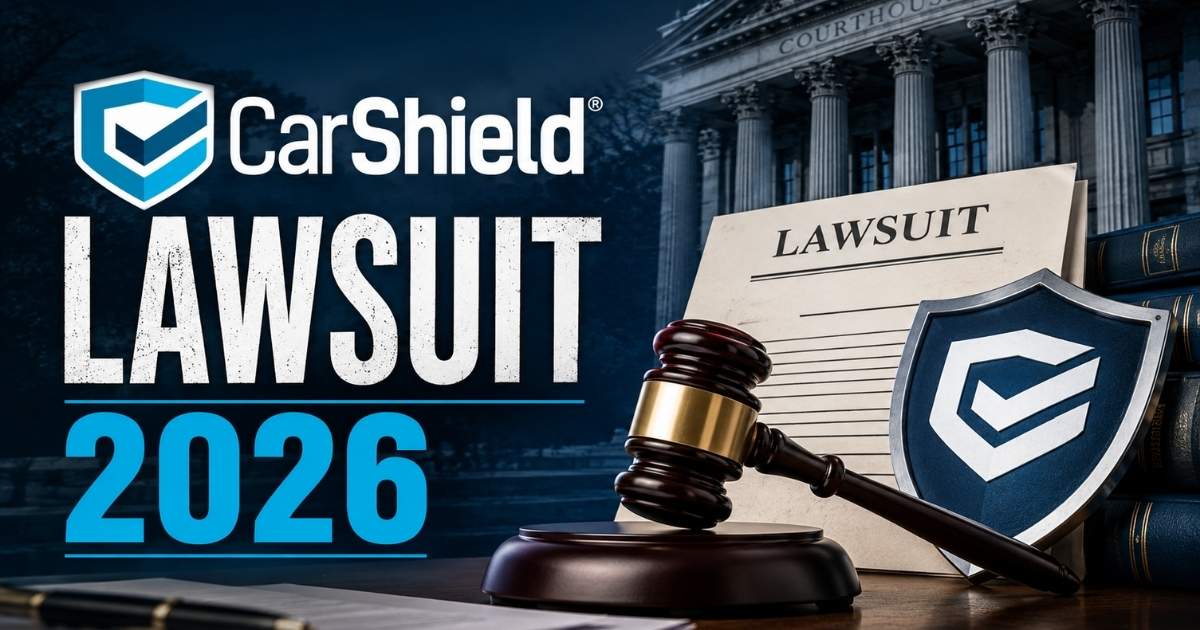

If you have ever paid a monthly premium to CarShield and then watched a repair claim get denied, you are not alone. Thousands of drivers have filed complaints, regulators have stepped in, and the courts are still sorting out what happens next.
This guide breaks down everything currently known about the CarShield lawsuit heading into the second half of 2026: what the Federal Trade Commission actually proved, how much money has already gone out, who still qualifies for a payout, and what to do if you think you are owed a refund. Every detail below reflects the most current public record, including federal court filings and FTC press releases.
CarShield Lawsuit 2026: What’s Happening Right Now
The CarShield legal saga is no longer a single case. It is now two separate tracks moving on two different timelines.
- The FTC settlement track is essentially finished on the distribution side. The Federal Trade Commission mailed refund checks worth more than $9.6 million to over 168,000 consumers in December 2025.
- The private class action track is stalled. In May 2026, a federal judge granted CarShield’s motion to send a newer class action lawsuit to arbitration, pausing the case rather than allowing it to move toward trial or a public settlement.
In plain terms, if you already received a check from the FTC in late 2025, that chapter of the story has closed for you. If you did not receive one, or if your complaint involves a contract signed more recently, your options now run through arbitration clauses buried in CarShield’s paperwork or through separate state-level consumer protection claims.
CarShield Class Action Lawsuit: The Full Background
CarShield, legally operated by NRRM, LLC, built its brand on television and radio commercials featuring recognizable faces including Ice-T, Chris Berman, and Walker Buehler. The pitch was simple: pay a monthly fee, and CarShield would protect you from the financial shock of a major repair bill.
Behind that pitch, according to regulators, sat a different reality. CarShield’s vehicle service contracts were actually developed and administered by a separate company, American Auto Shield, LLC (AAS). Consumers who called in expecting broad coverage often discovered that their specific repair, part, or vehicle system fell outside the contract’s fine print.
The Federal Trade Commission opened a formal investigation into these practices, and on July 31, 2024, it filed a complaint against both NRRM, LLC and American Auto Shield, LLC. The complaint accused the companies of using deceptive marketing and telemarketing scripts that misrepresented what the plans would actually pay for. That case ended in a $10 million settlement.
Separately, private plaintiffs filed their own class action against CarShield and AAS in March 2025, arguing that individual consumers had been personally harmed by denied claims and misrepresented contract terms. That case is the one currently paused for arbitration.
Is CarShield Being Sued in 2026?
Yes. CarShield is facing active legal exposure in 2026, though the nature of that exposure has shifted.
- The FTC’s original case is closed on paper, but compliance monitoring continues for up to ten years under the settlement order.
- A private class action filed by three plaintiffs, April Lindsey-Evans of North Carolina, and Brenna Sebek and Kevin Sheehan of Illinois, remains open but paused while arbitration proceedings play out.
- Individual consumer complaints continue to surface through the Better Business Bureau, state attorneys general offices, and consumer advocacy sites, which can seed future litigation.
CarShield has stated publicly that it cooperated with the FTC and used the process to confirm its practices comply with the law. The company continues to operate and sell vehicle service contracts in every U.S. state except California, where it refers residents to licensed mechanical breakdown coverage providers instead.
CarShield Deceptive Advertising Lawsuit: What They Actually Did Wrong
The FTC’s complaint did not accuse CarShield of a single bad practice. It identified a pattern of misrepresentations that ran across advertising, telemarketing calls, and the contracts themselves. According to the agency, CarShield and AAS:
- Advertised that all repairs, or repairs to any “covered” vehicle system, would be paid for, when the contracts actually excluded a long list of parts and pre-existing conditions.
- Promised customers a free rental car whenever their vehicle broke down, a benefit many customers never actually received.
- Told consumers they could choose any repair shop, while in practice the process for using an independent shop was far more restrictive than advertised.
- Used celebrity endorsers whose testimonials suggested personal, verified experience with the product, without adequate substantiation.
- Charged consumers up to $120 a month for contracts that, in practice, denied a significant share of repair claims.
The FTC also cited violations of the Telemarketing Sales Rule, which governs how companies are allowed to pitch products over the phone. This detail matters because it explains why the settlement order specifically bars future telemarketing misrepresentations, not just misleading TV commercials.
CarShield FTC Settlement Payout: How the Money Was Structured
The $10 million settlement was not simply cut into 168,000 equal checks. The FTC structured the fund in two parts.
- Approximately $9.6 million was set aside as direct consumer redress, meaning money returned to customers who purchased a contract and experienced the alleged harm.
- The remaining balance, roughly $400,000, covered administrative costs and enforcement expenses tied to running the refund program.
Under the settlement order, CarShield and American Auto Shield were required to stop the specific misrepresentations named in the complaint, adopt clearer disclosures, verify that endorser testimonials reflect real and typical experiences, and expand their repair shop network. Public reporting indicates the company added more than 10,000 repair locations and introduced a concierge system meant to help customers locate a participating shop, both changes made after the settlement took effect.
Refunds were distributed automatically. Consumers did not need to file a claim form to receive their check, because the FTC identified eligible customers directly from CarShield’s own records.
CarShield Lawsuit Settlement Amount: The Full Picture for 2026
When people search for the total CarShield settlement figure, they usually find the headline number: $10 million. That figure is accurate for the FTC action, but it is not necessarily the final word on CarShield’s legal costs.
Here is the fuller financial picture as it stands in 2026:
- $10 million total FTC settlement, agreed to in July 2024.
- $9.6 million of that amount distributed directly to consumers in December 2025.
- Ongoing legal costs tied to the separate private class action, which remains unresolved and could add further financial exposure depending on how the arbitration process concludes.
- Up to ten years of FTC compliance monitoring, which does not produce consumer payouts but does represent an ongoing cost and legal obligation for the company.
If the private class action eventually clears arbitration and proceeds, or if individual arbitration awards are issued in favor of consumers, the true financial total tied to CarShield’s legal troubles could grow well beyond the original $10 million figure. As of mid-2026, no additional public settlement fund has been announced beyond the completed FTC distribution.
CarShield Lawsuit Payout Per Person: Realistic Expectations
Individual payout amounts under the FTC settlement varied significantly and were never a flat, one-size-fits-all number. The agency’s distribution formula weighted a few factors more heavily than simple class membership:
- How much a consumer paid in total premiums.
- Whether the consumer had filed a documented complaint about a denied claim.
- Whether the consumer could show they received materially less coverage than advertised.
Because of that formula, some consumers received relatively small refund checks, while others who paid more over a longer period, or who had multiple denied claims on record, received larger amounts. Public reporting on similar FTC vehicle service contract cases suggests payouts have historically ranged from a modest amount up to several hundred dollars per person.
If you are hoping for a full refund of every dollar you ever paid CarShield, it is worth setting realistic expectations. FTC redress funds are designed to return a meaningful portion of documented harm, not to fully unwind every contract that was ever sold.
Who Qualifies for CarShield Class Action: Eligibility Overview
For the completed FTC settlement, eligibility was narrowly and specifically defined. You qualified automatically, with no application required, if you met both of the following conditions:
- You purchased a CarShield vehicle service contract between September 2019 and September 2024.
- You had a repair claim denied under that contract during that window.
If both applied to you, the FTC should have already identified your account through CarShield’s records and mailed you a check in December 2025.
Eligibility for the separate, still-pending private class action is different and broader in scope, since it is not limited to a single denied-claim requirement. That case is built around a wider argument that CarShield’s advertising was misleading to any consumer who relied on it, regardless of whether a specific claim was ever formally denied.
CarShield Lawsuit Eligibility: Who Gets Included and Who Doesn’t
To make this simpler, here is a breakdown of who is generally included and who typically falls outside the current settlement structure.
Likely included:
- Consumers who bought a CarShield contract between September 2019 and September 2024 and had a claim denied.
- Consumers listed in CarShield’s own customer and complaint records during that period.
- Consumers who received a refund check in December 2025 but have not yet cashed it.
Likely excluded from the completed FTC payout:
- Consumers who purchased a contract after September 2024, since that window falls outside the FTC’s redress period.
- Consumers who never had a claim denied, even if they were unhappy with the sales process itself.
- Former customers who cannot be located or verified through CarShield’s records, since no independent claim form was ever opened for this particular fund.
Consumers who fall outside the FTC window but still believe they were harmed may have options through the pending private litigation, individual arbitration, or a state attorney general complaint, depending on where they live.
CarShield Complaints Coverage Denied: The Core of Every Lawsuit
Nearly every legal action against CarShield, whether filed by a regulator or by individual plaintiffs, comes back to the same core complaint: coverage that was advertised broadly turned out to be narrow in practice.
Common complaint patterns include:
- A repair being labeled as a “pre-existing condition” even when the customer had no way of knowing about it before the contract began.
- A specific part or system technically excluded from the plan tier the customer purchased, something not made clear during the sales call.
- Long wait times or additional inspection requirements before a claim could even be considered.
- Denials issued after the customer had already authorized the repair shop to begin work, leaving them responsible for the bill.
These patterns are exactly what the FTC’s Telemarketing Sales Rule violations addressed, and they form the factual backbone of the newer private class action as well.
CarShield Vehicle Service Contract Lawsuit: What the Contracts Actually Said
A recurring theme across CarShield litigation is the gap between what sales representatives said on the phone and what the written contract actually authorized. Vehicle service contracts, sometimes marketed loosely as extended warranties, are governed by their written terms, not by verbal promises made during a sales pitch.
Court filings and complaint records describe several contract-level issues, including:
- Exclusion lists that were far longer and more specific than what telemarketers described.
- Waiting periods before certain repairs became eligible for coverage, which were not always clearly communicated up front.
- Requirements that repairs be pre-authorized by the administrator before work began, a step some customers say they were never told about.
- Arbitration clauses embedded in the contract’s fine print, the same clauses that are now central to why the 2025 private class action was paused in 2026.
This last point matters most for anyone considering legal action today. If your CarShield contract includes an arbitration agreement, and most standard contracts do, you may be required to resolve your dispute through individual arbitration rather than as part of a group lawsuit.
CarShield Refund Lawsuit: Getting Your Money Back
There are currently two distinct paths for a CarShield-related refund, and it is important not to confuse them.
Path one: the completed FTC redress fund. This program has already distributed its checks. If you qualified, you should have received a check in December 2025 with instructions to cash it within 90 days of the mailing date.
Path two: individual arbitration or a future class settlement. If you believe you were harmed and did not receive an FTC check, either because your contract falls outside the eligible window or because your claim denial was never formally logged, your remaining option is typically to pursue arbitration directly against CarShield and American Auto Shield, or to wait for developments in the pending private case.
A consumer protection attorney can help determine which path applies to your specific contract and complaint history, particularly if your contract contains an arbitration clause.
CarShield Lawsuit How to Join: Step-by-Step Process
If you believe you may still have a valid claim outside the completed FTC fund, here is a practical sequence to follow.
- Locate your contract. Find your original CarShield or American Auto Shield vehicle service contract paperwork, including the plan tier and effective dates.
- Gather your billing history. Pull together records showing exactly how much you paid in monthly premiums and for how long.
- Document any denied claims. Collect denial letters, emails, or call notes tied to any repair CarShield refused to cover.
- Check your contract for an arbitration clause. This single clause largely determines whether your path forward is individual arbitration or a potential future class action.
- Consult a consumer protection attorney. Most offer free initial consultations and only collect fees if you recover money.
- Watch for official notices. Any legitimate class settlement notice will come from a court-appointed administrator, never from a random email demanding a processing fee.
- Report ongoing issues. File a complaint with the FTC, your state attorney general, or the Better Business Bureau, since active complaints help support both regulatory action and private litigation.
CarShield Lawsuit Filing Deadline 2026: Do Not Miss These Dates
Deadlines in this case depend entirely on which track applies to you.
- FTC refund checks: Checks were mailed in December 2025, and recipients were required to cash them within 90 days of that mailing date. That window has already closed for anyone who received a check and did not act.
- Private class action: No new claim deadline currently applies, since the case is paused pending the outcome of arbitration proceedings that began in May 2026.
- Individual arbitration or state claims: These generally follow the statute of limitations in your state for consumer protection or breach of contract claims, which typically ranges from two to six years depending on the state and the type of claim.
Because deadlines vary so much by state and by claim type, the safest move is to speak with an attorney as soon as you suspect you have a valid claim, rather than waiting for a fixed date to appear online.
New CarShield Lawsuit 2026: What’s Different About These Cases
The newer 2025 to 2026 private class action differs from the original FTC case in a few important ways.
- It was brought by individual consumers rather than a federal regulator, which changes the legal standard and the type of damages available.
- It names American Auto Shield directly as a co-defendant alongside CarShield, focusing heavily on how the contracts were administered rather than only how they were advertised.
- It has already been redirected toward arbitration, a procedural outcome the original FTC case never faced, since regulators are not bound by private arbitration agreements the way individual consumers are.
- It could still produce individual arbitration awards for the named plaintiffs and any consumers who pursue their own arbitration claims, even without a public class-wide settlement.
This arbitration outcome is a meaningful shift. It means future consumers with similar complaints may need to pursue their disputes one at a time rather than joining a single, large group lawsuit.
CarShield Lawsuit Update 2026: Where Things Stand Right Now
As of mid-2026, here is the current status in one place:
- The FTC’s $10 million settlement is finalized, and its $9.6 million consumer redress fund has already been distributed.
- CarShield remains a fully operating company, selling vehicle service contracts nationwide except in California.
- The private class action filed in March 2025 is on hold after a federal judge granted CarShield’s motion to compel arbitration in May 2026.
- CarShield remains under FTC compliance monitoring, which can extend for up to a decade from the settlement date.
- No new public class-wide settlement fund has been announced beyond the completed FTC program.
Consumers should expect this story to keep developing slowly through individual arbitration proceedings rather than through a single dramatic courtroom verdict.
CarShield Lawsuit What Customers Are Saying: Real Accounts
Public complaint boards, the Better Business Bureau, and court filings tell a fairly consistent story from CarShield customers. Recurring themes include:
- Customers describing sales calls that promised near-total repair coverage, only to later learn the specific part that failed was excluded.
- Drivers who paid premiums for months or years without ever filing a claim, then found the process confusing or slow the one time they needed it.
- Some customers reporting positive experiences, particularly after the company expanded its repair network and added a concierge process following the FTC settlement.
- A smaller group of long-term customers noting that service and communication improved noticeably after 2024, coinciding with the regulatory scrutiny.
The mixed nature of these accounts reflects a company operating under new compliance obligations while still working through a backlog of complaints tied to its older sales practices.
Frequently Asked Questions
Is CarShield a scam?
No. CarShield is a legitimate, operating company, but regulators found its past advertising and telemarketing practices were deceptive, which led to a formal FTC settlement.
How do I know if I am owed money from CarShield?
If you purchased a contract between September 2019 and September 2024 and had a claim denied, the FTC should have already mailed you a check in December 2025.
What if I never received my FTC refund check?
Contact the refund administrator, Analytics, at the number listed on the official FTC settlement page to confirm your eligibility status.
Can I still join a CarShield class action in 2026?
The main private class action is currently paused for arbitration, so new consumers generally need to pursue individual arbitration rather than joining that case directly.
Do I need a lawyer to file an FTC claim?
No. The FTC identified eligible consumers automatically and mailed checks directly, with no application or attorney required.
What does it mean that the class action was sent to arbitration?
It means a judge ruled that, because the plaintiffs agreed to an arbitration clause in their contracts, their disputes must be resolved through private arbitration instead of a public class action lawsuit.
Is CarShield still selling contracts in 2026?
Yes, in every state except California, where it refers residents to licensed alternative providers instead of selling directly.
How much was the average CarShield refund check?
Amounts varied based on premiums paid and documented harm, ranging from modest sums up to several hundred dollars depending on the individual case.
Are CarShield contracts the same as a factory warranty?
No. They are third-party vehicle service contracts, sometimes marketed as extended warranties, which are separate from and generally less comprehensive than an automaker’s factory warranty.
What should I do if my CarShield claim gets denied today?
Request the denial in writing, review your contract’s exclusion list carefully, and consider consulting a consumer protection attorney if you believe the denial contradicts what you were told at the time of purchase.
Final Thoughts
The CarShield lawsuit story has moved through several distinct phases: a federal investigation, a $10 million settlement, an automatic wave of consumer refunds, and now a private class action that has hit a procedural roadblock in arbitration. For most affected consumers, the FTC chapter is already closed, either because a check has arrived or because the eligibility window has passed.
If you still believe CarShield or American Auto Shield denied you coverage you were promised, your best next step in 2026 is to review your contract for an arbitration clause, gather your documentation, and speak with a consumer protection attorney about your individual options. The regulatory spotlight on CarShield has already forced real changes to how the company advertises and administers its contracts, and that scrutiny is likely to continue as the pending litigation works its way through arbitration.

1 thought on “CarShield Lawsuit 2026: Complete Guide to the Settlement, Claims & Latest News ”