
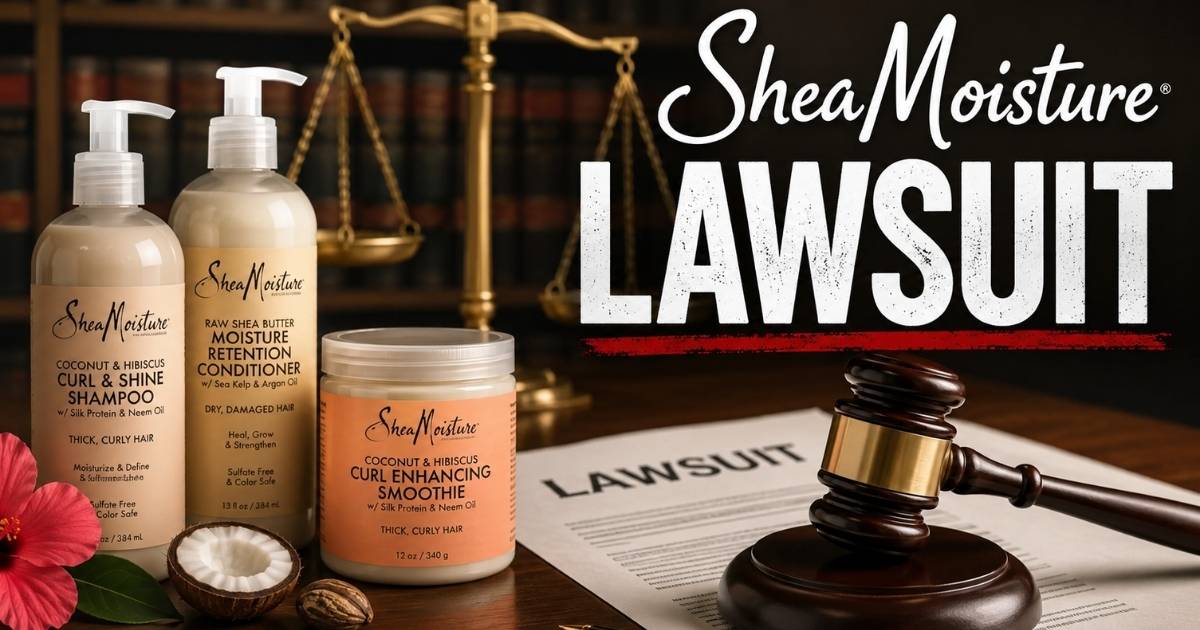

If you have searched “SheaMoisture lawsuit” recently, you have probably run into two very different stories. One is a real, active case sitting in federal court right now. The other is a hair loss and formaldehyde narrative that has spread across social media and several blog posts, but that does not match what is actually on file with any court.
This guide separates the two. You will get the real legal facts about the 2026 SheaMoisture case, an honest look at the DMDM hydantoin and formaldehyde concerns that keep getting attached to the SheaMoisture name, and a clear answer on who actually qualifies to take part in the real lawsuit. No guessed settlement numbers, no invented deadlines, just what is verifiable today.
SheaMoisture Lawsuit 2026: What Is Happening Right Now
As of late July 2026, there is one confirmed, active SheaMoisture lawsuit. It was filed on June 11, 2026, in the U.S. District Court for the Central District of California. The case is Yuryeva v. Sundial Brands LLC, Case No. 2:26-cv-06387.
Here is the short version:
- A California consumer, Ruffina Yuryeva, sued Sundial Brands LLC, the company behind SheaMoisture, along with parent company Unilever.
- The lawsuit is a proposed class action, meaning it is filed on behalf of a larger group of consumers, but a judge has not yet certified that class.
- The claim centers on product labeling, not on injuries, hair loss, or chemical exposure.
- The case is in its early stages. There is no trial date, no certified class, and no settlement fund at this time.
Separately, a wider and much messier conversation has grown online around SheaMoisture, DMDM hydantoin, and formaldehyde-related hair loss claims. That conversation did not start with a court filing against SheaMoisture specifically. It grew out of real lawsuits filed against other haircare brands and got attached to SheaMoisture through social media posts, TikTok videos, and some SEO-driven blog content. We will walk through exactly where that narrative came from and what is actually documented later in this article.
What Is the SheaMoisture Lawsuit About?
The active SheaMoisture lawsuit is a false advertising and consumer protection case. It is not a product injury case.
The complaint alleges that Sundial Brands prominently labeled certain SheaMoisture hair, personal care, and baby care products as containing “100% Virgin Coconut Oil” on the front of the packaging. According to the lawsuit, this claim is misleading because coconut oil is not actually the primary ingredient in these formulas, and the products contain multiple other ingredients in higher concentrations.
The plaintiff argues that:
- The front label claim shaped her purchasing decision and what she expected to be paying for.
- She would not have paid the price she did, or would not have bought the product at all, had she known the true ingredient makeup.
- This conduct violates California consumer protection statutes covering false advertising and unfair business practices.
In short, this is a labeling accuracy dispute, similar in style to other packaging class actions that have targeted food and personal care brands over “all natural,” “100%,” or “organic” claims that do not fully match the ingredient list.
The SheaMoisture Class Action Lawsuit Explained
A class action allows one or a few named plaintiffs to sue on behalf of everyone who experienced the same harm from the same conduct. Instead of thousands of individual lawsuits over the same coconut oil labeling issue, one case moves forward and, if successful, the outcome can apply broadly to everyone in the defined class.
Here is where the SheaMoisture case currently stands in that process:
- Complaint filed. Yuryeva filed her complaint on June 11, 2026, naming Sundial Brands LLC as the defendant.
- Case docketed. The lawsuit is proceeding in the Central District of California under Case No. 2:26-cv-06387.
- Pre-certification stage. The case has not yet reached class certification. This is the step where a judge decides whether the lawsuit can legally proceed as a class action rather than an individual claim.
- No settlement yet. Because certification has not happened, there is no settlement fund, no payout schedule, and no claim form to fill out.
If you see a website claiming there is already a SheaMoisture settlement amount or a claims deadline tied to this case, treat that with real skepticism. At this stage in the litigation, that information does not exist yet.
SheaMoisture and DMDM Hydantoin: The Chemical at the Center of a Different Debate
DMDM hydantoin is a preservative used in many shampoos, conditioners, and other water-based personal care products, across dozens of brands, not just SheaMoisture. It is what is known as a formaldehyde releaser.
Here is how it actually works:
- DMDM hydantoin is added to water-based formulas to stop bacteria, mold, and fungi from growing in the bottle.
- As it breaks down over time, it releases very small, controlled amounts of formaldehyde gas.
- This slow release is what gives the product its shelf life and keeps it safe from microbial contamination.
Formaldehyde is classified as a known human carcinogen at meaningful, sustained exposure levels, which is the reason this ingredient draws scrutiny. However, the trace amounts released by a rinse-off or leave-in hair product are a different exposure scenario than industrial or occupational formaldehyde exposure, and dermatology researchers have pointed out that there is currently no robust, peer-reviewed clinical study establishing a direct causal link between DMDM hydantoin at cosmetic-use concentrations and hair loss.
What is better documented is that formaldehyde and formaldehyde-releasing preservatives are a recognized contact allergen. For people who are already sensitive or allergic to formaldehyde, exposure through a haircare product can trigger allergic contact dermatitis, which shows up as scalp redness, itching, and irritation.
Some SheaMoisture product formulations have listed DMDM hydantoin in the past, which is part of why the brand keeps coming up in this broader conversation. But having an ingredient that is also named in lawsuits against other companies is not the same thing as SheaMoisture itself being the subject of a confirmed, filed formaldehyde or hair loss lawsuit. That distinction matters if you are trying to figure out your actual legal options.
Formaldehyde in SheaMoisture Products: What the Labels Don’t Say
One legitimate consumer complaint in this space is about label transparency, and it is worth understanding even though it is separate from the active coconut oil case.
Under current U.S. cosmetic labeling rules, manufacturers are required to list DMDM hydantoin itself on the ingredient panel if it is used. What they are not required to do is separately disclose that this preservative releases formaldehyde as it breaks down. The word “formaldehyde” simply will not appear on the bottle, even though the releasing agent does.
This is not unique to SheaMoisture. It applies to any personal care brand using formaldehyde-releasing preservatives, including DMDM hydantoin, quaternium-15, imidazolidinyl urea, and diazolidinyl urea. If you want to check whether a product you own uses one of these ingredients, look for those four names specifically on the ingredient list.
Consumer advocacy groups, including the Environmental Working Group, have flagged this labeling gap as a transparency issue worth addressing, separate from any claim that the ingredient is causing widespread hair loss.
The SheaMoisture Hair Loss Lawsuit: How Hair Damage Became a Legal Issue
To be direct: there is currently no confirmed, filed lawsuit specifically alleging that SheaMoisture products caused hair loss.
That said, the concern did not come out of nowhere, and it is worth understanding the real chain of events:
- Real lawsuits against other brands came first. Companies including the makers of WEN, DevaCurl, and Mane ‘n Tail have faced actual class action lawsuits alleging that their products, some containing DMDM hydantoin, caused hair loss, scalp irritation, or breakage. Some of these cases settled, and some were dismissed.
- Attorneys opened a broader investigation. Legal marketing firms began investigating whether similar claims could be brought against other haircare brands using formaldehyde-releasing preservatives. Some of these investigations, including one covering DMDM hydantoin more broadly, were later closed without a lawsuit being filed.
- Social media amplified the connection. Videos and posts linking curly hair product buildup, scalp issues, and formaldehyde-releasing preservatives to specific brands, including SheaMoisture, spread widely on platforms like TikTok, often without any underlying legal filing to back the brand-specific claim.
- Some blog content presented the rumor as settled fact. A handful of SEO-focused websites have published articles describing a “SheaMoisture hair loss lawsuit” with settlement amounts and payout figures that do not correspond to any real case on any court docket.
If a future lawsuit specifically naming SheaMoisture over hair loss or scalp damage is filed, that would be new, reportable news, and this article will be a starting point for tracking it. As of now, it has not happened.
SheaMoisture Scalp Damage Claims: Who Reported Injuries
The scalp damage claims circulating online are largely individual consumer reports, not documented legal claims tied to litigation. These reports typically describe:
- Scalp itching or redness after switching to SheaMoisture formulas containing waxes, butters, or preservatives
- Product buildup on curly and coily hair types, which can itself cause irritation and dullness unrelated to any specific chemical
- Shedding that users attributed to a specific product without lab testing or dermatologist confirmation
These are real experiences worth taking seriously on a personal health level. If you are experiencing scalp irritation or unusual hair shedding, the most useful next step is a dermatologist visit, not a lawsuit search. A dermatologist can determine whether you are dealing with a contact allergy, an unrelated condition like telogen effluvium, or a reaction to product buildup, and that diagnosis is what would actually support any future legal claim if one becomes relevant.
SheaMoisture Lawsuit Update 2026: Where Does the Case Stand?
Focusing back on the real, active case:
- Filed: June 11, 2026
- Court: U.S. District Court for the Central District of California
- Case number: 2:26-cv-06387
- Defendant: Sundial Brands LLC
- Claim type: False advertising and consumer protection violations tied to “100% Virgin Coconut Oil” labeling
- Status as of publication: Pre-certification, early litigation stage
At this stage, Sundial Brands has not yet been required to formally respond to every allegation in a public trial record, and no class has been certified. Cases like this typically move through motions to dismiss, discovery, and class certification arguments before any settlement conversation becomes realistic. That process commonly takes many months, sometimes over a year, even for cases that eventually settle.
Which SheaMoisture Products Are Included in the Lawsuit?
The lawsuit centers on SheaMoisture products that display “100% Virgin Coconut Oil” prominently on the front label. Based on the complaint, this includes items across the brand’s coconut oil-branded lines, such as:
- Coconut oil-labeled shampoos and conditioners, including formulas like Moisture & Smooth Conditioner
- Coconut oil-labeled leave-in and styling products
- Coconut oil-labeled personal care items, such as body washes or lotions carrying the same front-label claim
- Coconut oil-labeled baby care products under the SheaMoisture line
If you own a SheaMoisture product, check the front label specifically for the “100% Virgin Coconut Oil” claim. Products without that specific claim on the front packaging are not part of this particular lawsuit, regardless of whether they contain coconut oil as an ingredient somewhere on the back label.
Who Qualifies for the SheaMoisture Lawsuit?
Because this case has not been certified as a class action yet, there is no official enrollment process open to the public. Based on how the complaint defines the proposed class, the people the lawsuit is intended to eventually cover are generally consumers who:
- Purchased a SheaMoisture product carrying the “100% Virgin Coconut Oil” front-label claim
- Bought the product for personal or household use, not for resale
- Made the purchase within the relevant statute of limitations window for California consumer protection claims
- Relied on the coconut oil labeling, at least in part, when deciding to buy or how much to pay
If the class is later certified and a settlement is reached, notice would typically go out to people who fit this description, often through a dedicated settlement website, email notice if purchase records exist, or public notice campaigns. Nothing like that exists yet for this case.
SheaMoisture Settlement Amount: How Much Is the Fund Worth?
There is currently no SheaMoisture settlement fund. The case has not been certified, no settlement has been negotiated, and any specific dollar figure you see attached to this lawsuit right now is not based on a real court filing.
What can be said honestly is how settlements in comparable consumer labeling class actions have typically shaken out. Personal care and cosmetics mislabeling class actions in California federal courts have historically settled anywhere from several hundred thousand dollars for smaller regional disputes up to tens of millions of dollars for cases involving large national brands with millions of units sold. Where this particular case would eventually land, if it settles at all, depends on factors like:
- How many units of the labeled products were sold during the class period
- Whether the court certifies a nationwide class or a narrower California-only class
- How strong the evidence is that the label materially affected consumer purchasing decisions
- Whether the parties choose to settle rather than proceed to trial
None of that has been decided. Any specific total you see quoted elsewhere should be treated as speculation, not fact.
SheaMoisture Lawsuit Payout Per Person: What Could You Receive?
Same caveat applies here: no per-person payout figure has been set for this case, because no settlement exists yet.
For context, consumer class actions over mislabeled personal care and food products commonly result in modest per-claimant payouts, often in the range of a few dollars up to around 20 to 30 dollars per product purchased, sometimes higher with valid proof of purchase and multiple qualifying items. These cases rarely produce large individual payouts because the harm alleged is typically framed as a price premium consumers overpaid, not a personal injury.
If you are looking for a realistic expectation should this case eventually settle, a modest per-unit reimbursement tied to how many qualifying products you bought is the most likely outcome, based on how similar cases have resolved. Treat any site promising a specific guaranteed dollar amount right now as unreliable.
SheaMoisture Settlement 2026: Timeline and Expected Payment Dates
Since there is no settlement, there are no payment dates. What is useful is understanding the realistic path a case like this follows:
- Complaint and initial motions (already underway): Typically 3 to 9 months, covering motions to dismiss and early procedural fights.
- Discovery: Both sides exchange evidence, which can take 6 to 18 months depending on how contested the case is.
- Class certification: The court decides whether the case can proceed as a class action. This step alone can take several months and is sometimes appealed.
- Settlement negotiation or trial: If the parties settle, that negotiation and court approval process typically adds several more months.
- Claims administration and payment: After a settlement is approved, claim forms open, a filing window runs, and payments are distributed, usually 6 to 12 months later.
Taken together, consumer class actions of this type commonly take 18 months to 3 years from filing to actual payment, when they resolve in a settlement at all. Given the June 2026 filing date, a realistic best case for any payout would be sometime in 2027 or later, and that assumes the case settles rather than going to trial or being dismissed.
How to File a SheaMoisture Claim Step by Step
Since there is no active claims process yet, “filing a claim” today is not possible. What you can actually do right now:
- Save your proof of purchase. Keep receipts, order confirmations, or credit card statements showing SheaMoisture purchases, especially for products with the coconut oil labeling claim.
- Photograph the product label. Take clear photos of the front and ingredient panel of any qualifying product you still own.
- Register with a consumer class action tracking service. Sites like Top Class Actions and ClassAction.org let you sign up for notifications when a case like this reaches settlement.
- Watch for official notice. If the class is certified and a settlement is reached, notice will typically arrive by email, postal mail, or through a dedicated settlement website, not through a random ad or unrelated blog.
- Consult an attorney if you believe you were harmed. If you experienced a specific injury, such as documented scalp irritation from a product, that is a separate legal question from the labeling case and worth discussing directly with a consumer protection or product liability attorney.
SheaMoisture Claim Filing Deadline: Do Not Miss This Date
There is no confirmed claim filing deadline for this lawsuit yet, because no settlement has been reached and no claims window has opened. Any specific date circulating online right now should not be trusted.
Here is what will actually happen when a real deadline exists:
- If the class is certified and a settlement is approved, the court will set an official claims deadline, typically 60 to 180 days after the settlement website goes live.
- That deadline will be published on the official settlement website and often through Top Class Actions or similar legal news trackers.
- Missing that window generally means forfeiting your right to a payout from that specific settlement, so once a real deadline is announced, it is worth acting promptly.
The safest move today is bookmarking a reliable class action tracker and checking back periodically, rather than relying on unverified deadline claims.
Is the SheaMoisture Lawsuit Legitimate?
Yes, with an important distinction. The active coconut oil labeling lawsuit against Sundial Brands LLC is a real, verifiable case filed in federal court, with a public case number you can look up yourself through the Central District of California’s court records.
What is not currently legitimate, at least not yet, is the broader “SheaMoisture hair loss and formaldehyde lawsuit” narrative that includes specific settlement amounts, payout figures, and filing deadlines. That version of the story does not correspond to any filed case as of this writing. It appears to have originated from a mix of real lawsuits against other brands, genuine consumer concern about formaldehyde-releasing preservatives, and content published to attract search traffic rather than to report verified legal developments.
The practical takeaway: verify any lawsuit claim through the actual court docket or a reputable legal news source such as Law360, Reuters Legal, Top Class Actions, or ClassAction.org before acting on it, whether that means expecting a payout or avoiding a product out of legal concern rather than a personal health decision.
Frequently Asked Questions
Is there really a SheaMoisture lawsuit in 2026?
Yes. A class action lawsuit over “100% Virgin Coconut Oil” labeling was filed against Sundial Brands LLC on June 11, 2026, in California federal court.
Is the SheaMoisture lawsuit about hair loss?
No. The confirmed active lawsuit is about product labeling accuracy, not hair loss, scalp damage, or formaldehyde exposure.
Does SheaMoisture contain formaldehyde?
Some SheaMoisture formulas have listed DMDM hydantoin, a preservative that releases small amounts of formaldehyde as it breaks down, though this is not unique to SheaMoisture.
Can I file a claim for a SheaMoisture settlement right now?
No. There is no certified class or settlement fund yet, so there is no claim form to file at this time.
How much money will I get from the SheaMoisture lawsuit?
No settlement amount has been determined. Comparable labeling class actions typically result in modest per-product reimbursements if they settle.
Which SheaMoisture products are affected?
Products carrying the “100% Virgin Coconut Oil” claim on the front label, across shampoo, conditioner, styling, personal care, and baby care lines.
How do I know if I qualify?
You likely fit the proposed class if you purchased a qualifying coconut oil-labeled SheaMoisture product for personal use within the applicable time window, though official qualification will be defined if and when the class is certified.
Where can I check for real updates on this case?
Reputable sources include the court’s own public docket, Top Class Actions, ClassAction.org, and legal trade publications like Law360.
Final Thoughts
The real SheaMoisture story right now is narrower and less dramatic than what a lot of search results suggest. There is one active, verifiable lawsuit, and it is about coconut oil labeling accuracy, not chemical injury. The formaldehyde and hair loss conversation reflects a legitimate broader industry concern about formaldehyde-releasing preservatives in haircare, but it has not, as of this writing, turned into a filed legal claim against SheaMoisture specifically.
If you bought a qualifying coconut oil-labeled product, hold onto your receipts and keep an eye on official case updates rather than any site promising a guaranteed payout today. If you are dealing with actual scalp irritation or hair shedding, see a dermatologist first. That gives you real answers about your health, and if a legal claim becomes relevant later, documented medical evidence is exactly what would support it.

Daniel Christopher is the founder and administrator of LawsIps.com. He is passionate about making legal information easier to understand through clear, well-researched, and reader-friendly content. His goal is to help readers stay informed about legal topics, court updates, consumer rights, and educational legal resources in simple language.