
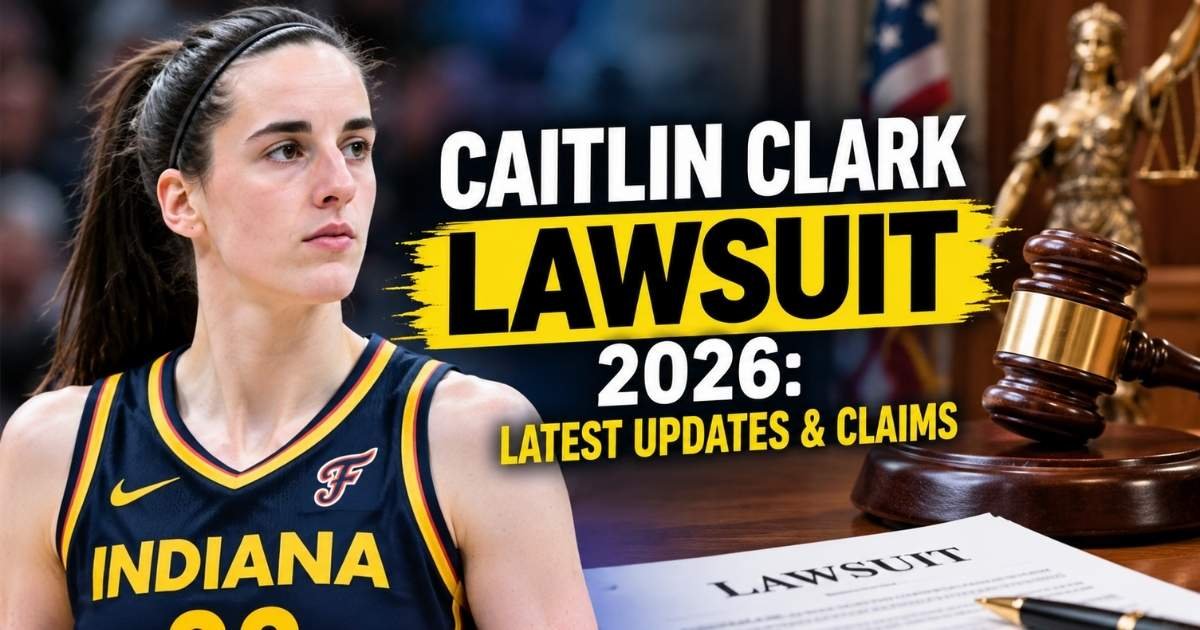

Search for Caitlin Clark and the word “lawsuit,” and you will see dramatic headlines. Some say she sued an ESPN analyst. Others say she sued Angel Reese, a rival player, or the WNBA itself. Many include numbers like $10 million, $90 million, or $100 million.
So what is real?
This guide separates documented facts from viral claims. It covers the defamation rumors, the ESPN and Monica McNutt story, the Angel Reese connection, and the law behind it all. It also explains what would have to happen for a real case to exist, and how to check any lawsuit claim yourself.
Quick answer: As of October 6, 2026, I found no credible report or court record showing that Caitlin Clark filed a defamation lawsuit against Monica McNutt, ESPN, Angel Reese, or anyone else over media commentary. Snopes rated the McNutt claim false, and later claims followed the same pattern.
Caitlin Clark Lawsuit: The Full Story
The “Caitlin Clark lawsuit” is not one event. It is a pile of separate rumors that grew from real controversies.
Clark plays point guard for the Indiana Fever. Since her college years at Iowa, she has drawn huge crowds and TV ratings. That attention brought praise, and it also brought heated debate about race, fairness, and physical play in the WNBA.
Every time a new on-court moment or TV segment went viral, a fake lawsuit story followed.
Timeline of the Lawsuit Rumors
- 2024 (rookie season): After a hard foul on Clark by Chicago Sky guard Chennedy Carter, ESPN analyst Monica McNutt criticized how the incident was framed. She argued that the coverage was building a “league versus Clark” narrative.
- Mid-May 2025: A flagrant foul involving Angel Reese and Clark sparked another round of debate on sports shows.
- May 19, 2025: McNutt’s comments on ESPN’s Get Up became the spark for a viral rumor that Clark had sued her for defamation, according to Snopes.
- 2025: Posts claimed Clark filed a $10 million suit against Angel Reese. Fact-checkers found no credible source.
- Late June 2026: After a physical play involving Phoenix Mercury forward Alyssa Thomas, a post claimed Clark filed a $90 million lawsuit. Primetimer reported that this was false.
- July 2026: A group of House Republicans sent a letter about Clark’s treatment on court to the WNBA commissioner. Some outlets framed it as a legal threat. It was not a lawsuit.
- August 2026: Video thumbnails again claimed “Clark sues,” this time tied to a locker room story. I found no filing behind them.
Why the Story Keeps Coming Back
Three things keep this rumor alive.
- Search demand: Clark is one of the most searched athletes in the world, so any “lawsuit” headline gets clicks.
- Real tension: Her games often involve physical play and public arguments about race, so the topic feels believable.
- Cheap content: A video titled “Clark SUES” costs nothing to make, and few viewers check court records.
Did Caitlin Clark File a Lawsuit?
No credible evidence shows she did. That is the direct answer to the most common question.
Here is what I checked:
- Fact-checks from Snopes and several sports outlets
- Recent news about Clark’s 2026 season and the Fever
- Reports on the July 2026 congressional letter
- Fact-checks of the Reese and Thomas rumors
None of these point to a defamation filing by Clark. If she had sued a national broadcaster, the story would lead ESPN, AP, and every sports desk in the country. Instead, the “reports” come from video channels, social accounts, and low-quality sites.
What About the Stalking Case?
Part of the confusion comes from a real legal matter. A man named Michael Lewis was charged in a stalking case in which Clark was the alleged victim.
That is a criminal case brought by prosecutors. It is not a lawsuit that Clark filed, and it has nothing to do with ESPN or any broadcaster. Some sites blur the two, which makes the rumor look more official than it is. If you want the case’s current status, check the court docket directly.
What About NIL and Trading Card Lawsuits?
A few pages claim Clark is involved in active name, image, and likeness (NIL) or trading card lawsuits. I could not confirm those claims through a court filing or a major news outlet. Treat them as unverified.
Athletes do sign licensing deals, and disputes over those deals happen in sports generally. But “disputes happen” is not the same as “this dispute exists.”
Caitlin Clark Defamation Lawsuit Explained
To judge any lawsuit rumor, you need to know what defamation means.
Defamation is a false statement of fact about a person that is communicated to others and damages their reputation.
It comes in two forms:
- Libel: written or published statements, including online posts
- Slander: spoken statements, including many broadcast comments
Courts often treat TV and radio as closer to libel in some states, but the rules vary. The core idea stays the same.
The Basic Elements of a Defamation Claim
In most U.S. states, a plaintiff must show:
- The defendant made a statement about the plaintiff.
- The statement was false.
- It was presented as fact, not opinion.
- It was shared with at least one other person.
- The defendant acted with the required level of fault.
- The plaintiff suffered harm, such as damaged reputation or lost income.
Why Fame Makes It Harder
Clark is a public figure. Under New York Times v. Sullivan (1964), public figures must prove “actual malice.” That means the speaker knew the statement was false or showed reckless disregard for the truth.
This is a high bar. It is not enough to show that a statement was unfair, harsh, or wrong. A court would need evidence about what the speaker knew when they spoke.
The Opinion Defense
The law also protects opinion. In Milkovich v. Lorain Journal Co. (1990), the Supreme Court held there is no blanket “opinion” exemption, but statements that cannot be proven true or false, or that are clearly rhetorical or analytical, are generally protected.
Sports commentary is full of this kind of speech. Phrases like “this narrative is unfair” or “the league has a problem” are judgments, not factual claims. That matters a great deal for the rumors below.
Caitlin Clark Monica McNutt Lawsuit Claims
The rumor goes like this: after McNutt’s on-air comments in May 2025, Clark filed a defamation lawsuit, and McNutt was “in tears.”
Some versions add that McNutt used a slur, called Clark a racist term, or made a statement that no recording supports.
What the Viral Posts Claimed
- Clark “officially filed” a suit “just minutes ago.”
- McNutt broke down in tears.
- The media was “scrambling for answers.”
Every version uses the same dramatic wording. None include a court name, a case number, a filing date, or a quote from a lawyer.
Red Flags That Point to Fake Lawsuit Stories
Use this checklist on any lawsuit headline:
- No case number: Real filings have one.
- No court named: A real suit is filed in a specific court.
- “Minutes ago” language: Urgent phrasing is a clickbait habit.
- No major outlet: AP, ESPN, and local papers would all cover it.
- Emotional claims: “In tears” is a story detail no one can verify.
- Reused thumbnails: Different videos using identical images is a warning sign.
Caitlin Clark Lawsuit Monica McNutt: What Started It
The trigger was a real television moment, not a legal one.
In mid-May 2025, a flagrant foul involving Angel Reese and Clark set off a wave of reaction. Days later, on May 19, 2025, McNutt discussed the situation on ESPN’s Get Up. Snopes identified that segment as the apparent catalyst for the rumor.
According to reporting at the time, McNutt urged viewers to respect the humanity of both players. She also pointed to the WNBA’s statement about racist comments aimed at Reese. Some fans heard her closing remark, about how the reaction might differ if the roles were reversed, as unfair to Clark.
Earlier Context from 2024
This was not McNutt’s first comment on the topic. After the Chennedy Carter foul in 2024, she said on The Daily Show that she felt the dominant story about the season had become “the league versus Clark.” She argued that framing was unfair to the women who built the league.
A Fox News report also noted that she had raised concerns about Clark being used as an “avatar” by some people to attack Black WNBA players.
Whether you agree with her or not, those are opinions about media framing and fan behavior. That detail matters for the legal analysis later.
Caitlin Clark Lawsuit Against Monica McNutt: The Facts
Here is a plain comparison of the claims and the record.
| Claim | What the record shows |
| Clark filed a defamation lawsuit against McNutt | No credible evidence; Snopes rated it false |
| Court records show a case | Snopes found nothing in Indiana court records |
| Major outlets reported the suit | No reputable outlet reported it |
| McNutt was “in tears” over the suit | No source; part of the fake story |
| Clark or her team announced legal action | No public announcement found |
| ESPN disciplined or apologized | I found no reporting of either |
The Simplest Test
If a famous athlete sues a major network analyst, three things always happen. A court docket exists, big outlets cover it, and lawyers comment. Here, none of those happened.
Monica McNutt Caitlin Clark Lawsuit: Her Side
McNutt is an ESPN analyst who covers the WNBA and NBA. Since there was no lawsuit, she has had no legal position to respond to. I found no statement from her about being sued.
What she has said publicly is about coverage. Her main points, as reported, were:
- Players on both sides deserve basic respect.
- The WNBA’s own statement about racist remarks toward Reese was a real issue.
- Clark’s rise should not be used as a weapon against other players.
- Women who built the league deserve credit for its growth.
Her Critics
Many fans disagreed, and some accused her of bias. Others, including some commentators, argued her comments were a fair read of online behavior.
This is where the law becomes useful. A disagreement over tone, framing, or fairness is a public debate. It is not automatically a legal claim.
How to Read Her Comments Fairly
If you want to judge her words, watch the original segment, not a clip. Short clips remove context. Many rumor videos use a single sentence and add a made-up legal ending.
Caitlin Clark Lawsuit ESPN: Network Liability Questions
Could ESPN ever be liable for an analyst’s comments? In theory, yes. In practice, it is hard.
How Network Liability Works
A company can be held responsible for statements an employee makes within the scope of their job. A broadcaster also can’t hide behind Section 230, the law that protects websites from user posts, because ESPN is the speaker of its own programming.
So a network can be named in a suit alongside the analyst. Plaintiffs often do exactly that.
Why It Rarely Works Against Commentary
For a claim against ESPN to succeed, a plaintiff would still need to prove everything listed earlier. That includes a false statement of fact and actual malice by someone at the network.
Sports debate shows are built on opinions, predictions, and arguments. Courts give wide room for that kind of speech.
Questions Lawyers Would Ask
- Was the statement factual or opinion?
- Can it be proven false?
- Did the speaker have a basis for it?
- Was it edited or taken out of context?
- Did the network refuse to correct a known error?
Is Caitlin Clark Suing ESPN?
No. I found no filing, announcement, or credible report of Clark suing ESPN.
ESPN is also a major business partner of the WNBA’s media ecosystem, which makes a surprise lawsuit even less likely without public signs of a dispute. In the real world, athletes usually raise concerns privately first, through agents or league contacts. Public lawsuits come late.
How Real Disputes Usually Start
- A private complaint or call to the network
- A formal letter from a lawyer
- A retraction or correction demand
- A cease-and-desist notice
- Only then, a lawsuit
None of these steps has been reported here.
Caitlin Clark Angel Reese Lawsuit Rumors
The Angel Reese rumor is the one with the biggest number attached. A viral post claimed Clark filed a $10 million lawsuit against Reese after Reese allegedly urged fans to harass Clark at her home.
EssentiallySports checked it and found no credible source. It also noted that both players stayed quiet because there was nothing to address.
Why This Rumor Spreads
The Clark and Reese rivalry began in college, including the 2023 NCAA championship game. It continued into the WNBA, where both entered in 2024. Fans treat every interaction as part of a feud.
A feud story needs a villain and a dramatic ending. A lawsuit is the easiest ending to invent.
Caitlin Clark Lawsuit Angel Reese: Connection Explained
The real connection between the two is competitive, not legal.
- Rivals since college: Their 2023 title game became a symbol of the matchup.
- Rookie classmates: Both entered the WNBA in 2024.
- Frequent flashpoints: Hard fouls, flagrant calls, and trash talk drive coverage.
- Different fan bases: That gives every incident a charged online reaction.
The Mid-May 2025 Flagrant Foul
The foul was reviewed by the league in the normal way, and the two players’ reactions were covered by sports media. Nothing about it created a legal claim, but it started the talk that led to McNutt’s comments and the fake McNutt lawsuit.
The Alyssa Thomas Rumor Followed the Same Pattern
In late June 2026, a physical play involving Thomas led to a one-game suspension. The league said she had recklessly made contact with Clark’s throat area with her fist. Thomas called the contact an accident.
Within days, a post claimed Clark filed a $90 million lawsuit. Primetimer reported that Clark had not sued Thomas. The pattern repeated: real incident, fake lawsuit, huge dollar figure.
Caitlin Clark Files Lawsuit: Current Status
Here is the status as of October 6, 2026, based on my research.
| Rumored target | Status |
| Monica McNutt | No lawsuit found; Snopes rated false |
| ESPN | No lawsuit found |
| Angel Reese | No credible source for the $10 million claim |
| Alyssa Thomas | Reported as false |
| The WNBA | No filing found; the “$100 million” video lacks evidence |
| Sophie Cunningham story | A video title claimed “Clark sues”; no filing found |
The Congressional Letter Is Not a Lawsuit
In July 2026, a group of House Republicans, described by NewsNation as 11 members, sent a letter to WNBA Commissioner Cathy Engelbert. Representatives Mark Alford and August Pfluger were named in coverage.
The letter raised concerns about physical play against Clark and mentioned possible involvement of the Department of Justice, the Labor Department, and the Equal Employment Opportunity Commission. It asked for a response by July 24.
That is political pressure. It is not a lawsuit, and Clark was not named as a plaintiff. Mixing up the two is a common mistake.
How to Check for a Lawsuit Yourself
Follow these steps before you share any lawsuit story:
- Search the plaintiff and defendant names on PACER for federal court cases.
- Check Indiana’s MyCase portal for state court cases.
- Look for a case number and a named court.
- Check AP, ESPN, and local outlets for coverage.
- Search the claim on Snopes or another fact-checker.
Court records can lag by a few days, so a brand new filing may not show instantly. But a real lawsuit by a star athlete does not stay hidden for months.
Caitlin Clark Defamation Case 2026: What Could Happen
No case exists. But what would a real one look like?
Scenario 1: A Case Against a Commentator
This is the weakest type of case. Most analyst comments are opinion, and Clark would have to prove actual malice. A court could dismiss it early.
Scenario 2: A Case Against an Online Account
A suit over fabricated posts, such as the fake lawsuit stories themselves, has a stronger factual basis. A false claim that someone made a racial slur on air is a statement of fact that can be checked. Still, the plaintiff would have to find the person behind the account, and many are anonymous.
Scenario 3: A Case Against a Creator Who Invents Quotes
If a video invents a quote and attributes it to Clark or someone else, the falsity is clear. That is where a defamation claim is strongest, though costs and publicity are real concerns.
Time Limits Matter
Statutes of limitations vary by state. In Indiana, defamation claims generally must be filed within two years, though the details depend on the facts and the court. A lawyer would need to confirm the deadline for any specific statement.
Anti-SLAPP Laws
Many states have laws that protect speech on public issues. Indiana has an anti-SLAPP statute that can shift legal fees to a plaintiff whose case is thrown out. That adds risk for anyone suing over commentary.
Public Relations Costs
Even a winning case would keep the original comments in the news. For a high-profile athlete, that is a real consideration. Many choose to stay quiet.
Caitlin Clark Legal Action Update
Here is a short update on every legal or quasi-legal thread tied to Clark’s name in 2026.
- Defamation suits: None found.
- Congressional letter: Sent in July 2026; not a lawsuit.
- Stalking case: A criminal matter in which Clark was the alleged victim.
- Fake lawsuit videos: Still circulating, with no evidence.
- On-court discipline: Handled by the WNBA, such as the one-game suspension for Alyssa Thomas.
What Clark Is Doing Instead
Clark’s season has been the story. In 2026 she set the Fever’s single-game scoring record with 45 points in a July 17 win over Seattle. Her focus has remained on the court.
What Would Change This Update
Watch for these signals:
- A named court and case number
- A statement from Clark’s agent or attorney
- Coverage from AP or ESPN
- A response from the defendant
If none appear, treat the story as fiction.
Caitlin Clark Lawsuit Settlement: Possible Outcomes
A settlement can only happen when there is a case. Since none exists, this section is hypothetical. It helps explain how these disputes typically end.
Common Outcomes in Defamation Disputes
- Dismissal: The court rules the statements were opinion or lacked actual malice.
- Retraction or correction: The speaker or outlet corrects the record.
- Private settlement: The parties agree to terms, often with a confidentiality clause.
- Public apology: Sometimes part of a settlement.
- Trial: Rare, expensive, and slow.
Why Settlements Are Often Quiet
Both sides tend to avoid a public fight. Networks want to protect their talent and brand, and plaintiffs want to avoid extra attention. Terms are frequently sealed.
What Money Would Depend On
Damages depend on proven harm, such as lost endorsements or documented reputational damage. Viral figures like “$90 million” are not tied to any real calculation. They are attention hooks.
How to Prove Defamation Against Athletes
This section is general education, not legal advice. I’m not a lawyer, and anyone facing a real situation should speak to a licensed attorney.
Athletes face a tougher road than ordinary people. Here is why, and what a strong case needs.
Step 1: Identify the Exact Statement
Get the exact words, date, and platform. Screenshots and full video recordings matter. A paraphrase is not enough.
Step 2: Separate Fact from Opinion
Ask whether the statement can be proven true or false.
- “She fouled hard” can be checked.
- “The coverage is unfair” is an opinion.
Only factual claims can be defamatory.
Step 3: Prove It Is False
The plaintiff must usually show falsity. Evidence may include game film, official league reports, or records.
Step 4: Show Actual Malice
For public figures, this is the main hurdle. Evidence might include:
- Internal messages showing the speaker knew the claim was wrong
- Ignoring clear contrary evidence
- Refusing to correct after being warned
- Inventing a source
Step 5: Show Harm
Plaintiffs must show damage. Useful proof includes:
- Lost sponsorships or contracts
- Documented harassment tied to the statement
- Expert testimony on reputation
Step 6: Send a Retraction Demand
Many lawyers send a formal notice before filing. It creates a record and sometimes ends the dispute quickly.
Step 7: Consider the Risks
Before suing, a plaintiff weighs cost, publicity, and anti-SLAPP risk. For many athletes, the better move is silence.
Frequently Asked Questions
Did Caitlin Clark sue Monica McNutt?
No. Snopes rated the claim false, and I found no court record or credible report of a lawsuit.
Is Caitlin Clark suing ESPN in 2026?
No credible source shows a lawsuit against ESPN as of October 6, 2026.
Did Caitlin Clark sue Angel Reese for $10 million?
No. Fact-checkers found no credible source for the claim.
Did Caitlin Clark sue Alyssa Thomas for $90 million?
No. Primetimer reported the viral claim as false.
Is there a Caitlin Clark defamation case in 2026?
No defamation case filed by Clark has been reported.
What started the Monica McNutt lawsuit rumor?
McNutt’s May 19, 2025 comments on ESPN’s Get Up about the Clark and Reese flagrant foul sparked it.
Was the congressional letter about Clark a lawsuit?
No. It was a letter from House Republicans to the WNBA commissioner asking for action.
Is the Michael Lewis case a Clark lawsuit?
No. It is a criminal stalking case in which Clark was the alleged victim.
Could Clark win a defamation case against a commentator?
It would be very hard, because she is a public figure and must prove actual malice.
How can I verify a lawsuit claim?
Search PACER or Indiana’s MyCase, look for a case number, and check major news outlets.
Why do fake lawsuit videos keep appearing?
They earn clicks and views, and Clark is among the most searched athletes.
Conclusion
The Caitlin Clark lawsuit story is mostly a rumor machine. The real events were on-court fouls, television commentary, a political letter, and a stalking case. The lawsuits were invented around them.
As of October 6, 2026, I found no credible evidence that Clark sued Monica McNutt, ESPN, Angel Reese, Alyssa Thomas, or the WNBA. Snopes rated the McNutt claim false, and other fact-checks reached the same result on the Reese and Thomas rumors.
The law also explains why such a case is unlikely. Clark is a public figure, so she would need to prove actual malice. Much sports commentary is opinion, and anti-SLAPP laws add risk for plaintiffs.
Before you share a lawsuit headline, look for a case number, a named court, and coverage from a trusted outlet. If those are missing, the story is probably not real. Check back for updates if a genuine filing ever appears.

Daniel Christopher is the founder and administrator of LawsIps.com. He is passionate about making legal information easier to understand through clear, well-researched, and reader-friendly content. His goal is to help readers stay informed about legal topics, court updates, consumer rights, and educational legal resources in simple language.