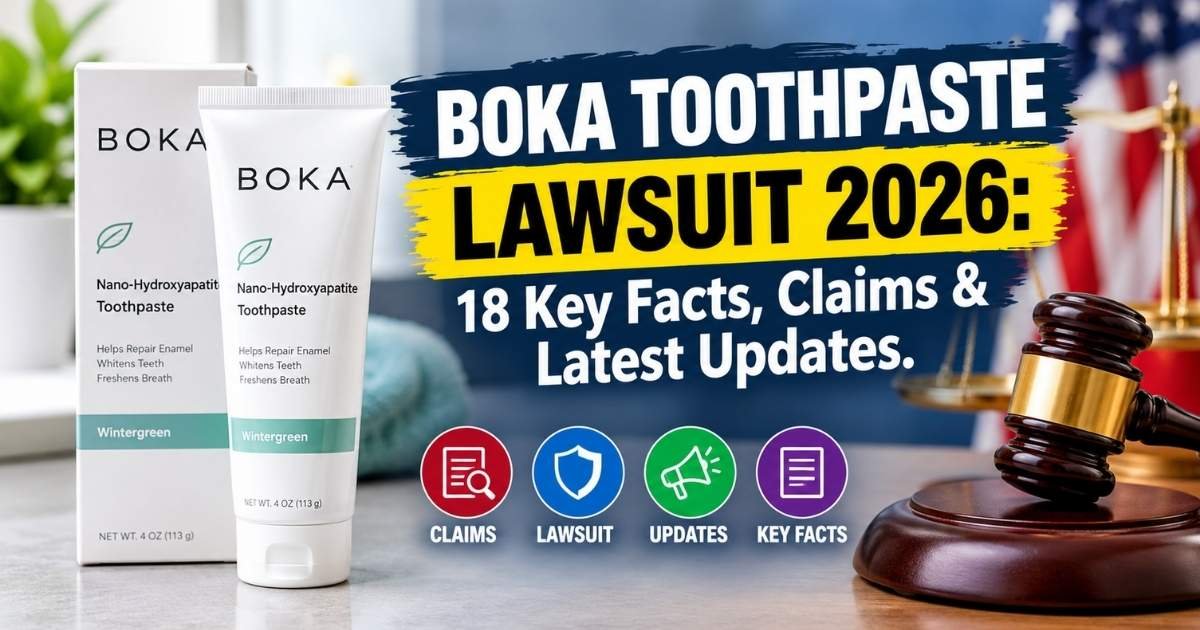

If you have searched for the Boka toothpaste lawsuit, you have probably run into a mix of confusing headlines, TikTok rumors, and law firm ads that all say something slightly different. Some claim a class action is already underway. Others say a settlement has been reached. A few even mention specific payout amounts.
Here is the reality: the situation is real, but it is more nuanced than most articles let on. This guide breaks down exactly what has happened, what has not happened yet, and what you should actually do if you bought Boka toothpaste and feel misled.
We built this article by reviewing official regulatory decisions, law firm investigation pages, and public statements from the companies involved, so you get a clear, accurate picture instead of recycled speculation.
What Is the Boka Toothpaste Lawsuit?
The phrase “Boka toothpaste lawsuit” is used online to describe a cluster of legal and regulatory issues surrounding Essor Group Inc., the company behind the Boka oral care brand. Boka markets toothpaste, mouthwash, and whitening kits built around nano-hydroxyapatite, or nHA, instead of fluoride.
The core issue is not that Boka toothpaste has been proven dangerous. It is about marketing. Critics, competitors, and consumer attorneys argue that Boka’s advertising overstated what nano-hydroxyapatite can do, specifically around remineralizing enamel and whitening teeth, without the level of scientific evidence regulators expect.
Here are the moving pieces that make up this story:
- A formal advertising challenge filed by Procter & Gamble, the maker of Crest.
- A decision from the National Advertising Division (NAD), a self-regulatory body under BBB National Programs.
- An appeal to the National Advertising Review Board (NARB).
- Ongoing investigations by consumer protection law firms exploring potential class action claims.
- Consumer complaints about ingredient transparency and trace heavy metals in independent lab testing.
It is important to separate fact from assumption here. As of this writing, no federal court has certified a class action or issued a ruling on consumer liability against Boka. What exists right now is a documented advertising dispute plus active investigations that could lead to litigation.
Boka Toothpaste Lawsuit in 2026: Where Things Stand
So where does this actually stand in 2026? Here is the honest summary.
- No certified class action lawsuit has been filed in federal court against Essor Group over Boka toothpaste as of this update.
- The National Advertising Division and National Advertising Review Board have both ruled against several of Boka’s marketing claims.
- Essor Group has publicly stated it disagrees with parts of those findings but has indicated it would consider adjusting its advertising to maintain credibility with regulators.
- Consumer law firms, including at least one national firm, have opened formal investigations and are actively collecting information from consumers who purchased Boka products.
- No settlement fund, payout schedule, or claim form currently exists.
This matters because a lot of content online implies a class action is already moving through the courts with a payout waiting for you. That is not accurate right now. What is accurate is that the groundwork for a potential lawsuit, built on the NAD and NARB findings, is already in place.
If you bought Boka toothpaste believing the marketing claims about remineralization or whitening, your best move is to hold onto proof of purchase and watch for updates, rather than assume a claim process is already open.
Latest Boka Toothpaste Lawsuit Update
The most recent significant development traces back to a formal advertising challenge, not a courtroom filing. Here is the timeline as it stands.
- Procter & Gamble challenged specific Boka advertising claims through the National Advertising Division.
- NAD issued its decision in May 2025, finding that Essor Group had a reasonable basis for stating its toothpaste contains nano-hydroxyapatite, but recommended the company stop claiming the toothpaste remineralizes and whitens teeth. NAD also flagged certain prebiotic claims tied to Boka’s mouthwash.
- Essor Group appealed that decision to the National Advertising Review Board.
- NARB upheld NAD’s findings in July 2025, recommending the same claims be discontinued.
Since that ruling, attention has shifted toward whether the advertising findings will translate into consumer litigation. Law firms reviewing the case have pointed to the NAD and NARB record as a strong evidentiary foundation for potential false advertising claims, since a neutral industry body already concluded the marketing lacked sufficient support.
Consumers should expect this story to keep evolving throughout 2026. Any real class action filing, settlement announcement, or FDA action would represent a significant escalation from where things stand today, so it is worth checking back periodically rather than relying on a single article for the final word.
Boka Toothpaste Class Action: How It Works
A lot of people searching for this topic are not familiar with how class actions actually work. Understanding the process helps set realistic expectations.
Here is the general path a consumer class action typically follows:
- Investigation phase. Law firms gather complaints, review marketing materials, and assess whether enough consumers were affected in a similar way.
- Filing. If the firm believes there is a strong case, it files a complaint in court on behalf of a named plaintiff and a proposed class of similarly situated consumers.
- Certification. A judge decides whether the case can proceed as a class action, meaning the claims are common enough across a large group to be handled together.
- Discovery. Both sides exchange evidence. This is often where internal marketing decisions, testing data, and communications come to light.
- Settlement or trial. Most consumer class actions settle before trial. A settlement typically creates a claims process, a payout formula, and a deadline for affected consumers to submit proof of purchase.
Boka’s situation is currently sitting between the investigation phase and a potential filing. The NAD and NARB decisions function almost like a pre-built evidence package that plaintiffs’ attorneys can reference, which is one reason legal interest in this case has grown quickly.
Boka Toothpaste and False Advertising Allegations
At the center of this entire story is a straightforward legal question: did Boka’s marketing create expectations its products could not support?
False advertising claims generally hinge on what a “reasonable consumer” would believe after reading a label or ad. If someone reads a phrase suggesting a product remineralizes enamel or works as a proven fluoride alternative, they reasonably expect scientific backing behind that claim.
The specific claims that drew scrutiny include statements that Boka toothpaste:
- Remineralizes tooth enamel.
- Whitens teeth through the action of nano-hydroxyapatite.
- Offers prebiotic benefits for oral microbiome health, tied to the mouthwash line.
NAD’s review found that while Essor Group could support the basic statement that its products contain nHA, the stronger efficacy claims were not adequately backed by product-specific evidence. That distinction matters a great deal in advertising law. Saying “our toothpaste contains ingredient X” is very different from saying “our toothpaste remineralizes your teeth,” and regulators hold the second claim to a much higher evidentiary standard.
The Boka Toothpaste Ingredients Controversy Explained
Boka’s entire brand identity is built around being fluoride-free. Instead of fluoride, its flagship toothpaste lines use nano-hydroxyapatite as the primary active ingredient, often alongside natural additives like xylitol, essential oils, and in some product lines, activated charcoal.
Here is why that formulation has become controversial:
- Fluoride has decades of large-scale clinical research behind it and is recognized by the American Dental Association as an effective anticaries ingredient.
- Nano-hydroxyapatite has a much shorter research history in Western markets, even though it has been used in oral care products in countries like Japan for years.
- Independent testing reports referenced in law firm investigations have raised questions about trace heavy metals in certain Boka products, though Boka has stated its raw materials are tested against California Proposition 65 limits.
- Consumers who chose Boka specifically to avoid fluoride may not have expected these additional ingredient questions.
None of this means the ingredients are confirmed to be unsafe. It means the ingredient story is more complicated than the clean, natural branding suggests, and that complexity is exactly what plaintiffs’ attorneys tend to focus on.
Boka Toothpaste Hydroxyapatite Claims Under Fire
Nano-hydroxyapatite is the ingredient at the heart of this entire dispute, so it deserves its own closer look.
Hydroxyapatite is a mineral that makes up a large portion of natural tooth enamel. The theory behind nHA toothpaste is that applying a nano-sized version of this mineral can help fill in microscopic gaps in enamel, similar to how fluoride works through a different chemical mechanism.
The problem regulators identified was not the ingredient itself. It was the gap between what the science currently supports and what the marketing implied. Specifically:
- NAD and NARB both noted that neither the FDA nor the American Dental Association has concluded that nano-hydroxyapatite remineralizes teeth in the way some Boka advertising suggested.
- The panels found that pairing strong claims with confident product imagery created an impression of proven, science-backed results that the underlying research did not fully support.
- This ruling was viewed as a landmark decision for the broader nano-hydroxyapatite toothpaste category, not just Boka, since several competing brands make similar claims.
For consumers, this is the single most important fact to understand. The controversy is about marketing precision, not a confirmed finding that the ingredient itself is harmful.
Is Boka Toothpaste Actually Safe?
This is probably the question most people actually want answered, and it deserves a direct response.
As of now, no regulatory body, including the FDA, has declared Boka toothpaste unsafe, issued a recall, or published a safety warning against it. The NAD and NARB rulings were about advertising claims, not product safety.
That said, “safe” and “as effective as advertised” are two different questions. Here is a simple way to think about it:
- Safety relates to whether normal use of the product causes harm.
- Efficacy relates to whether the product does what its marketing promises.
The current controversy is almost entirely about efficacy and disclosure, not documented safety harm. If you have used Boka toothpaste without issue, the regulatory record so far does not suggest you were exposed to a dangerous product. If you bought it specifically because you believed it matched or beat fluoride’s cavity protection based on the marketing, that is the piece under legal scrutiny.
Nano Hydroxyapatite Safety Concerns in Boka Toothpaste
Zooming out from Boka specifically, nano-hydroxyapatite as an ingredient category has been studied for years, with more consistent research coming out of countries like Japan, where it has been used in toothpaste since the 1980s.
Key points worth knowing:
- Some countries have approved nHA for use as an active anticavity ingredient in oral care products, while the United States has not given it that same formal status.
- Research on nHA safety for oral use has generally not flagged major toxicity concerns at the concentrations typically used in toothpaste.
- The bigger open question in the scientific community is comparative effectiveness against fluoride over the long term, not acute safety.
- Long term, large scale studies specific to the U.S. population remain limited compared to the decades of fluoride research.
In short, the safety conversation around nHA is less about alarm and more about a lack of the same depth of research fluoride has accumulated over decades. That gap is exactly what fuels ongoing debate among dentists, regulators, and plaintiffs’ attorneys alike.
Boka Toothpaste Side Effects and the Lawsuit Connection
Unlike some product liability lawsuits built around physical injury, the current Boka legal story is not primarily driven by widespread reports of side effects. It is driven by advertising and disclosure concerns.
That said, general side effects reported anecdotally with toothpaste products, including some Boka formulations, can include:
- Mild tooth or gum sensitivity, particularly with charcoal-based formulas.
- Minor irritation for people with specific ingredient sensitivities.
- Abrasiveness concerns tied to activated charcoal, a point some early consumer complaints raised.
If you experienced a genuine adverse reaction after using Boka toothpaste, that is a separate and potentially more serious issue than the false advertising claims discussed elsewhere in this article, and it is worth documenting with a healthcare provider. However, based on publicly available information, side effect reports are not currently the central legal argument driving the Boka investigation. The marketing and disclosure issues are.
Has the FDA Issued a Warning About Boka Toothpaste?
No. As of this writing, the FDA has not issued a public warning letter, safety alert, or recall notice specific to Boka toothpaste.
This is an important distinction many articles blur together. The NAD and NARB are not government agencies. They are part of BBB National Programs, an independent self-regulatory system the advertising industry uses to resolve disputes between competitors before things escalate to formal FTC or FDA involvement.
Here is how the oversight actually breaks down:
- The FDA regulates toothpaste based on how it is marketed, either as a cosmetic, a drug, or both, depending on the claims made.
- The FDA has not approved nano-hydroxyapatite as an official anticavity active ingredient in the United States.
- The NAD and NARB rulings were industry self-regulation, prompted by a competitor’s challenge, not a government enforcement action.
If the FDA does take formal action in the future, that would represent a significant shift from the current situation and would likely accelerate any class action momentum considerably.
Boka Toothpaste and Misleading Labels
Label language is where a lot of the legal tension concentrates. Words that sound reassuring to shoppers can carry very specific legal weight once they end up in a lawsuit.
Phrases that have drawn scrutiny in this case and in similar “clean” oral care lawsuits generally include:
- “Fluoride-free” positioned as inherently superior, without clarifying that fluoride remains the clinically established standard for cavity prevention.
- “Natural” or “clean” formulation claims that consumers may interpret as meaning safer or more effective by default.
- “Clinically proven” or “science-backed” language applied to benefits, like remineralization, that regulators found were not adequately substantiated for the specific product.
The legal argument is not that natural or fluoride-free products are automatically deceptive. It is that specific, testable claims, like “remineralizes enamel,” require specific evidence, and general brand positioning language cannot substitute for that evidence when it appears next to a concrete performance claim.
Is There a Boka Toothpaste Recall?
No product recall has been issued for Boka toothpaste as of this update. It is worth understanding why that distinction matters, because “recall” and “lawsuit” get used interchangeably online when they are very different things.
- A recall happens when a regulatory body or the company itself determines a product poses a health or safety risk and needs to be removed from shelves or corrected.
- The current Boka situation involves advertising claim disputes and legal investigations, which are separate processes from a product safety recall.
- No government agency has ordered Boka products off the market, and Essor Group has not issued a voluntary recall.
If you see content online claiming there is an active Boka toothpaste recall, treat it with skepticism unless it links directly to an official FDA recall notice or a statement from Essor Group itself.
Boka Toothpaste Settlement: What to Expect
This is where expectations need to be reset. As of this writing, there is no finalized Boka toothpaste settlement. No settlement fund exists, and no company has agreed to pay consumers as part of a resolved legal claim.
What typically happens if a case like this does progress to settlement:
- The company agrees to resolve claims without admitting wrongdoing, which is standard in most consumer class action settlements.
- A settlement administrator sets up a claims website and a defined claim period.
- Eligible consumers submit proof of purchase, or in some cases a sworn statement, to receive compensation.
- Payouts are typically modest per person, often ranging from a partial refund to a capped dollar amount per product purchased, distributed from a shared settlement fund.
If and when a real settlement is announced for Boka, it would come with an official case name, a court docket number, and a dedicated claims administrator website. Until that exists, any article promising specific dollar figures is speculating, not reporting confirmed information.
How Much Could You Get from the Boka Toothpaste Lawsuit Payout?
Because no settlement has been reached, there is currently no confirmed payout amount for Boka toothpaste claims. Any number you see quoted online right now should be treated as an estimate at best.
That said, it helps to understand the general range these types of cases tend to produce, based on comparable false advertising settlements in the personal care and consumer products space:
- Many false advertising settlements offer a partial refund per product purchased, often somewhere between a few dollars and the full purchase price.
- Claimants without a receipt are sometimes still eligible but may be capped at a lower number of qualifying purchases than those who can document their buying history.
- Total settlement funds in similar consumer product cases have historically ranged from several hundred thousand dollars to tens of millions, depending on how widespread the affected purchases were.
None of these figures are confirmed for Boka specifically. They are shared here so you understand the realistic ballpark if this situation does eventually produce a settlement, not as a promise of what you will receive.
Who Qualifies for the Boka Toothpaste Lawsuit?
Since no class has been formally certified yet, official eligibility criteria do not exist. However, based on how similar consumer protection cases are typically structured, likely eligibility factors would include:
- Purchasing specific Boka products, most likely toothpaste marketed with remineralization or whitening claims, within a defined date range.
- Buying the product in the United States, since the NAD and NARB proceedings and any resulting litigation would center on U.S. advertising law.
- Being able to show some form of proof of purchase, such as a receipt, order confirmation, or credit card statement, though some settlements allow sworn statements instead.
If you purchased Boka toothpaste based on claims about remineralization, whitening, or its status as a proven fluoride alternative, you likely fall within the group any future case would target, even though a formal claims process does not exist yet.
How to File a Boka Toothpaste Claim
Since there is no active settlement or certified class action right now, there is technically no claim form to file. That does not mean there is nothing productive to do while you wait.
Here is a practical checklist:
- Locate your receipts or order history. Check email confirmations, Amazon order history, or retailer receipts for Boka toothpaste purchases.
- Save the product packaging. Photograph the label, ingredient list, and any marketing claims printed on the box before you throw it away.
- Screenshot online marketing. If you remember which website page, ad, or social media post influenced your purchase, save it while it is still accessible.
- Contact a consumer protection law firm. Several firms are actively collecting information from Boka purchasers as part of ongoing investigations, which is a normal and free first step.
- Set a reminder to check back. Bookmark reliable legal news sources or the investigating law firm’s page so you notice when, and if, an actual case or settlement is announced.
Taking these steps now puts you in a strong position to act quickly if a formal claims process opens later.
Boka Toothpaste Lawsuit Deadline: Key Dates
Because no lawsuit has been certified and no settlement has been reached, there is no official claim filing deadline right now. Any specific date you see mentioned online for a “Boka toothpaste lawsuit deadline” is not tied to a real, confirmed settlement unless it links to an actual court-approved claims administrator page.
There is, however, a separate and very real deadline concept worth understanding: the statute of limitations. This is the legal time limit within which a consumer can bring a claim, and it varies by state and by the type of legal claim involved, often ranging from two to four years for consumer protection and false advertising claims, though some states allow longer.
If you believe you have a personal claim related to your Boka purchase, do not wait for a class action to be announced before consulting an attorney, since your individual state deadline could be shorter than the broader case timeline.
Frequently Asked Questions
Is Boka toothpaste currently the subject of a class action lawsuit?
No certified federal class action has been filed as of this update. Law firms are actively investigating the claims, and advertising regulators have already ruled against some of Boka’s marketing statements.
Who owns the Boka toothpaste brand?
Boka oral care products are marketed and sold by Essor Group Inc., which is the company named in advertising disputes and consumer investigations related to the brand.
Did Procter & Gamble sue Boka?
P&G did not file a traditional lawsuit. It challenged Boka’s advertising claims through the National Advertising Division, a self-regulatory industry process, which ruled largely in P&G’s favor.
Is nano-hydroxyapatite toothpaste safe to use?
Available research has not identified major safety concerns with nano-hydroxyapatite in toothpaste at typical concentrations, though long-term, large-scale studies remain more limited than those for fluoride.
Has the FDA recalled Boka toothpaste?
No. There is no FDA recall or public safety warning issued for Boka toothpaste as of this article’s publication.
Can I still join a Boka toothpaste lawsuit if one is filed later?
Yes, in most cases affected consumers can join or file a claim once a class action is certified or a settlement is announced, provided they meet the eligibility criteria and act within the claims deadline.
What should I do with my Boka toothpaste right now?
There is no safety-based reason to stop using it based on current public information, though you may choose to save your receipts and packaging in case a formal claims process opens later.
How much money could I get from a Boka toothpaste settlement?
No settlement amount has been confirmed. Similar consumer product false advertising settlements have historically ranged from a few dollars to the full purchase price per qualifying product.
Where can I check for official updates on this case?
Reliable sources include the investigating law firm’s official case page, BBB National Programs’ public decision archive, and any future FDA or court filings tied to Essor Group.
Conclusion
The Boka toothpaste lawsuit story is still being written. What we know for certain is that Procter & Gamble challenged Boka’s marketing claims, that independent advertising regulators sided against several of those claims, and that consumer law firms are now investigating whether that record supports a formal class action. What we do not know yet is whether a lawsuit will actually be filed, what a settlement might look like, or when any of it might resolve.
If you purchased Boka toothpaste and feel the marketing overstated what the product could do, the smartest move right now is patience paired with preparation. Save your receipts, hold onto the packaging, and keep an eye on updates from consumer protection attorneys rather than acting on unverified payout numbers or deadlines circulating online. As this case develops through 2026, staying informed with accurate, sourced information will matter far more than chasing the loudest headline.

Daniel Christopher is the founder and administrator of LawsIps.com. He is passionate about making legal information easier to understand through clear, well-researched, and reader-friendly content. His goal is to help readers stay informed about legal topics, court updates, consumer rights, and educational legal resources in simple language.