
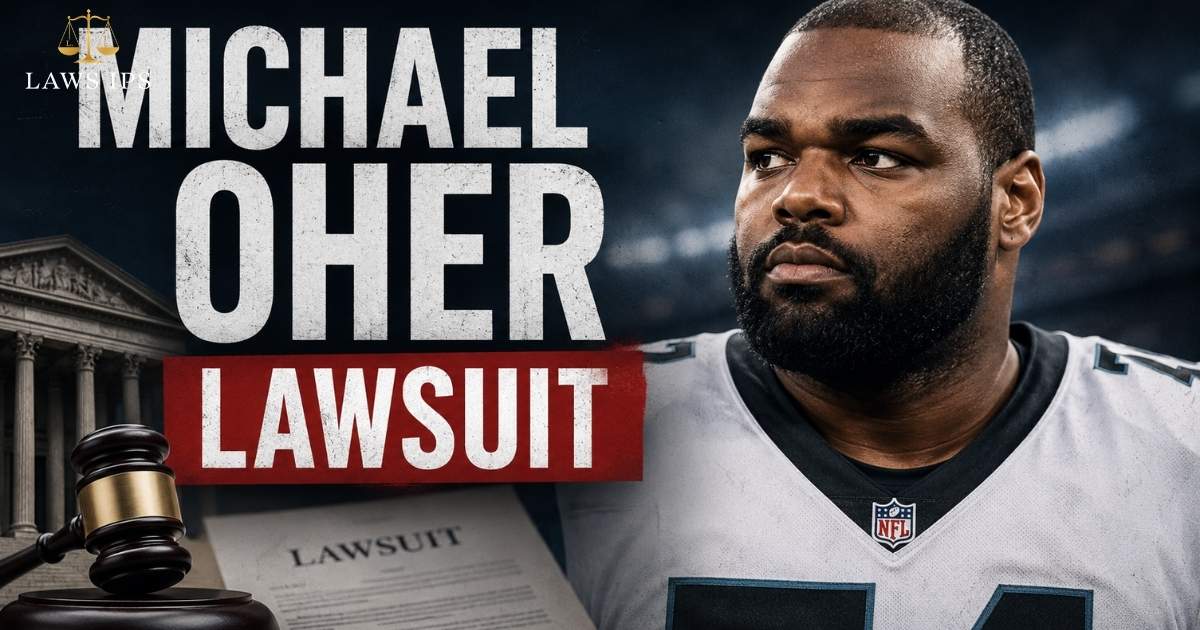

One of the most shocking legal stories in recent sports and entertainment history finally came to a close in 2026. Michael Oher, the former NFL offensive tackle whose life inspired the Oscar-winning film The Blind Side, filed a lawsuit in August 2023 that turned a beloved Hollywood story upside down. What looked like a heartwarming tale of a family lifting a young man out of poverty became a deeply contested legal dispute about deception, financial exploitation, and a conservatorship that Oher says he never truly understood.
By 2026, the case reached its conclusion. The conservatorship was terminated. A private settlement was reached. And the legal conversation it sparked continues to reshape how courts and lawmakers think about guardianship laws across the United States.
Here is a full breakdown of everything that happened, what the outcome means, and where things stand right now.
Michael Oher Lawsuit
The Michael Oher lawsuit refers to the legal petition filed in Shelby County Probate Court in Memphis, Tennessee, in August 2023. Oher alleged that Sean and Leigh Anne Tuohy, the family that took him in as a teenager, never legally adopted him. Instead, he claimed they had him sign conservatorship papers in 2004 when he was just 18 years old, telling him it was the same as adoption.
Under the conservatorship arrangement:
- The Tuohys held legal authority to enter contracts on Oher’s behalf
- They could make financial decisions without his direct consent
- Oher’s name, image, and likeness were effectively under their control
Oher said in court filings that he discovered the truth in February 2023, when he realized the papers he had signed nearly two decades earlier were not adoption documents. The lawsuit described this as a calculated deception that allowed the Tuohys to profit from his life story through The Blind Side film, which grossed over $309 million worldwide, without giving him his fair share.
The core legal claims included:
- Fraud and misrepresentation regarding the nature of the conservatorship
- Breach of fiduciary duty by the Tuohys as his legal conservators
- Exploitation of his name and likeness without proper compensation
- Seeking an accounting of all profits earned from his story
The lawsuit also demanded that the conservatorship be ended entirely and that the Tuohys be prohibited from using Oher’s name or likeness in future commercial endeavors.
Michael Oher Lawsuit Update
From the moment the petition was filed, the case moved through several distinct phases. Here is how it progressed:
August 2023: Oher filed the petition in Shelby County Probate Court. Media coverage was immediate and intense, as the lawsuit directly challenged the narrative millions of people knew from the 2009 film.
September 2023: The Tennessee probate court judge terminated the conservatorship, stating it was troubling that such an arrangement had ever been placed over a person who had no documented disability. This was a significant early win for Oher.
Late 2023 to 2024: Both parties entered the discovery phase. Attorneys exchanged financial documents, bank records, royalty statements, and contracts. The Tuohys were required to submit a formal accounting of all money received in connection with the Blind Side story.
2024: Mediation sessions took place as both sides sought to avoid a lengthy public trial. Court records in Shelby County showed no new active filings during this period, suggesting negotiations were progressing privately.
2025: The Tennessee Court of Appeals affirmed the earlier conservatorship termination ruling. Additionally, Oher testified before the Tennessee General Assembly’s Judiciary Committee in support of conservatorship reform legislation.
2026: The case officially concluded with a confidential financial settlement between both parties.
Did Michael Oher Win His Lawsuit
In practical terms, Michael Oher achieved significant victories through this lawsuit, even if neither side formally declared a winner in court.
Here is what Oher accomplished:
- The conservatorship that had governed his financial and legal affairs since 2004 was permanently terminated
- He secured a private financial settlement from the Tuohy family
- He forced a public accounting of the money connected to his life story
- He sparked national and legislative attention to conservatorship abuse
The termination of the conservatorship alone was a landmark outcome. The judge noted that the arrangement should never have been created for a capable adult without any documented disability. That ruling validated Oher’s core argument that the conservatorship was inappropriate and potentially exploitative.
The financial settlement, while confidential, suggests that the Tuohys chose to resolve the financial claims rather than face a public trial. That decision is widely seen as an acknowledgment of the legal risk they faced.
So while Oher did not win a court verdict on every claim, the outcome of this lawsuit was clearly in his favor.
Michael Oher Lawsuit 2026
The final chapter of the Michael Oher lawsuit closed in 2026. After nearly three years of legal proceedings that included a petition filing, a conservatorship termination hearing, extensive discovery, and private mediation sessions, both parties announced the matter had been resolved.
The 2026 resolution came through a confidential settlement agreement. No trial took place. The terms of the financial settlement were not made public, and both parties signed a non-disclosure agreement preventing them from discussing the specific dollar amounts involved.
What is confirmed about the 2026 resolution:
- The conservatorship remains permanently terminated
- A private financial settlement was reached between Oher and the Tuohys
- No appeals were filed by either side
- Court records in Shelby County showed no active filings, confirming the case is closed
- The settlement prevents either party from relitigating the same claims
Oher has continued to speak publicly about his experience through media interviews and his memoir. These public statements fall outside the scope of the settlement’s restrictions and represent protected speech.
Michael Oher Tuohy Lawsuit
The relationship between Michael Oher and the Tuohy family was at the heart of this entire legal battle. Sean and Leigh Anne Tuohy first brought Oher into their home when he was a teenager living in Memphis, Tennessee, struggling with poverty and an unstable home environment.
Their relationship was depicted as an adoption story in both the 2006 Michael Lewis book The Blind Side: Evolution of a Game and the 2009 film of the same name. Leigh Anne Tuohy, played by Sandra Bullock in the film, was portrayed as a fierce maternal figure who fought to give Oher a real home.
The lawsuit shattered that narrative publicly.
In their legal responses, the Tuohys:
- Denied ever intending to adopt Oher in a legal sense
- Said they referred to him as a son in a “colloquial sense” only
- Claimed the conservatorship was established to help with his college eligibility
- Maintained they divided Blind Side profits equally among five people, including Oher
- Produced court documents showing Oher received approximately $138,000 in film proceeds between 2007 and 2023
Oher’s legal team countered that receiving $138,000 over sixteen years from a film that earned hundreds of millions was itself evidence of financial exploitation, particularly since Oher allegedly signed away the rights to his story in a 2007 contract without any explanation or fair compensation.
Sean Tuohy told media outlets the family was “devastated” by the lawsuit and insisted they never profited at Oher’s expense.
Michael Oher Conservatorship Case
The conservatorship at the center of this case was established in 2004 when Oher was 18 years old. Conservatorships are legal arrangements typically reserved for individuals who cannot manage their own affairs due to a disability, illness, or cognitive impairment.
Oher had no such disability.
The Tennessee probate court judge who terminated the conservatorship in September 2023 acknowledged that this arrangement was unusual and concerning given that Oher was a healthy adult at the time it was created. The judge’s decision to end it immediately underscored the questionable legal basis on which it had been established.
Key facts about the conservatorship:
- Established in 2004 when Oher was 18 years old
- Gave the Tuohys authority to sign contracts on his behalf
- Remained in place for nearly 20 years
- Was terminated by a Tennessee judge in September 2023
- Termination was affirmed by the Tennessee Court of Appeals in April 2025
The case drew direct comparisons to Britney Spears’ high-profile conservatorship battle, which also involved a capable adult fighting to regain legal control of their own life and finances.
What Happened With Michael Oher Lawsuit
To summarize the full timeline of events in the Michael Oher lawsuit:
- February 2023: Oher discovers that the papers he signed in 2004 were conservatorship documents, not adoption papers.
- August 2023: Oher files a petition in Shelby County Probate Court against Sean and Leigh Anne Tuohy.
- September 2023: Tennessee judge terminates the conservatorship, finding it should never have existed.
- Late 2023: Tuohys file legal responses denying all wrongdoing and claiming profits were divided equally.
- 2024: Both parties enter discovery; financial records, royalty statements, and contracts are exchanged. Mediation begins.
- April 2025: Tennessee Court of Appeals affirms the conservatorship termination.
- September 2025: Oher testifies before Tennessee legislators in support of guardianship reform legislation.
- 2026: The case concludes with a private financial settlement. The matter is closed.
Michael Oher Lawsuit Outcome
The final outcome of the Michael Oher lawsuit can be summarized in three key points:
Point 1: Conservatorship Terminated. The Tuohys no longer have any legal authority over Oher’s finances, name, or business dealings. This outcome was secured in September 2023 and affirmed on appeal in 2025.
Point 2: Private Financial Settlement. The financial claims were resolved through a confidential agreement. The exact amount paid to Oher has not been publicly disclosed. Neither side claimed a complete legal victory on the financial claims.
Point 3: Legal Legacy. The case prompted Tennessee and other states to review and reform conservatorship laws, ensuring stronger protections for individuals who may not fully understand what they are signing.
Michael Oher Settlement
The settlement reached between Michael Oher and the Tuohy family is confidential. No verified dollar amount has been publicly confirmed by either party or their legal representatives.
What is known about the settlement:
- It was reached through private mediation rather than a court trial
- Both parties signed a non-disclosure agreement covering financial terms
- The settlement resolved all outstanding financial claims from the original 2023 petition
- Neither side returned to court after the settlement was finalized
- Court records confirm the case is fully closed with no pending motions or appeals
The decision to settle rather than go to trial was significant. A public trial would have required the Tuohys to testify under oath about their financial dealings, the full accounting of Blind Side proceeds, and their understanding of the conservatorship arrangement. Avoiding that public testimony suggests both sides had reasons to prefer a private resolution.
How Much Did Michael Oher Sue For
Oher’s original petition did not specify a fixed dollar amount in damages. Instead, it asked the court to:
- Terminate the conservatorship immediately
- Require the Tuohys to provide a sworn accounting of all money earned through deals connected to his name and story
- Order the Tuohys to pay Oher any money that was owed to him but withheld
- Prohibit the Tuohys from future use of his name, image, or likeness
Court documents revealed that the Tuohys received payments connected to The Blind Side film and book. According to documents filed by the Tuohy family, the film proceeds were divided equally five ways among Sean, Leigh Anne, their two children, and Oher, with each person receiving approximately $138,000.
Oher’s legal team disputed this accounting, particularly regarding a 2007 contract that allegedly transferred his story rights without proper compensation. The total financial claims, including potential royalties, speaking engagement profits, and other earnings connected to the Blind Side brand, were never publicly quantified during the proceedings.
The final settlement amount remains private.
Tuohy Family Lawsuit Response
The Tuohy family pushed back firmly against Oher’s allegations throughout the legal proceedings. Their responses included:
- A formal court filing in September 2023 stating there was “never an intent” to adopt Oher
- Claims that they referred to Oher as a son only in an informal, non-legal sense
- Financial accounting documents showing Oher received his equal share of film proceeds
- Public statements expressing hurt and devastation at being sued by someone they considered family
- Accusations, in later court filings, that Oher’s lawsuit amounted to a form of extortion
Sean Tuohy made media appearances defending the family’s actions. He insisted that the conservatorship was not their idea and that Oher’s legal team was distorting the facts. The Tuohys maintained they loved Oher and had always treated him like a member of the family, even if the formal legal relationship was not adoption.
Their legal strategy focused on challenging the financial exploitation claims by providing documentation of the payments made to Oher and arguing that he had always been aware of the nature of the conservatorship.
Michael Oher Blind Side Lawsuit
The Blind Side lawsuit, as it became widely known, raised questions that went far beyond one man’s legal dispute. It forced a cultural reckoning about the accuracy of a film that had been celebrated for over a decade.
The 2009 film portrayed Oher as a young man with limited intellectual capacity who needed the Tuohy family to guide him through life and football. Oher has spoken publicly about how this portrayal damaged his reputation and likely affected his NFL career prospects. He told interviewers that NFL scouts questioned whether he could read a playbook because of how he was depicted on screen.
The lawsuit also raised important questions about:
- The ethical responsibilities of filmmakers and authors when telling real people’s stories
- Whether individuals have adequate legal protection when signing documents they may not fully understand
- How conservatorships can be misused to extract financial benefit from capable adults
- The obligations of Hollywood studios when profiting from real-life narratives
The Blind Side film remains widely streamed, though the closing text that described Oher as playing for the Baltimore Ravens has long since become outdated.
Did Michael Oher Get Money From Blind Side
According to court documents filed by the Tuohy family, Oher received approximately $138,000 from The Blind Side film proceeds. This amount represented one-fifth of the total, as the family claimed proceeds were divided equally among five people: Sean Tuohy, Leigh Anne Tuohy, their daughter Collins, their son Sean Jr., and Michael Oher.
The payments occurred over a period from 2007 to 2023, with the most recent payment being approximately $8,480.
Oher’s legal team argued this amount was grossly inadequate given:
- The film earned over $300 million worldwide at the box office
- The story was specifically about Oher’s life
- A separate 2007 contract allegedly transferred the rights to his story without adequate compensation
- Leigh Anne Tuohy built a speaking career partly based on the Blind Side story
Whether the $138,000 figure represents fair compensation for the use of his life story was one of the central disputes the lawsuit sought to resolve. The private settlement that ended the case suggests additional financial compensation was provided to Oher, though the amount remains confidential.
Michael Oher Case Resolution
The Michael Oher case reached full resolution in 2026. Here is what the resolution looked like in practice:
- All court proceedings concluded with no pending filings
- The conservatorship termination order remains permanent and in effect
- A private settlement resolved the financial claims
- No appeals were filed by either party
- Both sides moved forward without returning to court
The broader legacy of the case resolution extends into legislative action. Oher’s testimony before Tennessee lawmakers in September 2025 contributed to the passage of the Guardianship Reform Act, which took effect on January 1, 2026. The legislation introduced stronger transparency requirements, mandatory periodic reviews, and independent legal counsel for conservatees in Tennessee.
Michael Oher Legal Case Status
As of June 2026, the Michael Oher legal case status is fully closed. There are no active court proceedings, no pending motions, and no reported appeals from either party.
The key legal milestones that defined the final status:
- Conservatorship terminated: September 2023
- Conservatorship termination affirmed on appeal: April 2025
- Financial settlement finalized: 2026
- Case docket: Closed in Shelby County Probate Court
Oher is legally free, financially settled, and no longer subject to any conservatorship. He has continued to speak about his experience publicly, and his advocacy for conservatorship reform has become a lasting part of his public identity beyond football.
Frequently Asked Questions
What was the Michael Oher lawsuit about?
Oher sued the Tuohy family claiming they tricked him into a conservatorship instead of adopting him, then used that legal control to profit from his life story through The Blind Side.
Did Michael Oher win his lawsuit?
Oher achieved two major wins: the conservatorship was permanently terminated, and he reached a private financial settlement with the Tuohys.
What happened to the Tuohy family after the lawsuit?
The Tuohys denied wrongdoing throughout the case and largely withdrew from public attention after the settlement was finalized.
How much did Michael Oher receive from The Blind Side?
Court documents show Oher received approximately $138,000 from film proceeds. Additional compensation through the private settlement is confidential.
Is the Michael Oher lawsuit over?
Yes. The case is fully closed as of 2026, with no pending court filings or appeals from either party.
What is a conservatorship and why was it controversial?
A conservatorship gives one party legal control over another’s finances and decisions. It is typically used for individuals with disabilities. Oher had no disability, making the arrangement legally unusual and the source of the lawsuit.
Did the Blind Side lawsuit change any laws?
Yes. Oher’s advocacy contributed to the Tennessee Guardianship Reform Act, which took effect January 1, 2026, requiring stronger protections for conservatees.
Did the Tuohy family adopt Michael Oher?
No. Court proceedings and the Tuohys’ own legal responses confirmed that Oher was never legally adopted. The conservatorship provided legal authority but no formal familial relationship.
Final Thoughts
The Michael Oher lawsuit was never just about one man and one family. It was about what happens when trust is broken at the most personal level, when a legal document quietly changes the terms of a relationship without full understanding or consent, and when a celebrated story turns out to have a far more complicated truth underneath.
Oher walked away from this case with his legal freedom fully restored and a private financial resolution in his favor. He also walked away with something harder to quantify: the public acknowledgment that his story had been misrepresented, that he had been depicted in ways that hurt his career and his dignity, and that the feel-good narrative others profited from came at a real cost to him.
For anyone who watched The Blind Side and believed they understood what happened, the lawsuit and its 2026 conclusion are a reminder that real life rarely fits neatly inside a two-hour film. Michael Oher’s story is more complicated, more painful, and ultimately more his own than any Hollywood production could fully capture.
The case is closed. But its impact on conservatorship law, athlete rights, and the ethics of storytelling will continue to be felt for years to come.

Daniel Christopher is the founder and administrator of LawsIps.com. He is passionate about making legal information easier to understand through clear, well-researched, and reader-friendly content. His goal is to help readers stay informed about legal topics, court updates, consumer rights, and educational legal resources in simple language.