


Class action settlement 2026 is not one payout, and treating it as one payout causes most reader errors. It is a calendar of different cases, with different classes, deadlines, proof rules, funds, and payment dates.
General information only follows here, and it is not legal advice. A settlement is not an admission of wrongdoing unless a court document says so, and an allegation in a lawsuit is not a court finding.
Deadlines were checked in research on October 25, 2026, and they must be checked again on each official settlement site before filing. Aggregator lists change fast, and a deadline that was open last week can close without warning.
No claim form should be filed on an aggregator link alone, without matching the case name, administrator, and official site. That single check prevents most fake settlement losses.
Verified Calendar: Open Settlements Most Readers Can Actually File
Start with deadline, not with fund size, since a large fund with a missed deadline pays nothing. A small flat payment filed on time is worth more than a large maximum filed late.
Check proof tier next, since no proof, notice ID, and documented tiers work differently. A basic claim may need only a sworn statement, while a higher tier may need receipts, statements, or a mailed Claim ID.
Check official site last in your own workflow, but first in trust, since only the administrator site and court docket can confirm a deadline, a class definition, and a payment method. Aggregator dates are a starting point, never a final source.

| Settlement, as reported | Fund, as reported | Payout, as reported | Deadline, as reported | Proof, as reported |
| Consumer Indirect Purchaser Pork Litigation | $117 million | Pro rata share | October 29, 2026 | No documentation in aggregator summary, verify on official site |
| Bestway above ground pool | $15 million | $40 no proof, or 10 percent with proof | October 30, 2026 | No receipt for $40, proof for higher tier |
| ConnectOnCall data breach | $4.95 million | $75 flat, plus monitoring in summary | November 2, 2026 | Sworn statement in aggregator summary |
| Generic drug price fixing, combined | $533 million in aggregator summaries | Pro rata, depends on claims and net fund | November 9, 2026 | Varies by drug and purchase, verify on official site |
| CVS digital privacy | $20.5 million | Up to $10 | November 16, 2026 | No proof in aggregator summary, access before July 27, 2026 |
| Dr. Squatch natural labeling | Fund not stated in fetched summary | 50 cents per product, up to $12.50 | November 27, 2026 | No proof in aggregator summary |
| Apple Siri, Landsheft v. Apple | $250 million | $25 base, up to $95 per device | December 21, 2026 | Serial number or device identifier, no receipt in secondary sources |
| Kroger prescription drug pricing | $17 million | Varies, proof over $8,000 estimated out of pocket | December 21, 2026 | No proof under $8,000 in secondary summary, administrator may ask later |
| Non-Bank ATM surcharge, Visa and Mastercard | $167.5 million | Up to $60 in one calendar summary | February 10, 2027 | No proof in calendar summary, verify on official site |
If you have ten minutes, file these checks first
- Match your purchase, use, or account to a class definition, including product, date range, state, and personal use versus resale, before starting a form.
- Note the claim deadline, opt out deadline, and objection deadline separately, since opt out and objection dates are usually earlier than the claim deadline.
- Choose the proof tier you can support truthfully, rather than the highest tier, since a false attestation can lead to denial and, in serious cases, legal risk.
- Save the confirmation page, claim number, and payment method after filing, since status checks later need those details.
- Set a calendar reminder for final approval, distribution, and check void dates, since payment usually arrives months after filing.
How a Class Action Settlement Works, in Plain English
A class action lets one or more plaintiffs sue on behalf of a larger group with similar claims. A federal class action generally follows Rule 23, which sets requirements for class treatment and settlement approval.
A settlement class is a group defined in a settlement agreement, often for settlement purposes only. Membership usually depends on the settlement terms, not on general interest in a brand or product.
Class counsel are lawyers already hired for the class, and they are usually paid from the settlement fund, subject to court approval, not out of an individual claimant’s pocket at filing. Typical fee ranges in secondary sources are 25 to 33 percent, but the approved amount varies by case.
Settlement administrator is a neutral third party appointed by the court to send notice, run the claim website, review claim forms, and issue payments. Common administrators in this research include Epiq, Kroll, Angeion, Verita Global, JND, and Rust Consulting.
Stages from filing to payment
Preliminary approval lets notice and the claim period begin, but it does not make a settlement final. Claims can open after preliminary approval, while payment still waits for later stages.
Notice tells likely class members about the settlement, the class definition, the deadlines, and the claim process, by mail, email, or publication, depending on available records. Missing a notice does not always mean missing eligibility, but it can mean missing a Claim ID.
Claim filing is the step that turns class membership into a payment request, for settlements that require a claim form. Some settlements pay automatically from company records, while most consumer settlements in this calendar require a form.

Final approval hearing, also called a fairness hearing, is when a judge decides whether the settlement is fair, reasonable, and adequate. Objections are considered at that stage, and appeals can follow final approval.
Distribution follows final approval, claim review, and appeal resolution, with payments issued by the administrator in the method chosen on the form. Distribution can take months, and some settlements pay over years in installments.
Opt out, object, and file a claim, decision table
| Choice | What it means | Effect on payment |
| File a claim | Submit a valid claim form before the deadline, with the required attestation or proof | Eligible for a payment if approved, subject to pro rata and fund rules |
| Do nothing, stay in class | Remain a class member without filing, for a claim form settlement | Usually forfeits a payment, while still being bound by settlement release terms, check the notice |
| Opt out, exclusion | Remove yourself from the settlement class by the exclusion deadline | No payment from that settlement, preserves a separate lawsuit right, subject to law and deadlines |
| Object | Stay in the class but tell the court in writing why the settlement should not be approved, by the objection deadline | No payment guarantee, objection is considered at final approval |
Release terms matter, since staying in a class usually means releasing covered claims against the defendant, even if you do not file. Opt out deadlines are therefore important, and they should not be ignored while focusing only on the claim deadline.
October 2026 Deadlines: Pork and Bestway
October deadlines are the most urgent in research on October 25, 2026, since Pork closes October 29 and Bestway closes October 30. A reader who delays by a week can miss both, even with a valid purchase.
Pork indirect purchaser settlement, with a $117 million fund in aggregator summaries, covers raw pork purchases at grocery stores for personal use, in a class period from June 28, 2014 to June 30, 2018, in 24 states in one summary. State list, product scope, and official site must be checked, since indirect purchaser classes are state specific in complex ways.
Pork payout is pro rata, which means the final amount depends on the net fund and the number of valid claims, not on a fixed per person figure. A reader should not expect a fixed amount from a pro rata fund, and should file only if the purchase and state fit the class definition truthfully.
Bestway pool settlement, with a $15 million fund, covers Bestway branded pools 48 inches or taller, sold from 2008 through 2024, with compression straps outside the support legs. Models in summaries include Power Steel, Steel Pro, and Coleman Power Steel, bought new from a retailer for personal use, not resale, one claim per household in one summary.
Bestway payout tiers are $40 cash without a receipt, or 10 percent of the purchase price with valid proof of purchase, in aggregator and secondary summaries. A receipt is not required for the basic $40 option, but the claim still needs product information and a signed, valid claim form, according to secondary summaries.
Bestway allegation, in secondary summaries, is that the pool design and build, with compression straps outside vertical support legs, created a potential drowning hazard. That allegation is a lawsuit claim, not a court finding in the settlement summaries, and Bestway’s position should be checked in settlement documents.
November 2026 Deadlines: Data Breach, Privacy, Fees, and Drugs
November is the largest deadline cluster in this calendar, with data breach, privacy, product, fee, and antitrust settlements closing within weeks of each other. A reader with several possible claims should file in deadline order, not in fund size order.
ConnectOnCall data breach settlement, with a $4.95 million fund in aggregator summaries, offers $75 in one summary, plus medical data monitoring in another summary, with a November 2, 2026 deadline. Class context in summaries is private information possibly affected in a data incident from February 16 to May 12, 2024, with an after hours telehealth communication element to verify on the official site.
CVS digital privacy settlement, with a $20.5 million fund in aggregator summaries, offers up to $10, with a November 16, 2026 deadline. Class context in summaries is living individuals who accessed CVS digital properties, including cvs.com, cvshealth.com, and the CVS app, in the United States before July 27, 2026, with the exact tracking allegation to verify on the official site.
Dr. Squatch natural labeling settlement offers 50 cents per product, up to $12.50, without proof of purchase in aggregator summaries, with a November 27, 2026 deadline. Class context in summaries is products labeled natural bought between November 1, 2018 and August 29, 2026 in one featured summary, and between 2018 and 2026 in another summary, so the exact class period must be checked on the official site.
Generic drug price fixing settlements, with $533 million combined in aggregator summaries, include Sun Pharmaceutical and Taro at $200 million, and Sandoz and Fougera at $275 million, in one mainstream summary, with a November 9, 2026 deadline in aggregator summaries. Drugs in summaries include generic versions of Prozac, Flonase, and Adderall, bought between May 1, 2009 and December 31, 2019, for personal use, not for resale, with third party payor rules to verify.
Other November settlements, aggregator reported, verify before filing
- Levoit HEPA settlement, $15 million in aggregator summary, $10 claim in one headline, November 3, 2026 deadline, for Core or EverestAir purifiers or replacement filters with True HEPA, HEPA, or H13 language, verify on official site.
- Kia window regulator settlement, claims made up to $400 per repair in aggregator summary, November 23, 2026 deadline, for 2016 and 2017 Optima and Sportage owners or lessees, with repair records to verify.
- Neutrogena Skin360 BIPA settlement, $4.7 million in aggregator summary, November 25, 2026 deadline, for Illinois users who performed a skin assessment, with Illinois BIPA rules to verify.
- Forbes website tracking settlement, $10 million in one deadline summary, November 9, 2026 deadline, California context in summary, with class definition not confirmed in that summary, so official site check is essential.
- LSC Lab data breach settlement, up to $300 per claim in one calendar summary, November 24, 2026 deadline, with the highest payout callout in that calendar, verify fund, class, and proof tier on official site.
- GoodRx privacy settlement, listed in one calendar with a December 29, 2026 deadline, with payout and class details not stated in fetched calendar text, verify on official site before any filing.
December 2026 Deadlines: Apple Siri, Kroger, and Equifax
December deadlines include the most famous case in this calendar, Apple Siri, plus Kroger prescription pricing, with a longer payment wait after filing. Final approval hearings in early 2027 mean payment will not arrive in December, even for timely claims.
Apple Siri settlement, Landsheft v. Apple Inc., covers United States buyers of iPhone 15 Pro, iPhone 15 Pro Max, and iPhone 16 models, including 16, 16e, 16 Plus, 16 Pro, and 16 Pro Max, bought between June 10, 2024 and March 29, 2025. Purchase must have been for personal or professional use, not resale, in secondary summaries, with a separate claim for each eligible device.
Apple Siri allegation, in secondary summaries, is that Apple promoted Apple Intelligence, including a more personal Siri with personal context understanding and on screen awareness, as available in June 2024, while those features did not ship until June 2026 in one summary. Apple denies wrongdoing, and the settlement is not an admission of liability, according to settlement summaries.
Apple Siri fund and payout are $250 million before deductions for notice, administration, taxes, fees, costs, and service awards, with a base payment of $25 per eligible device, rising pro rata up to $95 per device if few claims are filed, or falling if many claims are filed. The $95 figure is a ceiling, not a guarantee, and the $25 figure is a presumptive base in secondary summaries, not a final amount.
Apple Siri filing details, in secondary summaries, include a serial number or another device identifier, with no receipt required, plus contact details, a Claim ID and PIN if received, and a payment choice of check, PayPal, Venmo, or ACH. Claims opened September 21, 2026 in secondary summaries, with a December 21, 2026 deadline, and a final approval hearing on February 24, 2027, with distribution after that hearing.
Apple Siri administrator, in secondary summaries, is Verita Global, with an official site named smartphoneaisettlement.com in one secondary source. That site name should be verified against the court docket and ClassAction.org before filing, since lookalike domains are a known scam risk for high profile cases.
Kroger and Equifax, December deadlines to verify
Kroger prescription drug pricing settlement, with a $17 million fund in a secondary summary, has a December 21, 2026 claim deadline, an October 22, 2026 exclusion deadline, and a January 11, 2027 fairness hearing in that summary. Payout options in that summary include PayPal, Venmo, Zelle, ACH, virtual prepaid card, and paper check, with payments expected about 150 days after final approval, provided there are no appeals.

Kroger proof rule, in that secondary summary, is no proof for estimated out of pocket amounts under $8,000, with documentation required at $8,000 or more, and the administrator may request documentation later even for lower amounts. Fund breakdown in that summary includes administration up to $352,000, fees up to $5,666,666.67, expenses up to $610,325.71, and service awards up to $5,000 each, with remaining funds for approved claimants.
Kroger allegation, in that secondary summary, is that Kroger failed to include Savings Club prices when reporting usual and customary prescription prices to insurers, which plaintiffs claimed may have caused insured customers to pay more. Kroger denies wrongdoing but agreed to settle to avoid uncertainty, expense, and trial, according to that summary.
Equifax credit score error settlement, in aggregator summaries, offers up to $280, with a December 28, 2026 deadline, for people who received a notice about a 2022 coding error, using a claim number and PIN from that notice. That summary is aggregator reported only in fetched text, so the official site, class definition, and notice requirement must be checked before filing.
February 2027 Deadline: Non-Bank ATM Surcharge
Non-Bank ATM surcharge settlement, with a $167.5 million fund in calendar and guide summaries, covers fees paid at independent ATMs, in convenience stores, bars, gas stations, and similar locations, rather than bank owned ATMs, between 2007 and 2026 in one guide summary. That long class period means many readers may have paid a qualifying fee without remembering a specific transaction.
ATM payout in one calendar summary is up to $60, with a February 10, 2027 deadline, and a no proof tag in that calendar. That maximum and proof tag should be verified on the official site, since ATM fee settlements often use account records, fee records, or attestation rules that vary by subclass.
ATM filing advantage is time, since a February 2027 deadline gives readers months to check bank statements, ATM receipts, and account history, if records are available. A reader should still file early, since a deadline extension should never be assumed, and a February deadline can be missed during holiday and tax season distractions.
Settlements by Type: Privacy, Breach, Fees, Products, Antitrust
Type matters for proof and payout, since privacy cases, data breach cases, fee cases, product cases, and antitrust cases use different harm models. A flat payment model, a documented loss model, and a pro rata model should not be compared as if they were the same.
Privacy and website tracking
Privacy settlements in this calendar include CVS digital privacy, Forbes website tracking, and GoodRx privacy in calendar summaries, plus Flo health app privacy in October lists, with a $59.5 million fund in one October summary. Website tracking allegations often involve pixels or tracking tools that allegedly shared visit or health related data with third parties, with California and Illinois laws playing a larger role than nationwide privacy law.
Illinois BIPA difference is important, since Illinois biometric privacy law allows statutory damages of $1,000 to $5,000 per violation in general summaries, which pushes Illinois subclass payouts higher than nationwide privacy payouts. A nationwide privacy payout of $10 to $150 in typical ranges, versus $100 to $400 or more in Illinois biometric cases in secondary ranges, shows why state must be checked first.
California CIPA difference is also important, since California invasion of privacy law is used for website tracking and call recording cases, with class definitions that can be California only. A reader outside California should not assume a California tracking settlement applies, even if the website was used nationwide.
Data breach
Data breach settlements in this calendar include ConnectOnCall, LSC Lab, Lands End, EY and Bank of America MOVEit, Fort Wayne Medical Education, SitusAMC, Peco Foods, and Valley Oaks in aggregator summaries. Data breach payouts often use a flat payment plus a documented loss tier, plus credit monitoring or identity theft protection for a set period.
Flat versus documented tier is the key data breach decision, since a flat payment needs only a sworn statement or notice ID, while a documented tier needs statements, invoices, time logs, or fraud records, up to a cap. Documented losses can include ordinary losses, such as credit monitoring or freeze costs, and extraordinary losses, such as identity theft or falsified tax returns, depending on the settlement terms.
Credit monitoring value should not be counted as cash, since monitoring is a service, not a payment, and it usually lasts for a set period, such as two years in several summaries. A reader should check monitoring start date, provider, and enrollment deadline, since monitoring that is never enrolled in provides no benefit.
Fees and antitrust
Fee settlements include Non-Bank ATM surcharges, overdraft fees, hidden delivery fees, and venue fees in aggregator summaries, with small per transaction harms that add up across many transactions. Flat payments of $5 to $25 are typical for hidden fee cases in secondary ranges, while documented refunds can be larger, up to $10,000 in one DoorDash example in secondary summaries, with records required.
Antitrust settlements include Pork price fixing, generic drug price fixing, and NAR homebuyer commissions, with indirect purchaser classes that can be complex. Indirect purchasers bought from a retailer, not directly from a manufacturer, and state law, purchase period, and product list determine eligibility, not general purchase history alone.
NAR homebuyer settlement, with a $120 million fund in a mainstream summary, covers buyers who bought a home listed on a Multiple Listing Service for which a commission was paid, with a class period ending June 25 and varying by state and brokerage, and a claim deadline of October 27 in that summary. Payments in that summary will be issued over several years because defendants agreed to pay in installments, which is a rare but important payment timing warning.
No Proof, Notice ID, and Documented Tiers Explained
No proof means no receipt, not no eligibility, and not no form, in the best aggregator explanations. Every no proof form still asks a claimant to certify, under penalty of perjury, that they fit the class definition, including product, period, state, and use.
Notice ID trap is the most common filing blocker, since a settlement can advertise a no documentation cash tier, yet gate the online form on a Claim ID, Login ID, or PIN that only arrives by mail. Lands End, EY and Bank of America, and several other cases in October lists work that way in aggregator summaries, with alternate filing instructions on the official site for people without a notice.
Code by email difference matters, since a code that anyone can request by email is different from a mailed notice ID that cannot be requested. VSL#3 probiotic settlement in October lists, for example, asks for a Notice ID first, but people without a notice can enter an email to get a claim code, according to aggregator summary, which should be verified on the official site.
Proof tier table
| Tier | What you submit | Typical payout in secondary ranges | Effort in secondary summaries |
| Flat no proof consumer claim | Sworn statement, product and period attestation | $5 to $20 | About 5 minutes |
| Privacy or biometric, no proof | Sworn statement, sometimes account match | $30 to $400 pro rata, rarely more | About 5 minutes |
| Data breach flat plus documented | Flat attestation, plus optional statements, invoices, time logs for higher tier | $50 flat, up to $600 documented in one example | 5 to 20 minutes |
| Hidden fees with account records | Order history, ticket history, or statements | $1 to $250 in tiers, with higher documented refunds in some cases | 10 to 20 minutes |
| Auto defect reimbursement | Receipts, police reports, insurance records | Actual documented costs, varies widely | 30 minutes or more |
| In app purchases by minors | Purchase records, account details | Up to $20,000 in one secondary example, case specific | 20 to 40 minutes |
Unit cap warning applies to product settlements, since no proof claims often have a unit cap, such as a maximum number of products without receipts, with more units allowed only with proof. A reader who bought 20 products without receipts should not expect payment for all 20 under a no proof cap.
Administrator later request warning applies even to no proof claims, since several settlements state that the administrator may request supporting records afterward. A no proof claim should still be truthful, with any available records kept, in case a later request arrives.
How Much Will You Actually Get, Pro Rata Math
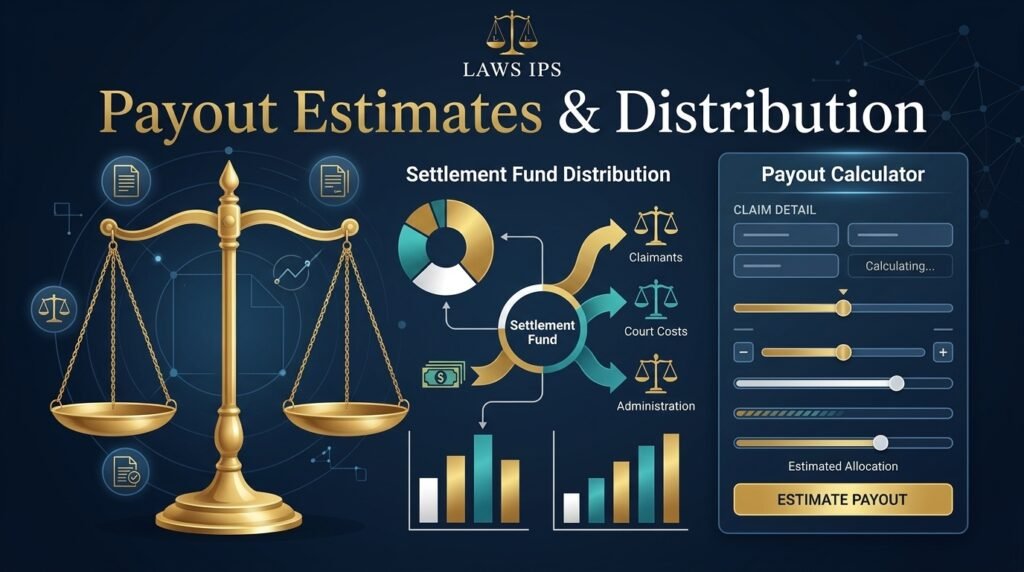
Gross fund is not individual payout, since fees, administration costs, taxes, and service awards are deducted before claimant payments, subject to court approval. Net fund is the amount left for claimants, and pro rata math divides net fund by valid claims, subject to tiers, caps, and minimums.
Pro rata example, illustrative only, shows the math clearly: a $10 million net fund, divided by 100,000 valid flat claims, equals $100 per claim, before any tier, cap, or minimum adjustments. If valid claims rise to 200,000, the same net fund equals $50 per claim, which is why advertised maximums fall when many people file.
Apple Siri pro rata example, from secondary summaries, shows the same math with a cap: $25 base per device, rising up to $95 per device if few claims are filed, or falling if many claims are filed, depending on valid claim count and other factors. A reader who files early does not lock in $95, since final amount depends on total valid claims after the deadline.
Tier math example, from Bestway summaries, shows a different model: $40 flat without proof, versus 10 percent of purchase price with proof, subject to fund limits and claim count. A $400 pool with proof could yield $40 as well, while a $1,000 pool with proof could yield $100, subject to settlement terms and fund availability.
Fee math example, from Kroger secondary summary, shows deductions clearly: $17 million fund, administration up to $352,000, fees up to $5,666,666.67, expenses up to $610,325.71, service awards up to $5,000 each, with remaining funds for approved claimants. Those caps are subject to court approval, and final approved amounts should be checked in court orders.
When Will You Get Paid
Payment timing is the most misunderstood part of class action settlements, since readers often expect payment days after filing. Most payments arrive months after final approval, after claim review, appeals, and distribution planning, not days after the claim deadline.
| Stage | Typical timing in secondary summaries | What happens |
| Claim deadline | Date on official site, varies by case | Last day to submit a valid claim form, late claims usually rejected |
| Final approval hearing | Weeks to months after claim deadline | Judge decides fairness, reasonableness, and adequacy, considers objections |
| Appeals period | Weeks to months after final approval, varies by case | Appeals can delay distribution, even if final approval is granted |
| Claim review and calculation | Weeks to months after final approval | Administrator reviews claims, calculates pro rata or tier amounts, resolves deficiencies |
| Distribution | Months after final approval in most cases, years in installment cases | Payments issued by chosen method, checks have a void date |
| Check void date | Date on check or official site, often 60 to 90 days after issuance, verify per case | Uncashed checks become void after that date, replacement process, if any, must be checked with administrator |
Kroger payment timing, in secondary summary, is about 150 days after final approval, provided there are no appeals, which illustrates a typical 5 month wait after final approval, not after filing. A December 21, 2026 claim deadline, plus a January 11, 2027 fairness hearing, plus appeals and review, means payment in mid 2027 at the earliest in that timeline, if no appeals delay it further.
NAR payment timing, in mainstream summary, is over several years, because defendants agreed to pay in installments, which is an extreme but real example. A reader who expects a single lump sum in 2027 for NAR should check the installment schedule on the official site, since payments may arrive in multiple rounds.
Amazon FTC payment timing, in contrast, is automatic and faster for the revised round, with payments beginning October 1, 2026, and additional automatic payments through April 2027 in one news summary, with a February 2027 threshold check for further payments. That timing is FTC redress timing, not class action claim timing, and it should not be used as a class action payment estimate.
FTC Refunds Are Not Class Actions, Amazon and Cleo Explained
FTC redress comes from government enforcement, not from a private class action, even when the money goes to consumers. FTC cases have different filing rules, different administrators, and sometimes no claim form at all, which confuses readers who search for a class action claim form for an FTC case.
Amazon Prime FTC settlement, with a $2.5 billion total in FTC announcements, required up to $1.5 billion in consumer redress, plus a $1 billion civil penalty, for allegations that Amazon enrolled millions in Prime without consent and made cancellation difficult. Amazon denies wrongdoing in the broader dispute context, and the settlement resolved FTC allegations without a trial on those allegations in the FTC announcement framing.
Amazon revised order, approved by a federal court in September 2026 in FTC announcement, expanded eligibility to consumers who used between 11 and 20 Prime benefits in a one year period, raised the maximum total payment from $51 to $200, and made all future payments automatic, with no claim form or additional paperwork for that round. Original order covered consumers who used fewer than 10 Prime benefits in a one year period, with refunds up to $51.
Amazon payments issued, in FTC announcement, were over $845 million as of September 2026, with additional automatic payments beginning October 1, 2026, through Venmo, PayPal, or mailed check in news summaries. Additional payments could also be issued in 2027 in news summaries, with a threshold check in February 2027 in one summary, so payment timing for Amazon FTC is automatic and staged, not claim based.
Cleo AI FTC refund, with a $17 million judgment entered April 25, 2025 in OpenClassActions summary, sends more than $15.8 million to 2,124,796 Cleo AI customers who paid for eligible instant cash advances, via PayPal beginning October 27, 2026, with emails through October 26, 2026. Administrator in that summary is Rust Consulting Inc., with a 30 day PayPal redemption window in that summary, and FTC guidance that the FTC never requires payment or account information to receive a refund.
FTC versus class action, comparison table
| Feature | Class action settlement | FTC redress program |
| Who brings the case | Private plaintiffs, class counsel | Federal Trade Commission, government enforcement |
| Claim form required | Usually yes, for consumer settlements in this calendar | Sometimes no, Amazon revised round is automatic, Cleo is administrator run |
| Court approval | Preliminary and final approval hearings, with objections | Court order or stipulated order, with FTC administration |
| Payment source | Settlement fund, minus fees, costs, and awards | Redress fund, plus civil penalty in Amazon case, separate from redress |
| How to check status | Official settlement site, administrator, court docket | FTC refund programs page, administrator named by FTC |
| Scam risk | Fake claim sites, fake administrator domains | Fake FTC refund emails, fake fee requests, FTC never asks for payment to receive a refund |
How To File a Claim, Step by Step
- Match the class definition first, including product, service, account, date range, state, and personal use versus resale, using the official notice or settlement site, not an aggregator summary alone.
- Note all four dates, claim deadline, opt out deadline, objection deadline, and final approval hearing, with the claim deadline as the filing date, and opt out and objection dates as earlier decision dates.
- Choose the proof tier you can support, flat no proof, notice ID, or documented tier, with a sworn attestation that is truthful, and records kept for any later administrator request.
- Gather identifiers, including Claim ID, Login ID, PIN, serial number, order number, account email, or phone number, depending on the settlement, with alternate filing instructions on the official site if no notice arrived.
- Choose a payment method, including PayPal, Venmo, Zelle, ACH, virtual prepaid card, or paper check, with the method available varying by settlement, and check void dates for paper checks.
- Complete the form accurately, with name, address, contact details, product or account details, and attestation, without exaggerating purchases, dates, or losses.
- Submit before the deadline, with a confirmation page, claim number, or email confirmation saved, and a copy of the submitted form kept for records.
- Check status after filing, using the official site or administrator contact from that site, with claim number ready, and update address or payment method promptly if either changes before distribution.
Filing for multiple settlements is allowed, if each class definition fits truthfully, with a separate claim form for each settlement, and a separate claim for each device or product where the settlement requires it. Filing for a settlement that does not fit, even with a small payout, risks denial and, for false attestations, more serious consequences.
Filing for a deceased relative or a minor requires special rules that vary by settlement and state, with estate, guardian, or parent documentation often required. General information here does not cover those cases, and an attorney or administrator contact from the official site should be used for those filings.
How To Check If a Settlement Notice Is Real
Real notices are free to respond to, contain specific case information, and can be verified on an official site or court docket, according to FTC and administrator guidance in this research. Fake notices often use real company names and real settlement names to look convincing.
Check the domain first, by typing the official site address yourself, rather than clicking a link in an unexpected email or text. A domain that looks similar, with extra hyphens, a .co instead of .com, or a generic Gmail sender, should not be trusted for personal data.
Check the administrator second, by matching the administrator name in the notice to a known administrator list, including Epiq, Kroll, Angeion, Verita Global, JND, Simpluris, and Rust Consulting, with the case listed on that administrator’s public case page. A notice with no administrator, or an administrator that cannot be found on a public case list, is a red flag.
Check the case third, by searching the case name and administrator domain on PACER, CourtListener, or ClassAction.org, and comparing the case title, court, and deadlines. A notice with no case name, no court, and no class definition should be treated as unverified.
Check the data request fourth, since real claim forms need only enough information to match a claimant to a class and pay them, usually name, address, contact, product or account details, and sometimes last four digits of a Social Security number for large payments with tax reporting. A form that asks for a full Social Security number by email, a bank login, a credit card number, a gift card, or cryptocurrency is a scam.
Real versus fake notice table
| Trait | Real notice, in general | Fake notice red flag |
| Cost to file | Free to file a claim on the official site | Upfront processing fee, tax fee, release fee, or gift card payment |
| Case details | Specific case name, court, class definition, deadlines, administrator | Vague case details, no case name, no court, generic brand name only |
| Payout promise | Maximum or capped benefit, with pro rata warning | Guaranteed large payout, no conditions, no deadline logic |
| Personal data request | Class member ID, product or account details, payment method, last four SSN only for large tax reporting cases | Full SSN, bank login, credit card, driver’s license photo, eBay or Apple password by email |
| Domain | Official domain named in court documents, administrator case page | Lookalike domain, shortened link, unfamiliar domain, .co instead of .com |
| Contact | Administrator contact from official site or court document | Only a mobile number, messaging app, personal email, or Gmail address |
| Urgency | Deadline stated in months, with a court document to check | Extreme urgency, 24 hour deadline, threat of account closure, prize style language |
Sony PlayStation example, in OpenClassActions summary, shows a real automatic settlement that requires no claim form for active PSN accounts, with credits deposited directly to PSN wallets by Sony, and an official site PSNDigitalGamesSettlement.com maintained by A.B. Data Ltd. Anyone telling a PlayStation owner to fill out a claim form on a non PlayStation site, or to log in to a separate payment site, is not running the real case in that summary.
Mistakes To Avoid
- Filing for a settlement that does not fit, with a false attestation about product, date, state, or use, which risks denial and undermines trust in the claim process.
- Using an aggregator deadline as an official deadline, without checking the official site, administrator, and court docket on the same day as filing.
- Expecting a maximum as a guarantee, especially for pro rata funds like Apple Siri, Pork, and generic drugs, where final amount depends on valid claim count and net fund.
- Missing an opt out or objection deadline while focusing only on the claim deadline, which can bind a reader to a settlement release they did not intend to accept.
- Filing by a fake site or link, especially for high profile cases like Apple Siri, where lookalike domains and social media ads are common.
- Paying a fee, gift card, or cryptocurrency to file, check, or release a settlement payment, since real claims are free to file on official sites.
- Sending a full Social Security number, bank login, or password by email to an unverified sender, even if the email looks official and uses a real settlement name.
- Assuming payment arrives days after filing, when most class action payments arrive months after final approval, and some, like NAR, pay over years.
- Ignoring a check void date, since uncashed settlement checks become void after a date on the check or official site, with replacement, if any, requiring administrator contact.
- Treating an FTC refund as a class action claim, or vice versa, since Amazon FTC automatic payments need no claim form for the revised round, while Apple Siri and most class actions do need a form.
Expert Tips
- File in deadline order, not fund size order, starting with October and November deadlines, then December, then February, with a calendar reminder for each.
- Save every confirmation, including claim number, payment method, submitted form copy, and administrator contact, in one file per settlement.
- Check spam and old addresses for notices, since many class members miss eligibility because a notice went to an old email or postal address.
- Use the official site address typed by hand, rather than a link in an unexpected email, text, or social media ad, for every filing.
- File the flat tier first if time is short, since a timely flat claim is better than a late documented claim, and documentation can sometimes be supplemented later, subject to settlement terms.
- Keep records even for no proof claims, including receipts, order histories, statements, and photos, in case the administrator requests records later.
- Update address and payment method promptly if either changes before distribution, using the official site or administrator contact from that site.
- Check claim status after final approval, not just after filing, since claim review, deficiency notices, and distribution updates appear after final approval.
- Sign up for settlement alerts from a trusted hub, without sharing sensitive data, to catch future cases that fit your purchases, accounts, and state.
- Consult a licensed attorney for large, documented, or complex claims, such as auto defects, medical monitoring, or multi year antitrust purchases, since those claims benefit most from professional review.
FAQs
What class action settlements are open in 2026?
Class action settlement 2026 research on October 25, 2026 shows open settlements including Pork, Bestway, ConnectOnCall, generic drugs, CVS, Dr. Squatch, Apple Siri, Kroger, and Non-Bank ATM, each with its own class, proof tier, and deadline. Check each official site before filing, since deadlines change and aggregator lists go stale fast.
Which class action settlements have deadlines in November 2026?
November 2026 deadlines in research include ConnectOnCall on November 2, generic drugs on November 9, CVS on November 16, and Dr. Squatch on November 27, plus Levoit, Kia, Neutrogena, Forbes, and LSC Lab in aggregator summaries. Verify each deadline on its official site, since November lists vary by aggregator.
Which class action settlements have deadlines in December 2026?
December 2026 deadlines in research include Apple Siri and Kroger on December 21, plus Equifax on December 28 in aggregator summary, and GoodRx on December 29 in one calendar summary. Apple Siri final approval hearing is February 24, 2027, so payment will not arrive in December.
How do I check if I am owed class action settlement money?
Check class definitions first, including product, service, account, date range, state, and use, against your own purchases and accounts. Then check official settlement sites, administrator case lists, ClassAction.org, and court dockets, with spam and old addresses checked for notices.
How do I file a class action settlement claim?
File on the official settlement site, using the claim form, class attestation, proof tier, and payment method for that case, before the claim deadline. Save the confirmation page and claim number, and check status after final approval, not just after filing.
Do I need proof of purchase for a class action settlement?
Many 2026 consumer settlements allow a basic claim with a sworn attestation and no receipt, up to a unit cap, while documented tiers pay more with records. Proof rules vary by case, so check the official site for each settlement, rather than assuming no proof means no form.
What does no proof of purchase really mean?
No proof means no receipt, not no eligibility, not no form, and not no attestation. Every no proof form still asks a claimant to certify, under penalty of perjury, that they fit the class definition, and some forms still require a mailed Claim ID or PIN.
What is a Claim ID, and what if I lost mine?
Claim ID, Login ID, or PIN is an identifier from a mailed or emailed notice, used to match a claimant to a class list on the official form. If lost, check the official site for alternate filing instructions, since some cases allow filing without a notice, while others require a code request or mail filing.
How much do class action settlements pay per person?
Typical no proof payouts in secondary ranges are $5 to $20 for flat consumer claims, $10 to $150 for nationwide privacy claims, $25 to $100 flat for data breach claims plus documented tiers, and $100 to $400 or more for Illinois biometric claims. Final amounts depend on net fund, valid claims, tiers, caps, and minimums.
Why is my settlement payout less than the advertised maximum?
Maximums are caps, not guarantees, and pro rata reduction, fees, costs, awards, and claim count all reduce per person amounts. Apple Siri, for example, has a $25 base rising to a $95 cap, with final amount depending on valid claims, so a $95 headline does not promise $95 to every claimant.
When will my class action settlement payment arrive?
Most class action payments arrive months after final approval, after appeals, claim review, and distribution planning, not days after filing. Kroger secondary summary expects about 150 days after final approval, provided there are no appeals, while NAR homebuyer payments arrive over several years in installments.
Do I need a lawyer to file a class action settlement claim?
No lawyer is needed for most consumer settlement claims, since class counsel are already hired and paid from the fund, subject to court approval. A licensed attorney consultation helps most for large, documented, or complex claims, or for opt out decisions.
Is it free to file a class action settlement claim?
Filing on an official settlement site is free, and any site that asks for an upfront fee, gift card, or cryptocurrency to file or release a payment is a scam. Tracker apps and claim help services may charge for optional help, but filing itself on the official site costs nothing.
What happens if I miss a class action settlement deadline?
Missing a claim deadline usually means no payment from that settlement, even if eligibility otherwise existed, since administrators almost never accept late claims in secondary summaries. Already filed claims can still be checked for status, and alert signups can help catch future cases.
How do I check my class action settlement claim status?
Check the official settlement site or administrator contact from that site, with claim number ready, after final approval and during distribution. Status checks right after filing usually show only receipt, not approval, since claim review happens after the deadline and final approval.
How do I spot a fake class action settlement email?
Check domain, administrator, case name, and data request before clicking or entering data, with a real notice being free, specific, and verifiable on an official site or court docket. Fake notices often ask for a fee, a full Social Security number, a bank login, or action within 24 hours, all of which are red flags.
Do I have to pay tax on a class action settlement payment?
Tax treatment depends on payment type and individual circumstances, with general information only here, not tax advice. Payments over $600 can trigger 1099 reporting in general summaries, so keep payment records, including date, amount, method, and case name, and consult a tax professional.
What is the difference between opt out, object, and file a claim?
File a claim means seeking payment, opt out means leaving the class to preserve a separate lawsuit right, and object means staying in the class but telling the court why the settlement should not be approved. Each choice has its own deadline, and opt out and objection dates are usually earlier than the claim deadline.
What is the difference between a class action settlement and an FTC refund?
Class action settlements come from private lawsuits, with court approval and usually a claim form, while FTC refunds come from government enforcement, with administrator run payments that are sometimes automatic. Amazon Prime FTC revised payments are automatic, while Apple Siri class action payments require a claim form.
What is an Illinois BIPA settlement, and why does it pay more?
Illinois Biometric Information Privacy Act settlements involve biometric identifiers, such as face geometry, collected without proper consent or disclosures under Illinois law. Statutory damages in general summaries are $1,000 to $5,000 per violation, which pushes Illinois subclass payouts higher than nationwide privacy payouts.
Can I file a class action settlement claim if I moved?
Moving does not automatically disqualify a claimant, but address changes must be updated with the administrator promptly, using the official site contact, before distribution. Notices mailed to an old address can be missed, so spam, old email, and old postal addresses should all be checked for notices.
Where can I check a federal class action case docket?
Federal case dockets can be checked on PACER, with an account and per page fees in general, and on CourtListener, with free docket and document access for many cases. Search by case name, case number, and court, and compare the docket to the official settlement site before filing.
Conclusion
Class action settlement 2026 rewards readers who file in deadline order, match class definitions truthfully, and verify every case on its official site. Pork and Bestway close in late October, November brings data breach, privacy, product, and antitrust deadlines, December brings Apple Siri and Kroger, and February brings the ATM surcharge deadline, with payment in most cases arriving months after final approval.
For most readers, the practical result is clear: check the official site today for each settlement that fits your purchases, accounts, or state, file the proof tier you can support, save your confirmation, and watch for final approval and distribution updates. Do not pay a fee to file, do not send sensitive data to an unverified site, and do not expect a maximum to arrive as a guarantee, especially for pro rata funds.
Check official settlement sites for Apple Siri, Bestway, Pork, CVS, Dr. Squatch, and ATM before their deadlines, sign up for settlement alerts from a trusted hub without sharing sensitive data, and consult a licensed attorney for large or complex claims. If a message about a settlement looks suspicious, preserve it, do not click links or pay a fee, and report it to the Federal Trade Commission.
