
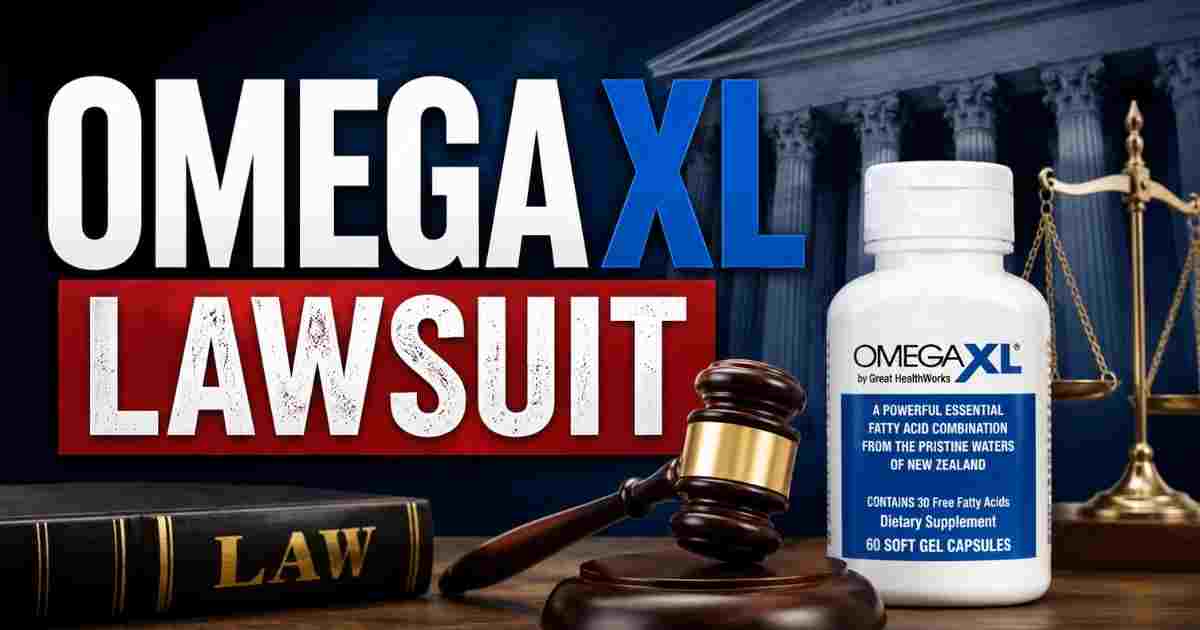

If you have searched for “Omega XL lawsuit” recently, you have probably landed on a handful of articles promising settlement checks, filing deadlines, and payout calculators. Some of that content is accurate. A lot of it is not.
This guide pulls together what is actually documented in court records, FDA files, and advertising review boards, and separates that from the speculation currently circulating online. You will learn the real legal history of Omega XL and its manufacturer, Great HealthWorks, what regulators have said about the product’s marketing, and what to do if you believe you were misled as a customer.
Nobody here is your lawyer, and this article is not legal advice. Treat it as a starting point for your own research or a conversation with a licensed attorney in your state.
What Is the Omega XL Lawsuit?
There is no single “Omega XL lawsuit.” Instead, there have been several separate legal and regulatory actions involving the supplement and its maker over the past decade, each with a different focus.
The main threads include:
- A 2017 class action in federal court alleging deceptive automatic subscription enrollment.
- A 2021 FDA warning letter over unsubstantiated disease treatment claims in Omega XL advertising.
- Prior scrutiny from the National Advertising Division (NAD), the advertising industry’s self-regulatory body, regarding substantiation of health claims.
- A 2023 website accessibility lawsuit unrelated to the product’s health claims or billing practices.
None of these is currently an open, active nationwide class action with a certified class or announced settlement fund. That distinction matters a great deal if you are trying to figure out whether you can file a claim right now.
Omega XL Lawsuit Update 2026: Where Does the Case Stand Now?
Here is the honest, verifiable status as of mid 2026.
The 2017 subscription billing class action, Boyer et al v. Great HealthWorks, Inc., filed in the U.S. District Court for the Southern District of California, was voluntarily dismissed without prejudice in March 2018. That means the plaintiffs withdrew the case. It was never refiled, no class was certified, and no settlement was ever paid out to consumers.
Since then, public court dockets do not show a new, active, nationwide class action lawsuit against Great HealthWorks over Omega XL’s health claims. Several websites publishing “2026 lawsuit update” content describe ongoing mediation, class certification hearings, and settlement negotiations without citing a specific case number, court, or filing date. That is a red flag. Legitimate litigation updates always reference a docket number and jurisdiction.
What is confirmed for 2026:
- No court-approved Omega XL class action settlement has been announced.
- No official claims administrator or settlement website exists for an Omega XL lawsuit at this time.
- The FDA warning letter from 2021 remains part of the company’s regulatory record.
- Individual consumer complaints about billing and refunds continue to appear on platforms like the Better Business Bureau.
If a new class action is filed or an existing matter is revived, it would show up on PACER (the federal court records system) or in state court dockets before it appears on any blog.
What Is the Omega XL Class Action Lawsuit?
A class action lets one or more named plaintiffs sue on behalf of a larger group of people who experienced the same alleged harm, instead of everyone filing individual cases. For a class action to move forward, a court has to certify the class, meaning it agrees the group’s claims are similar enough to be handled together.
The 2017 Omega XL case followed this structure. The named plaintiff alleged she was enrolled in a recurring monthly shipment program without clear disclosure, resulting in repeated charges to her card. That case sought class status on behalf of other customers who experienced the same billing practice.
Because that case was dismissed before class certification, no group of Omega XL buyers has ever been formally certified as a class in connection with this product. This is an important point of clarity that many current articles gloss over.
Who Is Great HealthWorks and Why Are They Being Sued?
Great HealthWorks, Inc. is a privately held, direct-to-consumer health and wellness company headquartered in Fort Lauderdale, Florida. The company was founded in the early 2000s and built its business primarily around Omega XL, a joint health supplement made from a lipid extract of the New Zealand green-lipped mussel, marketed under the ingredient name PCSO-524.
The company grew largely through long-form television infomercials, celebrity endorsements, and direct-response online marketing, a business model that put its advertising claims under close and repeated scrutiny.
Legal and regulatory attention toward Great HealthWorks has centered on two separate issues:
- Billing practices. The 2017 lawsuit focused on whether customers clearly understood they were being enrolled in an ongoing subscription.
- Advertising claims. The FDA and NAD have both reviewed whether Omega XL’s marketing crossed the line from permitted “structure and function” claims into impermissible disease treatment claims.
What Are the False Advertising Allegations Against Omega XL?
Under U.S. law, dietary supplements are allowed to make general “structure and function” claims, such as supporting joint health or promoting mobility. They are not allowed to claim a product treats, cures, prevents, or reduces the symptoms of a specific disease, because that would classify the product as an unapproved drug.
In 2021, the FDA sent Great HealthWorks a warning letter after reviewing the company’s website and promotional materials. Regulators identified statements suggesting Omega XL could relieve joint pain, reduce inflammation, or otherwise function as an alternative to medical treatment for arthritis and related conditions. The FDA determined this language crossed from acceptable wellness marketing into unsubstantiated drug claims.
The National Advertising Division has separately examined whether Omega XL’s advertising, including comparisons to standard fish oil and claims of superior effectiveness, was backed by adequate independent, peer-reviewed evidence.
Common categories of complaint found in these regulatory reviews and consumer feedback include:
- Claims that the product outperforms prescription medication for pain relief
- Comparative superiority claims against ordinary fish oil without head-to-head clinical support
- Testimonials and endorsements presented without adequate disclaimers
- Marketing language implying disease treatment rather than general wellness support
These are regulatory findings and consumer allegations, not a court judgment. Great HealthWorks has not been found liable for false advertising by a court as of this writing.
Omega XL Lawsuit Eligibility Requirements: Do You Qualify?
Because there is currently no active, certified class action or approved settlement for Omega XL, there is no official eligibility criteria to qualify for a payout right now. Any website presenting a detailed eligibility checklist, purchase window, or documentation requirement for an “Omega XL settlement” is describing a hypothetical scenario, not a real, filed claims process.
That said, if you believe you were financially harmed by misleading marketing or unauthorized billing, it is still worth organizing your records now. Useful documentation includes:
- Order confirmation emails from Great HealthWorks or omegaxl.com
- Credit or debit card statements showing recurring charges
- Any correspondence about cancellation requests or refund denials
- Screenshots or recordings of advertisements you relied on when purchasing
Having this ready means you will be prepared if a legitimate class action is filed and a claims window opens, and it also strengthens any individual complaint you choose to file with a regulator.
Who Qualifies for the Omega XL Lawsuit?
Since no certified class currently exists, nobody “qualifies” for a payout today in the legal sense. What you can do instead is position yourself to act quickly if that changes.
Consumers most likely to have a relevant complaint, whether that becomes part of a future class action or an individual dispute, generally include:
- People enrolled in the auto-ship subscription who say they were not clearly told about recurring billing
- Customers who requested cancellations or refunds and were denied or only partially refunded
- Buyers who purchased based on specific health claims, such as pain relief comparable to medication, that were later flagged by regulators
- Anyone who can show a documented financial loss tied to the product’s marketing or billing
If you fall into one of these groups, the most productive step right now is filing a complaint with the right agency rather than waiting for a class action that has not yet been filed.
What Is the Omega XL Lawsuit Settlement Amount?
There is no Omega XL lawsuit settlement amount to report, because there is no confirmed, court-approved settlement in place as of 2026. Any specific dollar figure you see online, whether presented as a range or an average payout, is an estimate based on unrelated supplement cases, not a number tied to an actual Omega XL settlement fund.
For context, dietary supplement class action settlements in general have varied widely, from small individual payouts in the tens of dollars to larger aggregate funds in the millions, depending on the size of the class and the strength of the evidence. None of those figures should be assumed to apply to Omega XL specifically until a real settlement is filed with a court.
How Much Could You Get from the Omega XL Class Action Payout?
Since no class action payout currently exists for Omega XL, this is not something anyone can answer with real numbers today. In general, when supplement class actions do settle, your eventual payout would typically depend on:
- How much you personally spent on the product
- Whether you can document your purchases
- How many total people file valid claims against the settlement fund
- What percentage the court allows for attorneys’ fees, typically in the 25 to 33 percent range of the total fund
If a real settlement is announced in the future, official claim forms distributed by a court-appointed claims administrator, not a blog post, will tell you exactly how the payout is calculated.
How Much Will I Get from the Omega XL Lawsuit?
Right now, the honest answer is zero, because there is nothing to file a claim against. No settlement fund exists, so there is no payout schedule, no claim form, and no administrator collecting submissions.
If that changes, and a class action is filed and eventually resolved, your potential recovery would likely be tied to your actual spending on the product. A single bottle purchase and a multi-year subscription would not be treated the same way under a typical settlement formula. Until an official case exists, treat any payout estimate you read as speculation rather than a promise.
What Is the Current Omega XL Lawsuit Status?
Summarizing the verifiable record:
| Legal Matter | Status |
| 2017 subscription billing class action | Voluntarily dismissed in March 2018, never refiled |
| 2021 FDA warning letter | Issued over unsubstantiated disease treatment claims |
| NAD advertising review | Raised substantiation concerns about health claims |
| 2023 website accessibility lawsuit | Separate matter, unrelated to health marketing or billing |
| New 2026 class action or settlement | Not confirmed in public court records at this time |
If you see an article describing an active class certification hearing, ongoing mediation, or a specific settlement fund size for Omega XL, ask for the source. A real case will have a docket number you can look up on PACER or your state court’s public records portal.
What Is the Omega XL Supplement Lawsuit Really About?
Strip away the marketing and the legal jargon, and this topic is really about one question. Can consumers trust the health claims made in supplement advertising?
The FDA does not review or approve dietary supplements before they reach the market the way it does with prescription drugs. Companies are legally allowed to make general wellness claims but are barred from suggesting a product treats or cures a specific medical condition without going through drug approval.
Regulators found that Omega XL’s marketing, at various points, used language that blurred that line, including comparisons to how prescription medications perform for pain relief. That is the underlying regulatory concern that has driven both the FDA’s involvement and the advertising industry’s own review process, independent of whether a new lawsuit ever gets filed.
Key Omega XL Lawsuit Updates You Need to Know
To keep this simple, here is what has actually changed and what has not:
- The original 2017 subscription lawsuit remains closed. It was never revived or refiled.
- The 2021 FDA warning letter is still part of the company’s public regulatory history.
- No new class action complaint tied to Omega XL’s health claims has surfaced in federal or state court dockets as of this writing.
- Multiple websites are currently publishing “2026 update” articles describing settlement negotiations and claim deadlines without citing a verifiable case number. Treat these claims with skepticism until a primary source confirms them.
- Individual consumer complaints about billing and refund practices continue, and remain a valid path for filing complaints with regulators even without a class action.
How to File an Omega XL Lawsuit Claim
Because there is no active class action settlement to file a claim against, “filing a claim” today really means one of two things: joining a future class action if one is filed, or pursuing your own complaint or small claims action now.
Here is a practical path to take right now.
- Gather your documentation. Save order emails, billing statements, refund correspondence, and any advertising you relied on.
- File a complaint with the FTC. The Federal Trade Commission accepts consumer complaints about deceptive advertising at ReportFraud.ftc.gov.
- File a complaint with your state Attorney General. Many states have consumer protection divisions that investigate patterns of complaints against a single company.
- Report to the Better Business Bureau. This creates a public record of your experience and can prompt a company response.
- Consult a consumer protection attorney. If your financial loss is significant, an attorney can evaluate whether an individual claim, arbitration, or small claims filing makes sense for your situation.
- Monitor legitimate class action trackers. Sites like the federal PACER system, your state court’s public docket search, or established legal news outlets will report a real class action before speculative blogs do.
If a legitimate class action is eventually certified, a claims administrator will contact eligible consumers directly, typically by mail or email, using information tied to your actual purchase records. You generally do not need to search for a claim form on your own; it comes to you.
What Is the Omega XL Claim Filing Deadline?
There is no claim filing deadline right now, because there is no open claims process. Deadlines only exist once a settlement receives preliminary court approval and a claims administrator opens a filing window, which typically runs 60 to 180 days.
Separately, be aware of general statutes of limitations that apply to consumer protection and fraud claims, which vary by state but commonly range from two to six years from the date of purchase or discovery of the alleged harm. If you are considering an individual legal claim rather than waiting for a class action, that clock is already running, and waiting too long could limit your options regardless of what happens with any future class action.
Omega XL Settlement News: What to Watch for in 2026
If you want to stay genuinely informed rather than relying on speculative content, here is where to actually look:
- PACER (pacer.uscourts.gov): Search for Great HealthWorks to see any newly filed federal complaints.
- Your state’s court e-filing portal: Many consumer protection cases are filed at the state level first.
- FTC and FDA public action databases: Both agencies publish enforcement actions and warning letters.
- Established legal news outlets and class action trackers: Outlets with a track record of citing case numbers and court filings are far more reliable than anonymous blog posts.
- Truth in Advertising and the National Advertising Division: Both organizations have previously covered Omega XL’s marketing claims and publish updates when new reviews occur.
If a real settlement is reached, it will be reported with a case caption, a court name, and a claims administrator. Anything short of that is speculation.
Frequently Asked Questions
Is there an active Omega XL class action lawsuit in 2026?
No confirmed, currently active nationwide class action exists in public court records as of this writing. The 2017 subscription case was dismissed in 2018 and never refiled.
Did Great HealthWorks lose a lawsuit over Omega XL?
No. The 2017 case was voluntarily dismissed before any ruling or settlement, so there is no court finding of liability against the company.
Why did the FDA send Great HealthWorks a warning letter?
In 2021, the FDA flagged marketing language suggesting Omega XL could treat or relieve disease symptoms like arthritis, which crosses into claims reserved for approved drugs.
Can I still file a complaint if there’s no class action?
Yes. You can file complaints directly with the FTC, your state Attorney General, or the Better Business Bureau, and consult an attorney about individual claims.
Where can I verify if a new lawsuit has been filed?
Search PACER for federal filings or your state court’s public docket system using “Great HealthWorks” as the defendant name.
Should I trust websites claiming a settlement fund already exists?
Be cautious. Verify any settlement claim against an actual case number, court name, or official claims administrator before providing personal information anywhere.
Final Thoughts
The real story behind Omega XL’s legal history is more nuanced than most headlines suggest. There was a genuine class action in 2017 over subscription billing, but it was dismissed and never resulted in a payout. There was a genuine FDA warning letter in 2021 over advertising language, and that record stands. What does not currently exist, despite what several “2026 update” articles claim, is an active, certified class action with a settlement fund waiting to be claimed.
If you believe Omega XL’s marketing or billing practices caused you financial harm, the most productive steps are gathering your documentation, filing complaints with the appropriate regulators, and speaking with a consumer protection attorney about your individual options. Watch primary sources, not speculative content, for any real developments, and be skeptical of any site asking for personal or financial information tied to a settlement that has not been officially announced.

Daniel Christopher is the founder and administrator of LawsIps.com. He is passionate about making legal information easier to understand through clear, well-researched, and reader-friendly content. His goal is to help readers stay informed about legal topics, court updates, consumer rights, and educational legal resources in simple language.