
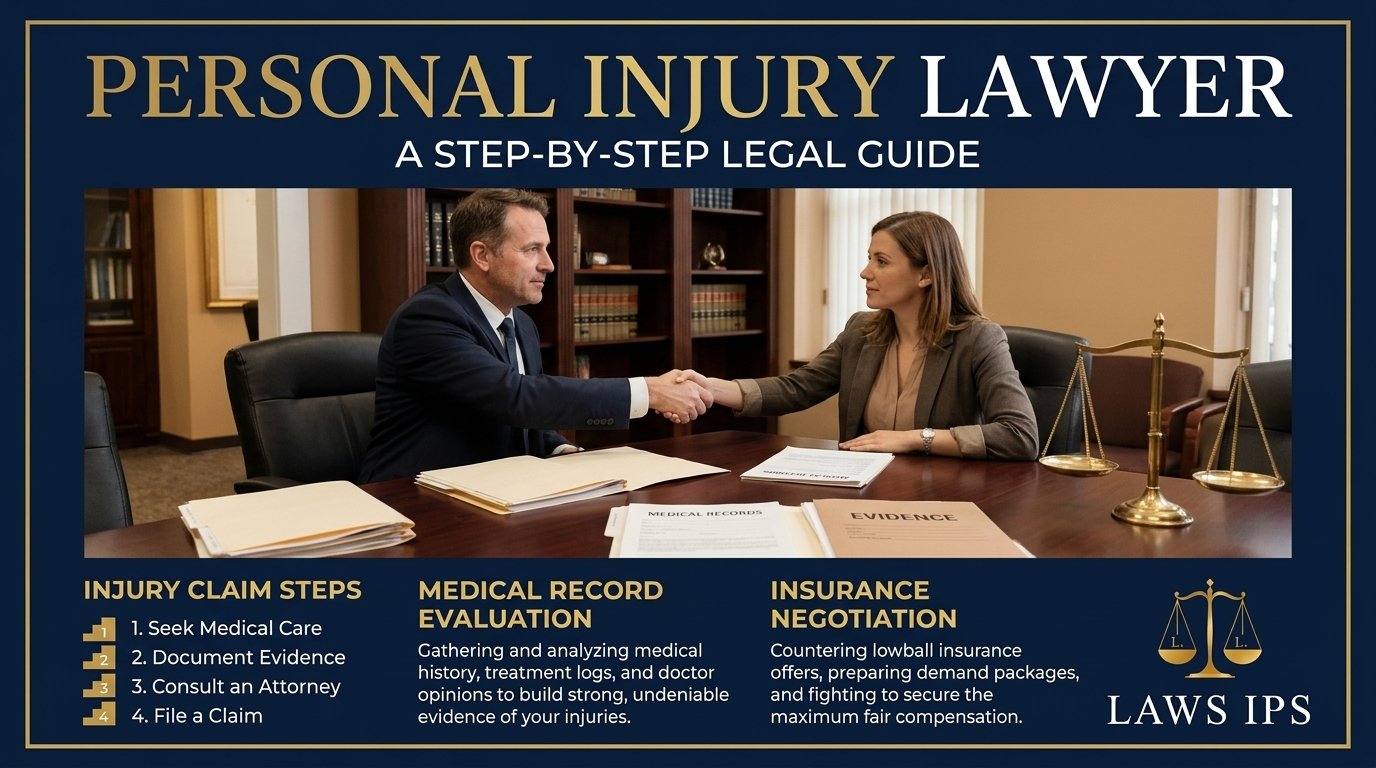

Personal injury lawyer services help people injured by another person’s carelessness recover medical costs, lost income, and other provable losses. A lawyer investigates what happened, identifies who was legally responsible, and builds a claim based on evidence, not opinion. That work matters because insurers often value claims low when injured people act alone.
This information is general information only, not legal advice, and it does not create a lawyer-client relationship. Personal injury law varies by state, by case type, and by court rules. Deadlines, fault rules, and fee limits can differ sharply, so check the official state source for your case before acting.
A good first question is simple: was someone else’s negligence a cause of your injury, and can that be proved? Negligence means a duty of care was owed, that duty was breached, and the breach caused harm. Without those three links, a claim is weak even when an injury is serious.
What a Personal Injury Lawyer Actually Does
Investigating the Accident
A personal injury lawyer starts by gathering facts before memories fade and evidence disappears. Police reports, photos, video, witness names, and medical records form the early file. Early investigation also protects you from later disputes about how the accident happened.

The lawyer checks insurance coverage, including the other party’s limits and your own uninsured motorist or medical payments coverage. Coverage limits matter because a strong liability case can still be limited by a low policy limit. That check shapes realistic expectations from the start.
Proving Liability and Damages
Liability means legal responsibility for the harm, while damages mean the losses that can be compensated. A lawyer connects the two with records, expert opinions where needed, and a clear causation story. Medical proof must link treatment to the accident, not merely show that treatment occurred.
Damages are separated into economic losses, such as bills and lost pay, and non-economic losses, such as pain and reduced daily function. Future costs also matter when recovery is incomplete or ongoing. A lawyer values each category separately, rather than guessing one total figure.
Handling Insurers and Paperwork
Insurers ask for recorded statements, broad medical authorisations, and quick releases. A lawyer reviews those requests, limits overbroad disclosure, and responds in writing where safer. Written communication creates a record and reduces later disputes about what was said.
Paperwork also includes demand letters, claim forms, lien notices, and court filings if a lawsuit becomes necessary. Missing a form or a deadline can weaken or end a claim. A lawyer tracks those dates and keeps copies of every filing and response.
Negotiating, Mediating, and Trying Cases
Most personal injury claims settle through negotiation, not trial, but settlement strength comes from trial readiness. A lawyer prepares the file as if a jury might see it, even while seeking settlement. That preparation signals to insurers that a low offer will not end the matter.
When negotiation stalls, mediation offers a structured settlement discussion with a neutral mediator. If mediation fails, a lawsuit and possible trial follow. Trial experience matters most at that stage, so ask about it before hiring.
Do You Need a Personal Injury Lawyer
Signs You Likely Need Help
You likely need help when injuries require ongoing treatment, time off work, or specialist care. Serious fractures, surgery, head injury, and permanent limits raise both value and complexity. Insurers also fight harder when the amount at stake is larger.
You likely need help when liability is disputed, more than one party is involved, or a government entity is involved. Government claims often have shorter notice deadlines and special forms. A missed government notice can bar a claim even before a lawsuit deadline arrives.
Signs You May Handle a Claim Alone
A very minor claim with a short treatment period, clear liability, and full payment of bills may be handled alone. Even then, get medical care first and keep every bill and receipt. Do not sign a release until treatment is complete and future costs are clear.
Be cautious when pain lasts longer than expected, new symptoms appear, or the insurer pressures a quick settlement. Quick settlements often close claims before the full injury picture is known. Once a release is signed, reopening the claim is usually very difficult.
| Situation | Lawyer help usually needed | Often manageable alone |
|---|---|---|
| Minor soreness, one clinic visit, bills paid in full | No, if liability is clear | Yes, with full records |
| Ongoing treatment or time off work | Yes | No |
| Disputed fault or multiple parties | Yes | No |
| Low offer or denied claim | Yes | No |
| Serious or permanent injury | Yes | No |
The Cost of Waiting
Waiting harms claims because evidence fades, witnesses move, and video is deleted. Treatment gaps also create doubt about whether the accident caused the injury. Prompt care and prompt documentation protect both health and any later claim.
Waiting also risks a deadline problem, since filing periods differ by state and case type. Some claims have notice periods far shorter than lawsuit deadlines. Early advice, even a single consultation, can identify the correct deadline for your situation.
Case Types a Personal Injury Lawyer Handles

Car, Truck, and Motorcycle Accidents
Car accident cases turn on driver negligence, such as speeding, distraction, impairment, or failure to yield. Police reports, dashcam footage, and vehicle damage photos help reconstruct fault. Medical records must connect injuries to the crash, visit by visit.
Truck cases add federal safety rules, driver logs, maintenance records, and employer liability. Motorcycle cases often face unfair bias about rider risk, so helmet use, lane position, and driver conduct need careful proof. Each vehicle type has different evidence, so generic advice fits poorly.
Pedestrian and Bicycle Accidents
Pedestrian cases focus on crosswalk rules, signal timing, driver attention, and visibility. Location photos, signal records, and witness accounts matter more than vehicle damage alone. Injuries are often severe because there is no protective shell around the person.
Bicycle cases raise questions about bike lanes, dooring, right of way, and helmet use. Helmet non-use does not automatically defeat a claim, but insurers may argue it worsened head injury. Local traffic rules control many of these details, so state and city rules must be checked.
Slip and Fall and Premises Liability
Premises cases require proof that a property owner knew, or should have known, about a dangerous condition. Wet floors, broken steps, poor lighting, and unsecured objects are common examples. Notice is often the hardest element to prove in these cases.
Incident reports, maintenance logs, surveillance video, and photos taken promptly carry great weight. Delay allows hazards to be fixed and records to change. Report the incident in writing, keep a copy, and photograph the exact hazard and surroundings.
Medical Malpractice and Nursing Home Injuries
Medical malpractice claims follow separate rules in many states, including expert review and shorter or special deadlines. Not every bad outcome is malpractice, since medicine involves known risks. An expert must usually show that care fell below the accepted standard.
Nursing home cases may involve falls, pressure injuries, medication errors, or neglect. Facility records, staffing records, and inspection reports become central evidence. These cases need early review because records and deadlines are tightly controlled.
Defective Products and Dog Bites
Product cases may rest on design defects, manufacturing defects, or missing warnings. Keep the product, packaging, and purchase records, and do not alter or discard the item. Recall notices and similar incident reports can support, but do not prove, a defect alone.
Dog bite liability varies by state, with some states using strict liability and others requiring proof of knowledge or negligence. Medical treatment, animal control reports, and owner insurance details should be collected promptly. Children and facial injuries raise special damages and care issues.
Workplace Injuries and Wrongful Death
Workplace injuries often start as workers compensation claims, which pay medical care and partial wages without proving employer fault. A separate personal injury claim may exist against a third party, such as a contractor or equipment maker. The two routes have different rules and deadlines.
Wrongful death claims are brought by eligible family representatives under state law, not by every relative automatically. Damages may include funeral costs, lost support, and loss of companionship, depending on the state. These cases are time sensitive and emotionally difficult, so early guidance helps families avoid costly errors.
How a Personal Injury Claim Works, Step by Step
Step 1: Get Medical Care and Report the Incident
Seek medical care promptly, even when pain seems mild at first. Adrenaline and delayed symptoms can hide serious injury for hours or days. Medical records created early become the strongest link between the accident and the injury.
Report the incident to police, a property manager, or an employer, depending on the setting. Get a written report number and a copy when available. Avoid detailed fault admissions in early reports, and stick to observable facts.
Step 2: Preserve Evidence Immediately
Photograph injuries, damage, hazards, and the scene from several angles. Save clothing, damaged items, receipts, and appointment records. Write a short dated note about what happened while memory is fresh.
Ask witnesses for names and contact details, and note what each person saw. Do not coach witnesses or ask them to change statements. A lawyer can follow up formally while accounts are still accurate.
Step 3: Notify Insurers Carefully
Notify your own insurer promptly, since policies often require timely notice. Keep the notice factual and brief, and do not guess about fault or injury extent. You can state that treatment is ongoing and details will follow.
Be cautious with the other party’s insurer, which represents the other side, not you. Decline a recorded statement until you understand its risks, and do not accept a quick settlement while treatment continues. Written responses allow review and correction.
Step 4: Build the Medical and Damages File
Treatment records, bills, imaging, work notes, and wage loss proof form the damages file. Keep a simple diary of pain, limits, missed work, and missed activities. Consistency between diary entries and medical visits strengthens credibility.
Future care estimates matter when recovery is incomplete. A treating provider, not an insurer estimate, should describe likely future treatment. Gaps in care should be explained honestly, since unexplained gaps invite causation attacks.
Step 5: Send a Demand and Negotiate
A demand letter summarises liability, injuries, treatment, losses, and a settlement figure. It is supported by records, not by anger or exaggeration. Insurers respond with questions, a counteroffer, or a denial, and negotiation follows.
Negotiation may take weeks or months, depending on treatment completion and insurer conduct. Patience often improves results, because settling before maximum medical improvement risks undervaluing future care. A lawyer explains each offer in net terms, after fees, costs, and liens.
Step 6: File a Lawsuit if Settlement Fails
Filing a lawsuit starts formal litigation, including discovery, depositions, and expert disclosure. Discovery exchanges documents, answers, and witness information under court rules. Depositions record sworn testimony that may later be used at trial.
Many cases still settle during litigation, sometimes close to trial. Filing does not guarantee trial, and trial does not guarantee a win. A lawyer should explain litigation costs, time, and risk before filing.
Step 7: Mediate, Settle, or Go to Trial
Mediation gives both sides a confidential chance to settle with a neutral mediator’s help. The mediator does not decide the case, but tests each side’s strengths and weaknesses. A mediated settlement ends the claim only if both sides agree in writing.
At trial, a judge or jury decides liability and damages based on admitted evidence. Trials bring uncertainty, delay, and cost, even for strong cases. Settlement offers certainty and control, which many injured people prefer after weighing risk.
Step 8: Resolve Liens and Receive Net Payment
Before payment is final, medical liens and reimbursement claims must be checked and, where possible, negotiated. Health insurers, government programs, and providers may claim part of a settlement. Unresolved liens can create later collection problems.
Net recovery means the amount left after attorney fees, case costs, and valid liens. Ask for a written settlement statement showing every deduction. Review it carefully before signing a release or distribution form.
How Much a Personal Injury Lawyer Costs
Contingency Fees Explained
Most personal injury lawyers work on a contingency fee, meaning payment depends on recovery. If no recovery occurs, no attorney fee is usually owed under that agreement. The percentage is stated in a written fee agreement, which you should read fully before signing.
Commonly reported contingency ranges fall between 25 percent and 40 percent, with one-third as a common standard. Ranges vary by state, case stage, and complexity, and some states cap or tier fees. Treat any range as a reported range, not a quote for your case.
Case Costs Are Separate From Fees
Case costs include filing fees, record fees, expert fees, deposition costs, and investigation expenses. Some agreements make the client responsible for costs even if the case loses, while others do not. That distinction must be clear in writing before work begins.
Ask whether costs are deducted before or after the fee percentage is calculated, since the order changes net recovery. A simple worked example in the agreement discussion prevents later surprise. Get the cost policy in writing, not merely in conversation.
| Item | Usually covered by fee | Usually a separate case cost |
|---|---|---|
| Lawyer time and negotiation | Yes | No |
| Court filing fee | No | Yes |
| Medical record copies | No | Yes |
| Expert witness fee | No | Yes |
| Investigation and photos | Sometimes | Often yes |
| Deposition transcripts | No | Yes |
A Worked Illustrative Example Only
This example is illustrative only, not a promise or an average outcome. Suppose a gross settlement is 90,000 dollars, the fee is one-third, costs are 3,000 dollars, and liens total 12,000 dollars. The fee would be 30,000 dollars, leaving 60,000 dollars before costs and liens.
After subtracting 3,000 dollars in costs and 12,000 dollars in liens, the net recovery would be 45,000 dollars. Small changes in fee percentage, costs, or liens change that net figure sharply. Always ask for a net estimate under several settlement figures before accepting an offer.
Hourly, Flat, and Hybrid Fees
Some lawyers charge hourly fees for limited tasks, such as document review or a second opinion. Flat fees are rare for full personal injury litigation, since case length is unpredictable. Hybrid models may combine a lower contingency rate with hourly work, but terms vary widely.
Compare total expected cost, not merely the headline percentage. A lower percentage with high costs can net less than a higher percentage with low costs. Written terms, cost responsibility, and withdrawal terms matter more than advertising slogans.
What Your Case May Be Worth
Economic Damages
Economic damages cover measurable losses, including medical bills, future care, lost wages, and reduced earning capacity. Keep every bill, receipt, pay stub, and employer letter. Future losses need provider support, not speculation alone.
Property damage, travel to treatment, and paid help at home may also qualify, depending on state law. Document each expense with dates and purpose. Undocumented losses are easy for insurers to dispute or ignore.
Non-Economic Damages
Non-economic damages cover pain, suffering, emotional distress, and loss of enjoyment of life. These losses are real, but harder to measure than bills. Diaries, family observations, and treatment notes help show daily impact credibly.
Some states cap non-economic damages in certain case types, especially medical malpractice. Caps, if any, depend on state law and case facts. Do not rely on another state’s cap or another person’s payout as a guide.
Factors That Raise or Lower Value
Strong liability proof, serious injury, clear causation, and consistent treatment tend to support higher value. Weak liability, treatment gaps, prior similar injuries, and low policy limits tend to reduce value. Credibility also matters, since inconsistent statements damage otherwise strong cases.
Settlement calculators found online give rough ranges, not case values. They cannot assess credibility, jury attitudes, local rules, or policy limits. Use them only as a learning tool, never as a promised figure.
Deadlines: Statutes of Limitations by State
Why Deadlines Differ
A statute of limitations sets the last date to file a lawsuit for a claim type. Personal injury periods commonly fall within a few years, but the exact period, start date, and exceptions vary by state. Discovery rules, minor status, and defendant identity can change the calculation.
Government claims often require a notice of claim months before the lawsuit deadline. Medical malpractice claims may require pre-suit review or notice in some states. Missing an early notice can end a claim even when the lawsuit period has not yet run.
Common Exceptions, Not Guarantees
Minors and legally incapacitated persons may receive tolling, meaning the clock pauses or starts later. Fraudulent concealment and late discovery may also affect start dates in some states. These exceptions are narrow, fact specific, and should never be assumed without legal review.

Do not rely on a national deadline chart without checking the current state statute and court rules. Statutes change, and charts online may be outdated. A short consultation can confirm the deadline that applies to your facts.
| Deadline issue | Why it matters | Action |
|---|---|---|
| Lawsuit filing period | Filing late usually bars the claim | Confirm the state period in writing |
| Government notice period | Often much shorter than the lawsuit period | File notice promptly when a public entity is involved |
| Malpractice pre-suit rule | May require review or notice first | Ask early, since review takes time |
| Minor or incapacity tolling | May pause the clock, but rules vary | Do not assume tolling applies |
Fault Rules That Change Your Recovery
Pure Comparative Fault
Under pure comparative fault, recovery is reduced by your percentage of fault, but not barred. A person 70 percent at fault could still recover 30 percent of proven damages in such states. The fault percentage is decided by negotiation, mediation, or a jury.
This system rewards careful fault proof, even when fault is shared. Photos, witnesses, and traffic rules help reduce your assigned share. Small percentage shifts can change recovery by thousands of dollars.
Modified Comparative Fault
Under modified comparative fault, recovery is barred once your fault reaches a threshold, commonly 50 percent or 51 percent. Below that threshold, recovery is reduced by your fault percentage. The exact threshold depends on the state, so the same facts can produce different outcomes across state lines.
Insurers often push fault percentages toward the bar threshold. Challenge unsupported fault claims with evidence, not argument alone. A lawyer can test whether the insurer’s fault theory fits traffic or safety rules.
Contributory Negligence
A few states still use contributory negligence, where any fault by the injured person can bar recovery. Exceptions exist, such as last clear chance, but they are narrow and fact specific. These states require especially careful fault analysis before filing.
Do not assume your state uses the most common system. Check the current state rule, since a small fault finding can decide the entire case. Early evidence collection matters most in contributory negligence states.
| Fault system | Effect of your fault | Recovery example at 30 percent fault |
|---|---|---|
| Pure comparative | Reduced, not barred | 70 percent of damages |
| Modified comparative, 51 percent bar | Reduced below bar, barred at or above bar | 70 percent of damages |
| Contributory negligence | May bar all recovery | Often zero, subject to narrow exceptions |
Dealing With Insurance After an Injury
Your Own Insurer Versus Their Insurer
Your own insurer may owe contract benefits, such as medical payments or uninsured motorist coverage. Their insurer owes duties to its own policyholder, not to you. That difference explains why the two conversations feel very different.
Cooperate with your own insurer as your policy requires, while keeping statements factual. With the other insurer, stay brief, decline speculation, and avoid recorded statements until advised. Politeness helps, but politeness does not require surrendering rights.
Common Adjuster Tactics to Recognise
Adjusters may offer a quick settlement before treatment ends, request broad medical history, or suggest that treatment was excessive. They may also argue a prior condition, not the accident, caused current pain. Each tactic aims to lower value or shift causation.
Respond with records, not emotion, and keep copies of every letter and offer. Do not sign medical authorisations covering unrelated history without review. A lawyer can limit disclosure to relevant treatment while preserving privacy.
Recorded Statements and Social Media
Recorded statements lock in early words that may later be used against you. Early pain descriptions, fault guesses, and activity comments can be quoted out of context. If a statement is required, prepare carefully and keep answers short and factual.
Social media posts, photos, and check-ins can also be used to dispute injury claims. A smiling photo does not prove full recovery, but insurers will present it that way. Pause public posting about activities, health, and the accident until the claim resolves.
Evidence That Wins or Loses a Case
Medical Evidence
Medical records must show injury, treatment, progress, and limits in clinical terms. Emergency records, follow-up notes, imaging, and therapy notes together tell a stronger story than bills alone. Consistent complaints across providers carry more weight than a single late report.
Follow treatment plans, attend appointments, and report symptoms honestly. Exaggeration damages credibility, while underreporting hides real limits. Tell providers about prior injuries too, since hiding them creates a larger problem later.
Scene, Witness, and Digital Evidence
Scene photos, surveillance video, and vehicle data can resolve fault disputes that words alone cannot. Request video promptly, since many systems overwrite recordings within days or weeks. Note camera locations, store names, and traffic camera positions in your early notes.
Witness statements should be collected while memories are fresh and contact details are current. Digital evidence includes texts, emails, app data, and dashcam files, subject to privacy and court rules. Preserve originals, and do not edit or delete relevant material.
| Evidence type | Best collected | Why it matters |
|---|---|---|
| Medical records and bills | From first visit onward | Proves injury, causation, and cost |
| Scene photos and video | Same day if possible | Preserves hazards and damage before repair |
| Witness contacts | Same day | Prevents lost testimony |
| Wage and work records | As leave occurs | Proves lost income accurately |
| Insurance letters | As received | Creates a complete negotiation record |
Settlement Versus Mediation Versus Trial
Settlement Pros and Cons
Settlement offers certainty, speed, privacy, and control over outcome. It avoids trial risk, delay, and additional cost. Many injured people value closure and predictable payment over a larger but uncertain verdict.
Settlement also requires compromise, since insurers rarely pay full trial value without trial risk. A settlement release ends the claim permanently, including unknown future complications. Never settle before understanding future care needs and lien deductions.
Mediation Pros and Cons
Mediation provides a structured negotiation with a neutral mediator, often after discovery has clarified strengths. It can break deadlocks without trial cost or public proceedings. Many courts encourage or require mediation before trial.
Mediation does not guarantee settlement, and preparation still costs time and money. A weak file mediates poorly, since the other side sees the same gaps a jury would see. Strong records and realistic demands improve mediation outcomes.
Trial Pros and Cons
Trial offers a jury decision when settlement value is unfairly low or liability is strongly disputed. A verdict can exceed settlement offers, especially with compelling testimony and clear damages. Trial also creates public accountability in some cases.
Trial brings risk, delay, cost, and stress, with no guaranteed win. Appeals can extend resolution further. Weigh trial only after reviewing evidence strength, costs, policy limits, and personal tolerance for uncertainty.
| Route | Speed | Certainty | Cost | Privacy |
|---|---|---|---|---|
| Settlement | Faster | High once signed | Lower | Higher |
| Mediation | Moderate | Medium, agreement needed | Moderate | Higher |
| Trial | Slowest | Low, jury decides | Highest | Lower |
How to Choose a Personal Injury Lawyer
Verify Licence and Discipline
Check bar admission in the state where the case will be filed, using the state bar directory. Also check discipline history, since a clean public record matters for trust. Directory ratings alone are not bar certification, and marketing awards are not licence proof.
Ask whether the lawyer handles your case type regularly, not merely general injury work. Car cases, medical cases, and product cases require different knowledge. Relevant experience matters more than office size or advertising volume.
Ask About Experience and Results Honestly
Ask how many similar cases the lawyer has handled, how many settled, and how many went to trial. Ask who will actually work on your file, including associates and support staff. A named lead lawyer who never returns calls is a poor fit, regardless of reputation.
Past results do not predict your outcome, and ethical rules limit result advertising in many states. Treat any promised result, guaranteed payout, or average settlement claim as a red flag. Honest lawyers discuss ranges, risks, and unknowns, not certainties.
Compare Fee Agreements Carefully
Compare fee percentage, cost responsibility, cost deduction order, and what happens if you lose. Compare withdrawal terms, lien handling, and communication promises. A clear agreement prevents most fee disputes later.
Ask for a sample settlement statement format, showing gross recovery, fee, costs, liens, and net payment. Ask how often you will receive updates, and through which channel. Communication style matters during months of waiting and uncertainty.
| Hiring check | Good answer | Warning answer |
|---|---|---|
| Licence and discipline | Verifiable state bar record, no hidden history | Evasive or unverifiable claims |
| Case experience | Regular similar cases, clear trial history | Vague experience, no trial discussion |
| Fee agreement | Written, clear costs and loss terms | Verbal only, unclear cost responsibility |
| Communication | Named contact, update schedule | No contact name, no update plan |
| Case handling | Named lead lawyer, staff roles clear | File passed without explanation |
Questions for the First Call
- Have you handled cases like mine, and what made them difficult?
- What is your fee percentage, and who pays costs if we lose?
- Are costs deducted before or after the fee?
- Who will handle my file day to day?
- How often will I receive updates?
- What is the likely timeline for a case like mine?
- What are the main risks and weaknesses you see?
- Will you handle lien negotiation as part of the case?
- Have you tried similar cases, or do you mainly settle?
- What do you need from me in the first two weeks?
Red Flags When Hiring
- Guaranteed outcomes or promised settlement amounts before records are reviewed.
- Pressure to sign a fee agreement during the first call without time to read it.
- Requests to sign blank forms, broad releases, or unrelated medical authorisations.
- No clear answer on costs if you lose or on cost deduction order.
- No named lawyer, no office contact, and no update schedule.
- Claims of special influence with insurers, judges, or adjusters.
- Encouragement to exaggerate symptoms, add treatment, or hide prior injuries.
- Referral payments or treatment directions that feel like a sales funnel.
- Poor communication during intake, since intake often predicts case communication.
- A fee that looks unusually low without a clear explanation of costs and services.
What to Bring to a Free Consultation
Bring photo identification, insurance cards, and any claim numbers already assigned. Bring police or incident reports, photos, witness contacts, and repair estimates. Bring medical records, bills, work notes, and pay records showing lost time.
Bring a short written timeline, including accident date, treatment dates, and insurer contacts. Bring prior injury records for the same body part, since honesty protects credibility. Bring a list of questions, including fees, timeline, risks, and communication expectations.

Bring the fee agreement home for review if you are not ready to sign. A reputable lawyer allows time to read terms and ask follow-up questions. Signing under pressure rarely improves a case, and it often creates regret later.
What Happens If You Lose
Fees, Costs, and Liens After a Loss
Under most contingency agreements, no attorney fee is owed if there is no recovery. Case costs may still be owed, depending on the written agreement. Read that clause before signing, since cost responsibility varies by firm and state.
Medical liens and treatment bills may remain even after a loss, unless providers agree otherwise. Health coverage, negotiated reductions, or payment plans may still be needed. Ask early how unpaid bills will be handled if the case does not succeed.
Appeals and Second Opinions
Some losses can be appealed on legal error, but appeals do not reweigh witness credibility freely. Appeal deadlines are short, and appeal costs can be substantial. A second opinion can clarify whether an appeal, a new strategy, or closure makes most sense.
Losing at trial does not mean the injury was unreal or the claim was frivolous. It often means proof, fault, or damages did not meet the legal standard. An honest post-case review helps injured people plan next steps without false hope.
Special Cases to Handle Differently
Children Injured in Accidents
Child injury claims involve guardian approval, court approval of settlements in many states, and special handling of settlement funds. Settlement money for a minor is often protected in a restricted account until adulthood. These rules protect children, but they also slow final payment.
Future care, schooling impact, and growth-related complications need special attention. A child’s injury may change as the child grows, so early settlement without future assessment risks undervaluation. Paediatric records and school records help document long-term impact.
Elderly Falls and Vulnerable Adults
Elderly fall cases often involve frailty, prior conditions, and facility duties. A fall may worsen existing limits, even when the fall itself seems minor. Medical proof must separate new harm from baseline condition carefully and honestly.
Nursing home and care facility cases may trigger reporting duties and inspection records. Family members should preserve care notes, medication lists, and facility communications. Early review helps families distinguish accident, neglect, and natural decline.
Rideshare, Delivery, and Work-Related Injuries
Rideshare and delivery cases raise coverage questions based on app status at the time of injury. Coverage may differ when a driver is offline, waiting, en route, or carrying a passenger. App records, trip data, and policy terms become central evidence.
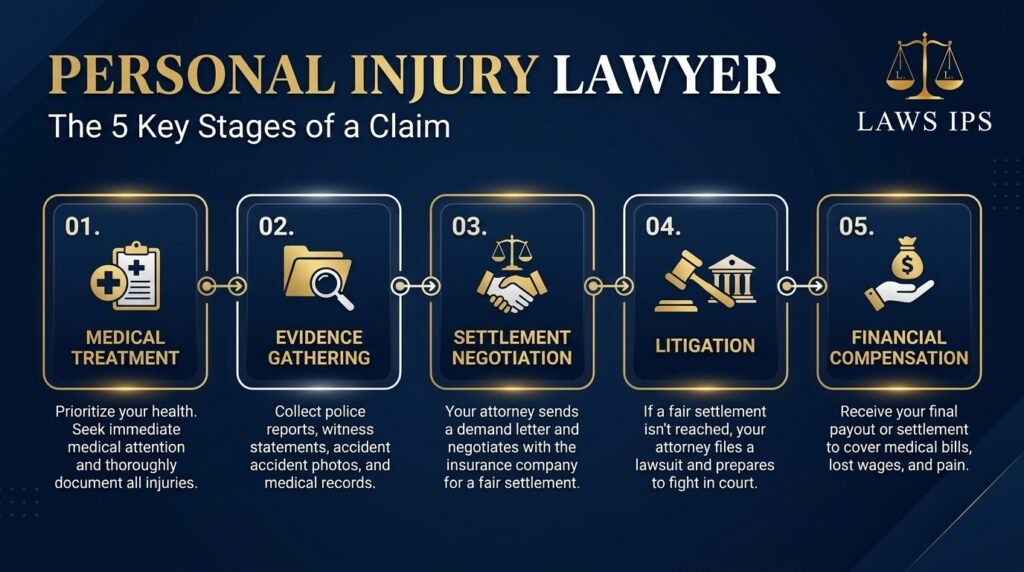
Work injuries may involve both workers compensation and third-party claims. Workers compensation pays without fault proof, but may limit damages and create reimbursement claims. A coordinated strategy prevents one claim from harming the other.
Government, School, and Public Property Cases
Claims against a government entity often require early notice, special forms, and shorter deadlines. Sovereign immunity may limit or bar some claims, depending on state law and facts. School and park cases also raise supervision, maintenance, and notice issues.
Do not wait for a standard lawsuit deadline when a public entity may be involved. Identify the correct agency, notice form, and notice period promptly. Early notice preserves options, even when the full claim is still being investigated.
Mistakes to Avoid
- Delaying medical care after an accident, which weakens causation proof.
- Giving a broad recorded statement before understanding the claim.
- Signing a release while treatment is incomplete.
- Posting accident details or activity photos on social media.
- Hiding prior injuries from providers or a lawyer.
- Missing a government notice deadline while waiting for treatment to end.
- Accepting the first offer without a net recovery calculation.
- Discarding damaged products, clothing, or repair records.
- Exaggerating symptoms, which damages credibility across the whole case.
- Choosing a lawyer on advertising alone, without checking licence, experience, and fees.
Tips That Improve a Claim
- Keep a simple injury diary with dates, pain levels, limits, and missed activities.
- Attend every appointment, or reschedule promptly with a documented reason.
- Save every bill, receipt, and insurer letter in one folder.
- Photograph injuries over time, not only on day one.
- Get employer letters confirming lost hours, duties, and pay rates.
- Ask providers to document limits, not merely diagnoses.
- Keep communication with insurers in writing where possible.
- Review every settlement offer in net terms, after fees, costs, and liens.
- Ask questions early, rather than discovering problems near a deadline.
- Stay consistent, honest, and patient, since credibility and complete records drive value.
Frequently Asked Questions
What is a personal injury lawyer?
A personal injury lawyer represents people harmed by another party’s negligence or wrongful conduct. The lawyer investigates liability, gathers medical and damages proof, negotiates with insurers, and files suit when needed. Most work on a contingency fee, so payment usually depends on recovery.
Do I need a personal injury lawyer for a minor accident?
Not always, especially when injuries are minor, liability is clear, and bills are fully paid. You should still get medical care, keep records, and avoid signing a release until treatment ends. Seek advice promptly if pain persists, liability is disputed, or an offer feels low.
How much does a personal injury lawyer cost?
Most charge a contingency fee, commonly reported between 25 percent and 40 percent, with one-third as a common standard. Case costs are separate and must be explained in writing. Always compare fee percentage, cost responsibility, and deduction order before signing.
Do I pay if I lose my case?
Under most contingency agreements, no attorney fee is owed when there is no recovery. Case costs may still be owed, depending on the agreement terms. Medical bills and liens may also remain, so ask how costs and bills are handled after a loss.
How long do I have to file a personal injury claim?
Filing periods vary by state, case type, and defendant identity, and government claims may require much earlier notice. Do not rely on a national chart without checking the current state statute. Confirm your deadline early, in writing, with a qualified source.
What if I was partly at fault?
Fault rules depend on your state, with pure comparative, modified comparative, and contributory systems producing different results. In comparative systems, recovery is usually reduced by your fault percentage. In contributory systems, even small fault can bar recovery, subject to narrow exceptions.
How long does a personal injury case take?
Simple settled claims may resolve in months, while disputed or litigated cases may take one to three years or longer. Treatment completion, insurer conduct, court schedules, and case complexity all affect timing. A lawyer can give a range, but not a guaranteed date.
What is my personal injury case worth?
Value depends on liability strength, injury severity, treatment, lost income, future care, credibility, and policy limits. Online calculators give rough ranges, not case values. A realistic valuation requires complete medical records and a net recovery calculation.
Should I accept the insurance company’s first offer?
Usually not before treatment ends and future costs are understood. First offers often arrive before the full injury picture is clear. Review any offer in net terms, including fees, costs, liens, and remaining medical needs, before deciding.
Should I give a recorded statement?
Be cautious, since recorded words can later be quoted against you. Your own policy may require notice and cooperation, but that does not require guessing about fault. Keep answers short, factual, and limited to what you directly observed.
Can I file a personal injury claim without a lawyer?
Yes, especially for small, clear claims, but complex, disputed, or serious cases carry higher risk alone. Court rules, evidence standards, and deadline traps punish mistakes harshly. A free consultation can clarify risk before you decide to proceed alone.
What should I bring to a free consultation?
Bring reports, photos, witness contacts, insurance details, medical records, bills, and work loss proof. Bring a short timeline and a list of questions about fees, timeline, and risks. Bring prior injury records for the same body part, since honesty protects credibility.
Can I switch personal injury lawyers?
Usually yes, but the original fee agreement may affect fees, costs, and lien rights on later recovery. Review the agreement, get a clear transfer plan, and confirm file transfer in writing. A second opinion before switching often prevents a costly mistake.
Will my case go to trial?
Most personal injury cases settle, but trial readiness strengthens settlement value. Filing suit does not guarantee trial, and many filed cases settle during litigation. Trial becomes more likely when liability is disputed or settlement value is far apart.
What if the other driver was uninsured?
Your own uninsured motorist coverage, medical payments coverage, or health coverage may provide a route to payment. Coverage depends on policy terms, state law, and timely notice. Check your policy promptly, and do not assume no recovery exists.
What if I was injured at work?
Work injuries often start as workers compensation claims, which do not require employer fault proof. A separate third-party claim may exist against a contractor, property owner, or product maker. Coordinate both routes, since deadlines and reimbursement rules differ.
How do medical liens affect my settlement?
Providers, health plans, and government programs may claim reimbursement from settlement funds. Liens reduce net recovery unless negotiated or resolved. Ask for a written settlement statement showing every lien deduction before signing a release.
Can I post about my accident on social media?
Avoid public posts about health, activities, fault, or settlement talks until the claim resolves. Insurers may collect posts and present them out of context. Even private posts can become discoverable, depending on court rules and privacy settings.
What does board certified mean for a personal injury lawyer?
Board certification is a state-specific credential in some states, not a national licence to practise personal injury law. Requirements, specialties, and terminology vary by state bar rules. Verify any certification claim through the relevant state bar or certifying body.
How do I check if a lawyer is licensed?
Use the state bar directory for the state where the case will be filed. Check admission status and public discipline history. Directory ratings and advertising awards are not substitutes for bar verification.
Is a free consultation really free?
A free consultation usually means no charge for the initial case review, not free representation. Ask what the consultation covers, whether advice is included, and when fees begin. Get the scope in writing if anything is unclear.
What happens after I sign a settlement release?
A signed release usually ends the claim permanently, including future complications from the same incident. Payment follows after lien resolution and deduction of agreed fees and costs. Review the release carefully, since reopening a settled claim is usually very difficult.
Can a personal injury lawyer help with a denied claim?
Yes, denial review often focuses on liability proof, causation, policy terms, and missing records. A lawyer can appeal internally, supplement evidence, negotiate, or file suit when warranted. Bring the denial letter, policy, and all prior correspondence to the review.
Conclusion
Personal injury lawyer help is most valuable when injuries are serious, liability is disputed, or insurers undervalue a claim. The strongest cases rest on prompt medical care, preserved evidence, honest records, and realistic expectations. Fees, costs, deadlines, and fault rules vary by state, so verify each one for your facts before deciding.
Choose a lawyer by licence, relevant experience, clear written fees, and dependable communication, not by advertising alone. Ask hard questions, compare agreements, and review every offer in net terms. If you were recently injured, seek medical care first, preserve evidence promptly, and get a consultation early enough to protect your deadline and your options.
