Navy Federal Loan Settlement: Cancellation Is Automatic, the $250 Is Not
Navy Federal loan settlement claims split into two very different groups. The loan cancellation, the refunds, and the credit deletion requests happen automatically for class members. Only the extra $250 needs a claim form, and that form is due November 29, 2026.
The case behind the headline is Edey et al. v. Navy Federal Credit Union, No. 2:25-cv-554. It covers unauthorized personal loans opened in members’ names, and fraud disputes Navy Federal denied in whole or in part.
This page keeps five Navy Federal matters separate. One is an open loan settlement. The others are a terminated overdraft order, a closed transfer settlement, a dismissed mortgage case, and a decade old collection order.
Navy Federal Loan Settlement in 60 Seconds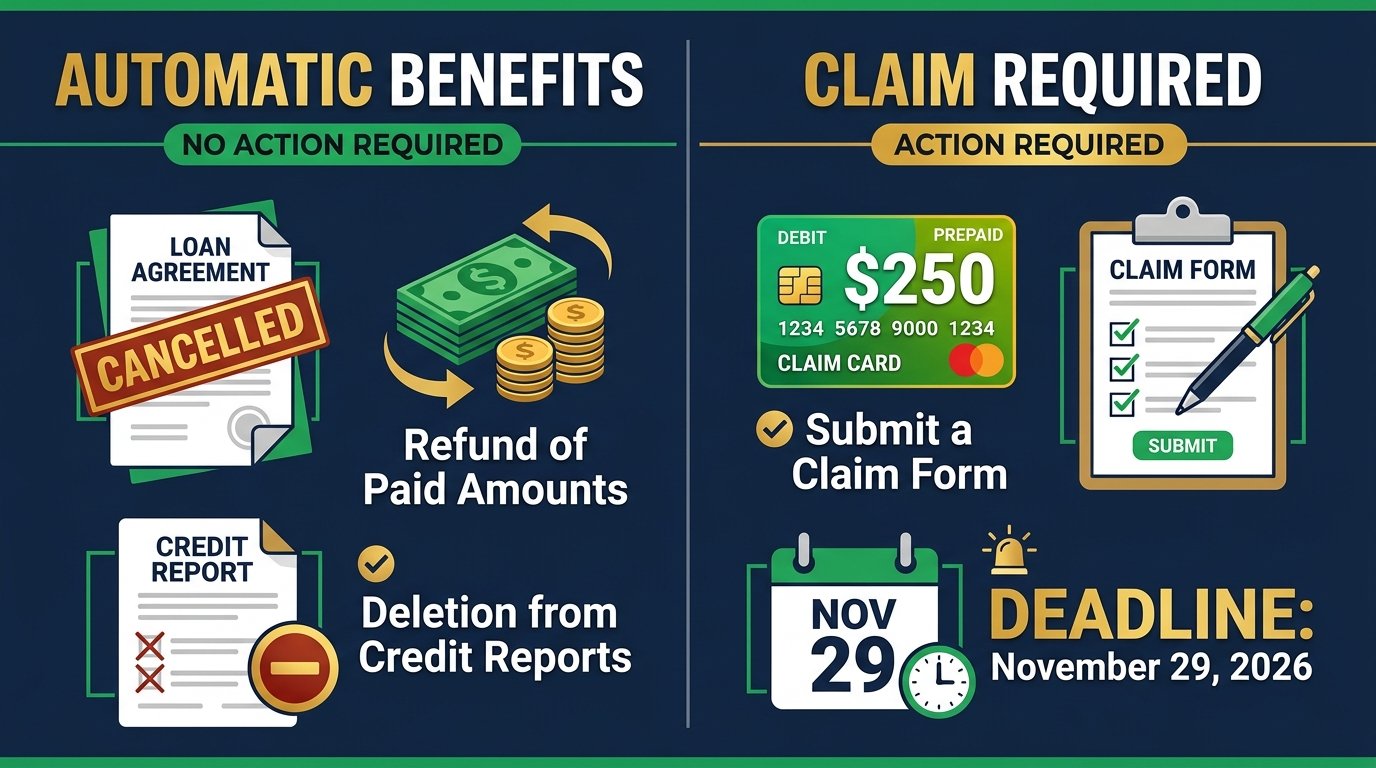
The real loan settlement is Edey, and it is preliminarily approved, not final. The court sits in the Eastern District of Virginia, Norfolk Division, and the final approval hearing is December 9, 2026.
Class members who do nothing still receive the core relief. The unauthorized loan is canceled, payments made on it are refunded, and Navy Federal requests deletion of the related credit reporting.
The one action with a clock is the extra $250 payment. It requires a valid claim, filed online or postmarked by mail, no later than November 29, 2026.
Filing runs through one official channel only. Claims go to the official Edey settlement site or by mail to the administrator, American Legal Claims Services, LLC. Filing is free.
The only live claim deadline
November 29, 2026 is the only Edey date still open to act on. A claim submitted online that day, or a paper form postmarked that day, is on time.
The opt out and objection window has already closed. That deadline passed on November 9, 2026, and it cannot be reopened by the administrator or by this page.
The December hearing is not a second chance to claim. The final approval hearing decides whether the settlement becomes final. It does not extend the claim deadline.
What happens if you do nothing
Doing nothing keeps a class member inside the settlement. The automatic benefits still apply if the settlement becomes final: cancellation, refunds including offsets, and credit deletion requests.
Doing nothing gives up only the extra $250. That payment is the single benefit the claim form controls, and it is lost once November 29, 2026 passes.
Doing nothing also means staying bound by the settlement. Class members who did not opt out by November 9, 2026 release the settled claims, with one important exception explained below.
Which Navy Federal Case Is This? Five Matters, Five Statuses
Searchers use settlement, lawsuit, and class action as if they named one case. They do not. The table below separates the five matters before any of them is explained.
|
Matter |
Subject |
Status |
Claim available |
|---|---|---|---|
|
Edey v. Navy Federal |
Unauthorized personal loans |
Open, preliminarily approved |
Yes, $250 by November 29, 2026 |
|
CFPB overdraft order, 2024-CFPB-0014 |
Checking account overdraft fees |
Terminated July 1, 2025 |
No claim process exists |
|
Stephenson v. Navy Federal |
Denied unauthorized transfer claims |
Closed, deadline passed |
No, closed December 18, 2025 |
|
Oliver v. Navy Federal |
Mortgage approval disparities |
Dismissed August 25, 2026 |
Never a settlement, nothing to claim |
|
CFPB debt collection order, 2016 |
Improper collection conduct |
Closed, historical |
No, redress was automatic |
Only the first row is a loan settlement with a live deadline. Every other row appears on this page so readers who arrived from the wrong search can correct course quickly.
No figure from one row may be added to another. The terminated overdraft order’s money is not part of Edey, and Edey itself has no published total fund.
Edey v. Navy Federal: The Unauthorized Personal Loan Settlement
The complaint says third parties opened personal loans in members’ names. In some accounts, impersonation schemes then induced members to transfer the loan proceeds to unknown third parties.
Members disputed the loans as fraudulent, and Navy Federal denied some disputes in whole or in part. The settlement resolves those denied dispute claims for the defined class. Navy Federal denies liability.
The settlement is a class action, decided for the whole class at once. That structure differs from the individual lawsuit model compared in the mass tort vs class action guide on this site.
The harm pattern resembles the identity theft side of a data breach settlement claim. An account exists that the member never agreed to, and the credit damage follows the member until it is removed.
The named plaintiffs are Edey, High, and Lee. The case was filed in September 2025, and the settlement agreement was signed on March 20, 2026, per the case reporting strands.
Class size reporting conflicts, and both strands stay labelled. The Lawsuit Watch reports about 1,607 class members as a court estimate. The Kim Law Firm reports 1,647. Neither figure is averaged here.
Claims activity is also a dated strand, not a live counter. Kim Law reports 380 claims filed as of October 25, 2026, and notices delivered at 99.82 percent.
The five conditions that define the class
All five conditions must be true for the same loan. Meeting one or two of them does not make a member part of this class.
- The loan application was submitted using a device Navy Federal did not recognize.
- The loan funds were deposited into the member’s own account.
- The member disputed the loan as fraudulent.
- Navy Federal denied the dispute in whole or in part.
- Navy Federal has not fully recovered the loan funds.
The checklist is the eligibility test, and the administrator’s records apply it. A member who believes all five fit should protect the $250 claim first and let the administrator confirm class status.
A loan Navy Federal agreed was fraudulent sits outside this class. So does a loan from outside the window below, and a dispute about a debit transfer rather than a loan.
The class period and the loan window
The class covers personal loans provided from January 1, 2023 through January 31, 2025. A loan opened in 2022 or in the spring of 2025 falls outside the settlement, whatever its facts.
Notices were mailed and emailed on August 10, 2026. The notice carries the Notice ID and PIN used for online filing, and its last page is the paper claim form.
Preliminary approval came before the notices went out. A judge reviewed the proposed terms first. Final approval is still pending, which is why every benefit on this page is conditional.
What Class Members Get
The relief splits cleanly into what is automatic and what needs the form. The table states the split before the sections explain each part.
|
Benefit |
Claim form needed |
Notes |
|---|---|---|
|
Loan cancellation |
No |
The unauthorized loan balance is canceled |
|
Refund of payments made |
No |
Includes amounts taken by offset |
|
Credit tradeline deletion request |
No |
Navy Federal asks the bureaus to delete the loan tradeline |
|
Credit inquiry deletion request |
No |
Covers the related hard inquiries |
|
Additional $250 payment |
Yes |
Claim due November 29, 2026 |
No total settlement fund is published for Edey. Two figures circulate in coverage, and both are plaintiffs’ filing figures only: almost $8.5 million in loan cancellations and more than $4.5 million in refunds.
Those filing figures must never be added into a fund total. They describe two different relief categories in a court filing, not an official aggregate the administrator announced.
Automatic: loan cancellation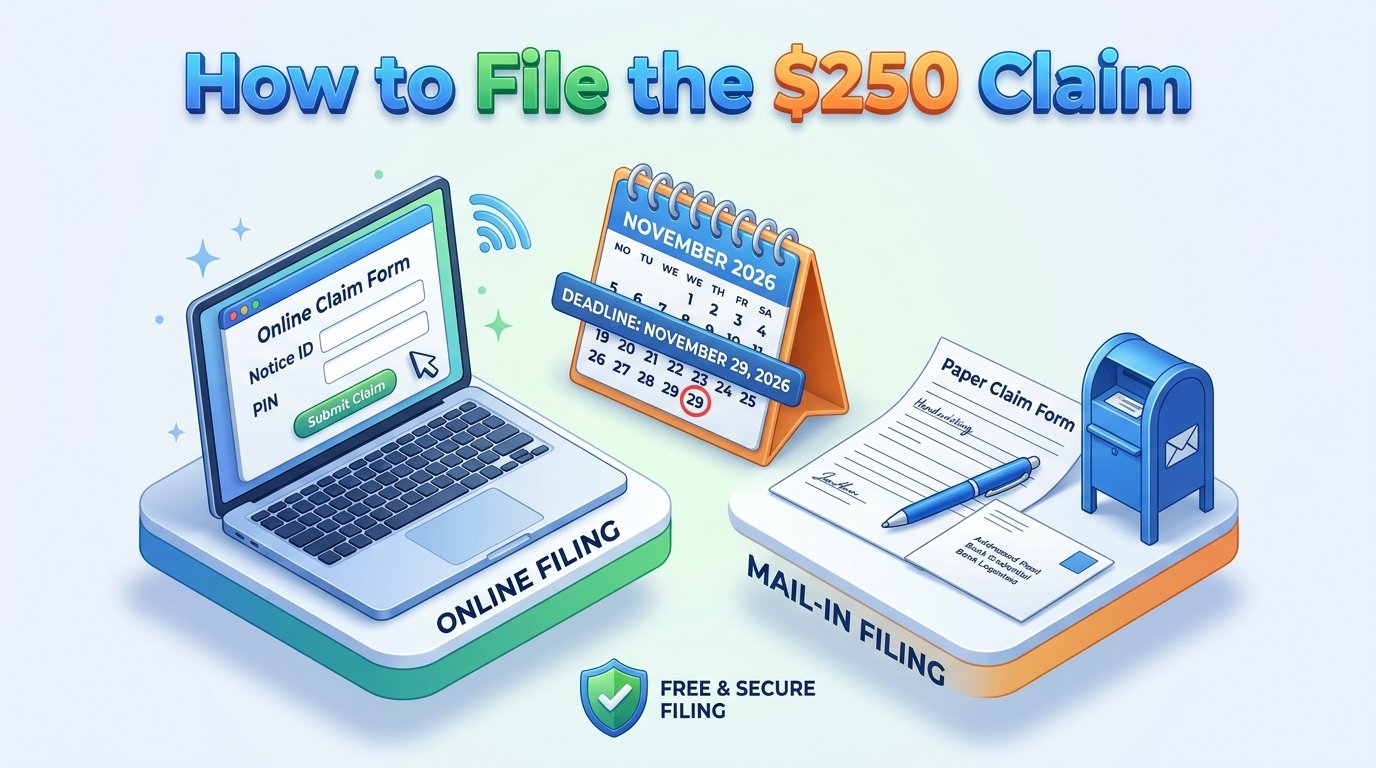
Cancellation wipes out the unauthorized loan itself. The balance the member never agreed to stops being a debt the member owes, without any form.
Cancellation is the largest single benefit for most class members. It is worth far more than the $250, and it does not depend on meeting the claim deadline.
Automatic: refunds, including offsets
Every payment made on the unauthorized loan is refunded. That includes payments the member made directly and amounts Navy Federal took by offset from other accounts.
Offset refunds matter because the money often came from savings or checking. A member who never wrote a check toward the loan may still have paid it through offsets.
Automatic: credit tradeline and inquiry deletion requests
Navy Federal must request deletion of the credit reporting tied to the loan. The request covers the loan tradeline itself and the credit inquiries the application generated.
A request is not an instant deletion. Each bureau processes deletions on its own timeline, which is why the credit section below tells members what to monitor.
Claim required: the extra $250
The $250 is a flat additional payment for class members who file a valid claim. It is the only benefit that disappears if the November 29, 2026 deadline is missed.
Unlike a privacy settlement claim, where the form carries the whole payment, here the form carries only the smallest part. The larger relief moves on its own.
How to File the $250 Claim Before November 29, 2026
Filing takes one of two routes, and both are free. Members who want the general claim process background can also read how to claim money from settlements on this site.
- Choose the online route or the mail route. Online filing uses the Notice ID and PIN. Mail filing uses the form on the last page of the notice.
- File online at the official site before the end of November 29, 2026. Enter the codes exactly as printed and keep the confirmation the site returns.
- Or mail the completed form so it is postmarked by November 29, 2026. The address is Edey v NFCU, c/o Settlement Administrator, PO Box 23668, Jacksonville, FL 32241.
- Keep your own copy and proof of mailing or submission. The administrator’s records decide timeliness, and a copy is the member’s evidence.
- Pay nothing to anyone. No fee, helper, or paid service is part of this claim at any step.
File online with the Notice ID and PIN
The online form identifies the claimant by the two notice codes. It does not ask the member to rebuild the loan file or upload account records.
Enter the codes only on the official site. The address is the official Edey settlement site, and it should be typed directly rather than reached through an advertisement.
File by mail with the notice form
The paper claim form is the last page of the mailed notice. Complete it, sign where it asks, and mail it to the Jacksonville administrator address above.
The postmark is the deadline test for mail. A form mailed on November 29, 2026 is timely even if it arrives later. A form mailed on November 30 is not.
No receipts or documents are required
The claim form does not ask for receipts, account records, or proof documents. A competitor listing that says otherwise is wrong, and this page corrects it plainly.
That error appears on an aggregator listing for this very settlement. The official route needs the notice codes online, or the notice form by mail. Nothing else is required to file.
Lost notice, changed address, or closed account
A lost notice is recoverable through the administrator, not through a paid service. Contact American Legal Claims Services through the official Edey settlement site and ask how to verify identity and recover the codes.
A changed address should be reported the same way. Settlement mail and any mailed check follow the address the administrator holds, so an old address can strand a payment.
Former members stay in the class if the five conditions fit. A closed Navy Federal account does not erase class membership, but payment routing details should be confirmed with the administrator.
Every Edey Date That Matters
Four dates govern this settlement, and two of them have already passed or are about to. The table keeps them in one place with the year on every date.
|
Date |
Event |
Status |
|---|---|---|
|
January 1, 2023 to January 31, 2025 |
Class loan window |
Closed period, defines eligibility |
|
August 10, 2026 |
Class notices mailed and emailed |
Done |
|
November 9, 2026 |
Opt out and objection deadline |
Passed |
|
November 29, 2026 |
$250 claim deadline |
Open, act now |
|
December 9, 2026 |
Final approval hearing, Norfolk |
Upcoming |
This page was checked on November 27, 2026. After November 29, the claim language on this page is scheduled to flip to past tense in a dated update pass.
November 9, 2026: opt out and objection, passed
November 9, 2026 was the last day to leave the settlement or object to it. Members who opted out kept the right to sue on their own. That door is now closed.
Missing that date was not missing the claim. The opt out deadline and the claim deadline are different dates with different consequences, and confusing them is the commonest reader error here.
December 9, 2026: final approval hearing
The court hears final approval arguments on December 9, 2026 in Norfolk, Virginia. Judge Arenda L. Wright Allen presides over the case in the Walter E. Hoffman U.S. Courthouse.
Until the court grants final approval, the settlement remains proposed. Preliminary approval allowed the notices and the claim process. It did not guarantee the relief.
The Effective Date and when relief is processed
Payments and cancellations run from the Effective Date, not from the claim deadline. The Effective Date arrives when final approval is effective and the required appeal conditions are satisfied.
Reporting on the settlement terms gives two processing windows from that date. Cancellation within 15 days, and payments within 30 days, as reported by The Kim Law Firm and other case coverage.
No individual payment date can be promised before then. A member who filed in October and a member who files on November 29 are processed on the same post approval schedule.
Credit Reports After an Unauthorized Loan
An unauthorized loan damages a credit file twice. The loan tradeline reports a debt and its payment history, and the application left hard inquiries behind it.
The settlement answers both harms with deletion requests. Navy Federal asks the credit bureaus to remove the tradeline and the related inquiries for class members, automatically.
Tradeline deletion is not the same as inquiry deletion
The tradeline is the loan account itself on the report. Its deletion removes the balance, the account history, and any late marks the unauthorized loan generated.
The inquiries are the application footprints. Deleting them matters because lenders reviewing the file otherwise see applications the member never made.
Members should pull all three bureau reports after the Effective Date. Equifax, Experian, and TransUnion process deletion requests separately, and a loan can vanish from one report while lingering on another.
Anything that remains can be disputed with the bureau directly. Keep the class notice and the before and after reports, because that paper trail is what a bureau dispute runs on.
The FCRA claim this settlement does not release
One claim is expressly carved out of this settlement. Class members do not give up the FCRA actual damages claim about Navy Federal’s duties after a credit reporting dispute.
The duty sits in section 1681s-2(b) of the Fair Credit Reporting Act. When a consumer disputes information through a bureau, the furnisher must investigate the dispute and correct inaccurate reporting.
In plain terms, the settlement ends the loan dispute fight but not the credit reporting fight. How Navy Federal investigated a member’s bureau dispute remains a separate legal question.
Whether that preserved claim is worth pursuing is individual, fact specific, and outside this page. This is general information about the carve out, not advice about any member’s claim.
The Overdraft Order Is Not a Loan Settlement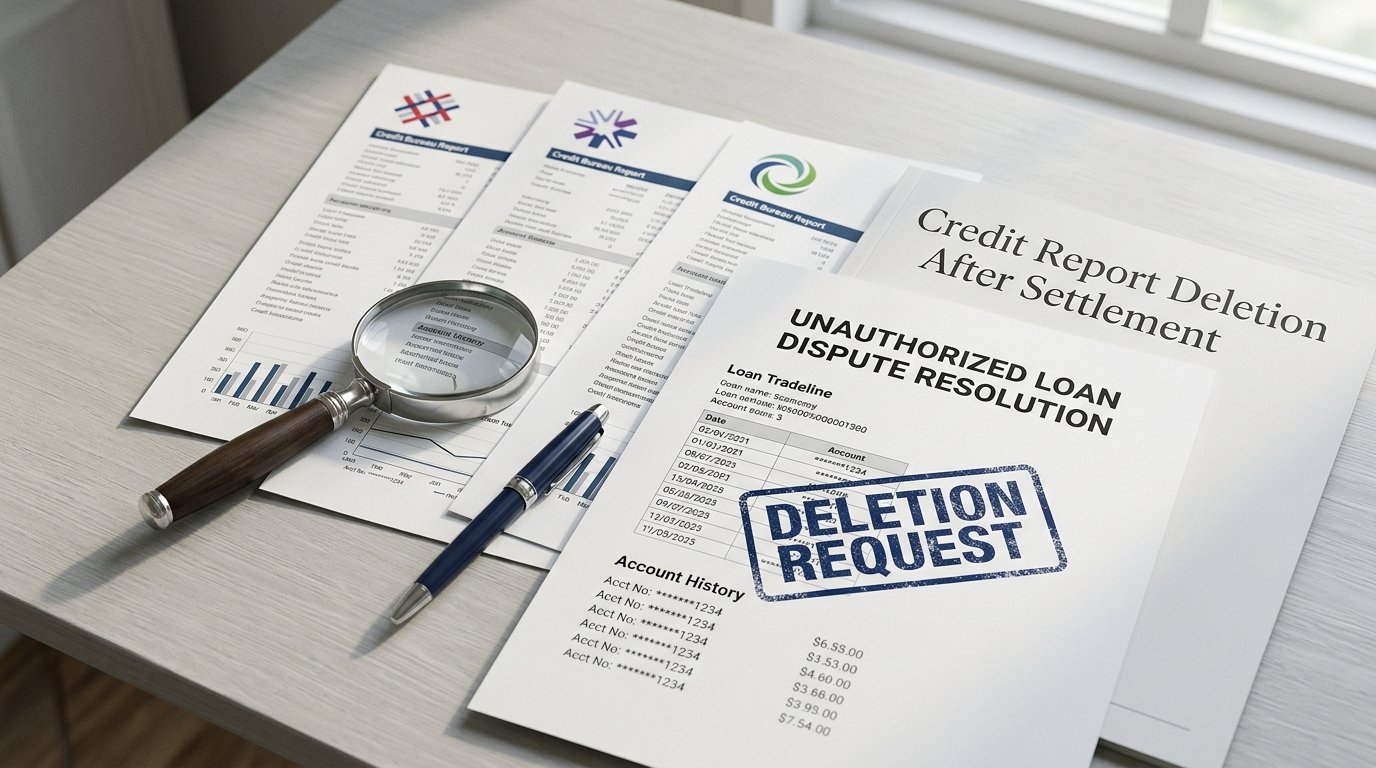
The most repeated Navy Federal settlement claim online is about the wrong product. The CFPB’s 2024 action concerned overdraft fees on checking accounts. It never involved loans.
Social posts still present roughly $95 million as money members can claim. That figure combines the order’s redress and penalty, and the claim it invites does not exist.
What the CFPB ordered in 2024
The order, File No. 2024-CFPB-0014, was issued on November 7, 2024. The full record sits on the CFPB’s Navy Federal action page, with the 2024 consent order itself published as a document.
It targeted two surprise fee practices on deposit accounts. Authorized positive, settle negative fees, and fees charged after incoming person to person credits that had not yet posted.
The terms were $80,689,100 in consumer redress and a $15 million civil penalty. The fee at the center of the practices was $20 per overdraft transaction.
LawFold’s overdraft page once described a private overdraft class action with payout tiers. LawFold later retracted that construction in print after it could not verify it. The retraction, not the tiers, is the reliable part.
What changed on July 1, 2025
The CFPB terminated the order on July 1, 2025, and the bottom line has four parts. The order was terminated, the $15 million penalty was paid in full, the consumer refunds were not distributed, and no claim process exists.
Termination waived the uncompleted redress obligations. The roughly $80 million in refunds the order required was never paid out to members before the order ended.
The Consumer Federation of America analysis documents the complaints behind the order and the reversal’s effect. Its account matches the CFPB report strand: penalty paid, refunds unpaid.
A page offering an overdraft settlement claim today is wrong or selling something. There is no form, no administrator, and no deadline for this strand, because there is no program.
Stephenson: The Closed Navy Federal Transfer Settlement
Stephenson et al. v. Navy Federal Credit Union, No. 3:23-cv-01851, was about electronic transfers, not loans. Members said Navy Federal denied unauthorized transfer claims and shorted the explanations and documents the law requires.
It was an Electronic Fund Transfer Act settlement on deposit accounts. The administrator was Kroll Settlement Administration, a different administrator from the Edey settlement’s.
The fund figures conflict and stay unmerged. The settlement agreement strand states $1.7 million. A ClassAction.org headline strand states $1.72 million. Neither is an official per person amount.
Its claim deadline was December 18, 2025, and it has passed. Final approval was granted in February 2026. No claim can be filed in Stephenson now.
The boundary is the product, not the bank. A denied debit transfer dispute belonged to Stephenson’s world. A denied unauthorized loan dispute belongs to Edey’s.
Oliver: The Mortgage Case That Never Became a Settlement
Oliver et al. v. Navy Federal Credit Union, No. 1:23-cv-01731, alleged racial disparities in mortgage approvals. The complaint cited a CNN analysis of 2022 lending data. Navy Federal denied discrimination throughout.
No court ever ruled that discrimination occurred. The case produced rulings on class certification and claim scope, including a divided Fourth Circuit decision on February 9, 2026, but no merits finding.
The case ended without any public settlement. After settlement talks, the nine plaintiffs dismissed the case with prejudice on August 25, 2026, as CU Daily’s docket based report records.
A dismissal after talks is not a class settlement. No class was ever certified, no terms were published, and there is no mortgage claim form, eligibility rule, or payout to apply for.
Some coverage of this case is now stale. Pages still describing Oliver as heading back into discovery predate the August 2026 dismissal and should not be relied on for its status.
The 2016 Debt Collection Order
The oldest strand is a CFPB consent order announced on October 11, 2016. It covered improper debt collection conduct from 2013 to 2015, detailed in the CFPB’s 2016 announcement.
The conduct included false threats of legal action and of contacting servicemembers’ chains of command. The order also covered letters misstating credit consequences and freezes on electronic account access for delinquent members.
The terms were about $23 million in redress and a $5.5 million civil penalty. Redress was administrator driven and automatic for identified members.
That order is closed history. It supports no current claim, and it is on this page only so the figure is never mistaken for live relief.
How to Tell the Official Settlement From a Copycat
One address is official: the Edey settlement site named throughout this page. Every other page, including this one, is commentary about the settlement, not the settlement itself.
Filing is always free. Anyone charging a fee to submit the $250 claim, recover a notice, or check eligibility is running a side business the settlement never authorized.
Treat the Notice ID and PIN like account credentials. Enter them only on the official settlement site. The administrator never needs them through a social media message or a phone solicitation.
A private settlement normally does not appear on ftc.gov/refunds. Absence from the FTC refunds page does not prove Edey is fake, and a listing on any other site does not prove that site is official.
Deadline pressure is the scammer’s favorite tool here. With November 29, 2026 days away, type the official address directly instead of following an advertisement, a reel, or a search result that looks almost right.
Frequently Asked Questions
Is the Navy Federal loan settlement real?
Yes. Edey et al. v. Navy Federal Credit Union, No. 2:25-cv-554, is a preliminarily approved class settlement with an official site. It concerns unauthorized personal loans, not overdraft fees or mortgages.
What is the Navy Federal loan settlement about?
It resolves claims that third parties opened unauthorized personal loans in members’ names. It also covers Navy Federal’s denial of some fraud disputes in whole or in part. Navy Federal denies liability.
Who qualifies for the Navy Federal loan settlement?
Only members who meet all five class conditions for a personal loan provided between January 1, 2023 and January 31, 2025. Meeting one or two conditions is not enough.
What are the five conditions for the Edey settlement class?
All five must be true for the same loan. The application used an unrecognized device; funds entered the member’s account; the member disputed the loan as fraudulent; Navy Federal denied the dispute in whole or in part; the funds were not fully recovered.
How much is the Navy Federal loan settlement payment?
The only fixed claim payment is an additional $250. The larger relief is automatic: loan cancellation, refunds of payments including offsets, and credit deletion requests. No total settlement fund is published.
Do I need to file a claim to get my loan canceled?
No. Loan cancellation is automatic for class members if the settlement becomes final. A claim form is required only for the additional $250 payment.
What happens automatically under the Edey settlement?
Three things happen without a claim form. The loan is canceled, payments made on it are refunded including offsets, and Navy Federal requests deletion of the related credit tradeline and inquiries.
How do I file a claim for the $250?
File online at the official settlement site using the Notice ID and PIN from your notice, or mail the claim form from the last page of the notice. Filing is free.
What is the claim deadline for the Navy Federal loan settlement?
November 29, 2026. The $250 claim must be postmarked or submitted online by that date. Do not wait for the final approval hearing in December.
What happens if I miss the November 29, 2026 deadline?
You lose the additional $250 claim payment. If you are a class member and the settlement becomes final, the automatic cancellation, refund, and credit deletion relief still applies to you.
When is the final approval hearing?
December 9, 2026, in Norfolk, Virginia. The court will decide at that hearing whether to grant final approval to the settlement.
When will I get my refund or the $250?
Payment follows final approval and the Effective Date. Reporting on the settlement terms places cancellation within 15 days and payments within 30 days after that date. No individual payment date is guaranteed in advance.
What is the Effective Date and why does payment wait for it?
It is the point when final approval becomes effective, after the required court and appeal conditions are satisfied. Settlement processing timelines run from that date, not from the claim deadline alone.
I got a notice but lost it. What do I do?
Contact American Legal Claims Services through the official settlement site. Do not buy a replacement notice or pay any third party to recover your Notice ID or PIN.
What is a Notice ID and PIN and where do I find them?
They are the unique codes printed on your mailed or emailed class notice. The online claim form uses them to connect your submission to the administrator’s class records.
I fit the class definition but never received a notice. Am I still covered?
You may still be a class member if all five conditions are true. Contact the administrator through the official site and explain that no notice arrived. Keep records of the loan and the dispute.
Do I need receipts or documents to file the claim form?
No. A competitor listing wrongly says receipts or account records are needed. The claim route uses the notice form or the online Notice ID and PIN process, nothing more.
Where do I mail the claim form?
Mail it to Edey v NFCU, c/o Settlement Administrator, PO Box 23668, Jacksonville, FL 32241. It must be postmarked by November 29, 2026.
Who is the settlement administrator for Edey v. Navy Federal?
American Legal Claims Services, LLC administers the Edey settlement. Use only the contact routes shown on the official settlement site or in the official notice.
Will the settlement remove the loan from my credit report?
Yes, Navy Federal must request deletion of credit reporting tied to the unauthorized loan, including the tradeline. Monitor all three bureau reports after the Effective Date, because deletion processing can vary by bureau.
Does the settlement delete the credit inquiries too?
Yes. The relief includes requests to delete the related credit inquiries as well as the loan tradeline. Keep copies of your reports before and after processing so you can dispute anything that remains.
What if Navy Federal took payments from my other accounts as an offset?
Offset amounts paid toward the loan are included in the automatic refund relief. You do not need to file the $250 claim to recover those payments if you are in the class.
I no longer have a Navy Federal account. How am I paid?
Confirm your mailing and contact details with the administrator through the official site. Do not assume an old account credit route will still work after the account has closed.
What did the November 9, 2026 deadline cover?
It was the deadline to opt out of the settlement or object to it, and it has passed. It was not the $250 claim deadline, which is November 29, 2026.
Can I still opt out or object?
No. The opt out and objection deadline passed on November 9, 2026. The remaining dated actions are the $250 claim deadline and then the final approval hearing.
What claims do I give up by staying in the class?
Class members release the settled claims covered by the agreement, about the unauthorized loans and related settlement conduct. One major claim is expressly preserved, and it is answered separately below.
Does the settlement release my Fair Credit Reporting Act claim?
No. The settlement expressly does not release the FCRA actual damages claim about how Navy Federal handled its investigation duties after a credit reporting dispute. This is general information, not advice about an individual claim.
What is the FCRA furnisher duty to investigate, in plain terms?
When a consumer disputes information through a credit bureau, the furnisher that supplied it must investigate and correct inaccurate reporting, as the FCRA requires. The relevant duty sits in section 1681s-2(b).
Did Navy Federal admit wrongdoing in the loan settlement?
No. Navy Federal denies liability. A settlement and preliminary approval are not findings that the allegations were proved.
Is the Edey settlement final?
Not yet. It has preliminary approval, and the final approval hearing is December 9, 2026. Relief is processed after final approval and the Effective Date.
Is there a Navy Federal overdraft settlement I can claim?
No current overdraft claim exists. The CFPB consent order concerned checking accounts, was terminated on July 1, 2025, and never gave members a class action claim form.
What happened to the CFPB’s $95 million Navy Federal order?
The November 7, 2024 order required $80,689,100 in consumer redress and a $15 million penalty. The CFPB terminated the order on July 1, 2025, before the refunds were distributed.
Did Navy Federal pay the $80 million in overdraft refunds?
No. The CFPB report strand says the consumer refunds had not been distributed when the order was terminated. Social posts presenting that money as claimable now are wrong.
Did Navy Federal pay the $15 million CFPB penalty?
Yes, the penalty was paid in full. It should not be confused with consumer refunds, which were not paid under the terminated order.
What were authorized positive, settle negative fees?
They were overdraft fees charged when a purchase was authorized while the balance appeared sufficient, then settled after the balance had fallen. It was a checking account practice, not a loan practice.
What is the Stephenson Navy Federal settlement?
Stephenson was an EFTA settlement about denied unauthorized electronic fund transfer claims and the explanations and documents members received. It was not about personal loans.
Is the Stephenson EFTA settlement the same as the loan settlement?
No. Stephenson concerns deposit account transfers and is closed. Edey concerns unauthorized personal loans, and its extra $250 claim deadline is November 29, 2026.
Can I still claim in the Stephenson settlement?
No. The Stephenson claim deadline was December 18, 2025, and it has passed. Final approval was granted in February 2026.
How much is the Stephenson settlement per person?
No official per person amount was published. The settlement agreement strand states a $1.7 million fund, while a headline strand says $1.72 million. Individual shares depend on the approved distribution calculation.
What is the Navy Federal mortgage discrimination lawsuit?
Oliver was a proposed class case alleging racial disparities in mortgage approvals and disparate impact in underwriting. Navy Federal denied discrimination, and no court ruled that discrimination occurred.
Is there a Navy Federal mortgage settlement to claim from?
No. Oliver never became a public settlement with claim terms. The plaintiffs dismissed the case with prejudice on August 25, 2026, so there is no mortgage claim form or payout.
Is the Navy Federal loan settlement a scam?
The Edey settlement itself is real and court supervised. Scams arise around it when copycat pages or callers charge for filing, ask for codes away from the official site, or present the terminated overdraft order as claimable money.
Conclusion
The Navy Federal loan settlement rewards the members who separate its two halves. Cancellation, refunds including offsets, and credit deletion requests are automatic for the Edey class if the settlement becomes final.
The $250 is the only part on a clock, and the clock runs out on November 29, 2026. File free, through the official site or the administrator’s mail address, and keep a copy of everything.
Everything else wearing the Navy Federal settlement name is closed, terminated, or never existed as a settlement. The overdraft order ended in 2025, Stephenson closed in 2025, and Oliver was dismissed in 2026.
This page is general legal and financial information, not legal advice. Eligibility turns on the class definition and the administrator’s records, and the preserved FCRA claim raises individual questions this page cannot answer.

Dilawar is a dedicated writer and contributor at Lawsips.com, focusing on legal information, business law, consumer rights, legal awareness, and everyday legal matters. He is passionate about simplifying complex legal topics and providing readers with clear, practical, and easy-to-understand information. His goal is to help readers stay informed about legal developments, understand their rights, and make better decisions through informative and well-researched articles.