How to Read a Mortgage Estimate Without Getting Fooled
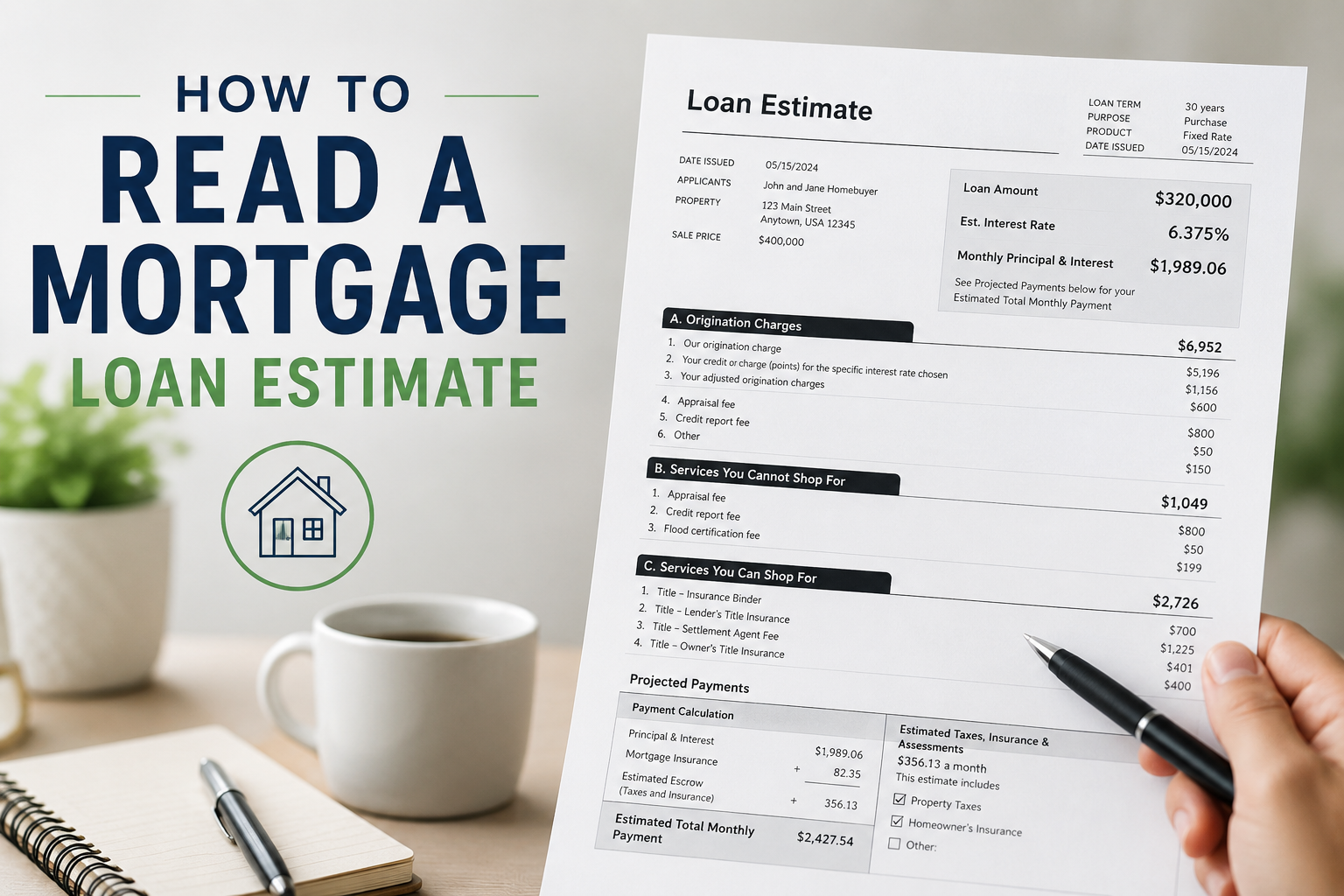
Three pages. Roughly forty numbers. One signature line at the bottom. That is the document most buyers stare at for twenty minutes before saying, fine, sure, send it over. I have watched people who run spreadsheets for a living skim past a two thousand dollar line item because it was buried in a column marked “other.” The estimate is not designed to hide things from you. It is just designed for a lender to fill out fast, which means it is not designed for you to read at all.
So read it backwards. Start on page three and work toward the top. That single habit changes how the whole document lands, and it is the first thing I tell anyone shopping for mortgage financing solutions to do, because the last page is where the numbers that actually move your monthly payment live.
Here is the rest of my approach, built from years of sitting on the other side of that table.
What are the only five numbers that matter?
Loan amount. Interest rate. Total closing costs. Cash to close. Monthly payment including escrow. Everything else on the estimate is either a backup detail or a box a regulator made the lender check.
If you memorize that short list, the document shrinks from forty numbers to five. I would argue three of them are close to irrelevant to your decision on day one. The rate and the total closing costs do all the real work, and the cash to close number is mostly there so you know what to wire.
Notice what is missing from the list: APR. The annual percentage rate folds closing costs into the rate and spits out a figure that is useful for comparing two nearly identical offers and useless for almost everything else. Lenders know people fixate on it. That is why it sits in a big box near the top.
The Penny Test I run on every estimate
This is my own diagnostic, and it takes about ninety seconds. Take the total closing costs, divide by your loan amount, and move the decimal two spots to the right. On a three hundred thousand dollar loan, twenty four hundred dollars in costs comes out to point eight percent.
Under one percent is clean. One to two percent is normal and worth a polite question or two. Above two percent, you need a line by line explanation of what you are paying for and why. Round numbers near a clean dollar figure, like a twelve hundred dollar “processing” charge, tend to be priced rather than calculated. Those are the ones I push on first.
Run this before you call anyone. You will ask sharper questions when you already know the answer is defensible or not.
Where the junk hides on page two
The middle page is where estimates get interesting, and not in a good way. Watch these spots.
- Services you can shop for: the estimate has to list these separately, and a lender who quotes them without letting you compare is doing you a disservice.
- Owner’s title insurance: the seller often covers a chunk of this in many markets, so confirm who is actually paying before you accept it at face value.
- Prepaid interest: this is simply interest from your closing date to the end of the month. A higher number is not a red flag, it just means you are closing early in the month.
- Escrow deposits: these are prepayments into your own escrow account, not a fee someone keeps. Lots of buyers panic over these for no reason.
The Consumer Financial Protection Bureau built the standard estimate form to force this kind of transparency, and it is worth understanding what the form is designed to show before you argue about a line item. Knowing the intent behind each box makes you a much harder person to bluff.
The trap I see most often is a low interest rate paired with a bloated cost column. The rate gets the headline. The costs pay for it. No lender is secretly generous, and no lender is secretly robbing you, but the tradeoff between rate and fees is real, and you need to see both numbers side by side.
Comparing two estimates without going cross eyed
Do not compare documents. Build one table. Put each lender in a column, the same five numbers in a row, and fill it in with a pen. The exercise forces you to look at identical things, which is the entire point.
| Line item | Lender A | Lender B | Lender C
|
|---|---|---|---|
| Interest rate | |||
| Total closing costs | |||
| Penny Test result | |||
| Cash to close | |||
| Monthly payment with escrow |
Leave the boxes blank until the lender fills them in. If a lender cannot give you all five numbers in writing, that is your answer, and you can stop the conversation there. I have never once regretted walking away from a lender who got cagey about the cost column.
Questions to ask before you sign anything
Ask who pays for title insurance if you are unsure, and ask whether the rate is locked or floating. Ask what happens to the estimate if your closing date moves by two weeks. Those three questions surface almost every disagreement before it becomes expensive.
A rate lock is a promise with an expiration date, and plenty of buyers learn that the hard way when a delayed closing pushes them past it. Closing timelines are not entirely in your hands either, since appraisals and title work run on their own schedule. The Department of Housing and Urban Development has long tracked how closing costs and settlement practices work across markets, and it is a useful place to check how much of the process is standard versus negotiable.
What to do the day it arrives
Print it. Read page three first, then page one, then page two. Mark every number you cannot explain out loud in plain English. Call the loan officer about exactly those, and nothing else. The conversation goes a lot faster when you only have four questions instead of forty, and the loan officer will respect you more for it, even if they do not say so.
One more habit that pays off: save every estimate you receive, including the revised ones. Lenders reissue them all the time, and comparing the first version to the final version tells you whether anything moved quietly. If a fee grew between drafts, you want to know why before you sign, not after.
The document is not the enemy. It is a badly laid out map to a decision worth hundreds of thousands of dollars, and maps only help people who actually read them. Take the ninety seconds for the Penny Test, keep your five numbers in one table, and ask your questions in a single call. Then go sign something you fully understand.
When was the last time you read past page one of an estimate, out of genuine curiosity and not panic? Try it on the next one and see what you find.

Sam Kuran writes for LawSips about legal topics, law firm marketing, and technology. His articles use plain English and practical examples to help readers understand legal terms and explore how law firms use technology to manage their work and reach clients.