
Criminal Defense: How a Domestic Violence Charge Actually Gets Built
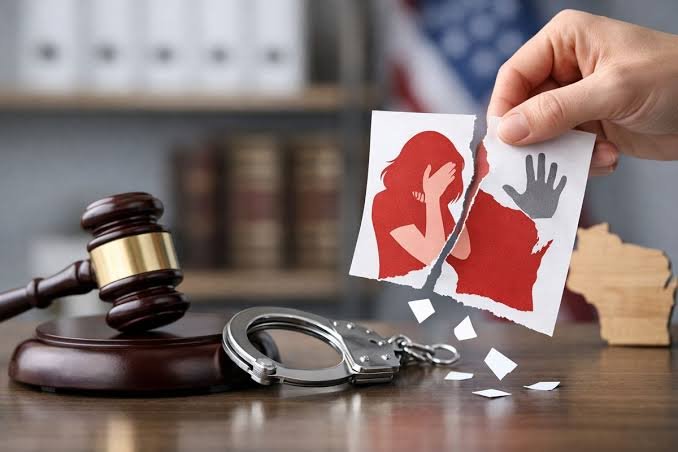
Most people picture a domestic violence case starting with an arrest. It doesn’t. It starts with dispatch notes, a 911 recording, and two officers deciding which version of a messy night sounds most consistent. By the time anyone is handcuffed, the file has a direction, and that direction is hard to turn.
That matters whether you are the person charged, a family member trying to understand the process, or a business owner writing about the legal system for readers who are frightened. Cases like this live or die on small procedural details that most people never think to look at. A defense strategy starts with understanding how the pieces were stacked before you ever got a chance to speak, which is the first thing a domestic violence defense lawyer de la Grana Law Tampa team will walk through when a file lands on the desk.
I have read enough charging documents to know the pattern. The arrest report tells you what officers believed in the first hour. The probable cause affidavit tells you what they could write down. Those two things are not the same, and the gap between them is where the entire fight happens.
What does a domestic violence charge look like on paper?
Pull the paperwork and you find four layers, and each one can be attacked on its own.
- The call record. Timestamps, dispatch notes, the words your neighbor used. Calls get logged before anyone knows what happened.
- The initial statement. What each person said in the first twenty minutes, often under stress and often partial.
- The physical description. Injuries, property damage, the state of the room. This layer is persuasive and it is also the easiest to photograph badly.
- The narrative. The investigator’s summary that stitches it all into a story. This is where bias enters quietly, and where a good defense rereads every line against the raw notes.
Not every case has all four, and some have more. What surprises clients is how much weight the narrative carries. A single sentence in an officer’s summary, like “the suspect appeared agitated,” gets treated as fact at every later stage, even though it describes a mood nobody measured.
The evidence already exists before anyone is arrested
This is the part that catches people off guard. Body camera footage, 911 audio, and dispatch logs are collected by the responding agency as a matter of routine. That means the record is being built while you are still processing what happened, and you cannot unbuild it later.
Under the federal rules codified through the Legal Information Institute, discovery rules obligate prosecutors to share materials with the defense, and that includes the raw footage and notes behind the official narrative. Reading the discovery packet line by line, comparing it to the report, and flagging every place where the two disagree is slow work, and it is almost always where defenses find their footing. I’d rather spend a week cross checking timestamps than go into a hearing guessing about what the recording contains.
A concrete scenario worth walking through
Picture a couple arguing in a driveway after a dinner party. A neighbor hears raised voices and calls. Two officers arrive, see a scratched forearm and a tipped-over trash can, and separate everyone. One partner is visibly upset and talking fast. The other is quiet. The quiet one gets arrested, not because they did anything worse, but because the officer needed to bring the situation down, and separating with an arrest is the default move.
Now look at what actually existed in that file. The 911 call was placed eight minutes after the argument began, and the caller says “they’re yelling.” The body camera picks up the quiet partner explaining the scratched forearm came from a raised hand during the argument. The report doesn’t mention that sentence. Three versions of the same minute, floating in three separate files, and reconciling them is the job.
Where do domestic violence cases usually crack?
First, the timeline. Dispatchers log times to the second. When the narrative places an event before a 911 call and the recording says otherwise, that’s a door.
Second, the injury description. A photograph shows a mark. A paragraph says “visible bruising.” Those aren’t the same claim, and a defense reader should say so.
Third, the account changes across the case. A first statement that shifts by the time of a follow-up interview is normal for people in crisis, but the shift itself is data, and it’s fair game.
Fourth, the investigation itself. A responding officer who skips a secondary interview, or an investigator who never photographed a second room, leaves a hole in the record. According to National Institute of Justice material on how domestic violence gets investigated, the reliability of an initial report depends heavily on how the first responders handled their walkthrough, which is why the state’s version isn’t automatically a complete fact pattern.
And it’s worth saying plainly: domestic violence is a real harm and the system has to take it seriously. That reality doesn’t erase the fact that rushed investigations happen, and it doesn’t mean a person charged is guilty of the worst version of the story. Both things fit in the same sentence, and pretending otherwise makes the system worse for everyone involved.
The first 72 hours matter more than most people think
Here’s where I’d draw the line for anyone reading this with a file in their hands: what you say and do in the first three days will shape the entire case, and not in your favor if you’re improvising.
Some practical moves worth knowing:
- Write nothing down. No texts, no social posts, no messages to the other person about the case. Every one of them is a future exhibit.
- Get an attorney before a formal interview. You can decline to answer and ask for counsel. Under the process outlined by the United States Courts, you have the right to counsel at critical stages of a criminal case, and an interview is a critical stage.
- Collect no evidence yourself. Screenshots and reenactments become part of the record and are easy to misread. A defense team can obtain what’s admissible through proper channels.
- Keep a plain journal. Dates, times, and a clear account of what you remember, written for yourself and not for anyone else.
That journal isn’t a legal document, but it’s the tool I’d insist on if I were the one charged. Memory softens after a week. A single line written down the morning after is worth more than an hour of recollection in month three.
The outcome usually lives in the details
Charges of this kind move through an already crowded system, and the final outcome is often decided by things that seem tiny on the page: a timestamp, a sentence dropped from the report, a photograph that doesn’t match its caption. Reading the file carefully is not a strategy. It is the strategy, and there is no shortcut around it.
If you are heading into a process like this, the worst thing you can do is wait and hope it gets quietly dropped. It rarely does. Speak to counsel early, treat the paperwork like the evidence it is, and treat the investigation like something a sharp reader could still take apart. Do you know which of the four layers in your case is the weakest?

Sam Kuran writes for LawSips about legal topics, law firm marketing, and technology. His articles use plain English and practical examples to help readers understand legal terms and explore how law firms use technology to manage their work and reach clients.