
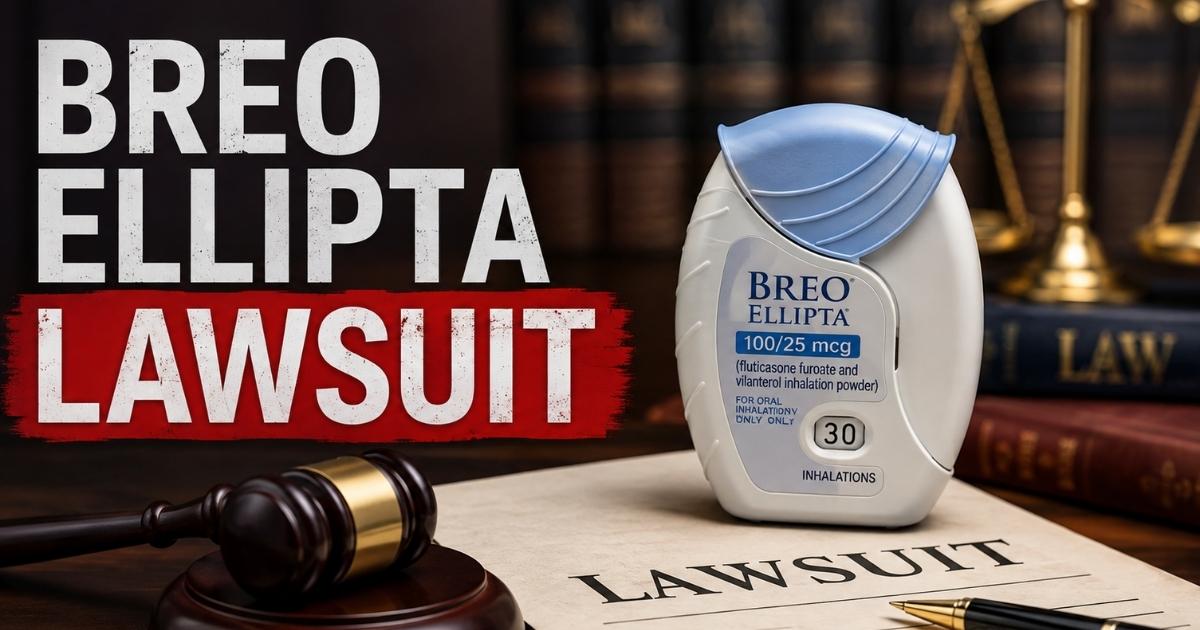

Breo Ellipta has been prescribed to millions of people living with asthma and chronic obstructive pulmonary disease (COPD). It is also, right now, the subject of ongoing legal disputes that range from patent battles to individual personal injury claims. If you searched for this topic because you or someone you love took Breo Ellipta and later developed pneumonia, heart problems, or another serious condition, you probably want clear answers, not legal jargon.
This guide breaks down what the Breo Ellipta lawsuit actually involves in 2026, what the litigation does and does not include, who may qualify to file a claim, and what the settlement landscape looks like today. Everything here is written in plain language and grounded in what is publicly verifiable about the case, not speculation dressed up as fact.
Breo Ellipta Lawsuit 2026: What You Need to Know Right Now
Here is the short version before we go deep into the details.
- Breo Ellipta is a combination inhaler made by GlaxoSmithKline (GSK) that treats asthma and COPD.
- The best documented Breo Ellipta lawsuit is a patent infringement case brought by Vectura Ltd, which ended in an $89.7 million verdict against GSK that was upheld on appeal.
- Separate from the patent fight, individual patients have filed personal injury lawsuits alleging GSK failed to adequately warn about pneumonia, cardiovascular events, bone density loss, and other serious side effects.
- As of 2026, there is no confirmed federal multidistrict litigation (MDL) or nationwide class action settlement dedicated specifically to Breo Ellipta injury claims.
- Breo Ellipta remains FDA approved and available on the market. No recall has been issued.
- Anyone who believes they were harmed should talk to a personal injury or mass tort attorney promptly, since filing deadlines vary by state and by the date of injury.
Keep reading for the full picture, including the medical evidence behind these claims and how the eligibility and filing process actually works.
What Is the Breo Ellipta Lawsuit About?
The phrase “Breo Ellipta lawsuit” gets used online to describe several different legal disputes, and mixing them up leads to confusion. It helps to separate them clearly.
- Patent infringement litigation. Vectura Ltd sued GSK, claiming that Breo Ellipta (along with Anoro Ellipta and Incruse Ellipta) used a patented dry powder inhaler technology without permission. This case was about intellectual property, not patient safety.
- Antitrust and pricing disputes. Some lawsuits accuse GSK of using so called “device hopping” tactics, meaning shifting patients toward newer patented inhaler devices to delay generic competition and keep prices high.
- Trade secret claims. A more recent complaint alleges that confidential inhaler design information was misused during efforts to develop a generic version of Breo Ellipta.
- Personal injury claims. Individual patients and families have filed lawsuits alleging that GSK did not properly warn about serious risks, including pneumonia, heart complications, and bone loss, and that these risks caused real harm.
Each of these tracks involves different plaintiffs, different legal theories, and different courts. When people search for “is Breo Ellipta being sued,” they are often really asking about the personal injury claims, since those are the ones tied to actual patient harm.
Breo Ellipta: The Basics
Breo Ellipta is a once daily maintenance inhaler that combines two active ingredients:
- Fluticasone furoate, an inhaled corticosteroid that reduces airway inflammation.
- Vilanterol, a long acting beta2-agonist (LABA) that relaxes the muscles around the airways to make breathing easier.
The FDA approved Breo Ellipta for COPD in May 2013 and expanded the approval to include asthma in April 2015, based on clinical trials that involved more than 7,700 patients. It is co-developed by GSK and Theravance Biopharma, with GSK responsible for manufacturing, marketing, and regulatory compliance in most markets, which is why GSK is the primary defendant named in the majority of active claims.
The Breo Ellipta Class Action Lawsuit Explained
Many websites use the term “Breo Ellipta class action lawsuit” loosely, so it is worth explaining what that legal structure actually means and how it applies here.
A class action allows a group of people who suffered a similar type of harm to bring one combined lawsuit instead of filing separately. Courts approve class treatment when the claims share common facts and legal questions, and when a class format is more efficient than handling each case individually.
For pharmaceutical injury cases like this one, a class action is not always the best fit, for a simple reason: injuries vary widely from patient to patient. One person’s pneumonia hospitalization looks very different, medically and financially, from another patient’s cardiac arrhythmia or bone fracture. Because of that variation, more serious drug injury cases are often pursued as individual lawsuits or grouped into a mass tort, rather than a single class action with one shared payout.
Why This Matters for You
If your injury was relatively minor and well documented across many patients in the same way, a class action structure may eventually apply. If your injury was severe, such as hospitalization, permanent damage, or a death in the family, an individual lawsuit within a mass tort framework typically allows for compensation that reflects the specific harm you experienced, rather than an equal share of a fixed settlement pool.
GlaxoSmithKline and the Breo Ellipta Lawsuit
GlaxoSmithKline is one of the largest pharmaceutical companies in the world, headquartered in London and generating tens of billions of pounds in annual revenue. GSK holds the primary product license for Breo Ellipta and is named as the lead defendant in nearly every legal action connected to the drug.
GSK is not new to large scale litigation. The company has faced high profile cases over other products in its portfolio, and its legal team has extensive experience defending pharmaceutical injury claims. This history matters for two reasons.
- It shows GSK has the resources and legal strategy to contest claims aggressively, which means plaintiffs generally need strong medical documentation to succeed.
- It also means GSK has, in prior cases, negotiated settlements once evidence of harm and inadequate warning became difficult to dispute in court.
In the Vectura patent case specifically, GSK contested the verdict through appeal, and the U.S. Court of Appeals for the Federal Circuit affirmed the $89.7 million judgment in November 2020. That case is fully resolved. The personal injury track, by contrast, remains active, with individual cases proceeding in various state and federal courts rather than in one centralized proceeding.
Breo Ellipta Side Effects at the Center of Litigation
Every prescription drug carries some risk, and Breo Ellipta’s official prescribing information already discloses a range of side effects. The legal dispute is not about whether these risks exist. It is about whether patients and doctors were given clear enough warning about how serious some of them can be.
Commonly reported side effects include:
- Upper respiratory tract infection
- Headache
- Oral thrush (a fungal infection in the mouth and throat)
- Nasopharyngitis (inflammation of the nose and throat)
- Back pain
These are generally mild and well known. The lawsuits center instead on the more serious, less obvious risks described below.
Cardiovascular Side Effects Driving Breo Ellipta Claims
Vilanterol, the long acting beta agonist in Breo Ellipta, works by stimulating beta2 receptors to relax airway muscles. That same mechanism can also affect the cardiovascular system. According to the drug’s labeling and independent clinical literature, this can include:
- Increased heart rate
- Elevated blood pressure
- Heart palpitations or irregular heartbeat
- QTc interval prolongation, a change in heart rhythm that can raise the risk of dangerous arrhythmias
- Supraventricular tachycardia and other rhythm disturbances
For patients with pre-existing heart conditions, these effects can be more than a nuisance. They can trigger emergency hospitalizations or contribute to more serious cardiac events. Plaintiffs in cardiovascular injury cases generally argue that the risk was understated relative to what internal or published research indicated, and that better warnings could have changed how doctors and patients weighed the risks and benefits.
Breo Ellipta Pneumonia Risk: What the Research Shows
Pneumonia risk is one of the most frequently cited issues in Breo Ellipta injury claims, and it has real clinical backing. Inhaled corticosteroids, the drug class that includes fluticasone furoate, have been studied extensively in COPD patients because steroids can suppress local immune response in the lungs.
Peer reviewed pulmonology research has found that fluticasone based inhalers were associated with a higher rate of pneumonia compared to some alternative inhaled corticosteroids, such as budesonide. Breo Ellipta’s own FDA label already carries a pneumonia warning for COPD patients, since this risk was identified during clinical development.
The legal argument in many personal injury claims is not that the pneumonia risk is a secret. It is that the risk was not communicated clearly enough, especially in cases involving hospitalization, and that patients with certain risk factors, such as low body weight, existing lung disease, or a history of pneumonia, were not adequately flagged for closer monitoring.
If you were hospitalized with pneumonia while using Breo Ellipta and were not warned this was a heightened risk for someone in your situation, this is one of the stronger fact patterns attorneys look for when evaluating a potential claim.
Other Serious Side Effects Linked to Breo Ellipta
Beyond pneumonia and cardiovascular events, several other conditions appear in the litigation, often because they develop gradually and are harder for patients to immediately connect back to the medication.
Bone Density Loss and Fractures
Long term corticosteroid exposure, even through an inhaler, has been linked to decreased bone mineral density. In clinical trials, patients on higher doses of Breo Ellipta experienced fractures at a higher rate than those on a comparison bronchodilator alone. This is a particular concern for older adults and postmenopausal women, who already face elevated fracture risk.
Adrenal Suppression
Corticosteroids can suppress the body’s natural cortisol production over time. If a patient stops the medication abruptly after long term use, this can trigger adrenal insufficiency or, in severe cases, an adrenal crisis, which is a medical emergency.
Elevated Blood Sugar
Corticosteroids can raise blood glucose levels, which is a particular concern for patients who already have diabetes or prediabetes.
Vision Problems
Long term corticosteroid use has been associated with an increased risk of glaucoma and cataracts in some patients.
Hypersensitivity Reactions
Some patients have reported allergic type reactions, including rash, swelling, or difficulty breathing shortly after using the inhaler.
Mental Health Changes
A smaller number of plaintiffs report new or worsened anxiety and depression symptoms after starting the medication, which they attribute to its systemic effects.
Breo Ellipta Lawsuit Eligibility: Do You Qualify?
Not every side effect creates a valid legal claim. Attorneys handling these cases generally look for a combination of factors before deciding whether a case has merit.
A claim is more likely to move forward if you can show:
- You were prescribed and actually used Breo Ellipta for a meaningful period.
- You experienced a serious, medically documented injury, such as hospitalization, a diagnosed cardiac event, a fracture linked to bone density loss, or another significant complication.
- Medical records connect the injury to a plausible side effect of the medication rather than an unrelated condition.
- The injury occurred within the legal time window allowed in your state (more on this below).
- You did not have a pre-existing condition that fully explains the injury independent of the medication, though this does not automatically disqualify a claim, it simply affects how the case is evaluated.
Mild, temporary side effects that resolved on their own, such as a short bout of oral thrush treated with medication, generally do not support a lawsuit on their own. The strongest claims tend to involve hospitalization, permanent damage, or death.
Who Qualifies for the Breo Ellipta Lawsuit in 2026?
Building on the eligibility factors above, here is a more specific breakdown of who attorneys are typically screening for in current Breo Ellipta injury evaluations.
- Patients hospitalized with pneumonia while actively using Breo Ellipta, particularly those with no other clear cause identified.
- Patients who suffered a cardiac event, such as a heart attack, atrial fibrillation, or a dangerous arrhythmia, during or shortly after Breo Ellipta use.
- Patients diagnosed with significant bone density loss or a fracture after long term use, especially where no bone density screening was recommended.
- Patients who experienced adrenal crisis after stopping the medication.
- Family members pursuing a wrongful death claim where Breo Ellipta is believed to have been a contributing factor.
If you are unsure whether your situation fits, the safest step is a free case evaluation with a mass tort or pharmaceutical injury attorney. Most firms handling these cases offer no-cost consultations and only get paid if your case results in a settlement or verdict, so there is generally little downside to asking.
Breo Ellipta Lawsuit Settlement: Where Things Stand
This is where accuracy matters more than anywhere else in this article, because a lot of content online blurs the line between what has actually happened and what might happen.
Here is the confirmed status as of 2026:
- The Vectura patent case is fully resolved. GSK paid the $89.7 million judgment (calculated as a royalty on more than $2.99 billion in sales) after losing at trial in 2019 and again on appeal in 2020. This settlement has nothing to do with patient injuries.
- No large scale class action settlement or federal MDL has been confirmed specifically for Breo Ellipta personal injury claims. Public federal court databases do not currently list a Judicial Panel on Multidistrict Litigation consolidation dedicated to Breo Ellipta injuries.
- Individual personal injury lawsuits remain active in various state and federal courts, proceeding on their own timelines rather than as part of one unified settlement fund.
If you see a website advertising a specific dollar figure for “the Breo Ellipta settlement” as though a fund already exists and is accepting claims, treat that claim with skepticism and verify it directly with an attorney before assuming it applies to you. As of now, compensation in this litigation comes through individual case resolution, not a pre-set nationwide payout program.
How Much Is the Breo Ellipta Settlement Amount?
Because there is no established nationwide settlement fund for injury claims, there is no official, confirmed figure to report for an average or expected payout. Any specific number you see quoted for Breo Ellipta injury settlements should be treated as an estimate at best, not a guarantee.
That said, general factors that influence settlement value in pharmaceutical injury cases like this one include:
- Severity of the injury. Hospitalization, permanent disability, or death typically results in higher compensation than a temporary complication.
- Medical expenses. Documented costs for hospital stays, treatment, surgery, and ongoing care factor directly into the claim’s value.
- Lost income. Time away from work, or permanent loss of earning capacity, is factored into damages.
- Pain and suffering. Non-economic damages account for the physical and emotional toll of the injury.
- Strength of causation evidence. Cases where medical records clearly link the injury to the medication, with fewer competing explanations, tend to settle for more.
- State law caps. Some states limit certain types of damages in personal injury cases, which can affect the final number regardless of how strong the underlying case is.
An experienced attorney can give you a realistic range based on the specifics of your medical history and injury, but be wary of anyone who promises an exact settlement figure before reviewing your records.
Breo Ellipta Lawsuit Payout: What Injured Patients Can Expect
Rather than a fixed number, think of a potential payout as being built from several categories of damages that a case can include:
- Economic damages, covering hospital bills, medication costs, rehabilitation, and lost wages.
- Non-economic damages, covering pain, suffering, loss of enjoyment of life, and emotional distress.
- Punitive damages, which are rare and only apply if a court finds the manufacturer’s conduct was especially reckless, not just negligent.
- Wrongful death damages, in cases where a patient died, which can include funeral expenses, loss of financial support, and loss of companionship for surviving family members.
Cases involving hospitalization for pneumonia or a cardiac event, with clear documentation and no major competing causes, generally represent the strongest candidates for meaningful compensation. Cases with limited documentation or where other health conditions could explain the injury tend to be harder to value and may settle for less, if they proceed at all.
How to File a Breo Ellipta Lawsuit in 2026
If you believe you have a valid claim, here is the general process most patients go through.
- Get medical treatment first. Your health comes before any legal step. Make sure any ongoing symptoms are properly diagnosed and documented.
- Gather your records. Collect prescription history, pharmacy records, hospital discharge summaries, and any test results connected to your injury.
- Consult a mass tort or pharmaceutical injury attorney. Look for a firm with specific experience in drug injury litigation, not just general personal injury work. Most offer a free initial case review.
- Complete a case evaluation. The attorney’s team will review your medical history and usage timeline to determine if your case meets the threshold for filing.
- Sign a retainer agreement. Most firms in this space work on contingency, meaning you pay nothing upfront and the firm only collects a fee if your case results in compensation.
- The attorney investigates and files. This includes gathering expert medical opinions, requesting additional records, and formally filing the lawsuit in the appropriate court.
- Discovery and negotiation. The case proceeds through the legal process, which can include settlement negotiations at various stages before trial, if it gets that far.
Throughout this process, keep copies of everything and stay in regular contact with your legal team. Cases can take months or, in more complex litigation, years to resolve.
Breo Ellipta Lawsuit Filing Deadline: Don’t Miss It
Every state sets its own statute of limitations, which is the legal deadline for filing a personal injury or product liability lawsuit. Miss this window, and you generally lose the right to sue, no matter how strong your case would otherwise be.
A few important points about how these deadlines work in drug injury cases:
- The clock often starts from the date of injury, but in many states it can instead start from the date you discovered, or reasonably should have discovered, that the medication caused your harm. This is known as the “discovery rule,” and it matters a lot in cases involving gradual injuries like bone density loss.
- Wrongful death claims typically have their own, separate deadline, which is often shorter and starts from the date of death rather than the original injury.
- Deadlines can be affected by factors such as the victim’s age at the time of injury or whether the injury was properly diagnosed early on.
Because these rules are technical and vary significantly, do not try to calculate your own deadline from general information alone. Speak with an attorney as soon as possible, since consultations are typically free and a quick conversation can confirm whether you still have time to act.
Breo Ellipta Statute of Limitations by State
Statute of limitations periods for personal injury and product liability claims generally range between one and six years, depending on the state and the type of claim involved. Below is a general reference for common ranges, though you should always confirm the exact rule with a licensed attorney in your state, since exceptions and recent law changes can apply.
| Time Frame | Examples of States in This Range |
| 1 year | Kentucky, Louisiana, Tennessee |
| 2 years | California, Texas, Ohio, Florida (for most personal injury claims), Georgia, Pennsylvania |
| 3 years | New York, New Jersey, Washington, Maryland |
| 4 years | Utah, Wyoming |
| 6 years | North Dakota, Maine |
This table is a general starting point, not legal advice. Wrongful death deadlines, discovery rule exceptions, and claims involving minors can all shift these timeframes. If you are unsure where you stand, treat it as urgent and get a professional opinion rather than guessing.
Is Breo Ellipta Part of a Mass Tort?
A mass tort is different from a class action. In a mass tort, each plaintiff’s case remains individual, meaning your compensation depends on your own specific injury and evidence, even though many cases may be coordinated together for efficiency during pretrial proceedings.
As of 2026, Breo Ellipta injury lawsuits are best described as individual cases that share common allegations, proceeding in various courts around the country. There is no confirmed, centralized federal mass tort or MDL number specifically for Breo Ellipta injury claims at this time. That could change if the volume of filed cases grows enough to justify formal consolidation, which is a decision made by the Judicial Panel on Multidistrict Litigation, not by individual law firms or websites.
This distinction matters because it affects strategy. Without a formal mass tort structure, cases currently move at different speeds in different jurisdictions, and outcomes in one case do not automatically apply to another.
Breo Ellipta Lawsuit Updates 2026: Latest Developments
Here is a summary timeline of the confirmed legal history behind Breo Ellipta, useful for understanding how the litigation has evolved:
- May 2013: FDA approves Breo Ellipta for COPD.
- April 2015: FDA expands approval to include asthma.
- 2016: Vectura Ltd files a patent infringement lawsuit against GSK over inhaler technology used in Breo, Anoro, and Incruse Ellipta products.
- May 2019: A federal jury finds GSK willfully infringed Vectura’s patent and awards $89,712,069 in damages.
- November 19, 2020: The U.S. Court of Appeals for the Federal Circuit affirms the verdict, along with interest.
- 2021 and beyond: Philip Morris International acquires Vectura Group, drawing renewed media attention to the case’s history.
- 2025: Reports emerge of a trade secret dispute connected to generic Breo Ellipta development, along with individual complaints alleging inadequate warnings tied to pneumonia and cardiovascular harm.
- Early to mid 2026: Individual injury lawsuits continue to be filed and litigated in various courts. No nationwide MDL or class settlement for personal injury claims has been announced.
Because this is an evolving area, treat any specific new settlement announcement you encounter online with a healthy dose of verification, and check directly with an attorney or official court records before assuming it applies to your situation.
Frequently Asked Questions
Has Breo Ellipta been recalled?
No. Breo Ellipta remains FDA approved and available by prescription. The lawsuits involve patent, pricing, and injury allegations, not a product recall.
Is there a Breo Ellipta class action lawsuit I can join right now?
There is no confirmed, active nationwide class action settlement for injury claims as of 2026. Most injury cases are being pursued individually.
What side effects qualify for a lawsuit?
Serious, well documented effects generally qualify, including hospitalization for pneumonia, cardiac events, significant bone fractures, and adrenal crisis. Mild, temporary effects typically do not.
How much does it cost to file a Breo Ellipta lawsuit?
Most attorneys handling these cases work on contingency, meaning you pay nothing upfront and fees only apply if you receive a settlement or verdict.
How long do I have to file a claim?
It depends on your state’s statute of limitations, which usually ranges from one to six years. Consult an attorney quickly to confirm your specific deadline.
Can family members file if a loved one died after taking Breo Ellipta?
Yes, wrongful death claims are possible in appropriate cases, though they typically follow their own separate filing deadline.
Do I need to stop taking Breo Ellipta if I want to file a claim?
No. Never stop a prescribed medication without talking to your doctor first. Legal claims and medical decisions should be handled separately, with your health as the priority.
Is the $89.7 million verdict the same as an injury settlement?
No. That verdict resolved a patent dispute between Vectura and GSK. It is unrelated to personal injury compensation for patients.
Final Thoughts
The Breo Ellipta lawsuit landscape in 2026 is more complicated than a single headline can capture. On one hand, there is a fully resolved patent case that has nothing to do with patient safety. On the other, there is a growing, still developing set of individual injury claims from patients who say they were not properly warned about pneumonia, cardiovascular risks, and other serious complications.
If you or a family member experienced a serious health event after using Breo Ellipta, the most useful next steps are straightforward: get the medical documentation you need, understand your state’s filing deadline, and speak with an attorney who handles pharmaceutical injury cases. No website, including this one, can tell you exactly what your case is worth. A real evaluation of your medical records is the only way to know where you actually stand, and given that most consultations are free, there is little reason to wait if you believe you were harmed.

Daniel Christopher is the founder and administrator of LawsIps.com. He is passionate about making legal information easier to understand through clear, well-researched, and reader-friendly content. His goal is to help readers stay informed about legal topics, court updates, consumer rights, and educational legal resources in simple language.