


Class action lawsuit settlements can feel confusing, because deadlines, proof rules, and payment types differ by case. A settlement is a court-supervised agreement to resolve claims, usually without an admission of wrongdoing, not a court finding that a company broke the law.
General information only, not legal advice, applies to this whole article. Laws, court rules, and settlement terms vary by case and state, and a lawyer or the official settlement notice should be checked for a specific situation.
Class action lawsuit settlements reward careful readers, because the official notice, not a headline, controls eligibility, deadlines, and payment. A headline that says “up to $500” rarely means every person will receive $500.
What a Class Action Settlement Is, and Is Not
Settlement Versus Judgment
A settlement is an agreement between plaintiffs and defendants to end a lawsuit, usually to avoid trial cost and risk. Defendants often deny the allegations and deny any wrongdoing, even when they agree to pay a fund.
A judgment is a court decision after trial, finding liability or dismissing claims on the merits. A settlement should never be presented as a judgment, because no trial finding was made.
A settlement fund is money set aside under a court-approved agreement, minus court-approved fees, costs, and administration expenses. The net fund, not the gross fund, is what remains for eligible class members.
A release of claims means class members who stay in the class give up the right to sue separately on the same claims. Reading the release section matters, because it defines what claims are closed.
Preliminary Versus Final Approval
Preliminary approval lets notice and claims start, after a judge finds the proposed settlement fair enough to notify the class. Preliminary approval is not a ruling that the claims were proven.
Final approval comes after a fairness hearing, where the judge considers objections, fees, and fairness. Final approval is what allows distribution, subject to any appeals.
Appeals can delay payment for months, even after final approval, because an appeal must be resolved before distribution. A payment date should never be promised before appeals are resolved.
Court oversight continues through distribution, with an administrator reporting claims, payments, and unclaimed funds. Court oversight is what separates a real settlement from a fake notice.
Who Is in the Class
A settlement class is defined by a class definition, such as people who bought a product, used a service, worked for an employer, or held a security during a class period. Fitting the definition matters more than feeling affected.
A class period is the date range in the definition, such as a purchase window or an employment window. A purchase one day outside the class period usually does not qualify.
Exclusions in the notice list people who are not in the class, such as defendants, employees, judges, and sometimes resellers. Resale purchases are often excluded from consumer classes, because the class covers household use.
Household limits appear in many consumer settlements, with one claim per household, not one claim per person in the same home. Duplicate household claims can be treated as one claim or denied.
How Class Action Settlements Work, Step by Step
Step 1: Filing and Certification
A lawsuit is filed by one or more plaintiffs who claim a company harmed a large group in a similar way. The complaint states the legal claims, the facts alleged, and the class sought.
Class certification is the court decision that a case can proceed as a class action, under the federal class action rule or a state equivalent. Certification requires common questions, typical claims, and adequate representation, among other factors.
Settlement can occur before or after certification, with a proposed settlement class defined in the agreement. A settlement class can be provisionally certified for settlement purposes only.
Class counsel represents the class, while defense counsel represents the defendants. Class members usually do not hire their own lawyer to file a claim, but they can hire one to object or opt out.
Step 2: Notice and Claims
A notice plan is court approved, using mail, email, text, ads, or a settlement website, depending on the case. Notice plans vary, because some classes have company records and some do not.
A long-form notice gives the full class definition, deadlines, payment formula, opt-out and objection rights, and hearing date. A short postcard or email notice is only a summary, and the long-form notice controls.
A claim form asks for name, address, contact, class facts, proof where required, attestation, and payment method choice. Claim forms must be filed by the claim deadline, online or postmarked, as the notice states.
An administrator is a neutral company appointed by the court to give notice, process claims, and distribute payments. Administrators are paid from the settlement fund, not by class members.
Step 3: Hearing, Appeals, and Distribution
A fairness hearing lets the judge hear objections and decide final approval, fees, and service awards. Objectors can speak at the hearing if they follow the notice procedure.
An appeals period follows final approval, during which an objector or party can appeal. Distribution usually waits until appeals are resolved, because an appeal can change the outcome.
A distribution plan sets payment order, payment method, and what happens to unclaimed funds. Unclaimed funds may go to other class members, to a charity under a cy pres award, or back to the defendant, depending on the agreement.

A check void date is printed on settlement checks, after which the bank will not honor the check. Reissues go through the administrator, not through a bank, and deadlines for reissue requests apply.
| Stage | What happens | What you must do |
|---|---|---|
| Filing | Complaint filed, class sought | Nothing, unless you are a named plaintiff |
| Certification | Court decides class can proceed | Nothing, unless notice says otherwise |
| Preliminary approval | Notice and claims can start | Read the long-form notice |
| Notice | Mail, email, or ads sent | Check your notice and deadlines |
| Claims | Forms filed online or by mail | File by the claim deadline, with proof where required |
| Hearing | Judge decides final approval | Object by the objection deadline if you object |
| Appeals | Appeal period runs | Wait, no action unless you are an appellant |
| Distribution | Payments sent after appeals | Deposit checks before the void date, update address |
Open, Announced, and Closed: How to Read a List
Open Claims
Open claims means a claim form is live on the official settlement site and the claim deadline has not passed. Open status must be checked on the official site, not only on a list page, because lists go stale.
Open does not mean guaranteed payment, because final approval, appeals, and claim count still affect payment. An open claim form can exist before final approval, with payment only after approval and appeals.
Open lists should show a check date, a claim deadline, a proof rule, and an administrator, for every entry. A list without check dates can mislead readers after deadlines pass.
Announced but Not Open
Announced settlements are reported in news or court filings, but no claim form exists yet. Announced cases should never be presented as open, because filing early can be rejected as untimely.
Testing-phase claims are a real trap, shown in a recent privacy settlement where early claims filed during site testing were rejected and had to be refiled. A claim form that appears early should be checked for a live status notice.
Website outages can also confuse filing, with a site returning errors or a maintenance page before claims truly open. A claim should be confirmed with a confirmation number or email, not assumed from a submitted form.
Closed Claims and Automatic Payments
Closed claims means the claim deadline has passed, and late claims usually receive nothing. A closed case should be labelled closed, not left in an open list with an old deadline.
Automatic payments mean eligible class members are paid from company records, with no claim form. Automatic cases still have opt-out and objection deadlines, even when no claim form exists.
No claim form does not mean no action, because address updates and payment method choices may still be needed. Company records can have an old address, so updating contact details matters.
- Open: claim form live, deadline future, file now
- Announced: reported, no live form, wait for official notice
- Closed: deadline passed, late claims usually denied
- Automatic: paid from records, no form, check opt-out dates
- Testing: form visible but not live, refile when live
Who Qualifies: Class Definition and Class Period
How to Read a Class Definition
A class definition has four parts: who, what, where, and when. Who means the person type, what means the product or service, where means the location, and when means the class period.
Product and service definitions list covered products, services, or accounts by name, model, or type. A similar product that is not listed usually does not qualify, even if it feels similar.
Location definitions can be nationwide, state-specific, or tied to a workplace, store, or incident location. A nationwide class and a state class have different rules, even for the same company.
Use definitions can require household use, personal use, or employee status, and exclude resale, business use, or government use. Reading the use rule prevents a denied claim.
Household Limits and Exclusions
One claim per household means multiple people in one home share one claim, not one claim each. Household is usually defined as people occupying the same dwelling unit.
One claim per person means each eligible person can file separately, even in the same home, unless a household cap applies. The notice controls, not a list summary.
Exclusions can include defendants, their employees, the judge and family, and sometimes distributors or resellers. Excluded people should not file, because their claims will be denied.
Minors and deceased class members have special rules, with a parent, guardian, or estate representative often filing on their behalf. Documentation for minors and estates varies by case and should be checked in the notice.
Eligibility Checklist
- Who: Do I match the person type in the definition?
- What: Did I buy, use, work for, or hold the listed product, service, or security?
- Where: Was I in the covered location during the class period?
- When: Was my purchase, use, or employment inside the class period?
- Use: Was my use household or personal, not resale or business, if required?
- Exclusion: Am I excluded as an employee, distributor, or judge family member?
- Household: Is this one claim per household or one per person?
Deadlines That Matter Most
Claim Deadline
A claim deadline is the last date to file online or postmark a mailed claim, often at 11:59 p.m. Eastern Time for online filing. A claim filed one day late usually receives nothing, even if the case is otherwise valid.
Online versus postmark rules differ, with online deadlines based on submission time and mail deadlines based on postmark date. A mailed claim should be sent early, with proof of mailing kept.
Time zones matter, because an online deadline in Eastern Time can close earlier in Pacific Time than expected. Checking the notice time zone prevents a missed deadline.
Deadline extensions are rare and must come from the court or administrator, not from a list page. A rumored extension should be verified on the official site before relying on it.
Opt-Out and Objection Deadlines
An opt-out deadline is the last date to exclude yourself from the class, usually earlier than the claim deadline. Opting out preserves the right to sue separately, but forfeits any settlement payment.
An objection deadline is the last date to tell the court you disagree with the settlement, while staying in the class. Objecting does not automatically remove you from the class or guarantee payment.
Opt-out and objection dates in one recent data breach case closed about two weeks before the claim date, showing why earlier dates must be flagged. A reader who only tracks the claim date can miss the opt-out window.

Hearing dates are separate from deadlines, with a fairness hearing scheduled after opt-out and objection dates. Hearing dates can move, so the official site should be checked close to the hearing.
| Deadline | What it means | If you miss it |
|---|---|---|
| Claim deadline | Last date to file for payment | Usually no payment from that settlement |
| Opt-out deadline | Last date to exclude yourself | You stay in the class and release claims |
| Objection deadline | Last date to object to the settlement | You cannot object at the hearing |
| Hearing date | Judge decides final approval | No action needed, unless you objected |
| Payment window | When payments are sent after appeals | Deposit checks before the void date |
Payment Window and Appeals Delay
A payment window starts only after final approval and any appeals are resolved. A hearing date is not a payment date, and a final approval date is not a payment date if an appeal follows.
Appeals delay can last months, because an appeal must be briefed, argued, and decided. Administrators usually cannot distribute until appeals are resolved or dismissed.
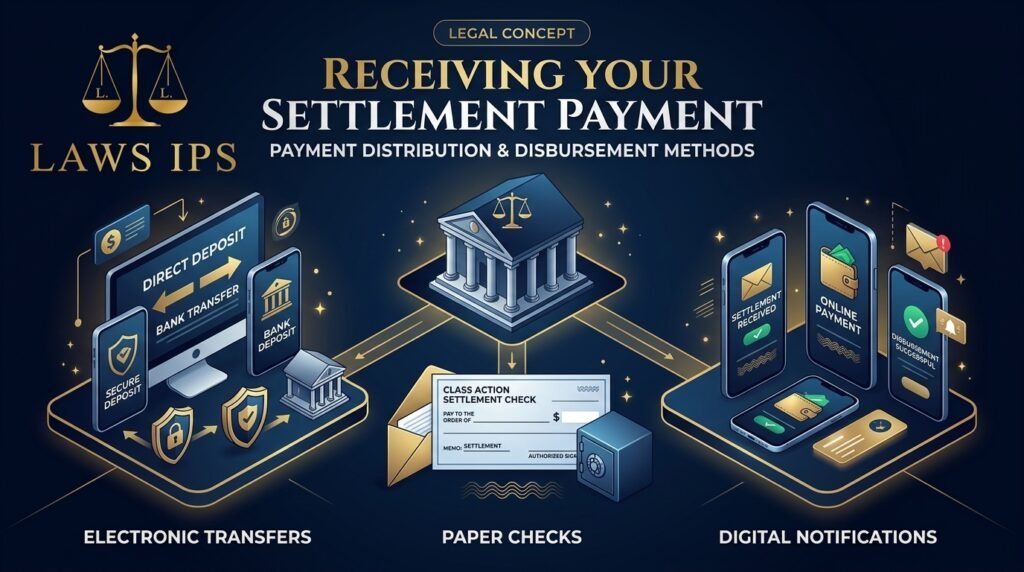
Payment method choice can affect timing, with direct deposit and digital wallets often faster than mailed checks. Payment method choices should be made on the official site, not by email reply.
Address updates should be sent to the administrator before distribution, because mailed checks go to the address on file. An old address can delay or lose a payment.
Proof of Purchase and Proof of Membership
No-Proof Tier
A no-proof tier lets class members claim a smaller flat or pro rata payment by attesting, under penalty of perjury, that they qualify, with no receipt. No-proof tiers are common for everyday food, supplement, and household products.
Attestation means affirming, under penalty of perjury, that the claim is true and that you meet the class definition. False attestation can lead to denial and legal risk, so attestation should never be used for a claim you do not believe is true.
No proof does not mean nothing required, because most portals still ask for name, address, contact, class facts, and sometimes a Notice ID. A Notice ID from a notice itself can count as proof of class membership.
No-proof caps limit payment, such as a per-household cap, a per-unit cap, or a maximum number of units. Caps prevent a no-proof claim from paying the same as a documented claim.
With-Proof Tier
A with-proof tier pays more, but requires documents, such as a receipt, order confirmation, bank or card statement, loyalty record, or account history. Documents should show merchant or product, date inside the class period, and amount where required.
Receipts are the clearest proof, but order emails, screenshots, and PDFs are often accepted where the notice allows them. Original paper receipts are rarely required, but the notice controls what formats are accepted.
Bank and card statements can prove purchase where they identify the merchant, product, and date clearly. A statement line that only shows a retailer name may not prove a specific product, so order history helps.
Company records can prove membership where the company already has a customer list, such as an online retailer, a bank, or an employer. Company-record cases often need little or no proof, because the administrator checks against that list.
| Proof type | What it shows | Best for |
|---|---|---|
| Receipt | Product, date, amount, merchant | Consumer products, food, supplements |
| Order confirmation | Product, date, amount, account | Online purchases, subscriptions |
| Bank or card statement | Merchant, date, amount | Purchases where receipt is lost |
| Loyalty or account history | Product, date, account | Retail, pharmacy, streaming, apps |
| Notice ID or Claim ID | Class membership from notice | Data breach, privacy, employment cases |
| Attestation only | Sworn statement of qualification | No-proof tiers, small purchases |
Notice ID Rescue
A Notice ID is the identifier on a mailed or emailed notice that links a claim to the class list. A Notice ID helps filing, but is not always required, depending on the case.
Lost notice does not always block filing, because some portals let you register an email address to receive a code, or file without a Notice ID. Other portals require a Notice ID, so the notice procedure must be checked.
No notice does not always mean no eligibility, because notice plans miss people, especially where company records are incomplete. A person who fits the class definition can often file without a notice, if the portal allows it.
Wrong Notice ID can cause a denial or a deficiency notice, so the ID should be copied exactly, including letters, numbers, and dashes. A screenshot of the notice, kept privately, helps if a filing is disputed.
How Much Will You Get
Pro Rata Math
Pro rata means a share of the net fund, divided among valid claims, often by units, shares, or loss amount. More valid claims mean a smaller share per claim, even when the fund is fixed.
Pro rata example helps: if a net fund is $850,000 and valid claims total $1,000,000 in calculated value, each claim is reduced by 15 percent, to 85 percent of its calculated value. This math is a settlement formula example, not a promise for any specific case.
Claim count is unknown until the deadline passes, so early payment estimates are ranges, not guarantees. A payment estimate should always be labelled as an estimate, subject to claim count, fees, and costs.
Fund breakdown matters, because gross fund minus attorneys fees minus administration costs minus service awards equals net fund. A $32 million gross fund is not $32 million for class members.
Flat Versus Documented Payments
Flat payments give every eligible claimant the same amount, subject to fund limits and caps. Flat payments suit data breach and privacy cases where individual loss is hard to prove.
Documented payments reimburse actual losses, up to a cap, with receipts, bills, or fraud records. Documented tiers suit data breach cases where identity theft or fraud caused out-of-pocket loss.
Per-unit payments pay by quantity, such as per can, per pack, or per share, with proof tiers paying more per unit. Per-unit caps limit total payment, even for large purchasers.
Per-share payments in securities cases pay by security held, with brokerage records often required. Per-share estimates before fees are not final payments, because fees, costs, and claim count reduce them.
| Payment type | How it works | Who it suits |
|---|---|---|
| Flat | Same amount per claimant, subject to caps | Data breach, privacy, small consumer cases |
| Pro rata | Share of net fund, shrinks with more claims | Most consumer and privacy cases |
| Documented | Reimburses proven losses, up to a cap | Data breach with identity theft or fraud |
| Per unit | Pays by quantity purchased | Food, beverage, supplement, product cases |
| Per share | Pays by security held | Securities and stockholder cases |
| Automatic | Paid from company records, no form | Employment, merger, and some consumer cases |
Why “Up To” Misleads
“Up to” is a ceiling, often for the highest documented tier, not the payment most people receive. A headline that says “up to $5,000” can hide a flat tier of $40 or $75 for most claimants.
Maximums in recent research show this gap clearly, with documented tiers up to $5,000 or $5,500 in some data breach cases, while flat tiers were $40 or $75. Both figures can be true, for different tiers, and only the notice shows which tier applies.
Estimates from aggregators should be labelled as estimates, because final payments depend on valid claim count, fees, and costs. An estimate that ignores claim count will overstate payment.
How to File a Claim
Online Filing Steps
- Verify the case on the official settlement site, using the case name and administrator from the notice, not an email link.
- Read the long-form notice for class definition, deadlines, proof, payment, opt-out, and objection rules.
- Choose online or mail filing, as the notice allows, noting that some cases are mail-only.
- Enter name, address, and contact exactly as on the notice or account, to avoid a mismatch denial.
- Enter class facts honestly, such as purchase dates, product names, or employment dates, within the class period.
- Upload proof where required, in the format the portal accepts, with clear, legible images.
- Choose a payment method where offered, such as check, direct deposit, or digital wallet, and double-check account details.
- Attest and e-sign where required, confirming the claim is true under penalty of perjury.
- Save confirmation with a confirmation number, email, or screenshot, kept privately, for status checks.
- Watch for deficiency notices and fix them by the deficiency deadline, or the claim can be denied.
Mail Filing Steps
Mail-only cases require the claim form that came with the notice, with no online or printable form in some cases. A mail-only case should be flagged clearly, because an online search for a form will fail.
Postmark rules mean a mailed claim must be postmarked by the claim deadline, not merely mailed on that date. Mailing early, with proof of mailing, prevents a postmark dispute.
Mailing address must match the administrator address in the notice, not a defendant address or a list page address. An incorrect address can delay or lose a claim.
Copies of mailed claims and proof should be kept, because mailed claims cannot be tracked like online claims. A copy helps if the administrator says a claim was not received.
After You File
Confirmation does not mean approval, because claims are reviewed after the deadline for validity, duplicates, and proof. Approval usually comes after final approval and claim review, not at filing.
Status checks go through the administrator site or phone number in the notice, not through a list page. Status check procedures vary by case, and some administrators do not show status until distribution.
Address changes should be reported to the administrator promptly, because payments go to the address on file. An address change after distribution may require a reissue request.
If Your Claim Is Denied, Deficient, or Delayed
Deficiency Notices
A deficiency notice says a claim is incomplete, with a deadline to fix it. Deficiency reasons can include missing proof, unclear proof, wrong Notice ID, duplicate filing, or household limit issues.
Fixing a deficiency means uploading clearer proof, correcting an ID, or clarifying class facts, by the deficiency deadline. Missing a deficiency deadline can turn a fixable claim into a denied claim.
Proof clarity matters, because a blurry receipt, a cropped statement, or a screenshot without a date can be treated as deficient. Clear, complete, legible proof reduces deficiency risk.
Duplicate claims can trigger a deficiency or denial, because one person or household filing twice can look like fraud. Duplicate filings should be corrected through the administrator, not by filing a third claim.
Denial Reasons and Appeals
Common denial reasons include outside class period, wrong product, resale use, excluded person, duplicate claim, missed deadline, and insufficient proof for a documented tier. Each denial should state a reason, which guides any correction or dispute.
Dispute procedures vary by case, with some notices allowing a written dispute or correction by a deadline. Dispute procedures should be followed exactly, because a late dispute can be rejected.
No payment after denial is normal, because a denied claim is not in the distribution. A denied claimant who stays in the class still releases claims, unless they opted out by the opt-out deadline.
Legal help for a denied claim can come from class counsel contact details in the notice, or from an independent lawyer for a separate claim. Class counsel contact details are in the notice, not on a list page.
Delayed Payments and Check Problems
Delayed payments are common after final approval, because appeals, claim review, and distribution take time. A delay alone does not mean a claim was denied.
Check void dates should be checked on arrival, with checks deposited promptly. A voided check needs a reissue request through the administrator, with a deadline that varies by case.
Direct deposit failures can occur from wrong account details, closed accounts, or bank holds. Account details should be double-checked at filing, and changes reported promptly.
Digital wallet payments can fail from wrong handles, closed accounts, or transfer limits. Payment method choice should match an active, verified account.
Opt Out, Object, or Do Nothing
Opt Out and Sue Alone
Opting out means excluding yourself from the class, preserving the right to sue separately on the same claims. Opting out forfeits any settlement payment from that case.
Opt-out procedure requires a written exclusion request, mailed or submitted as the notice states, by the opt-out deadline. An opt-out request must include name, address, and case identification, as the notice requires.
Suing alone after opting out requires a separate lawsuit, with its own cost, time, and risk. Opting out should not be done lightly, because individual lawsuits are expensive and uncertain.
Opt-out advice for a specific situation should come from a lawyer, because opting out has legal consequences. General information here is not a recommendation to opt out or stay in.
Object and Stay In
Objecting means telling the court you disagree with the settlement, fees, or terms, while staying in the class. Objecting does not remove you from the class or guarantee payment.
Objection procedure requires a written objection, mailed or filed as the notice states, by the objection deadline, with reasons and supporting facts. Objectors can sometimes speak at the fairness hearing if they follow the notice procedure.
Objecting and claiming can coexist, because an objector who stays in the class can still file a claim, unless the notice says otherwise. Objecting does not automatically forfeit payment.
Appeals by objectors can delay distribution, because an objector who disagrees with final approval can appeal. Appeals delay is why payment timing is uncertain even after a hearing.
| Choice | Payment | Right to sue separately | Deadline |
|---|---|---|---|
| File a claim | Yes, if valid, after approval and appeals | No, claims released | Claim deadline |
| Opt out | No | Yes, separate lawsuit possible | Opt-out deadline, often earlier |
| Object | Yes, if valid, if you stay in | No, unless you also opt out | Objection deadline, often earlier |
| Do nothing | No, even if eligible | No, claims released if you stay in | No action, but rights lost |
Do Nothing
Doing nothing means staying in the class, releasing claims, and receiving no payment if a claim was required. Doing nothing is the worst outcome for an eligible person who wants payment.
Automatic cases are the exception, where doing nothing can still lead to payment from company records. Automatic payment still requires an updated address and payment method where offered.
Doing nothing after opting out means no payment and no release, because an opt-out removes you from the class. Doing nothing is different from opting out, and the distinction matters.
How to Tell a Real Settlement From a Scam
Real Site Signals
A real settlement site is a dedicated site for one case, named in a court-approved notice, with a case name, case number, court, administrator, long-form notice, and claim form. Real sites link to court documents as PDFs, not only to screenshots.
A real administrator is a neutral company appointed by the court, with a corporate site and a case-specific subdomain or site. Administrator names vary by case and must be checked per case, not assumed from another case.
A real notice lists a court name and case number that can be looked up in federal court records or state court dockets. A real notice never asks for payment to file, and never guarantees a specific payout.
A real claim form asks for name, address, email, class facts, and sometimes a Notice ID or last four digits of a Social Security number in data breach cases. Real forms do not ask for full Social Security numbers, bank logins, or card numbers just to file.
Scam Signals
Fee scams ask for a processing fee, filing fee, or subscription to claim a settlement. Filing a class action claim is always free, with attorneys fees paid from the fund, not by class members.
Guaranteed payout scams promise a specific, often large, dollar amount to everyone, such as thousands of dollars for a routine purchase. Real notices describe a fund and a formula, not a guaranteed individual amount.
Urgency scams pressure a reply in 48 hours or less, with countdown timers and threats of losing a claim. Real deadlines give weeks or months, with a clear date in the notice.
Lookalike domain scams use extra hyphens, misspellings, .co instead of .com, or generic names like a brand plus claim plus year. Lookalike sites often use stock photos, countdown timers, and no court documents.
| Signal | Real site | Likely scam |
|---|---|---|
| Domain | Administrator subdomain or dedicated case site, matching notice | Lookalike, extra hyphens, .co, brand-new domain |
| Cost to file | Free | Any fee, processing charge, or subscription |
| Info requested | Name, address, email, class facts, sometimes Notice ID | Full Social Security number, bank login, card number, ID selfie |
| Documents linked | Long-form notice, court order, settlement agreement as PDFs | None, or blurry screenshots only |
| Payout promise | Fund and formula, estimated range only | Guaranteed specific amount for everyone |
| Pressure | Clear deadline weeks or months away | 48-hour urgency, countdown timer, threat |
PACER, Regulator, and Reporting Checks
Federal court records can be searched by case number, party name, or case locator, to confirm a federal case exists. State court dockets can be searched similarly, depending on the state system.
Regulator refund pages list government redress programs, which are different from class actions, but can confirm a government case. Regulator pages should not be used to confirm a private class action alone.
Independent verification means searching the case name plus administrator, without clicking an email link. A case that appears nowhere except one email is a red flag.
Reporting phishing goes to the national phishing reporting address and the consumer protection regulator’s fraud reporting page, as listed in official guidance. Reporting helps take scam domains down, but does not recover money already sent to a scammer.
If money was sent to a suspected scam, contacting the bank immediately to secure accounts is the first step. A bank can sometimes stop a transfer, but recovery is not guaranteed.
Settlements by Type
Data Breach and Privacy Settlements
Data breach settlements allege a company failed to safeguard personal information, such as names, dates of birth, Social Security numbers, financial accounts, or health records. Allegations are not findings, and misuse is not always alleged.
Privacy settlements allege sharing of personal or health information with advertising or analytics companies without consent, often under state privacy laws or video privacy law. Video privacy cases allege disclosure of viewing history without consent.
Payment tiers in data breach cases often include a flat payment with no proof, documented losses up to a cap with proof, and credit monitoring. Documented tiers require proof tracing loss to the incident, not just a general fraud claim.
Credit monitoring in data breach cases can include dark web scanning, public records monitoring, identity restoration, and identity theft insurance. Monitoring enrollment details are usually mailed with the notice, not only on a list page.
Consumer and False Advertising Settlements
Consumer settlements allege false advertising, mislabeling, overcharging, or defective products, such as beverages, supplements, cookware, or dry shampoo. Allegations are not findings, and settlement does not prove a product was unsafe.
False advertising tiers often pay per unit with proof, and a capped amount without proof, with household limits. Per-unit rates vary by pack size, flavor, or model, as the notice states.
Product defect tiers can offer cash, replacement, or repair, with proof tiers paying more than no-proof tiers. Replacement options, such as a replacement wheel or product, are not cash and should not be presented as cash.
Refund settlements for returns or refunds, such as a large online retailer returns case, can have subclasses with different rules. Subclass A can be automatic, while Subclass B requires a claim with proof of tender and a signed statement.
Securities, Employment, and Government Fee Settlements
Securities settlements allege misleading statements or omissions affecting stock price, with payment by share held during a class period. Brokerage records are often required, and per-share estimates before fees are not final payments.
Employment settlements allege wage, hour, benefits notice, or job applicant issues, such as COBRA notice, 401(k) fees, or job posting rules. Employment classes are often defined by employer records, so payment can be automatic.
Government fee settlements allege improper fees, such as water and sewer fees, special deterrent fees, or landfill odor harms, with local residents or ratepayers as class members. Government fee cases have local eligibility rules, not national rules.
Merger and stockholder settlements pay shareholders at a merger or take-private closing, often automatically, with objection deadlines but no claim form. Merger cases should not be presented as consumer claim cases.
| Type | Typical proof | Typical payment | Filing trap |
|---|---|---|---|
| Data breach and privacy | Notice ID, documented loss proof for high tier | Flat plus documented, plus monitoring | Assuming misuse was alleged when it was not |
| Consumer and false advertising | Receipt, order history, attestation for no-proof tier | Per unit, per household cap, pro rata | Assuming full purchase price without proof |
| Securities | Brokerage records | Per share, before fees, pro rata | Using a foreign exchange when only US markets qualify |
| Employment | Employer records, mailed notice form | Automatic or mail-only, flat or per person | Missing a mail-only deadline because no online form exists |
| Government fees | Residency or ratepayer records | Flat or pro rata, local rules | Assuming national eligibility for a local case |
Tax, Records, and After Payment
Keep Records
Payment records should be kept with tax documents, including claim confirmation, payment notice, check copy, and distribution statement. Records help if a payment is questioned or a tax form arrives later.
Claim records should include a copy of the claim form, proof uploaded, confirmation number, and any deficiency or approval notices. Records should be kept privately, not shared publicly, because they contain personal details.
Tax forms for some settlements may arrive as a 1099 or similar form, depending on payment type and amount. Tax form rules vary by payment type, and a tax professional should be asked for a specific payment.
Tax Questions to Ask a Professional
Tax treatment of settlement payments depends on the claim type, such as physical injury, wage, refund, or privacy harm, and on tax law at payment time. General information here is not tax advice.
Questions to ask include whether a payment is taxable, whether a 1099 should be expected, whether documented loss reimbursement differs from a flat payment, and how to report a payment. A tax professional can answer for a specific payment, while a list page cannot.
Record keeping for tax should include payment date, amount, case name, administrator, and any 1099 received. Records should be kept for the period a tax professional recommends.
Address Changes and Reissues
Address changes should be reported to the administrator before distribution, through the official site or phone number in the notice. An address change after distribution may require a reissue request with a deadline.
Reissue requests for voided, lost, or returned checks go through the administrator, not through a bank. Reissue deadlines vary by case and should be checked on the official site.
Payment method changes after filing may be possible before distribution, depending on the case. Payment method changes should be made through the official site, not by email reply to a list page.
Mistakes, Tips, and Checklist
Ten Numbered Mistakes
- Trusting a headline amount, without reading the long-form notice and payment tiers.
- Missing an earlier opt-out date, while only tracking the claim deadline.
- Filing during a testing phase, without confirming the form is truly live.
- Clicking an email link, without independently verifying the case and administrator.
- Paying a fee to file, which is always a scam signal for a real settlement.
- Attesting to a claim you do not believe, under penalty of perjury, for a quick payment.
- Filing twice from one household, triggering a duplicate or denial.
- Using a blurry receipt, triggering a deficiency notice and a missed fix deadline.
- Ignoring a deficiency notice, turning a fixable claim into a denied claim.
- Waiting for a payment date, without checking appeals, address, and void dates.
Ten Numbered Tips
- Verify every case on the official settlement site, using case name and administrator from the notice.
- Read the long-form notice for definition, deadlines, proof, payment, opt-out, and objection rules.
- Track all deadlines, with claim, opt-out, objection, hearing, and payment window in one list.
- File early, not on the deadline day, to allow time for site outages and deficiency fixes.
- Save confirmation with a number, email, or screenshot, kept privately.
- Use clear proof, with product, date, and amount visible, in the format the portal accepts.
- Choose direct deposit where offered, and double-check account details before submitting.
- Update your address with the administrator before distribution, not after a check is mailed.
- Deposit checks promptly, before the void date, and request reissue quickly if needed.
- Report phishing to the regulator fraud page and the phishing reporting address, and secure bank accounts if money was sent.
Filing Checklist
- Case verified: case name, case number, court, and administrator checked on official site
- Definition checked: who, what, where, when, use, exclusions, household limit
- Deadlines tracked: claim, opt-out, objection, hearing, payment window, with time zones
- Proof ready: receipt, order history, statement, loyalty record, or Notice ID, as required
- Form completed: name, address, contact, class facts, attestation, payment method
- Confirmation saved: confirmation number, email, or screenshot, kept privately
- Deficiency watched: inbox and mail checked for deficiency notices until distribution
- Address current: administrator updated before distribution
- Payment deposited: check deposited before void date, or digital payment confirmed
- Records kept: claim, proof, confirmation, payment, and any tax form, with tax documents
FAQs
What is a class action lawsuit settlement?
A class action lawsuit settlement is a court-approved agreement to resolve claims by a large group, usually without an admission of wrongdoing. A fund is set aside, an administrator processes claims, and payments are distributed after final approval and appeals.
A settlement is not a judgment, because no trial finding was made. Class members who stay in the class release the same claims, even if they do not file.
How do class action settlements work?
Class action settlements work in stages: filing, certification, preliminary approval, notice, claims, fairness hearing, appeals, and distribution. An administrator gives notice, processes claims, and distributes payments under court oversight.
Payments go out only after final approval and any appeals are resolved, often months after the claim deadline. Claim count, fees, and costs affect final payment amounts.
Am I eligible for a class action settlement?
Eligibility depends on the class definition, which states who, what, where, and when. A person must match the product, service, employment, or security, location, and class period in the definition.
Fitting the definition matters more than feeling affected, and exclusions, resale use, and household limits can block a claim. The long-form notice controls eligibility, not a list summary.
How do I check if I qualify?
Check qualification by reading the long-form notice on the official settlement site, then matching your purchase, use, employment, or holding to the definition. A checklist of who, what, where, when, use, and exclusions helps.
A notice in your mail or email can help, but a missing notice does not always mean no eligibility. Some portals let you file without a Notice ID, while others require one.
Do I need a lawyer to file a claim?
No lawyer is needed to file most class action claims, because class counsel represents the class and claim forms are designed for class members. Filing is free, with attorneys fees paid from the fund.
A lawyer can help if you want to object, opt out, or sue separately, because those choices have legal consequences. Independent legal advice should be sought for opt-out decisions.
Is filing a class action claim free?
Filing is always free for a real class action settlement, with attorneys fees and administration costs paid from the fund. Any notice asking for a processing fee, filing fee, or subscription is a scam signal.
Payment method choice does not cost a fee to file, although a bank or wallet provider may have its own transfer rules. Fee requests should be reported as phishing.
Do I need proof of purchase?
Proof rules vary by case, with some cases offering a no-proof tier and others requiring proof for a higher tier. No-proof usually means no receipt, not nothing required, because attestation and sometimes a Notice ID are still needed.
With-proof tiers pay more, with receipts, order confirmations, bank statements, loyalty records, or account histories as common proof. The notice states what proof counts for each tier.
What counts as proof of purchase?
Proof of purchase includes a receipt, order confirmation, bank or card statement, loyalty record, or account history showing merchant or product, date inside the class period, and amount where required. Clear, legible images or PDFs are usually accepted where the notice allows them.
A statement line that only shows a retailer name may not prove a specific product, so order history helps. Original paper receipts are rarely required, but the notice controls formats.
What is a no-proof settlement?
A no-proof settlement lets class members claim a smaller flat or pro rata payment by attesting, under penalty of perjury, that they qualify, with no receipt. No-proof tiers are common for everyday food, supplement, and household products.
No-proof caps limit payment, such as a per-household cap or a per-unit cap. Attestation should never be used for a claim you do not believe is true.
What is a Notice ID and what if I lost it?
A Notice ID is the identifier on a mailed or emailed notice that links a claim to the class list. A Notice ID helps filing, but is not always required, depending on the case.
Lost notice does not always block filing, because some portals let you register an email address to receive a code, or file without a Notice ID. Other portals require a Notice ID, so the notice procedure must be checked.
How much will I get from a settlement?
Payment amount depends on fund size, fees, costs, claim count, payment tier, and proof level. Pro rata shares shrink with more valid claims, while flat payments are fixed subject to caps.
“Up to” amounts are ceilings, often for documented tiers, not payments most people receive. Final amounts should be labelled as estimates until distribution.
What does pro rata mean?
Pro rata means a share of the net fund, divided among valid claims, often by units, shares, or loss amount. More valid claims mean a smaller share per claim, even when the fund is fixed.
Pro rata math can be shown as net fund divided by total valid claim value, with each claim reduced proportionally if total claims exceed the fund. This is a formula, not a promise for any specific case.
How long do settlement payments take?
Settlement payments take months after the claim deadline in most cases, because claim review, final approval, appeals, and distribution take time. A hearing date is not a payment date.
Appeals delay can extend payment further, because distribution usually waits until appeals are resolved. Administrators cannot promise a payment date before appeals end.
What is preliminary versus final approval?
Preliminary approval lets notice and claims start, after a judge finds a proposed settlement fair enough to notify the class. Final approval comes after a fairness hearing and consideration of objections, fees, and fairness.
Preliminary approval is not final approval, and payment requires final approval plus resolution of any appeals. A claim form can be live before final approval, with payment only later.
How will I be paid?
Payment methods can include check, direct deposit, digital wallet, or prepaid card, depending on the case. Payment method choice is made on the official site at filing, where offered.
Direct deposit and digital wallets are often faster than mailed checks, but account details must be correct. Mailed checks have a void date and must be deposited promptly.
What if my settlement check expired?
An expired check past its void date will not be honored by a bank, and a reissue request goes through the administrator. Reissue deadlines vary by case and should be checked on the official site.
Depositing promptly after arrival prevents void-date problems. A lost or returned check also needs a reissue request, with an updated address where needed.
What if I missed the claim deadline?
A missed claim deadline usually means no payment from that settlement, even if you were eligible. Late claims are rarely accepted, unless the court or administrator grants an extension, which is rare.
Opt-out and objection deadlines also matter, because missing an opt-out deadline means staying in the class and releasing claims. Deadline extensions should be verified on the official site, not assumed.
What if my claim was denied?
A denied claim usually states a reason, such as outside class period, wrong product, duplicate filing, missed deadline, or insufficient proof. Dispute procedures, where offered, must be followed by the dispute deadline.
A denied claimant who stayed in the class still releases claims, unless they opted out by the opt-out deadline. Class counsel contact details in the notice can help with a dispute question.
What is a deficiency notice?
A deficiency notice says a claim is incomplete, with a deadline to fix it. Common deficiencies include missing proof, unclear proof, wrong Notice ID, duplicate filing, or household limit issues.
Fixing a deficiency by the deadline can save a claim, while missing the deadline can turn a fixable claim into a denied claim. Clear, complete proof reduces deficiency risk.
What does opt out mean?
Opting out means excluding yourself from the class, preserving the right to sue separately, and forfeiting any settlement payment. Opt-out requests must follow the notice procedure and meet the opt-out deadline, often earlier than the claim deadline.
Opting out should not be done lightly, because individual lawsuits cost time and money and carry risk. Independent legal advice should be sought for opt-out decisions.
What does object mean?
Objecting means telling the court you disagree with the settlement, fees, or terms, while staying in the class. Objecting does not remove you from the class or guarantee payment.
Objection procedure requires a written objection by the objection deadline, with reasons and supporting facts. Objectors can sometimes speak at the fairness hearing if they follow the notice procedure.
What happens if I do nothing?
Doing nothing means staying in the class, releasing claims, and receiving no payment if a claim was required. Doing nothing is the worst outcome for an eligible person who wants payment.
Automatic cases are the exception, where doing nothing can still lead to payment from company records. Automatic payment still requires an updated address and payment method where offered.
Is a class action settlement legit?
Real class action settlements are court-supervised under the federal class action rule or state equivalents, with a judge, a case number, an administrator, and a dedicated official site. Real settlements never ask for a fee to file and never guarantee a specific payout.
Scam notices mimic real settlements with lookalike domains, fee requests, guaranteed amounts, and urgency pressure. Verification on the official site and in court records separates real from fake.
How do I tell a real settlement from a scam?
Verify independently by searching the case name plus administrator, without clicking an email link. Check the case number in federal or state court records, check the official site domain against the notice, and check for long-form notice PDFs.
Scam signals include fees, full Social Security number requests, bank login requests, guaranteed amounts, 48-hour urgency, and lookalike domains. Suspicious messages should be reported to the regulator fraud page and the phishing reporting address.
Do I pay tax on a settlement payment?
Tax treatment depends on claim type, payment type, and tax law at payment time, and general information here is not tax advice. Some payments may be taxable, while others may not, depending on the underlying claim.
Keep payment records with tax documents, including case name, amount, date, and any tax form received. A tax professional should be asked for a specific payment, because list pages cannot give personal tax advice.
Can a minor file a claim?
Minors usually need a parent, guardian, or legal representative to file on their behalf, with documentation varying by case. Minor filing rules should be checked in the long-form notice, not assumed from another case.
Deceased class members usually need an estate representative to file, with documentation varying by case. Estate filing rules should also be checked in the notice.
Conclusion
Class action lawsuit settlements reward readers who verify, track deadlines, and file carefully, rather than readers who trust a headline amount. A settlement is not a finding of wrongdoing, preliminary approval is not final approval, and “up to” is a ceiling, not a promise.
Verify every case on the official settlement site, read the long-form notice, track claim, opt-out, and objection deadlines together, file early with clear proof, save confirmation, watch for deficiency notices, and deposit payments before void dates. That careful order, plus a scam check before sharing personal details, will give your class action lawsuit settlements filing the best chance of a valid, timely payment.
