

How to File a Claim for Settlement? An email lands in your inbox saying you may be owed money from a lawsuit you never heard of. Your first instinct is to delete it. Your second is to wonder if it is real.
Here is the surprising part. Many of these notices are legitimate, and the money is often waiting for anyone who files on time. The Federal Trade Commission has reportedly estimated that only about 4% of eligible consumers actually submit claims.
Table of Contents
What Does It Mean to File a Claim for Settlement?

A settlement claim is a request for your share of money or benefits from a legal settlement. It is not a new lawsuit.
In most class action cases, you submit the claim to a neutral company called the settlement administrator. The administrator reviews your form and sends payment if you qualify.
Settlement vs. Lawsuit
A lawsuit asks a court to decide who is right. A settlement is an agreement that ends the dispute, usually without the company admitting wrongdoing.
Once a court approves a class settlement, eligible members can claim benefits under its terms.
Who Pays and Who Decides
The defendant company funds the settlement. The court approves it, and the administrator runs the claims process.
You do not need to hire a lawyer to file a standard consumer claim. For a deeper background, read our guide to how a class action lawsuit works.
Types of Settlement Claims You Can File
The steps change slightly depending on the type of case. Knowing which kind you have saves time.
Class Action Settlement Claims
These cover large groups affected by the same issue, such as misleading ads, defective products, or unfair fees. Most readers searching this topic are dealing with one of these.
See our overview of class action settlements for more detail.
Data Breach Settlement Claims
People whose personal information was exposed can often claim credit monitoring or reimbursement for documented losses. Eligibility for monitoring may differ from eligibility for cash reimbursement.
Consumer Product and Refund Claims
These involve products or services that were allegedly mislabeled or defective. Payments may be a fixed amount, a refund, or vouchers.
Employment and Wage Settlement Claims
Workers may receive money for unpaid overtime or similar violations. Some of these settlements pay automatically from company records, with no claim form at all.
Personal Injury Settlement Claims
An injured person claims compensation from an at-fault party or their insurer. This process is individual, not class-wide, and is handled through negotiation.
Our guides on what a personal injury lawyer does and when to hire a personal injury lawyer explain how these cases work.
Insurance Settlement Claims
You file with an insurance company after a covered loss, such as a car accident or property damage. The insurer investigates and offers a settlement amount.
How to File a Claim for Settlement: Step-by-Step
This is the core process for class action and similar settlements. Follow each step in order.
- Read the notice carefully. Find the case name, court, and deadlines.
- Verify it is real. Visit the official settlement website on your own.
- Check your eligibility. Compare your situation with the class definition.
- Gather your documents. Collect receipts, account records, or screenshots.
- Complete the claim form. Answer every required question accurately.
- Submit before the deadline. File online or by mail.
- Save your confirmation. Keep screenshots or a claim number.
- Track your claim. Use the portal or contact the administrator.
Step 1: Read the Notice From Start to Finish
The notice explains who qualifies, what you can receive, and which dates matter. Read the long-form notice if one is available, not just the summary.
A court-approved notice normally lists the court name, the judge, the claims administrator, and the official website.
Step 2: Verify the Settlement Is Legitimate
Never click a link in an unexpected email as your first step. Search for the case name and find the settlement website yourself.
Compare what you find with trusted class action trackers and news coverage. If something does not match, stop.
Step 3: Confirm You Are in the Class
Eligibility starts with the class definition. It may depend on dates, locations, products, or account types.
If you do not fit the definition, do not submit a claim. False claims can be rejected or cause problems.
Step 4: Gather Supporting Documents
Some settlements require proof of purchase. Others accept a sworn statement that your claim is true.
Useful records include:
- Receipts or order confirmations
- Bank or card statements
- Account numbers or email addresses linked to the product
- Photos of packaging or the product
- Prior correspondence with the company
Step 5: Fill Out the Claim Form
Use your legal name and a current mailing address. Enter your claim ID or unique identifier exactly as shown on the notice.
Choose your payment method carefully. Options often include check, PayPal, Venmo, or direct deposit.
Step 6: Submit Online or by Mail
Online filing is usually fastest and gives you instant confirmation. If you mail a form, check whether it must be postmarked or received by the deadline.
Use trackable mail when possible.
Step 7: Save Proof That You Filed
Take a screenshot of the confirmation page. Save any confirmation email in a dedicated folder.
If a dispute arises later, this record can protect you.
Step 8: Monitor Your Claim Status
Most administrators provide a portal where you can check status using your claim ID. If you cannot find updates, call or email the administrator listed on the official website.
How to Find a Settlement You Qualify For
You do not need a notice to claim a settlement. Many people qualify without ever receiving one.
Check Your Email and Mail
Search your inbox and spam folder for terms like “settlement,” “class action,” or “legal notice.” Notices often come from names you do not recognize.
Use Class Action Tracking Sites
Websites such as ClassAction.org and TopClassActions.com list open settlements and deadlines. Use them to compare your purchases and accounts against current cases.
Browse Case-Specific Guides
Our site covers many active cases. Examples include the Facebook lawsuit settlement payments, the Venmo class action lawsuit, and the T-Mobile class action lawsuit.
Search Court Records
Federal cases appear on PACER, and state courts have their own search tools. This is useful when you want to confirm a settlement’s approval status.
Filing a Claim With No Proof
Many settlements pay a flat amount to anyone who certifies they are a class member. This is common for small consumer claims.
In these cases, you typically sign a statement under penalty of perjury. The payout may be modest, but the process is quick.
When No Proof Is Enough
No-proof claims are more common when companies lack detailed purchase records. They are also used when individual losses are small.
Learn more in our guides on class action lawsuit claims with no proof and top class action lawsuits with no proof required.
Be Honest on the Form
Only claim what you truly bought or used. Overstating a claim can lead to rejection and legal trouble.
Understanding Settlement Deadlines
Deadlines are where most people lose money. Missing one can end your chance to collect.
| Deadline Type | What It Means | Why It Matters |
|---|---|---|
| Claim deadline | Last day to submit a claim form | Miss it and you usually receive nothing |
| Opt-out deadline | Last day to exclude yourself from the class | Keeps your right to sue separately |
| Objection deadline | Last day to object to the terms | Lets you tell the court you disagree |
| Final approval hearing | Court decides whether to approve the deal | Payments wait until approval |
How Claim Deadlines Are Set
Settlement agreements commonly set claim deadlines such as 60, 90, or 120 days after notice goes out. The exact date depends on the case.
The deadline can also be extended by the court, so always check the official website for updates.
Postmark vs. Receipt
Some deadlines require a postmark by the date. Others require the administrator to receive your form by then.
Read the wording closely, and file early.
Claim, Opt Out, or Object: Which Should You Choose?
When you receive a class notice, you generally have three options. Each carries different consequences.
| Option | What You Do | What You Get | What You Give Up |
|---|---|---|---|
| File a claim | Submit a claim form | Your share of the settlement | Right to sue separately over covered claims |
| Do nothing | Take no action | Usually nothing | Right to sue separately, in most cases |
| Opt out | Submit a written exclusion | Right to pursue your own case | Any payment from the settlement |
| Object | File a written objection | A chance to be heard by the court | Nothing, if you also file a claim |
Why Filing a Claim Usually Makes Sense
If the payout is reasonable and your own losses are small, filing is the simple route. A small check is better than no check.
When Opting Out Might Be Better
Opting out can make sense if you have serious losses and want to sue the company yourself. Speak with an attorney before deciding.
What Objecting Means
An objection challenges the proposed settlement while you remain a class member. It does not replace the need to file a claim if one is required.
How to File a Class Action Claim Online
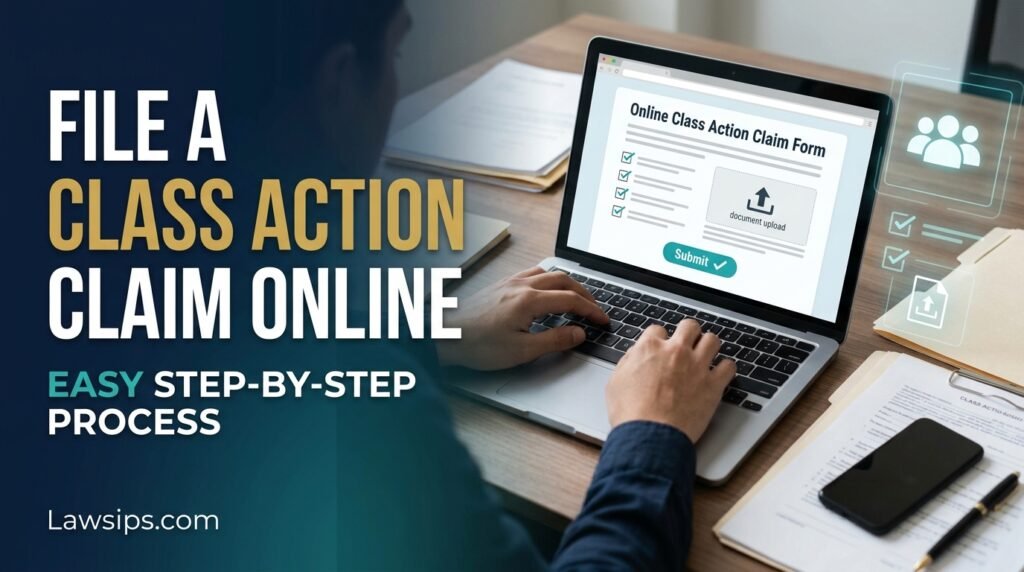
Most modern settlements use a dedicated website. The process takes about ten minutes.
Locate the Claim Page
Go to the official settlement website and look for a button labeled “Submit a Claim” or “File a Claim.” Make sure the web address matches the one in the court-approved notice.
Enter Your Claim ID
Your notice may include a unique ID or PIN. If you did not receive one, many settlements still allow you to file without it by providing other details.
Upload Documents
Attach receipts or screenshots if requested. Use clear files in accepted formats such as PDF or JPG.
Review Before You Submit
Check spelling, addresses, and payment details. A single typo can delay your payment.
How to File a Claim by Mail
Mail-in claims remain common for older customers or cases involving paper notices. Use the form and address provided in the notice.
Complete the Paper Form
Write clearly in ink. Sign and date the form where required.
Keep Copies
Make a copy of the form and any attachments. Mail it with tracking or delivery confirmation.
Mind the Postmark Rule
If the notice says postmarked by the deadline, ask the post office for a dated receipt. This is your proof of timely filing.
How to File a Personal Injury Settlement Claim
A personal injury claim works differently from a class action. It involves an individual demand for compensation after an accident or injury.
Rules vary by state, so treat the steps below as a general roadmap.
Step 1: Get Medical Care and Document Everything
Seek treatment right away and follow your doctor’s instructions. Keep records of every visit, test, and bill.
Step 2: Report the Incident
Notify the relevant party or insurer promptly. Police reports, incident reports, and photos strengthen your claim.
Step 3: Identify the Right Insurance Policy
The at-fault party’s liability coverage may pay for your damages. In some cases, your own policy also applies.
Step 4: Calculate Your Damages
Damages may include medical bills, lost income, property damage, and pain and suffering. Keep receipts and pay records.
Step 5: Send a Demand Letter
A demand letter lays out the facts, your injuries, and the amount you seek. The insurer then responds with an offer or a denial.
Step 6: Negotiate
Initial offers are often lower than what a claim is worth. Negotiation may involve several rounds.
Step 7: Review the Release Carefully
Before accepting, read the release. Signing usually ends your right to seek more money for the same injury.
Watch the Statute of Limitations
Every state sets a deadline for filing a lawsuit. If you miss it, you may lose your claim entirely.
Not sure whether you need help? Our guide on whether you need a personal injury lawyer can help you decide.
How to File an Insurance Settlement Claim
Insurance claims follow a similar pattern. Speed and documentation make the biggest difference.
Contact Your Insurer Promptly
Report the loss as soon as possible, and request a claim number. Ask what documents the company needs.
Document the Loss
Take photos or video of damage before repairs. Keep receipts for temporary expenses.
Understand Your Policy
Review coverage limits, deductibles, and exclusions. This helps you judge whether an offer is fair.
Respond to the Adjuster
An adjuster investigates the loss and proposes a settlement. Provide accurate information and keep notes of every conversation.
Dispute Low Offers in Writing
If the offer seems too low, send a written request with supporting evidence. You may also have the right to appraisal or to file a complaint with your state insurance department.
Filing a Data Breach Settlement Claim
Data breach settlements are increasingly common. They often offer more than one type of benefit.
Credit Monitoring
Class members may choose free credit monitoring or identity protection. This usually requires a simple election on the claim form.
Reimbursement for Losses
You may claim money lost to fraud or time spent fixing problems. Bank statements and receipts help support these claims.
Protect Yourself While Filing
Only enter your information on the official settlement site. Never provide full Social Security numbers unless the notice clearly requires it and you have verified the source.
How to Spot a Settlement Scam

Scammers copy real settlements to steal money and data. Learn the warning signs before you click.
Red Flags to Watch For
- A request for a fee to “release” your payment
- Pressure to act immediately or lose everything
- Mentions of gift cards or cryptocurrency
- Bad grammar or odd sender addresses
- Links that do not match the court or company
- Requests for bank passwords or full card numbers
What a Real Notice Includes
A legitimate notice names the court, the judge, the administrator, and an official settlement website. It also explains your rights clearly.
Real claims do not require upfront payments.
How to Verify
Search for the case name on your own. Check news coverage and reputable trackers, and contact the administrator through details on the official website.
If you are unsure, you can also call the court clerk to confirm the case exists.
Common Mistakes When Filing a Settlement Claim
Small errors cause many rejected claims. Avoid these common ones.
Missing the Deadline
File as soon as you can. Do not wait for the final week.
Using the Wrong Claim ID
Copy the ID from your notice exactly. Letters and numbers can look alike.
Giving Incomplete Information
Fill in every required field. Missing details can trigger a rejection.
Ignoring Address Changes
Settlement notices often make class members responsible for updating their address with the administrator. If you move and do not update it, a check may never reach you.
Filing a Duplicate Claim
Multiple claims for the same purchase can cause rejection. Submit one accurate claim per person unless the rules allow more.
Assuming an Objection Is Enough
Objecting does not automatically earn you a payment. If a claim form is required, you still need to file one.
What Happens After You File a Claim
Filing is only the beginning. The administrator reviews claims, and the court must approve the settlement before money moves.
Claim Review
The administrator checks eligibility and may ask for more documents. Respond quickly to any request.
Final Approval Hearing
The court holds a fairness hearing to decide whether the settlement is fair, reasonable, and adequate. Payments generally wait for this approval.
The Appeal Window
After final approval, objectors may file appeals. Payments typically cannot be issued until all appeals are resolved.
Real-World Delays
Delays can be long. A large Facebook privacy settlement received final approval in 2023, yet appeals pushed payments back for an extended period.
More recently, a reported $28 million SiriusXM do-not-call settlement saw payouts paused while an objector’s appeal moved forward.
How Long Does It Take to Get Paid?
There is no single timeline. Payment speed depends on the court schedule, the number of claims, and any appeals.
| Stage | Typical Result |
|---|---|
| Claim period | Weeks to a few months |
| Claim review | Weeks to months |
| Final approval hearing | Often several months after preliminary approval |
| Appeal period | Can add months or years if an appeal is filed |
| Payment distribution | After final approval and appeals end |
How You Will Be Paid
Payment options often include checks, prepaid cards, digital wallets, and direct deposit. Choose the method that is easiest and safest for you.
Cash Your Check Quickly
Settlement checks may expire after a set period, such as 180 days in some cases. Deposit yours promptly.
Keep Your Contact Details Current
Update your address, email, or payment details if they change. Administrators cannot pay people they cannot reach.
Do You Need a Lawyer to File a Settlement Claim?
For most consumer class actions, no. The claim form is designed for ordinary people to complete on their own.
Class counsel is paid from the settlement or by the defendant, so you do not owe them fees when you file a standard claim.
When Legal Advice Helps
Consider speaking to an attorney if you are considering opting out or if your losses are significant. A lawyer can also help if your claim is denied or the release seems unclear.
Personal Injury Fees
Injury lawyers often work on contingency, meaning they are paid a percentage only if you win or settle. Ask for the percentage and expenses in writing.
Are Settlement Payments Taxable?
Tax treatment depends on what the payment replaces. Some payments may be taxable income, while others, such as certain damages for physical injuries, may be treated differently.
A small consumer refund is not handled the same way as a lost wages settlement. Check IRS guidance or speak with a tax professional about your situation.
What If You Missed the Deadline?
Missing the claim deadline is frustrating, but check before giving up. Some settlements extend deadlines or accept late claims at the administrator’s discretion.
Steps to Take
- Visit the official settlement website for updates.
- Look for deadline extension notices.
- Contact the administrator and explain your situation.
- Ask whether late claims are allowed.
Plan Ahead Next Time
Set a calendar reminder as soon as you spot a claim. Add two reminders before the deadline.
Smart Tips to Maximize Your Settlement Payout
A few habits can make you more successful across many claims.
- Create a dedicated email address for settlement notices
- Keep digital copies of receipts and account records
- Track deadlines on a calendar
- File early and save confirmation pages
- Read the payout formula to understand how amounts are calculated
- Keep notes of your claim IDs and submission dates
Understand How Payouts Are Calculated
Some settlements pay equal shares. Others adjust payments based on proof, usage, or length of time as a customer.
Because payouts can shrink when many people file, the amount you see in the headline may differ from the final check.
Real-World Settlement Examples
Studying real cases helps you understand how claims work in practice.
Large Privacy and Tech Settlements
Big technology cases can involve millions of class members and complex claim systems. Our coverage of the Facebook lawsuit settlement payments shows how appeals can delay payouts.
Consumer Product Claims
Many food and consumer brand cases offer small payments or vouchers. See examples such as the Panera class action lawsuit and the prime class action lawsuit.
Financial Services Claims
Cases involving payment apps and lenders often target fees and account practices. Read about the Venmo class action lawsuit and the Affirm lawsuit settlement.
Mass Injury Settlements
Large injury litigation, such as the 3M earplug lawsuit and the BSA lawsuit settlement, follows a different path than a typical consumer claim.
Official Resources for Settlement Claims
Use trusted sources to verify cases and learn your rights.
- The official settlement website listed in your court-approved notice
- Federal court records through PACER
- Your state court’s online case search
- Your state attorney general’s consumer protection office
- The Federal Trade Commission at ftc.gov for scam reporting
- The Consumer Financial Protection Bureau for financial product issues
- Your state insurance department for insurance claim disputes
- ClassAction.org and TopClassActions.com for settlement listings
Also Read:
- Class Action Lawsuit: How It Works
- Class Action Settlement: What to Expect
- Class Action Lawsuit No Proof: Can You Still Claim?
- Top Class Action Lawsuits With No Proof Required
- Facebook Lawsuit Settlement Payments
- Venmo Class Action Lawsuit Sign Up Online
- T-Mobile Class Action Lawsuit
- Netflix Class Action Lawsuit
- Panera Class Action Lawsuit: Full Guide for 2026
- Charter Communications Class Action Lawsuit
- Prime Class Action Lawsuit
- Chicken Class Action Lawsuit
- Affirm Lawsuit Settlement
- MyChart Lawsuit Settlement
- BSA Lawsuit Settlement
- Scouting Settlement Trust
- Uber and Lyft Lawsuit
- 3M Earplug Lawsuit
- Temu Lawsuit
- DoorDash Lawsuit
- Home Depot Lawsuit
- Do I Need a Personal Injury Lawyer? What to Know Before You Decide in 2026
- When to Hire a Personal Injury Lawyer
- What Does a Personal Injury Lawyer Do?
Frequently Asked Questions (FAQs)
How do I file a claim for a settlement?
Find the official settlement website, confirm you qualify, and complete the claim form before the deadline. Submit it online or by mail and save your confirmation.
Is it free to file a settlement claim?
Yes. Legitimate settlements never ask you to pay a fee to file or receive your money.
Where do I find the claim form?
It is on the official settlement website listed in the court-approved notice. Some notices also include a paper form.
Do I need a claim ID to file?
Many notices include one, but you can often file without it by providing other details. Check the settlement website for instructions.
Do I need proof of purchase?
Sometimes. Many settlements accept a signed statement, while larger payouts may require receipts or account records.
What happens if I do not file a claim?
You usually receive no money. You may also lose your right to sue separately if you did not opt out.
What is the difference between filing a claim and opting out?
Filing a claim lets you collect your share. Opting out excludes you from the settlement so you can pursue your own case, but you receive no payment from it.
Can I object and still get paid?
In many settlements, yes, if you also file a claim. Check the notice, because rules can differ.
How do I know if a settlement notice is real?
Look for the court name, judge, administrator, and official settlement website. Verify the case independently and never pay fees.
How long does it take to get paid?
It varies. Payments usually follow final court approval and the end of any appeals, which can take months or longer.
How do I check my claim status?
Use the settlement portal with your claim ID, or contact the administrator listed on the official website.
Can I file a claim after the deadline?
Sometimes, if the deadline is extended or the administrator accepts late claims. Contact the administrator quickly.
Do I need a lawyer to file a settlement claim?
For standard consumer claims, no. A lawyer may help if you want to opt out, if the claim is denied, or if your losses are large.
Will I owe taxes on a settlement payment?
It depends on what the payment is for. Ask a tax professional or check IRS guidance for your situation.
What if I moved after the notice was sent?
Update your address with the settlement administrator right away. If you do not, your payment may be lost or returned.
Can I file for someone else, like a family member?
Rules vary. Some settlements allow representatives to file with proper authority, while others require each person to file individually.
What if my claim is rejected?
Review the rejection notice and follow the dispute instructions. You may be able to submit additional documents.
How much money will I get from a settlement?
It depends on the fund size, the number of valid claims, and the payout formula. Final amounts often differ from early estimates.
Can I file more than one claim for the same settlement?
Usually you should file one claim per person. Duplicate claims can be rejected.
How do I file a claim for a personal injury settlement?
Document your injuries, report the incident, calculate damages, and send a demand to the insurer. Review any release carefully and watch your state’s filing deadline.
How do I file an insurance settlement claim?
Contact your insurer, report the loss, and provide documentation. Dispute low offers in writing with supporting evidence.
Are there scams I should watch for?
Yes. Beware of fee requests, urgent threats, gift card demands, and links that do not match the official settlement site.
What does the settlement administrator do?
The administrator sends notices, processes claims, answers questions, and distributes payments under the court’s supervision.
Conclusion
Knowing how to file a claim for settlement can turn a forgotten notice into real money. The process is simple when you follow it step by step.
Verify the notice, confirm your eligibility, gather what you need, and submit your claim before the deadline. Then keep your confirmation and watch for updates.
Be patient with payment timing, because court approval and appeals can take time. Above all, protect yourself from scams by using only official settlement websites and never paying a fee.
This article is general information, not legal or tax advice. Rules differ by case and state, so consult a licensed attorney or tax professional for your situation.
