
Settlement Claim Form Online: The One Official Site, the Free Filing, the Confirmation

A settlement claim form online is a small form with an unusual property. Exactly one website in the world holds the real one for your case, and dozens of pages pretend to.
The real form is free. It sits on the official settlement website named in your class notice, run by a court appointed administrator, and filing it typically takes 5 to 15 minutes.
The wrong site costs more than time. Lookalike claim pages exist to harvest Social Security numbers, bank logins, and card details from people who were only trying to claim money owed to them.
Some settlements need no form at all. Large classes are sometimes paid automatically from company records, and filing a form nobody asked for is wasted motion.
Everything below is one verified procedure. Verify the site, check whether a form is even required, file it honestly, and keep the confirmation.
LawSips is legal information, not a law firm. Nothing here files anything for you, and every filing route ends at the official site, reached your way.
What a Settlement Claim Form Online Actually Is
The form belongs to the administrator. A claim form is the official document a class member submits to the court appointed settlement administrator to be paid from a settlement.
The court appoints that administrator. Judges name a neutral company to run the notice program, the website, the forms, and eventually the money.
The big names recur for a reason. Epiq, Kroll, Angeion, JND, Verita, Rust Consulting, and Simpluris run the majority of these settlements, per field coverage of the industry.
The administrator decides validity. Its determination is the final word on whether your individual claim qualifies, which is why its form is the only one that matters.
The form asks for a defined kit. Identity basics, contact details, the class specific facts your case turns on, a payment choice, and a certification that your answers are true.
Notice programs run at industrial scale. A large settlement mails and emails millions of notices, which is why the form, not a caseworker, is the system’s front door.
That scale cuts both ways for safety. The same volume that makes standard forms trustworthy also makes the settlement’s name worth imitating for criminals.
Imitation is the sincerest metric in this field. A settlement big enough to matter is big enough to fake, which is why the verification habit scales with the headline.
Filing is always free. No legitimate administrator charges a filing fee, a processing fee, or a release fee, at any stage, ever.
The OpenClassActions claim form guide defines the form the same way, as the administrator’s document, and its mechanics agree with the procedure on this page.
Guides like this one are maps, not doors. The map collection lives on the LawSips home page; the door itself is always the official site.
What a real notice contains is fixed by court rule. It names the case and the court, describes the class and the claims, and explains your rights to opt out or object.
It also states the binding effect. A judgment will bind class members, which is why the notice exists as a legal document rather than an advertisement.
A message missing those parts is not a notice. Marketing copy with a claim button and no court, no case name, and no rights language is a funnel, not a court communication.
Keep the notice itself, permanently. It is the one document that settles every later argument about the site’s address, the deadline, and your Claim ID.
One Settlement, One Official Site
Each settlement gets its own website. The address is usually case specific, often following the pattern of the company or case name plus the word settlement.
The address is printed in the notice. Your class notice, mailed or emailed, names the official site, and that printed address outranks every link anyone sends you.
Search results are a directory, not a destination. Use them to learn the address, then type it yourself rather than arriving through an advertisement or a text.
Court documents confirm the address. The official site’s own court documents section and the docket agree on which site is authorized.
Step Zero: Verify the Site Before the Form
Verification comes before data. The two minutes spent checking a site are the highest value minutes in the entire claim.
Go around the message. Whatever arrived by text, email, ad, or social post is a claim about a site, never the route to it.
Type the address from the notice. If you hold a paper notice, its printed address is the safest string you own.
Match three things on the site. The case name, the claim deadline, and the administrator’s name should all match your notice exactly.
Check the money flow description. The real site explains how you will be paid and never mentions a fee charged to you.
Apply the data minimization test. Real forms ask for limited identity data. A form demanding your full Social Security number and bank login up front has failed it.
The Equifax lesson is the standing warning. Fake sites imitated that settlement’s official claims site, while the real form asked only for the last six digits of the SSN.
The Owed settlement scam guide lays out the scam taxonomy, including fee demands and fake checks, with a two minute verification routine that matches this chapter.
Learn the lookalike pattern by name. The Owed lookalike site glossary exists because copied claim sites are common enough to need their own definition and recovery path.
Know the FTC’s four signs. Scammers pretend to be from an organization you know, invent a problem or a prize, pressure you to act now, and demand payment in a specific way.
Settlement scams hit all four. A familiar brand, a deadline panic, and a small fee to release a large payment is the complete pattern in one message.
Sender domains confess quietly. Messages from free email domains or domains with extra words bolted onto a brand are not how court appointed administrators write.
If a check fails, stop. Close the page, find the address independently, and start again from the notice or the court record.
The ground truth is the docket. Every real federal case lives in the court record system, and a settlement that cannot be found there is not being run by any legitimate administrator.
Aggregators help you discover, never file. Reputable trackers, the FTC’s own refund index, and attorney general pages are discovery tools; the filing still happens on the official site.
Government refunds are the exception that proves the map. When the FTC runs a refund program itself, the claim route starts from the regulator’s own pages rather than a case site.
First Branch: Some Settlements Need No Form
Automatic distribution is real. Some classes are paid from the defendant’s own records, with no claim form requested or accepted.
A live structure shows the split. In one large 2026 retail settlement, one subclass is paid automatically while a second subclass must file with order details.
The amounts tell the story. The automatic group draws on the main fund, while the claim required group shares a smaller, separately stated allocation.
Your task inverts in the automatic case. Instead of filing, confirm you are in the class and that the address or account the company holds for you is current.
Notices say which branch you are in. Read yours for the words no further action or you must file a claim, because the two sentences demand opposite behavior.
Doing nothing is sometimes correct. In a claims made settlement, silence means no payment; in an automatic one, silence is the procedure working as designed.
When in doubt, ask the administrator. Its contact form and helpline exist to answer exactly this branch question, and the answer is free.
Current details are the automatic claimant’s filing. A stale address in company records is the automatic payment’s version of a missed deadline, and it is fixed the same week it is noticed.
Estimates behave differently by branch. Automatic payments are calculated from records, while claims made payments wait for the claim count, which is why the two branches hear different news.
A claim form in an automatic case is a red flag by itself. Anyone inviting you to file for a settlement your notice says is automatic is selling a detour.
The Walkthrough: Filing the Form Online
The flow is standardized. Court shaped notice programs converge on the same five movements, whatever the case.
- #### Start at the official site
Arrive by typing, not clicking. Enter the printed address yourself, confirm the three matches from step zero, and only then look for the filing button.
- #### Enter your identifier if you have one
The Claim ID does real work. Typing the Claim ID, Notice ID, or PIN from your notice prefills your eligibility and ties the claim to the notice record.
- #### Complete the form honestly
Accuracy is a legal act. You certify the answers, and padded numbers are fraud, with rejection and investigation as the stated risks in field guidance.
- #### Choose the payment method
The choice happens now, not later. Pick digital or check with the route consequences in the payment chapter below, because changing it afterward is slow or impossible.
- #### Submit and save the confirmation
The confirmation is the receipt. Save the confirmation number, screenshot the final screen, and keep both with the notice itself.
The whole flow is short. Field guidance puts online filing at 5 to 15 minutes for a prepared claimant, and preparation is where the time actually goes.
Mobile filing works, with one caution. The forms run on phones, but the verification steps matter more on a small screen, where the domain is easiest to misread.
Prepare before you start. Notice, ID, documents for your tier, and a payment destination decided in advance turn the form into transcription.
With Your Claim ID, and Without It
The ID path is the fast path. Your record opens pre filled, the class facts are half answered, and the form mainly asks you to confirm and choose.
The no ID path still exists. Most settlements let you file without an identifier when no notice reached you, per the mechanics guides in this field.
Expect more manual entry. Without an ID you supply the identity and class facts yourself, and the administrator matches you against its records afterward.
A lost notice has a remedy. The official site’s contact form handles ID lookups at volume; administrators field hundreds of these requests daily.
The lookup belongs on the official site only. Never hand your details to a third party lookup service, however official its page design looks.
The Pending Money scam avoidance guide states the phone rule precisely. Never call a number printed on a suspect notice; find the number on the verified official site instead.
Proof Tiers: None, Documents, or an Identifier
Proof is the form’s real variable. Cases differ less in their questions than in what they make you prove, and the pattern sorts into three.
The no proof tier runs on certification. You attest that you fit the class, choose a payment method, and sign electronically, with no documents requested.
A live example is documented. One current privacy settlement’s form requests no receipts at all, asks for contact details and a certification, and allows claims with or without a notice ID.
Our class action lawsuit no proof needed tracks that pattern across the settlements where certification replaces paperwork entirely.
The documented tier pays for paper. Receipts, order numbers, or records support a higher benefit, and the form tells you exactly which documents it accepts.
A middle pattern uses an identifier as proof. One current phone related claim runs on the device serial number instead of receipts, because the number proves the purchase by itself.
Address can be a tier key. In one data breach claim, supplying a historical California address unlocks the higher of two estimated payment levels.
Choose the tier your evidence honestly supports. Claiming the documented tier with documents you do not have ends in a deficiency notice or a denial.
|
Proof pattern |
What the form wants |
Typical benefit shape |
Watch point |
|---|---|---|---|
|
No proof |
Contact details plus a truth certification |
Fixed or base level |
Eligibility is attested, so accuracy is the whole claim |
|
Documented |
Receipts, order details, or records |
Higher tier |
Documents must match the class period and product |
|
Identifier based |
A serial number, account, or notice ID as the proof itself |
Set by the identifier’s record |
The identifier must be exact; one wrong digit fails the match |
Read the class definition before choosing. Eligibility lives in that definition text on the official site, not in any summary, including this one.
Dates inside the definition decide tiers. Purchases or exposures outside the class period fall out of the higher tier no matter how good the receipt looks.
Households file member by member. Each class member holds an individual claim, so a family files separate forms rather than one combined household claim.
The Payment Choice Is Made on the Form
Payment is a filing time decision. The method you select on the form is the method the administrator uses, often with no later change window.
Digital options dominate live forms. PayPal, Venmo, Zelle, virtual prepaid cards, and direct transfer options appear across current official forms.
Digital is the fastest route. Field guidance ranks electronic payment first for speed once distributions begin.
Paper checks are the slowest path. One mechanics guide frames the check route as adding 2 to 4 weeks to an already slow calendar.
Route can restrict the choice. In at least one live case, digital payment is online only, and paper filers are paid by check to the address on their form.
That asymmetry rewards the online route twice. Faster filing and faster payment compound for the claimant who can file online safely.
Address accuracy is payment accuracy. A check goes to the address on the form, so a move between filing and distribution needs an administrator update.
Tax paperwork can follow a payment. Larger settlements may issue tax forms afterward, another reason the address on file should be the address where you actually receive mail.
Our settlement check status follows the money after filing, through approval, calculation, and the mailing or transfer itself.
The Confirmation Is the Receipt
Submitting is not the same as having filed. The confirmation is what converts your memory of filing into a provable fact.
Save three artifacts. The confirmation number, a screenshot of the final screen, and the confirmation email if one arrives.
Keep the notice with them. Together they hold your ID, your deadline, and your proof of filing, the complete file for any later dispute.
No confirmation, act quickly. If the flow ended without a number, treat the claim as unfiled until the administrator’s channels say otherwise.
The email may lag the filing. A missing email with a saved confirmation number is a complete filing; the number outranks the inbox.
One case adds a timing wrinkle. A settlement whose site ran an early testing period advised claimants from that window to verify their claim’s status explicitly.
File once, cleanly. Duplicate submissions complicate matching and help nobody; the confirmation is what makes one filing enough.
Estates use the same receipt logic. A representative filing for a deceased class member keeps the confirmation with the estate papers, where the payment will eventually need to land.
Your filing file is a legal file. Treat it like tax records: kept for years, findable in minutes, and boring in the best way.
Name the folder by the case. Case name, deadline, and confirmation number on the folder itself saves the search when an administrator’s letter arrives a year later.
After Filing: Status, Deficiencies, and the Quiet Months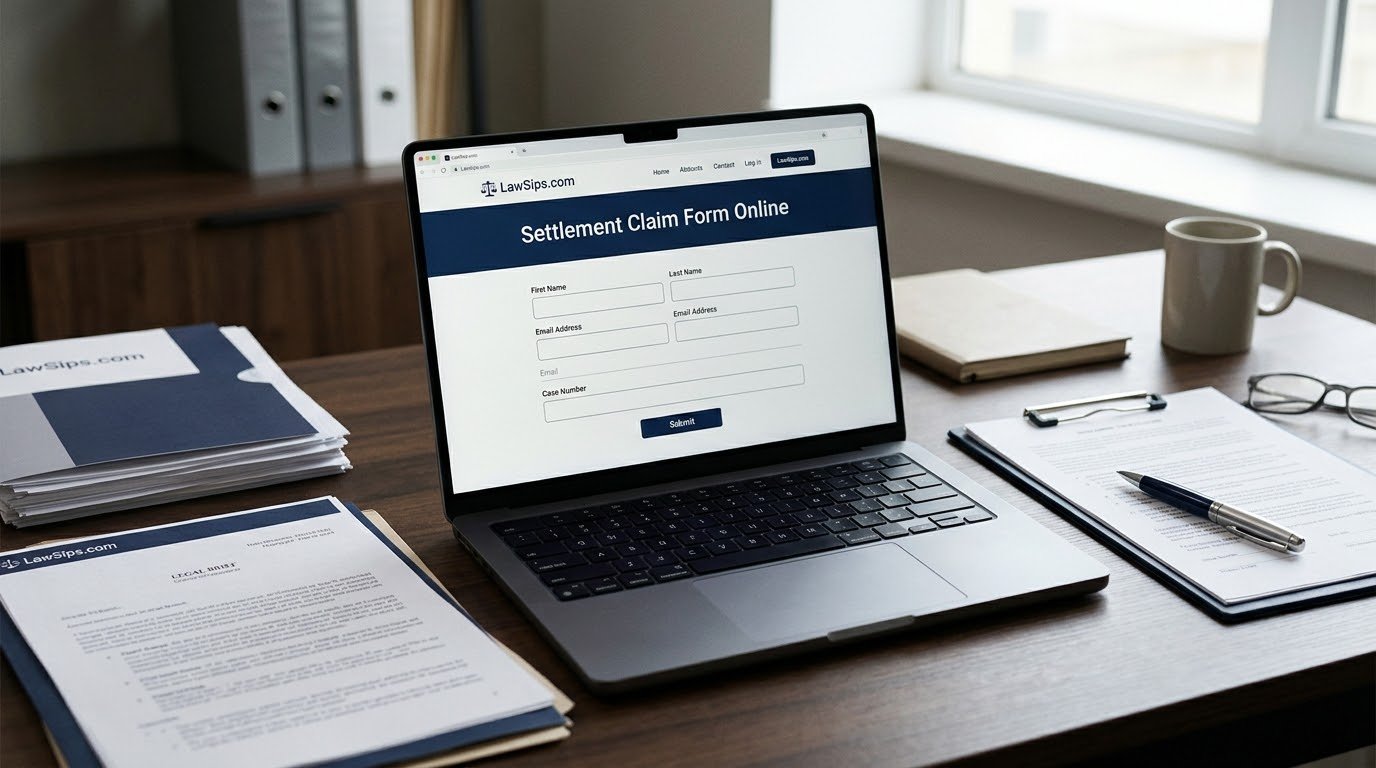
Silence is the normal next sound. Administrators validate claims in batches, and months of quiet are the process working, not failing.
Status questions go to the administrator. Its official site and helpline are the only channels that can see your claim’s actual state.
Our how long does a settlement take sets the honest calendar, from claim period through final approval to distribution, phase by phase.
A deficiency notice is not a denial. It names a fixable gap, missing data, a mismatched document, an unsigned certification, and gives a cure window.
Cure it exactly as instructed. Answer the specific defect, through the stated channel, before the cure deadline printed on the notice.
Ignoring a deficiency is the true denial. Unanswered notices mature into rejected claims, while cured ones return to the payment pool.
Final approval sits inside the quiet. The court’s final approval hearing usually falls after the claim deadline, and distributions wait for it plus any appeal window.
Per person math explains estimate drift. Our class action lawsuit settlement amounts shows how a fund divided by valid claims moves every estimate until the count closes.
The administrator’s determination ends the question. After validation, its eligibility decision on your claim is final within the settlement’s own machinery.
Keep your details current. A new address or email belongs in the administrator’s records the week it changes, not the week the check fails to arrive.
The Harm Report open settlements guide maps where settlements live across administrators, the FTC refund index, attorney general pages, and the court docket, for any status question that outgrows one site.
Deadlines: The Court’s Clock, Not the Blog’s
The court sets the deadline. Judges fix the claim deadline at preliminary approval, and it is printed on the notice and the official website.
Typical windows run 60 to 180 days. That range, counted from the notice date, is the field consensus for claim periods.
Our settlement claim deadline is built on that clock, including what the agreement in your case does with a late claim.
Online cutoffs can be minute precise. Live cases close filing at a stated time, 11:59 p.m. Eastern in prominent examples, so your time zone is part of the deadline.
Different forms carry different dates. The opt out and objection deadlines are separate, earlier, and served by different forms with opposite intentions.
Filing early is a safety feature. Deadline week brings site load, support queues, and no cure window for a form rejected at the wire.
A late claim is usually a dead claim. The settlement agreement decides exceptions, and the field’s honest summary is that late filing rarely survives.
Put the deadline in two calendars. Yours, and a household member’s who will notice the week arriving, because single reminders fail exactly when life gets busy.
Paper Forms: The Route That Skips the Phishing
Every major settlement keeps a paper door. The form is downloadable as a PDF from the official site, and mailed notices often include one in the envelope.
Paper deletes the phishing surface. No lookalike site can intercept a printed form in an envelope addressed from the notice.
The postmark is the deadline rule. Mailed claims are judged by the postmark date, not the arrival date, in the standard pattern.
Mail early anyway. The postmark protects a timely mailing, not a lost one, and a certificate of mailing is cheap insurance.
Keep your own copy of everything mailed. A photograph of the completed form and the stamped envelope turns a lost mailing from an argument into evidence.
Paper filers accept the slow lane. Check payment to the form’s address is the paper route’s standard ending, with the delay that carries.
|
Route |
Speed |
Payment options |
Proof of filing |
Deadline rule |
|---|---|---|---|---|
|
Online form |
Minutes to file |
Digital choices plus check |
Confirmation number and screen |
Stated cutoff time and time zone |
|
Paper form |
Days to prepare and mail |
Check to the form address |
Postmark, plus your retained copy |
Postmarked by the deadline |
Either route, the site is the source. Download the PDF from the official site you verified, never from a file sharing link or an email attachment.
A last word on intermediaries. Apps and services offer to fill and post forms for you; some are legitimate conveniences and all of them stand between you and the administrator.
Verify an intermediary like a website. Independence disclaimers, a real company identity, and no fee to file are the minimum checks before your data changes hands.
The free direct route always exists. That fact is the benchmark every intermediary must beat, and most cannot beat it by much.
Frequently Asked Questions
1. What is a settlement claim form online?
It is the administrator’s payment document. A class member submits it to the court appointed settlement administrator through the official settlement website to be paid from a class action settlement.
2. Where do I find the official claim form for my settlement?
It is printed in your class notice. The notice names the one official settlement website for your case.
Type that address yourself; court documents on the site confirm it.
3. Is filing a settlement claim form free?
Yes, filing is always free. No legitimate administrator charges a filing, processing, or release fee.
Any site or message demanding money to file or to unlock a payment is a scam.
4. How long does it take to file a claim form online?
Typically 5 to 15 minutes online. That field estimate assumes you start prepared, with your notice, Claim ID, documents for your tier, and a payment destination already decided.
5. What information does an online claim form ask for?
Identity basics plus case facts. Expect your name, address, and email, the Claim ID if you have one, the class specific details the form defines, a payment choice, and a truth certification.
6. What is a Claim ID or Notice ID on a settlement form?
It is your notice’s key to the form. The Claim ID, Notice ID, or PIN ties your claim to the notice record and prefills your eligibility, which makes the ID path the fast path.
7. Can I file a claim form without a Claim ID?
Yes, in most settlements. Mechanics guides agree most settlements let you file without an identifier when no notice reached you.
Expect more manual entry while the administrator matches your records.
8. I never received a settlement notice. Can I still file?
Yes, if you fit the class definition. Notices do not reach every class member.
Read the class definition on the official site, and file through it if your facts match.
9. I lost my settlement notice. What should I do?
Use the official site’s contact form. Administrators run ID lookups at volume for known class members.
Never give your details to a third party lookup service, however official it looks.
10. Do all settlements require a claim form?
No, some pay automatically. Certain classes or subclasses are paid from the defendant’s own records with no form at all.
Your notice says whether your branch needs a form or no action.
11. What is an automatic payment settlement?
It pays from records, not forms. The company or administrator already holds the class list and payment details, so money moves without a claim, provided your address and account details are current.
12. What is the difference between a no proof claim and a with proof claim?
Proof is the difference. A no proof claim runs on your certification that you fit the class.
A with proof claim asks for receipts, order details, or records and usually supports a higher tier.
13. What documents count as proof for a settlement claim?
Whatever the form names. Receipts, order numbers, transaction dates, and account records are the usual documents.
The official form lists exactly what it accepts, and substitutes are rarely taken.
14. Can a claim run on a serial number instead of receipts?
Yes, where the number proves the purchase. One current phone related claim runs on the device serial number instead of receipts, because the serial ties you to a covered product directly.
15. What happens if I exaggerate amounts on a claim form?
**Do not.
It is fraud.** Claim forms are certified, and field guidance warns that padded numbers risk rejection and investigation.
Honest figures in the right tier beat invented figures in a higher one.
16. How do I choose a payment method on the claim form?
On the form, at filing time. Live forms offer digital options such as PayPal, Venmo, Zelle, or a prepaid card, plus a paper check.
The choice is rarely changeable later, so decide before submitting.
17. Is digital payment faster than a paper check from a settlement?
Yes, digital is fastest. Field guidance ranks electronic payment first for speed after distribution begins, while a paper check is the slowest path and can add 2 to 4 weeks.
18. Can I file a settlement claim form by mail instead?
Yes, paper filing remains standard. The official site offers a downloadable PDF, and mailed notices often include the form.
Keep a copy and note that paper filers are generally paid by check.
19. What does postmarked by the deadline mean?
The mailing date counts, not arrival. Mailed claims are judged by their postmark, so a form posted on the deadline day is timely even if it arrives later.
Mail early regardless.
20. What time does an online claim form close on the deadline day?
Often at a stated minute, Eastern. Prominent live cases close online filing at 11:59 p.m.
Eastern on the deadline date.
Check your settlement’s exact cutoff and convert it to your time zone.
21. What is a claim deadline and who sets it?
It is the court’s filing deadline. Judges set it at preliminary approval, it is printed on the class notice and the official site, and typical claim windows run 60 to 180 days from the notice date.
22. What happens if I miss the settlement claim deadline?
Usually the claim dies. The settlement agreement controls any exception, and the field’s honest summary is that late claims rarely survive.
File early enough to keep a cure window for defects.
23. How do I know my online claim was received?
The confirmation is your proof. A completed filing returns a confirmation number and final screen.
Save the number and a screenshot; a confirmation email may follow but the number outranks the inbox.
24. What should I save after submitting a claim form?
Save the number, the screen, and the notice. Together they hold your proof of filing, your Claim ID, and your deadline, which is the complete file for any later dispute with the administrator.
25. I filed and got no confirmation email. What now?
Treat the claim as unfiled until verified. If the flow ended without a confirmation number, contact the administrator through the official site and be ready to refile cleanly, once, inside the deadline.
26. How can I check the status of my settlement claim?
Ask the administrator, nowhere else. Its official website and helpline are the only channels that can see your claim’s state.
Aggregators and forums can describe the process, never your claim.
27. What is a deficiency notice on a claim?
It is a fixable gap, not a denial. The administrator flags missing data, a mismatched document, or a missing signature, and gives you a cure window.
Answer the specific defect before its deadline.
28. Can I fix a deficient settlement claim?
Yes, inside the cure window. Follow the notice’s stated channel and fix exactly what it names.
An unanswered deficiency notice is what matures into a rejected claim.
29. Who decides whether my claim is valid?
The settlement administrator decides. After validation, its eligibility determination on your claim is final inside the settlement’s machinery, which is why filing on the official form matters.
30. Can I change my payment method or address after filing?
Through the administrator, promptly. Address changes are routine and should be filed the week you move.
Payment method changes are harder and sometimes impossible, which is why the form choice matters.
31. Is it safe to enter my Social Security number on a claim form?
Only limited data is normal. Real forms may ask for the last digits of a Social Security number for identity matching.
A demand for the full number plus bank logins is a scam pattern.
32. How can I tell if a settlement claim website is fake?
Go around the message and compare. Find the settlement’s public version independently, then match the case name, deadline, and administrator.
A domain that differs by a letter is a fake.
33. What are the FTC’s four signs of a scam?
Pretend, problem, pressure, payment. Scammers pretend to be an organization you know, invent a problem or prize, pressure you to act immediately, and demand payment in a specific way.
Settlement scams hit all four.
34. A claim site asks for a filing fee. What should I do?
Close it and report it. Filing is always free, so a fee demand ends the inquiry.
Find the real site from your notice, and report the fake at the FTC’s fraud reporting site.
35. I entered my information on a suspicious claim site. What now?
Protect the accounts first. Change any password you reused there, tell your bank what happened, and follow the recovery steps at the federal identity theft site.
Then report the site to the FTC.
36. What is the difference between a claim form and an opt out form?
They do opposite things. A claim form joins the settlement to be paid.
An opt out form leaves it, preserving your right to sue separately.
They carry different deadlines and different envelopes.
37. Does filing a claim form require a lawyer?
No lawyer is required. Claim forms are designed for class members to file themselves, and the administrator’s helpline answers form questions free.
A lawyer matters for objections or separate suits, not filing.
38. Can I file a claim form for a deceased family member?
Yes, estates can file claims. A family member or estate representative files with the class member’s details and the estate’s documentation, on the settlement’s own deadlines, which may differ from individual ones.
39. When will I be paid after filing my claim form?
After final approval and validation. Payments follow the claim deadline, the court’s final approval, and the administrator’s validation of claims, a pipeline that normally runs for months, not weeks.
40. Why do settlement payments take months after the deadline?
The money waits for the counting. Administrators must close the claim period, resolve appeals windows, validate claims, and calculate each share before any distribution can be calculated or sent.
41. Will more claims filed mean a smaller payment for me?
Usually yes, under pro rata math. Most funds divide by valid claims, so a heavier claim count lowers each share.
That is why early payout estimates move and are labeled estimates.
42. Where can I find settlements with claim forms open now?
Start from verified directories and the sites themselves. Reputable trackers list open settlements, but the filing always happens on the official site named in the notice, which you should reach by typing its address.
Conclusion
The settlement claim form online rewards a claimant who verifies first. One official site, a free filing, the honest tier, and a saved confirmation are the whole craft.
Check whether a form is even required. Automatic classes pay the silent, claims made classes pay only the filed, and your notice tells you which world you are in.
Then keep the file complete. Notice, confirmation number, and screenshot together, with your address current at the administrator, and the quiet months will end in a payment instead of a puzzle.

Dilawar is a dedicated writer and contributor at Lawsips.com, focusing on legal information, business law, consumer rights, legal awareness, and everyday legal matters. He is passionate about simplifying complex legal topics and providing readers with clear, practical, and easy-to-understand information. His goal is to help readers stay informed about legal developments, understand their rights, and make better decisions through informative and well-researched articles.