

If you have bought everyday products, used online services, paid fees, held an account, or received a data-breach notice, you may have encountered a problem that affects more than one person.
Class action settlements you can claim are court-supervised resolutions that may let eligible consumers, employees, account holders, or other affected people receive money or another benefit without filing an individual lawsuit.
The important words are eligible and open. A settlement can involve a large fund but still exclude you because you did not belong to the defined group, your purchase fell outside the covered dates, or the filing deadline has passed. A website advertising a payout is not proof that a claim is available.
Table of Contents
Where to Find Class Action Settlements You Can Claim
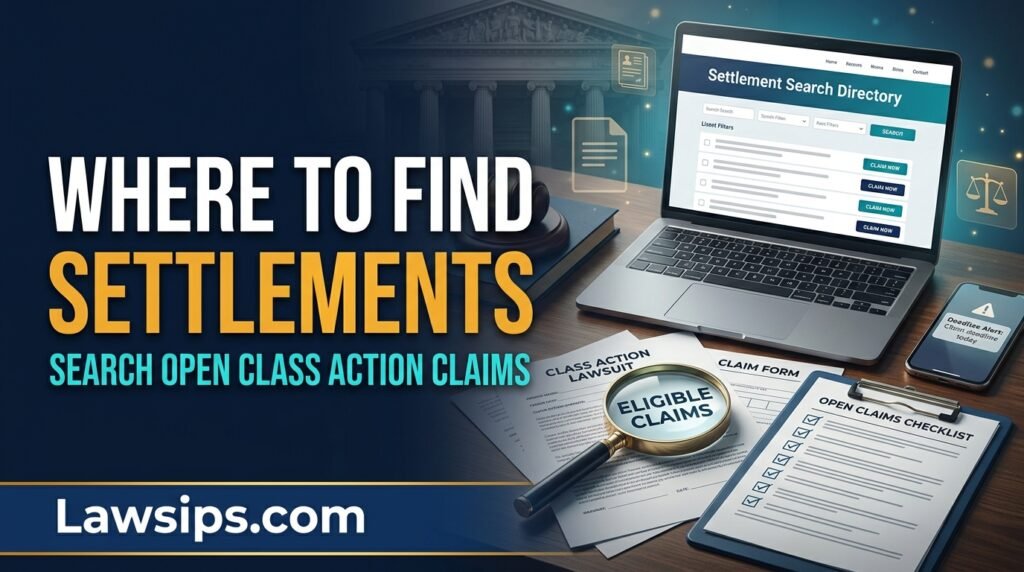
The fastest way to discover possible claims is to search a settlement directory, then verify each promising result through the official settlement website. Directories are useful for discovery, but the official notice controls eligibility, deadlines, documentation, and payment terms.
Settlement directories to check
- OpenClassActions — Open Settlement Directory
- ClaimWell — Open Class Action Settlements
- Recording Law — Class Action Settlements 2026
- ClaimSensor — Class Action Settlements You Can Claim
- SettlementList — U.S. Settlement Directory
- Class Action Deadlines
- Sparrow — Class Actions
- Claim Owed Money — Settlements
These sites may organize claims by deadline, settlement category, proof requirements, and estimated payment. Since third-party pages can lag behind court notices, never rely on a directory alone to decide whether a claim is still open.
Official sources worth checking
- Federal Trade Commission refund programs
- Federal court rules on class actions — Rule 23
- U.S. Courts — Federal Rules of Civil Procedure
- PACER — Federal court records
- USA.gov — Consumer complaints
Types of Class Action Settlements That May Be Available
Settlement opportunities can arise in many areas of consumer and employment life. The category alone does not prove that a current settlement exists; it simply helps you decide what to search for.
Data breach settlements
A data breach settlement may cover people whose personal information was involved in a specified security incident. Covered data may include names, addresses, account identifiers, Social Security numbers, or other information described in the settlement notice.
Benefits can include a small cash payment, reimbursement for documented expenses, compensation for time spent responding to the incident, credit monitoring, or identity-protection services. A person must usually fall within the settlement’s defined group, such as people who received a breach notice or whose information was identified in affected records.
Consumer product settlements
Product settlements may involve allegations about advertising, labeling, product defects, warranties, pricing, or fees. A settlement may cover people who bought a particular product during a stated period and in a particular location.
Some claims require receipts or other proof of purchase. Others allow a limited number of purchases to be claimed without documentation. Read the product names, model numbers, purchase dates, state restrictions, and claim limits carefully.
Website privacy and tracking settlements
Some lawsuits allege that websites or apps shared user information through tracking technologies, pixels, or other tools without legally sufficient consent. The precise legal theory and eligibility criteria vary by case.
Do not assume that visiting a website or using an app automatically qualifies you. The settlement may cover only particular users, dates, subscriptions, states, or interactions.
Banking, credit, and financial settlements
Financial cases may concern fees, interest calculations, credit reporting, lending disclosures, payment processing, or other account practices. Eligibility can depend on the account type, transaction history, dates, and whether a person suffered a covered loss.
Keep statements, notices, transaction records, and correspondence. Do not provide online banking passwords or a full payment-card PIN to a claims website.
Employment and wage settlements
Employment settlements can cover defined groups of current or former workers. Issues may include unpaid wages, overtime, meal or rest breaks, tip credits, job-posting disclosures, or other workplace practices.
These cases often have narrow definitions based on employer, work location, job role, and employment dates. Some payments may be subject to tax withholding or reported on tax forms. Review the settlement notice and ask a qualified tax professional about your individual circumstances.
Antitrust and overcharge settlements
Antitrust cases may involve allegations that competitors coordinated prices or restricted competition. A settlement can cover eligible purchasers of particular goods or services during a defined period.
The class may distinguish direct purchasers from indirect purchasers, businesses from individual consumers, or purchases in different states. Some settlements require purchase documentation, and distributions may depend on the number and value of approved claims.
How to Check Whether You Qualify
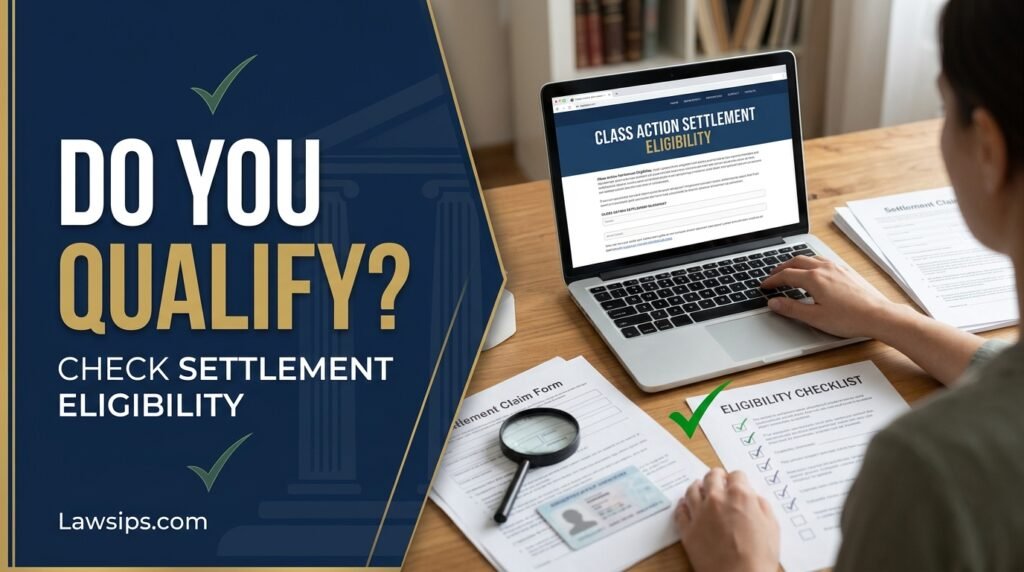
Eligibility is determined by the official class definition, not by a general headline. Use the following process before completing a form.
Step 1: Read the class definition
Look for the exact group covered by the settlement. It may identify a product, company, account type, state, purchase period, employment period, or data incident.
For example, a settlement may cover people who purchased a named product between two dates. Owning a similar product or purchasing it outside the period may not be enough.
Step 2: Compare dates and locations
Check when you bought the product, used the service, held the account, worked for the employer, or received the notice. Some settlements apply nationwide; others are limited to a state or specific jurisdiction.
If you are unsure, read the detailed notice or contact the administrator using the contact details published on the official settlement website.
Step 3: Check proof requirements
A settlement may allow a claim without receipts, require a notice ID, or ask for documents showing actual losses. “No proof required” generally means no supporting purchase or loss documents are required for that particular payment category; it does not mean anyone can claim regardless of eligibility.
Never invent a purchase, loss, or account relationship. False information can lead to rejection and may have legal consequences.
Step 4: Check whether you must file
Some settlements require each eligible person to submit a claim form. Others provide automatic payments to identified class members, or offer different benefits depending on whether a form is submitted.
Read the official notice to learn whether a claim is required, how to file, and whether an electronic or paper form is accepted.
Step 5: Check the deadline and submission confirmation
Record the deadline, time zone, submission method, and any mailing requirements. If you file online, save the confirmation number or email. If you mail a form, follow the notice’s instructions and keep a copy.
How to File a Class Action Settlement Claim
Most consumer settlement claims follow a straightforward process, but details vary. Use the official settlement website and complete every required field accurately.
- Open the official settlement website. Confirm that the URL matches the court-approved notice or the administrator named in it.
- Read the long-form notice. Check the class definition, covered period, available benefits, exclusions, deadline, and release of claims.
- Choose the correct benefit category. Some settlements separate a basic cash payment from documented losses, reimbursement, or monitoring services.
- Enter accurate information. Use the name and contact details requested by the form. Explain any discrepancy between current details and the records covered by the settlement if the instructions allow it.
- Upload only required documents. Use clear, complete copies and redact unrelated sensitive information when permitted by the instructions.
- Review the declaration. Many forms require you to certify that the information is accurate. Do not submit a claim for purchases or losses you did not experience.
- Submit before the deadline. Do not assume a saved draft counts as a submitted claim.
- Save proof of submission. Keep a PDF, screenshot, confirmation number, or email for your records.
- Monitor official updates. The administrator may request additional information or publish updates about approval and payment timing.
Do You Need Receipts or Proof of Purchase?
Not always. The answer depends on the settlement and the benefit you are requesting. A settlement might offer a smaller fixed or pro rata payment without receipts and a larger reimbursement option for documented losses.
| Requirement | What it can mean | What to do |
|---|---|---|
| No purchase proof | The form may not require receipts for the specified benefit | Still confirm that you meet the class definition |
| Proof of purchase | Receipt, order confirmation, or other evidence of a transaction | Find records showing product, date, and purchase |
| Notice ID or PIN | A code sent to identified class members | Use the code from the official notice |
| Proof of loss | Evidence of expenses or financial harm | Keep invoices, statements, and related records |
| Identity verification | Information used to match a claimant to records | Provide only what the official form requests |
| Business records | Documents for commercial or organizational claims | Check whether an authorized representative must file |
If you no longer have a receipt, read the notice before giving up. Some settlements accept alternative evidence, permit a claim without documentation for a limited benefit, or use company records to identify class members.
How Much Money Can You Receive?
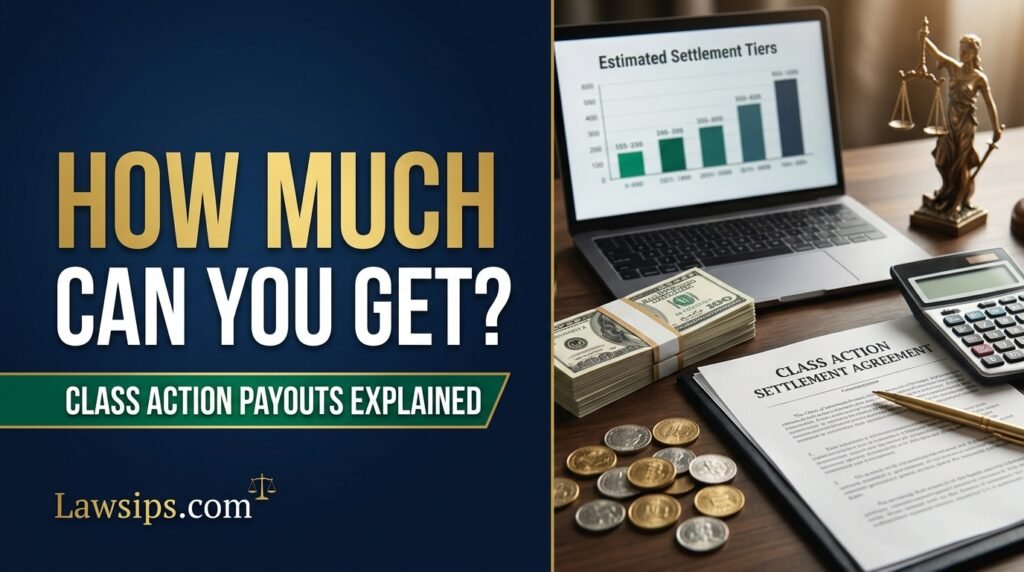
There is no standard class action payout. A payment can be a few dollars, a larger reimbursement for documented expenses, a non-cash benefit, or no payment at all if the claim is denied or the settlement does not provide individual cash benefits.
The advertised maximum is often not what every claimant receives. A settlement may set a cap for documented losses, limit the number of eligible purchases, or divide a fund among approved claims.
Factors that affect your payment
- The total settlement fund and the benefits the agreement authorizes.
- The number of valid claims submitted.
- Whether you choose a basic benefit or documented-loss option.
- Whether your claim is approved and supported by required evidence.
- Administrative costs, court-approved attorneys’ fees, and other permitted deductions.
- Whether the payment formula is pro rata, fixed, tiered, or based on documented loss.
What does “pro rata” mean?
A pro rata payment is a share calculated under the settlement’s distribution formula. If more eligible people submit valid claims than expected, each person’s share may be smaller than an early estimate.
Always distinguish between the total settlement fund, the maximum amount available to one claimant, an estimated individual payment, and a guaranteed payment. Those are four different things.
Open Settlement Examples and How to Verify Them
Settlement status can change quickly. As of October 22, 2026, public directories were listing a range of open claims, including data-incident, product, privacy, employment, and consumer cases. However, deadlines close, court orders can change procedures, and a directory may not reflect a last-minute update.
For example, directory pages recently listed matters involving Lands’ End, Equinox, Americold, Palomar Health Medical Group, Highlands Oncology, EFS Advisors and Aviben, as well as product and consumer cases. Several listings showed deadlines around October 22–23, 2026, which makes immediate verification essential rather than a reason to assume a claim remains open.
Use these directory pages to locate the case, then open the official notice before taking action:
- OpenClassActions settlement directory
- ClaimWell open settlements
- SettlementList U.S. settlements
- Claim Owed Money directory
- Sparrow class action listings
Do not treat the names above as a promise that you qualify. Some may have closed by the time you read this article. The official settlement website is the final place to confirm current status, class period, claim requirements, and deadline.
How to Identify an Official Settlement Website
A legitimate settlement site usually identifies the case name, court, case number, settlement administrator, key dates, official documents, and a way to contact the administrator. The site may state that a court authorized the notice and explain that the notice is not a solicitation from a lawyer.
Before entering personal details, verify the website through at least one reliable source. The court docket, the official notice you received, or a government refund page may help confirm the process.
Warning signs of a settlement scam
- A demand for an upfront fee to unlock or release a settlement payment.
- Promises that everyone will receive a guaranteed amount.
- A request for your password, banking PIN, cryptocurrency seed phrase, or full account credentials.
- A countdown timer or threat that you will lose money unless you pay immediately.
- No case name, court, settlement administrator, or official notice.
- A suspicious domain that imitates a company, court, or claims administrator.
- A social media message asking you to pay taxes or processing charges to receive a prize-like payment.
The Federal Trade Commission explains that its refund programs do not require upfront fees and warns consumers against requests for sensitive information. Check the FTC’s refund program guidance if a message claims to be connected to an FTC refund.
What Happens After You Submit a Claim?
Submitting a form does not necessarily mean the claim has been approved or that payment is imminent. The administrator may review eligibility, verify records, request more information, or wait for the court’s approval process to finish.
Common stages include:
- Claim review: The administrator checks the form against the settlement rules.
- Deficiency notice: You may be asked to correct missing or inconsistent information.
- Court approval: A proposed settlement may need final approval before benefits are distributed.
- Appeals or other delays: Challenges can postpone distribution.
- Payment processing: Approved payments may be issued by check, electronic payment, or another method specified in the notice.
- Uncashed payment rules: Checks and electronic payment links may expire under the settlement’s terms.
There is no universal payment timeline. Use the official site’s status page and contact information rather than relying on comments, social posts, or another claimant’s experience.
Can You Claim Multiple Class Action Settlements?
You may be eligible for more than one settlement if you independently meet each settlement’s class definition. For example, a person could have purchased a covered product and separately received a notice about a data incident. Each case has its own requirements.
However, you cannot claim a settlement merely because it mentions a company you know. You must truthfully meet that settlement’s criteria, and you should never submit duplicate claims unless the instructions explicitly permit them.
Do You Need a Lawyer to Claim Settlement Money?
For many routine consumer settlements, eligible class members can submit a claim themselves using the official form. The form should explain the steps and the required documentation. You generally do not need to hire a lawyer just to submit a standard claim.
Legal advice may be useful if you are considering opting out, objecting to a settlement, pursuing a separate individual claim, dealing with a large loss, or facing a dispute about your rights. The deadlines and consequences can differ, so consult a licensed attorney in the relevant state when the decision could materially affect your legal position.
What Does Opting Out Mean?
In some class actions, eligible members can ask to be excluded from the settlement class by following the notice’s opt-out procedure. This may preserve the ability to pursue an individual case, but it can also involve cost, risk, and strict deadlines.
If you do nothing, the result depends on the type of class action and the court’s orders. Read the notice carefully: submitting a claim, objecting, opting out, and doing nothing are different choices with different consequences.
Can You Object to a Class Action Settlement?
A class member may have a right to object to a proposed settlement under the applicable court rules and notice. An objection is not the same as opting out. It generally asks the court to consider a concern about the settlement while the person remains within the class, subject to the case’s procedures.
The notice will state who may object, the deadline, the required information, and whether a hearing is scheduled. Federal Rule of Civil Procedure 23 addresses court review and approval of class settlements; read the current rule and the case-specific notice before acting.
Why Are Some Settlement Payments So Small?
A large settlement fund does not automatically translate into a large check for each person. The fund may cover many claimants, documented-loss reimbursements, administration, attorneys’ fees approved by the court, and other authorized distributions.
A settlement can also offer non-cash relief, such as account credits, product replacement, or monitoring services. The settlement agreement and distribution formula—not the headline amount—explain what eligible people may receive.
How to Keep Track of Deadlines Without Missing Claims
A simple tracking system can prevent missed opportunities and reduce the risk of duplicate or fraudulent submissions.
- Save the official settlement URL and case name.
- Record the claim deadline and the date you checked it.
- Note the documents or notice codes required.
- Save your submitted form and confirmation.
- Add a reminder before the deadline.
- Recheck the official website if the court issues an update.
- Keep the administrator’s contact information with your records.
You can also check more than one settlement directory to discover cases, but verify the same claim against the official notice before filing. Do not share personal data with a directory simply to browse listings unless you understand why it is needed and trust the provider.
Legal and Consumer Resources
The following sources are useful for checking legal procedures, reporting suspicious messages, or understanding consumer rights. They are not all settlement directories, and each has a different purpose.
- Federal Rule of Civil Procedure 23 — Cornell Legal Information Institute: explains class certification and settlement approval procedures.
- U.S. Courts — Rules and Policies: provides federal court rules and related resources.
- PACER: provides access to federal court case records, with account and fee rules.
- Federal Trade Commission refunds: identifies official FTC refund programs.
- FTC refund program FAQs: explains how to identify legitimate FTC payments and avoid scams.
- USA.gov consumer complaints: helps consumers find the appropriate complaint channel.
- Consumer Financial Protection Bureau: accepts complaints about many financial products and services.
- Your state Attorney General: can be a starting point for state consumer protection information.
Also Read:
- MyChart Lawsuit Settlement 2026: Payouts and Claim Forms
- Temu Lawsuit 2026: Latest Updates and Settlement Status
- Spectrum Lawsuit 2026: Eligibility, Payouts and How to File
- Starbucks Lawsuit 2026: Latest Updates and Legal Details
- Brita Lawsuit 2026: Settlement Payouts and How to File
- Blue World Pools Lawsuit 2026: Latest Updates and Claims
- Panera Class Action Lawsuit: Full Guide for 2026
- Always Pads Lawsuit 2026: Claims, Payout and Eligibility
- Ryze Superfoods Lawsuit 2026: Updates and Who May Qualify
- Primal Queen Lawsuit 2026: Legal Updates and Claims
- Popeyes Lawsuit 2026: Claims, Payouts and Filing Information
- Goonzquad Lawsuit 2026: Latest Updates and Legal Claims
- Prose Hair Lawsuit: Claims and Legal Updates
- Omega XL Lawsuit 2026: Legal History and Settlement Status
- Crepe Erase Lawsuit 2026: Settlement Claims and Legal Updates
- Emuaid Lawsuit 2026: Latest Legal Updates
- EcoShield Lawsuit 2026: Eligibility and Legal Updates
- Chaturbate Lawsuit 2026: Latest Updates and Claims
- Symple Lending Lawsuit 2026: Latest Updates and Claims
- Hailey Welch Lawsuit 2026: Settlements, Payouts and Deadlines
- Class Action Lawsuit: How It Works and Who Can Join
- RPM Living Lawsuit: Latest Updates and Legal Developments
- Class Action Settlements and Consumer Claim Updates
- Consumer Lawsuit Updates and Legal Guides
Frequently Asked Questions (FAQs)
What class action settlements can I claim right now?
The answer changes as claims open and close. Start with a current settlement directory, then confirm the case’s deadline and eligibility rules on the official settlement website before filing.
How do I find class action settlements in my name?
Search settlement directories and check any mailed or emailed legal notices you received. Some administrators use notice IDs or account records, but there is no single public database that lists every settlement you personally qualify for.
Are class action settlements real?
Yes, court-supervised class action settlements are a real legal process. However, scam websites may imitate legitimate notices, so verify the case name, court, administrator, and official claim website.
Do I have to pay to file a class action claim?
Routine claims submitted through an official settlement process are generally free. Be suspicious of anyone who demands an upfront payment to register you or release settlement money.
Can I claim a settlement without a receipt?
Sometimes. Certain settlements permit a claim without purchase proof for a defined benefit, while others require a receipt, order confirmation, notice code, or evidence of loss.
How much can I get from a class action settlement?
The amount depends on the settlement’s terms and payment formula. The maximum advertised amount may apply only to documented losses or a specific category and is not a guaranteed payment for every claimant.
How long does it take to receive settlement money?
It varies by case. Payments may wait for claim review, final court approval, appeals, and processing, so the official settlement website is the best source for current timing.
What happens if I miss a settlement deadline?
You may lose the right to receive benefits through that claim process. Check the official notice for the exact deadline and any instructions for late or corrected submissions.
Can I file for more than one settlement?
Yes, if you independently qualify for each settlement and follow each case’s rules. Do not submit duplicate or inaccurate claims.
Do all class action settlements require a claim form?
No. Some settlements use automatic payments for identifiable class members, while others require a valid claim form to receive money or benefits.
What is a settlement administrator?
A settlement administrator is the organization appointed to handle tasks such as sending notices, receiving claim forms, reviewing submissions, and distributing benefits under the settlement terms.
How can I verify a settlement claim form?
Find the official website through the court-approved notice or a reliable court or administrator source. Confirm that the case name, court, deadlines, and contact details match.
Are settlement directories official government websites?
Usually not. Many are independent informational services that compile settlement listings. Use them to discover potential claims, then verify details through official case documents and the settlement administrator.
Can I claim money if I never received a notice?
Possibly, depending on the class definition and filing rules. Search the official settlement site by case or company and check whether people without a notice ID may file.
What does “no proof required” mean?
It generally means the settlement does not require specified supporting documents for that payment option. You must still meet the class definition and provide accurate information requested by the form.
Why is my settlement payment less than the advertised amount?
The headline may show a maximum or estimate rather than a guaranteed payment. A pro rata formula, claim volume, documentation, or settlement-specific limits can affect the final amount.
Can I check a class action settlement through PACER?
PACER provides access to federal court records, which can help verify case activity. It is not a simple consumer claim directory, and the official settlement website may be easier for filing instructions.
What is the difference between a class action lawsuit and a settlement?
A class action lawsuit is a legal case brought on behalf of a defined group. A settlement is an agreement resolving claims; it may occur before trial and usually requires court approval when it binds a certified or proposed class under the applicable rules.
Does joining a settlement mean the company admitted wrongdoing?
Not necessarily. Settlement agreements often resolve disputed claims without an admission of liability. Read the agreement and notice for the exact terms.
Should I opt out of a class action settlement?
That depends on your circumstances, the settlement terms, and whether you want to pursue an individual claim. Opt-out deadlines can be strict, so consider legal advice before making a decision with significant consequences.
Can I object to a proposed settlement?
Eligible class members may have a right to object under the notice and applicable court rules. The notice explains the deadline, procedure, and required information; an objection is different from opting out.
Are data breach settlements always paid in cash?
No. Benefits may include reimbursement, credit monitoring, identity-protection services, or a combination of benefits. The official settlement notice specifies what is available.
Can businesses claim class action settlement money?
Some settlements include businesses or other organizations, while others cover only individuals. Review the class definition and whether a business representative or additional documents are required.
What should I do if a settlement website asks for my Social Security number?
Stop and verify why the information is requested using the official notice and administrator contact details. Never provide passwords, full banking PINs, or other credentials, and avoid sending sensitive information to an unverified site.
Are settlement payments taxable?
Tax treatment depends on what the payment compensates and your individual circumstances. Keep the settlement notice and payment records and consult a qualified tax professional if you are unsure.
Can I still receive money after a settlement is approved?
Possibly, if the claim period remains open and you meet the rules. Court approval does not automatically mean the filing deadline has passed, so check the official website.
What does a class definition mean?
It describes the people or organizations covered by the case, often using dates, purchases, locations, account types, or other criteria. It is the starting point for determining eligibility.
What is a pro rata settlement payment?
It is a share calculated under a settlement’s distribution formula. The final amount may change based on the number of approved claims and the fund available for distribution.
What if my claim is rejected?
Read the rejection notice and the settlement rules to see whether there is an appeal, correction, or inquiry process. Contact the administrator through the official website and keep copies of all correspondence.
How do I avoid fake class action settlement ads?
Avoid upfront fees, guaranteed-payout promises, suspicious links, and requests for passwords or financial credentials. Verify every claim through the court-approved notice or official administrator website.
Conclusion
Finding class action settlements you can claim starts with a reliable directory, but it should never end there. Check the official settlement notice, compare its class definition with your circumstances, confirm the deadline, and follow the required filing steps. Keep receipts, account records, notices, and submission confirmations in case the administrator needs to verify your claim.
Remember that an advertised settlement fund is not a promise that every person will receive a specific amount. Payments depend on eligibility, documentation, claim volume, and the agreement’s distribution rules. Some cases offer automatic benefits, while others require a timely form or proof of loss.
Most importantly, protect your personal information. Filing an ordinary settlement claim should not require an upfront fee, and no legitimate administrator should need your password or banking PIN. Use the directories and legal resources above to discover opportunities, then rely on official court documents and settlement websites for the final answer. A careful five-minute verification can help you avoid scams and prevent a missed deadline.
