
Estate Planning Lawyer: What They Do, What It Costs, and the Funding Rule

An estate planning lawyer builds the legal plan that decides who acts for you when you cannot, who raises your children, and who inherits what, in what order, and through which door.
The documents are the visible part: a last will, a revocable living trust where one fits, a financial power of attorney, and a healthcare directive. The plan underneath them is the actual product.
One rule decides whether the plan works at all. A trust controls only the assets actually transferred into it, so funding, the deeds, retitling, and beneficiary forms, is where plans live or quietly die.
This page is general legal information from LawSips, which is not a law firm and sells no consultations. It teaches the role, the real costs with their sources attached, and the vetting that protects you.
The Short Answer: A Plan, Not Paperwork
Ask what an estate planning lawyer sells and most people say documents. Lawyers who do the work well say decisions: made by you, in advance, in the state’s own legal language.
A document mill starts from templates. A planning lawyer starts from an interview that surfaces the second marriage, the estranged child, the house in another state, and the account whose beneficiary form disagrees with everything.
The fee buys that interview, the drafting it informs, the signing ceremony done to your state’s rules, and, in good firms, the funding labor that makes the paper real.
Judge every quote by what is inside it. Two plans with identical document lists can be utterly different products, and the cheaper one usually skipped the parts you cannot see.
What an Estate Planning Lawyer Actually Does
The work runs in a sequence, and each stage has a job. Seeing the sequence is how you evaluate any firm you are considering.
Step 1: The Inventory Interview
Step 1: Map the estate. The lawyer inventories assets, titles, debts, and beneficiary forms, because a plan can only direct what it can see, and forms filled in years ago still speak.
Step 2: Map the family. Spouses, children, stepchildren, dependents, and the difficult relationships all enter the design. Silence about a hard fact is the most expensive sentence in planning.
Step 3: Set the incapacity answers. Who manages money, who speaks to doctors, and who steps in if the first choices cannot serve. Death is only half the plan; incapacity is the other half.
Step 4: Choose the vehicles. Will based or trust based, which powers, which directives, and what stays outside both through beneficiary designations. The menu is small; the fitting is the skill.
Step 5: Draft, sign, and fund. Documents are drafted, executed under state rules with witnesses or notarization as required, and then the assets are moved, retitled, or re-designated to match.
Step 6: Review on a rhythm. Births, deaths, marriages, divorces, moves, and asset changes all age a plan. Good firms build the review in; good clients keep the appointments.
The Documents and What Each One Does
Four documents carry most plans, with a fifth as the safety net. Learn their jobs and every firm’s package list becomes readable.
|
Document |
Its job |
When it speaks |
|---|---|---|
|
Last will |
Names heirs, an executor, and guardians for minors |
At death, through probate |
|
Revocable living trust |
Holds assets and passes them without probate |
During life and at death |
|
Pour over will |
Catches stray assets and pours them into the trust |
At death, through probate |
|
Financial power of attorney |
Lets an agent manage money and property |
During incapacity |
|
Healthcare directive |
States treatment wishes and names a medical agent |
During medical incapacity |
The will is probate’s instruction sheet. It speaks only at death, it becomes public record, and for parents its most important line is often the guardian nomination, not the money.
The living trust is a container you fill during life. Assets inside it pass to your beneficiaries without probate court, privately, and under whatever timing and conditions you set.
The pour over will is the trust plan’s mop. Anything accidentally left outside the trust at death gets poured into it through probate, slower than planned but aimed correctly.
The financial power of attorney is the incapacity key. Without one, a family may need a court conservatorship to pay a mortgage or manage accounts for someone who cannot.
The healthcare directive, often paired with a living will and a HIPAA authorization, gives doctors your instructions and your chosen voice when you cannot speak. Together the pair covers the years, not just the ending.
The Funding Rule: A Trust You Do Not Fund Is a Plan You Do Not Have
Here is the sentence this whole page exists to print. A revocable trust controls only the assets transferred into it. An unfunded trust avoids nothing.
Funding means real paperwork. The house moves by deed into the trust, bank and brokerage accounts are retitled, and beneficiary forms are aligned so nothing contradicts the plan.
Firms that do this work well treat funding as part of the engagement, preparing deeds and giving retitling instructions with deadlines. A comparison of DIY and attorney drafted plans makes the same point from the practitioner’s side of the desk.
DIY plans fail here most often, and silently. The trust is beautifully drafted, the binder is full, and the house was never deeded over, so probate happens anyway and the family learns why at the worst moment.
Ask every lawyer one question before signing anything: is funding help inside your fee, and how will we prove it is done? The answer separates planners from printers more reliably than any credential.
Do You Need One? The Complexity Test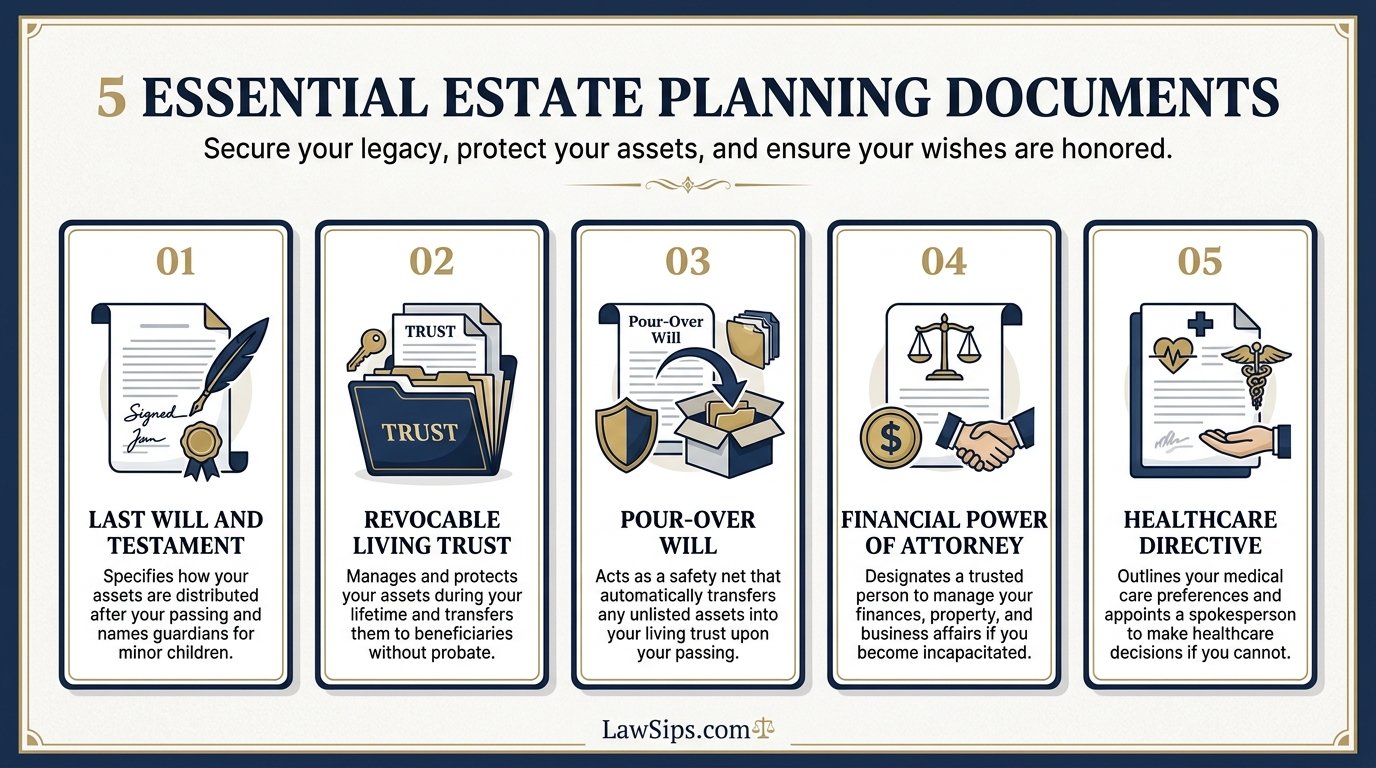
You are not legally required to hire a lawyer to make a will in any state. The real question is whether your situation fits inside what a form can safely hold.
DIY can serve the genuinely simple case: one state, modest assets, adult beneficiaries who inherit outright, no minor children, and wishes that match the default patterns forms are built around.
Hire a lawyer when any complexity signal appears. Each one below is a place where forms stop interviewing and start guessing.
- Minor children, who need guardians named and inheritances managed past age eighteen
- A blended family, where first and second families must both be provided for deliberately
- A disabled beneficiary, whose benefits a direct inheritance could disrupt
- Property in more than one state, which otherwise means probate in each state
- A business interest, with succession and control questions no template asks about
- A large or taxable estate, approaching the federal exclusion discussed below
- Incapacity worries, family conflict, or an heir you need to protect from the inheritance itself
The test is not wealth. A young couple with a baby and a house can need a lawyer more than a wealthy single person with three adult siblings and simple wishes.
What It Costs: The Survey Ledger
Most estate planning firms charge flat fees for core documents, not hourly rates. A 2026 nationwide study covered 909 law firms, and its medians are the field’s current anchor.
|
Document or package |
Survey median |
Middle half of firms |
|---|---|---|
|
Power of attorney (single) |
300 dollars |
250 to 400 dollars |
|
Simple will |
625 dollars |
450 to 1,000 dollars |
|
Will package |
1,000 dollars |
750 to 1,500 dollars |
|
Revocable living trust (single) |
2,475 dollars |
1,600 to 3,000 dollars |
|
Trust package |
2,700 dollars |
2,500 to 3,500 dollars |
The study behind the table was published by Legal Templates, a company that sells DIY documents, an interest worth naming because it profits when lawyers look expensive. The Clear Money Guide cost explainer flags exactly this, and corroborates the figures against nonprofit and marketplace sources that broadly agree.
Practitioner guides put the shapes around the medians. Basic four document plans commonly run 1,000 to 2,500 dollars, trust based plans 2,500 to 5,000 dollars and up, and couples’ trust packages frequently land between 3,000 and 5,600 dollars.
The Neptune attorney cost guide walks the same dataset document by document. Read it beside the table above and the story holds: the document set decides the price far more than the firm’s logo does.
Hourly billing survives where scope is genuinely unknown: complex planning, business succession, contested matters, and probate administration, commonly quoted between 200 and 550 dollars per hour across current sources.
Rate surveys add geography. Clio’s legal trends data, as summarized by the Real Cost Report fee norms study, puts the national lawyer average near 349 dollars an hour on 2025 data, with state averages running from about 196 in West Virginia to 492 in Washington DC.
One more discipline from the fee literature: fees must be reasonable under the profession’s own rules, and reputable billing runs in six minute increments. A firm billing simple emails in quarter hours is telling you something early.
Flat Fee or Hourly: Matching the Model to the Matter
For a defined document set, the flat fee wins on predictability, which is why most of the industry uses it. You agree the price and the package before anyone drafts a page.
Hourly makes sense when nobody can bound the work: a contested guardianship, a business unwind, litigation, or an estate tangled enough that the inventory itself is a project.
The hybrid is common and healthy. A flat fee for the plan, hourly for the known unknowns named in the engagement letter, each with its own estimate.
What you should never accept is hourly billing for a standard package with no cap and no scope, or a flat fee so vague that nobody can say which documents, or whether funding, it includes.
Will Based or Trust Based: The Two Architectures
A will based plan is cheaper to build and simpler to keep. Its cost arrives later: probate, with court supervision, public filings, and timelines your family does not control.
A trust based plan costs more to build and demands the funding labor. Its payoff is speed, privacy, and control: no probate for funded assets, and distributions on your schedule, not the court’s.
Some states make probate quick and inexpensive; others make it slow and costly, and the same family can rationally choose differently across a state line. This is a state law question before it is a price question.
California is the extreme exhibit. Its probate code sets statutory fees of 23,000 dollars each for the attorney and the executor on a million dollar estate.
That is a 46,000 dollar combined exposure that trust planning exists to avoid. It is a California strand only; most states use reasonableness standards instead.
Probate, Intestacy, and the Default Plan
Probate is the court supervised process that validates a will, pays debts, and transfers what remains. It is not a punishment; it is a procedure, orderly, public, and rarely fast.
Intestacy is what happens with no will at all. Your state’s statute picks your heirs in a fixed order, usually spouse and children first, and a judge picks your children’s guardian with no instructions from you.
Every adult already has an estate plan. The only choice is whether it is the one you wrote or the one your state wrote for people who never got around to it.
Planning also aligns the shadow plan: beneficiary designations on retirement accounts and insurance, and joint titles, which pass outside the will entirely and override it where they conflict.
Taxes in One Honest Paragraph
The federal estate tax exclusion for 2026 is 15 million dollars per person. Below that line, which covers the overwhelming majority of households, federal estate tax is simply not the problem being solved.
What those households are buying is probate avoidance, incapacity coverage, privacy, and order. A lawyer who sells tax terror to a two million dollar estate is selling; a lawyer who explains the exclusion is planning.
State estate and inheritance taxes exist in a minority of states with lower thresholds, and basis rules affect what heirs later pay on sales. Both belong in a real consultation, at the general level, with your state’s numbers attached.
The Relatives: Sorting the Professionals
An estate planning lawyer works before death: design, documents, funding. A probate lawyer works after death: administering an estate through court. Some do both; the jobs are different and the hiring moments never overlap by accident.
A financial advisor manages money and models futures but cannot draft legal documents or give legal advice. Most good plans involve both professionals, each inside their own license.
An elder law attorney overlaps on incapacity and adds long term care and benefits planning, specialist territory with its own rules. When care costs enter the picture, that specialty earns its own consultation.
LawSips keeps the sorting honest across its professional guides. The same cost and vetting literacy applies whether you are reading about a bankruptcy lawyer near me or the employment lawyer near me cost guide before a hiring decision.
How to Choose: The Vetting Sequence
Step 1: Verify the license. Your state bar’s website confirms the lawyer is licensed and in good standing, and shows discipline history. Two minutes, non negotiable.
Step 2: Check the specialty. Estate planning should be a practice focus, not a line on a generalist’s menu between traffic tickets and divorces. Focus shows in the questions they ask you.
Step 3: Demand the scope in writing. The engagement letter should name every document, the funding help, the signing process, and the revision policy. If it fits in one vague paragraph, the scope will too.
Step 4: Price the package, not the pitch. Compare quotes line by line: documents, funding, copies, storage, and the first review. A 6,800 dollar quote and a 2,900 dollar quote for similar packages differ in scope, as fee reporting shows, more often than in greed.
Step 5: Ask the funding question. Who prepares the deeds, who instructs the banks, and how completion is confirmed. Then ask who updates the plan when life changes, and at what price.
Walk away from pressure tactics, seminar scare selling, and quotes far below the survey medians with no scope explanation. Under the profession’s own fee rule, cheap is a question, not a bargain.
The Consultation Kit: Arrive Prepared
Bring the inventory: a list of accounts, properties, debts, and insurance, with titles and beneficiary forms where you can find them. Half of planning quality is the quality of this list.
Bring the family map: full names, dates, relationships, and the hard facts, including estrangements and dependents with special needs. The lawyer cannot design around a fact they never hear.
Bring your wishes in rough form: who gets what, who raises the children, who decides if you cannot. Rough is fine. The interview exists to sharpen, not to grade.
Leave with three things in writing: the package and price, the timeline to signing, and the funding checklist with owners and dates. If a consultation cannot produce those, it was a sales call.
Keeping the Plan Alive
Review the plan every three to five years, and immediately at the life events: marriage, divorce, a birth or adoption, a death in the family, a move to another state, or a major change in assets.
Beneficiary forms deserve their own audit at every review. They override the will where they conflict, and they are the documents most likely to still name a former spouse or a closed account.
Documents move with you, mostly. A validly executed will is generally recognized across state lines, but property, community property rules, and execution details differ enough that a move earns a local review, not a rewrite by default.
Store the signed originals somewhere findable and tell your executor where. A perfect plan in an unknown drawer performs exactly like no plan at all.
Two Households, Two Correct Answers
The first household is young: two teachers, one baby, one house, two retirement accounts. Their plan is a will based package: guardians named, powers and directives signed, beneficiary forms aligned, at a flat fee near the survey’s will package median.
The second is layered: a second marriage, children from both sides, a rental in another state, and a disabled grandchild.
Their plan is trust based, with funding done by the firm and a special needs trust inside it. DIY was never a candidate; the interview itself was the product.
Neither household overbought. Each bought the plan their facts required, which is the entire discipline this page teaches: facts first, architecture second, documents last.
Where LawSips Fits
The guide to open class action settlements shows the house pattern: process guides that make legal systems readable, with dates, documents, and decisions sorted before you act. The settlements side runs on the same discipline: deadlines read properly, documents filed properly, and nothing left to memory.
This page is the same service for the planning side of law, the side you choose in advance rather than meet in a crisis. LawSips publishes the map; a licensed lawyer in your state walks the ground with you.
General information is the ceiling here. Your facts, your state, and your family decide your plan, and that decision belongs in a consultation, not on a website, including this one.
The Funding Audit: A Worksheet You Can Run Tonight
Funding fails in the gap between signing day and ordinary life. New accounts open, houses get refinanced, and each change can quietly move an asset back outside the trust.
Run a personal funding audit once a year. It takes an evening, a folder of statements, and the discipline to compare three lists that should agree with each other.
List one: what you own. Every account, property, policy, and business interest, with its approximate value. The inventory your lawyer built the plan on is the starting draft.
List two: how each asset is titled. Trust name, joint names, individual name, or a beneficiary form. Title is the asset’s actual instruction set, whatever the plan intended.
List three: what the plan says. Where each asset is supposed to end up, and through which door: trust, will, or designation. Disagreements between list two and list three are the audit’s findings.
Fix findings in order of value. The house deed first, then the largest accounts, then the small designations everyone forgets: the old 401k, the starter insurance policy, the credit union account.
Bring the audit to your review appointment. A lawyer who sees a client maintained audit knows the plan is alive, and the review can spend its time on law changes instead of archaeology.
Red Flags and Green Flags When Firms Compete
A red flag is a quote far below the survey medians with no written scope. Somewhere, a document, the funding, or the lawyer’s own time was removed to reach that number.
Watch for seminar driven selling: free dinners, expiring discounts, and fear based pitches about probate catastrophe. Planning sold like a timeshare usually performs like one.
Another flag is product first language. A firm that recommends a specific trust architecture before hearing your family facts is fitting you to its template, not the reverse.
Green flags look boring by comparison: a written scope, a funding process with named steps, a revision policy with prices, and a lawyer who explains the federal exclusion before mentioning taxes.
The best signal is questions. A firm whose first meeting is mostly them asking, about assets, family, and worries, is selling the interview. A firm that mostly talks is selling the binder.
What Happens After You Sign: The First Year
Month one belongs to funding. Deeds are recorded, accounts are retitled, and beneficiary forms are replaced. Keep every confirmation; the folder of confirmations is the plan’s proof of life.
Months two and three belong to communication. Your executor, trustee, and agents should know their roles, where the documents live, and who the lawyer is. Surprised fiduciaries perform badly.
The rest of the year belongs to ordinary vigilance. New assets get titled correctly at purchase, not corrected later. The trust’s name belongs on the new account from day one.
At year one, run the funding audit above. Most plans need one or two small corrections, and corrections made in year one are clerical. The same corrections found at death are litigation.
The Cost of Doing Nothing, Stated Plainly
Doing nothing also has a price, and it is paid by other people, later, in a worse currency. Intestacy hands your choices to a statute, and your children’s guardian to a judge who never met them.
Incapacity without documents can mean court proceedings to manage a parent’s or spouse’s own money, with filings, hearings, and reporting that a signed power of attorney would have replaced for a few hundred dollars.
Even the organized can be undone by stale paper. The plan from before the divorce, before the second house, before the falling out, directs a life that no longer exists.
None of this requires fear to justify action. It requires arithmetic: a few thousand dollars of planned cost now, against unplanned cost, delay, and conflict billed to the people you were trying to protect.
Special Situations That Change the Architecture
Property in a community property state changes how married couples hold and pass assets, with basis consequences at the first death. Nine states follow the system, and plans there are drafted to it.
A family business adds valuation, control, and fairness among children who work in it and children who do not. Buy sell agreements and the estate plan must be written to agree with each other.
A beneficiary with addiction or creditor problems changes the design from outright inheritance to managed distributions. Trusts earn their drafting here, holding money with rules instead of handing over a lump sum.
Charitable intent is easy to state and easy to bungle. Naming charities precisely, with correct legal names and percentages rather than fixed sums, keeps gifts valid as estates change size.
Pets outlive owners more often than plans admit. A named caregiver, a funding amount, and in some states a formal pet trust turn a hope into an instruction.
Each situation is a reason the interview matters. None of them appears on a template’s checklist, and every one of them is ordinary in a real practice.
Questions Readers Ask Before the FAQs
Will my plan be public? The will becomes public in probate. A funded trust’s terms generally stay private, one of the quieter reasons families choose the trust architecture.
Can I change my mind later? A revocable trust and a will are both changeable while you have capacity. Revocable is the point: the plan bends with your life until it cannot, then it sets.
What if my chosen executor refuses? Name successors for every role. Plans fail at the second vacancy more often than the first, and a named chain beats a court’s improvisation.
Does my plan cover my online life? Modern plans add digital asset instructions: account inventories, access directions, and memorialization wishes. The law here is young, which is another reason a lawyer’s current drafting beats an old template.
Frequently Asked Questions
1. What does an estate planning lawyer do?
They design and draft your plan. Wills, trusts, powers of attorney, and healthcare directives, plus the funding guidance that makes them work under your state’s law.
2. How much does an estate planning lawyer cost?
Mostly flat fees, with survey medians as the guide. A 2026 study of 909 firms reports medians near 625 dollars for a will and 2,700 for a trust package.
3. Do I need a lawyer to make a will?
No, a lawyer is not required. You can write your own will, but validity follows your state’s signing and witness rules, and complex situations outgrow forms quickly.
4. Can I do my own estate planning online?
Yes, for genuinely simple estates. Online documents can work when assets are modest, beneficiaries are adults, and wishes are standard.
Complexity is the line, not price.
5. What documents are included in an estate plan?
Typically four documents plus a safety net. A will or trust, a financial power of attorney, a healthcare directive, often a HIPAA authorization, and a pour over will with trust plans.
6. What is the difference between a will and a living trust?
A will speaks at death through probate; a trust works during life too. Trust assets pass privately without probate.
Wills also name guardians, which trusts cannot do.
7. What is a pour over will?
It is the trust plan’s safety net will. Assets accidentally left outside the trust at death are poured into it through probate, aimed correctly but slower.
8. Why do lawyers say a trust must be funded?
Because a trust controls only what it owns. Assets must be transferred in by deed, retitling, or beneficiary form.
Without transfers, the trust governs an empty container.
9. What happens if my trust is never funded?
Those assets go through probate anyway. The unfunded property follows your will or intestacy, not the trust, which is why funding help belongs inside the lawyer’s fee.
10. Does a will avoid probate?
No, a will is probate’s instruction sheet. It directs the process but does not skip it.
Avoiding probate takes trusts, beneficiary designations, or joint ownership structures.
11. What happens if I die without a will?
Your state’s intestacy statute decides. Heirs inherit in a fixed order, usually spouse and children first, and a court chooses guardians for minors without your input.
12. What is a power of attorney in an estate plan?
It names who manages your money if you cannot. A durable financial power of attorney lets your chosen agent pay bills and handle property during incapacity.
13. What is a healthcare directive?
It records your treatment wishes and your medical voice. A healthcare directive or living will guides doctors, and a healthcare agent speaks for you when you cannot.
14. Do I need an estate plan if I am single with no kids?
Yes, often more urgently. Without a spouse default, intestacy sends assets to parents, siblings, or the state order.
Your documents choose your people and your causes instead.
15. When should I hire an estate planning lawyer?
At any complexity signal or life event. Minor children, a house purchase, marriage, a blended family, property in two states, or a business all justify hiring.
16. How do I choose a good estate planning lawyer?
Verify three things. A state bar license in good standing, estate planning as a real practice focus, and a written flat fee scope that names funding and revisions.
17. What questions should I ask an estate planning lawyer?
Ask about scope, funding, and updates. What documents are included, is funding help inside the fee, how is completion confirmed, and what do future revisions cost.
18. What should I bring to an estate planning consultation?
Bring the inventory and the family map. Accounts, properties, debts, insurance, titles, beneficiary forms, plus full family details and your wishes in rough form.
19. Is a flat fee or hourly better for estate planning?
Flat fee for defined document packages. Most firms price core documents flat, which suits predictable work.
Hourly fits complex, contested, or open ended matters.
20. How much does a living trust cost with a lawyer?
A median near 2,475 dollars standalone, about 2,700 as a package. Those are 2026 survey medians from a 909 firm study; couples’ packages run higher.
21. How much does a simple will cost with a lawyer?
Near the survey median of 625 dollars. The 2026 study’s middle half of firms charges 450 to 1,000 dollars for a simple will.
22. Does a couple pay double for an estate plan?
Usually not double. Couples’ packages price the shared work once, and surveys describe meaningful savings per person versus two separate individual plans.
23. How long does the estate planning process take?
Typically a few weeks. Consultation, drafting, a signing appointment, then funding steps.
Attorney time runs roughly 1 to 3 hours for a will and 5 to 10 for a trust.
24. How often should I update my estate plan?
Every three to five years as a baseline. And immediately at life events: marriage, divorce, births, deaths, a move, or a major change in what you own.
25. What life events mean I should update my estate plan?
The classic triggers. Marriage, divorce, a new child, a death, buying or selling property, moving states, a business change, or a beneficiary whose circumstances changed.
26. Does my estate plan work if I move to another state?
Mostly, with a local review advised. Valid documents are generally recognized across states, but property and community property rules differ, so a move earns a check, not automatic rewrites.
27. Can an estate planning lawyer help avoid probate?
Yes, that is a core part of the job. Trusts, beneficiary designations, and ownership structures route assets around probate where state law allows.
28. Can an estate planning lawyer reduce estate taxes?
Sometimes, at the right tier. Most estates owe no federal estate tax under the 2026 exclusion, so planning focuses elsewhere; larger estates get real tax structuring.
29. What is the federal estate tax exemption in 2026?
15 million dollars per person for 2026. Below that, federal estate tax is generally not the issue, which is why most plans target probate and incapacity instead.
30. Do beneficiary designations override my will?
Yes, designations win over the will. Retirement accounts and insurance pass to the named beneficiary regardless of will language, so forms must be audited against the plan.
31. Who should I name as executor or trustee?
Choose for trustworthiness and stamina. Executors and trustees manage money, deadlines, and family feelings.
Name successors too, and pick people who will actually serve.
32. Can an estate planning lawyer set up a special needs trust?
Yes, it is a recognized specialty area. A properly drafted special needs trust can hold inheritances without disrupting means tested benefits; it warrants a lawyer experienced in them.
33. What is the difference between an estate planning lawyer and a probate lawyer?
Timing and task. The estate planning lawyer designs before death; the probate lawyer administers after death through the court.
Some lawyers practice in both areas.
34. What is the difference between an estate planning lawyer and a financial advisor?
Different licenses, different tools. The lawyer drafts binding documents and gives legal advice.
The advisor manages investments and financial modeling.
Good plans coordinate both.
35. Are online will services legitimate?
They are legitimate businesses selling real documents. The documents can be valid for simple cases.
The limits are fit, state execution details, and the absence of funding advice.
36. What are the risks of a DIY will?
Invalid execution and silent mismatches. Wrong witnesses or signatures can void a will, templates miss state rules, and nobody checks funding or beneficiary forms for you.
37. Can a handwritten will be valid?
In some states, yes. Handwritten holographic wills are recognized in a number of states with strict conditions, and contested often.
State law decides; local advice settles it.
38. What is an engagement letter for an estate plan?
It is the contract that defines the job. The engagement letter names documents, funding help, fees, signing process, and revision terms.
Read it before you sign it.
39. Do estate planning lawyers offer free consultations?
Some do, many charge for the first meeting. Either can be fair.
What matters is leaving with a written package, price, timeline, and funding checklist.
40. What if my estate planning lawyer retires or dies?
Your documents remain yours. Keep signed originals and copies under your control, know where they are, and choose any new lawyer with the same vetting sequence.
41. Can an estate planning lawyer help with guardianship for my kids?
Yes, through your will. A will is where parents nominate guardians for minor children.
Without one, a court chooses with no instructions from you.
42. Is an estate planning lawyer the same as an elder law attorney?
Related, not identical. Elder law adds long term care and benefits planning to estate planning’s core.
Overlapping skills, different center of gravity.
Conclusion
An estate planning lawyer sells a plan, not paper: decisions about incapacity, guardianship, and inheritance, drafted into your state’s language and funded into the real world.
Price it by its scope against the survey medians, vet it by license, focus, and the funding question, and keep it alive with reviews every few years.

Dilawar is a dedicated writer and contributor at Lawsips.com, focusing on legal information, business law, consumer rights, legal awareness, and everyday legal matters. He is passionate about simplifying complex legal topics and providing readers with clear, practical, and easy-to-understand information. His goal is to help readers stay informed about legal developments, understand their rights, and make better decisions through informative and well-researched articles.