
Class Action Lawsuits No Proof: What Is Open, What Is Real, and How to File
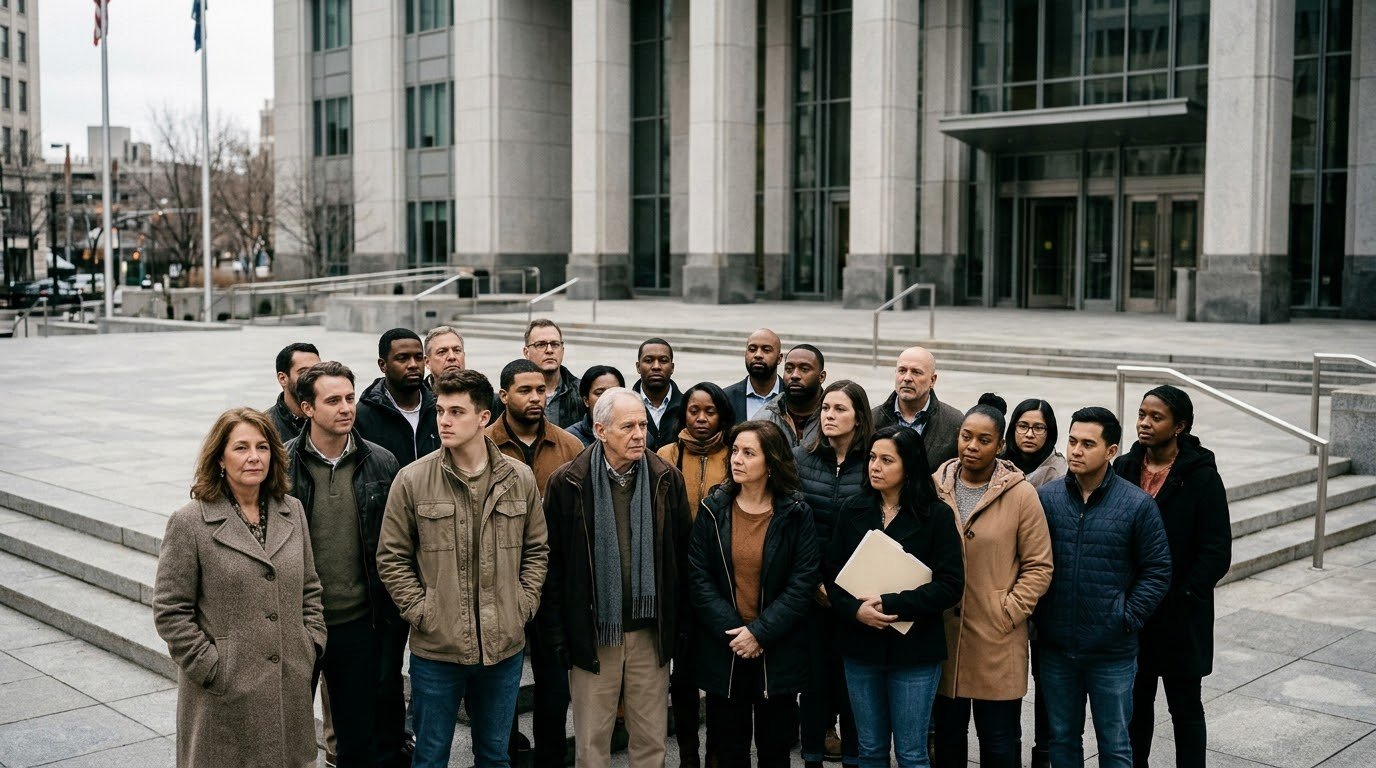
Class action lawsuits no proof required sound too easy to be real, and that suspicion is the right place to start. A settlement that pays on your signature alone invites one honest question: is any of this legitimate?
The short answer is yes, with a structure underneath. These are court approved settlements in which a judge accepted a sworn statement in place of receipts, because the harms are small and the receipts no longer exist.
This article answers in the order the question deserves. Trust first: how to verify any settlement in minutes. Mechanism second: why a signature legally replaces a receipt. The list third: what is open now, with every deadline dated.
One boundary before anything else. This is general legal information only, not legal advice about your situation. Amounts and deadlines below come from named trackers on named dates, and the official settlement website is always the final authority.
The Short Answer: Real, Court Approved, and Paid on a Signature
A no proof settlement is a class action the court has approved whose claim form asks for your sworn statement instead of documents. You declare that you fit the class, sign under penalty of perjury, and submit.
The mechanism has a name and a statute. The statement is an attestation, and federal law, Title 28 Section 1746, gives an unsworn declaration signed under penalty of perjury the same force as a sworn oath.
That is why the Class Action Buddy legitimacy explainer can state its conclusion flatly: no proof settlements are legitimate because federal and state judges authorized the attestation tier, usually because requiring receipts would exclude nearly the whole class.
The payments are real but modest. Everyday consumer cases pay a flat $5 to $50 in most instances. Data breach, wage, and documented loss claims sit in a different, higher band, and mixing the two bands produces every misleading headline in this topic.
The honest companion page to this one is our class action lawsuit no proof needed companion guide, which works through the proof doctrine in depth. This page owns the trust check and the current list; the two are designed to be read together.
The Trust Check: Four Things Every Real Settlement Has
Before any list matters, the verification routine matters. Every legitimate no proof settlement, without exception, carries four verifiables. Check them in order and you can sort a real settlement from a fake one in about five minutes.
A case name and a docket number. Real settlements come from real lawsuits, with a caption and a court. If a page or message cannot name the case, it has failed the first test and nothing after it matters.
A court appointed administrator. Known firms run nearly all major settlements: Epiq, Kroll, Angeion, JND, Simpluris, A.B. Data, and KCC. The administrator’s name appears on the official site and in the court approved notice.
An official settlement website. The claim form lives on one administrator run site, named in the notice. Social posts and text messages may point toward it, but the form itself never lives on a stranger’s page.
Free filing, always. No legitimate settlement charges anything to file a claim. The moment a site asks for a filing fee, a processing fee, or your bank login, it has identified itself.
The case behind any settlement can also be confirmed on PACER, the federal court record system, and the ClaimSensor legitimacy review makes the same point from its catalog work: a genuine settlement names its case and court, and the record is there to be checked.
|
The check |
A real settlement |
A fake one |
|---|---|---|
|
Case identity |
Case name, court, and docket number stated |
No case named, or a vague company mention |
|
Administrator |
A known administration firm, named |
No administrator, or an unknown company |
|
Filing cost |
Free, always |
A fee, a deposit, or bank login requested |
|
Payout story |
A fund size and a modest per person band |
A huge personal payout with no fund named |
|
Where the form lives |
The official administrator website |
A social post, a text link, a lookalike page |
The Scam Markers Are the Mirror Image
Scams in this topic are not sophisticated. They copy the vocabulary of real settlements and drop the verifiables, counting on the reader to feel the deadline pressure before checking anything.
The loudest marker is money moving the wrong way. Settlements pay you; they never collect from you. A fee request ends the evaluation on the spot, whatever the rest of the page says.
The quiet markers matter too. Pressure language about expiring money, payouts far above the $5 to $100 band with no fund size stated, and forms asking for credentials no claim needs are all tells.
The discipline that defeats all of it is boring and total: never file from a link you were sent. Arrive at the official site through the court approved notice, the administrator’s own case list, or a tracker you already trust.
How No Proof Claims Actually Work
The claim itself is short. You open the official site, read the class definition, complete the form with your name, address, and eligibility answers, choose a payment method, sign the attestation, and submit. Most forms take minutes.
What makes it law rather than paperwork is the sentence above the signature line. You declare, under penalty of perjury, that you purchased the product, used the service, or held the account during the class period, and that your answers are true.
The exchange is described precisely in the LegalClarity no proof settlements explainer: instead of producing itemized records, you confirm the basic facts on a simplified claim form, and the administrator verifies eligibility against the defendant’s own records or other objective data.
That last point explains the whole category. In breach and account cases, the company already knows whose data or account was involved. Your receipt was never the real evidence; the defendant’s records were, and your signature is what connects you to them.
The statutory anchor is added by the Owed no proof settlements list: courts encourage this design, and the Federal Judicial Center’s guidance warns judges against demanding documents class members are unlikely to retain. The no proof tier is the system working as intended, not a loophole in it.
No Proof Is Not No Eligibility
The gate on every claim is the class definition, the court’s written description of who is in: a product bought, an app used, an account held, inside a stated place and a stated class period.
Fitting that definition is what qualifies you. A receipt never did. This is also where honest filing gets its edge: the attestation must be true, so the definition deserves a careful read before the payout figure gets one.
As the joining guides put it, you do not really join a class action; you are already in it if you fit the definition. Filing is how you claim your share, and our how to join a class action lawsuit guide covers that distinction fully.
No Proof Is Not No Checking
Filing without documents does not mean filing without scrutiny. Administrators screen every claim for duplicates, impossible quantities, and fraud patterns, and they reject claims that fail the definition, the deadline, or basic consistency.
Some settlements reserve a second look. The ATM surcharge case in the list below takes a sworn estimate at filing and states that the administrator may ask for bank statements later. No proof describes what you upload today, not a promise that nothing is ever checked.
The fraud history is part of the honesty. One documented case drew hundreds of thousands of claims for a class a fraction of that size, which is exactly why the screens exist and why honest claimants should welcome them.
Open Now: The Dated Snapshot, Checked November 12, 2026
A list of open settlements is a snapshot, not a permanent page. The table below was checked on November 12, 2026 against the trackers named in this article. Every row carries a deadline, and deadlines are the one fact that never improves with age.
Read it with one habit: the deadline column is the article. A settlement you qualify for and miss by a day pays exactly what a settlement you never qualified for pays, and the claims window almost never reopens.
|
Settlement |
What no proof gets |
Claims deadline |
|---|---|---|
|
CVS digital privacy |
Up to $5 (up to $10 with proof) |
Nov 16, 2026 |
|
Datadog overtime |
Share of a $4.15M fund |
Nov 20, 2026 |
|
Wiz Washington job posting |
Share of a $5M fund |
Nov 23, 2026 |
|
LSC Planned Parenthood lab breach |
Flat payment per the notice |
Nov 24, 2026 |
|
Skin360 Illinois |
Payment per the notice |
Nov 25, 2026 |
|
Finastra customer data |
Payment per the notice |
Nov 27, 2026 |
|
Dr. Squatch |
Payment per the notice |
Nov 27, 2026 |
|
Apple Siri privacy |
Up to $95, at $25 per device |
Dec 21, 2026 |
|
Kroger prescription pricing |
Payment per the notice |
Dec 21, 2026 |
|
Equifax credit score |
Payment per the notice |
Dec 28, 2026 |
|
NYC TLC license suspension |
Up to $200, from a $140M fund |
Dec 28, 2026 |
|
GoodRx user privacy |
Share of a $32M fund |
Dec 29, 2026 |
|
Non-bank ATM surcharges |
Share of a $167.5M fund |
Feb 10, 2027 |
The rows are tracker strands, labelled as such. Fund sizes and per person figures come from the settlement notices as the trackers report them, and the official site for each case is where the binding numbers live.
For the wider inventory beyond the no proof shelf, our open class action settlements tracker is the page to work from, and our settlement claim form online guide explains the form itself, online and paper, for readers filing their first claim.
Closing in November: The Deadline Fortnight
November 2026 is unusually crowded. CVS closes on November 16, four days after this snapshot, and seven more rows close before the month ends. Anyone holding several small claims should file this fortnight, in deadline order.
The CVS case is the cleanest example of the tier design. Website and app users attest to use and receive up to $5 with no proof, or up to $10 with documentation, subject to the fund’s pro rata arithmetic.
The two wage and job cases, Datadog and Wiz, sit above the consumer band because payroll and posting records do the proving. They are listed here because their claim forms ask the worker for attestation, not paperwork.
December and the February ATM Case
December carries the list’s biggest consumer name. The Apple Siri settlement pays $25 per eligible device, up to $95, on an attestation of ownership and use during the class period, with a December 21 deadline.
The longest runway belongs to the non-bank ATM surcharge settlement, a $167.5M fund covering surcharged withdrawals from October 2007 to August 2026. Its deadline is February 10, 2027, and its sworn estimate design gets its own section below.
Between them sit Kroger, Equifax, the NYC TLC case, and GoodRx, a December cluster worth a single filing session, and our class action lawsuit settlement amounts breakdown explains how funds like these translate into per person money once claims are counted.
What No Proof Claims Pay: Two Bands, Not One Average
The most misleading sentence in this topic is any single average payout. No proof money comes in two bands, and the band a case sits in is decided by its type, not by optimism.
Band one is the flat consumer tier: $5 to $50 for everyday consumer cases, and the Class Action Buddy no proof settlements list prints the same band, with grocery and food cases at $5 to $15 without proof. This is the band most readers will actually collect from.
Band two is everything records make bigger: data breach cases with documented losses, wage cases paid on payroll math, and documented tiers generally, which run from the low hundreds into the thousands. These are real, and they are not the no proof story.
The context comes from the FTC’s study of class action settlements, reported across the trackers: a median claims rate near 9 percent across 149 settlements, and half of settlements paying a median of at least $69 per claim. Low filing is why flat tiers survive pro rata division.
One catalog view sharpens the shape: the ClaimSensor legitimacy review counted its reviewed settlements in August 2026 and found 64 of 68 required no receipt upload, with data breach cases the largest open group. No proof is the norm in this system, not the exception.
For the full per person picture across case types, our how much do class action lawsuits pay analysis works the same two band logic through the site’s wider settlement coverage, and it is the right next read after this page.
The Three Lanes: Attestation, Sworn Estimate, and Documented
Every settlement claim travels one of three lanes, and knowing which lane a case uses tells you what to prepare before you open the form.
|
Lane |
What you submit |
What it typically pays |
|---|---|---|
|
Attestation only |
Your signed statement under penalty of perjury |
The flat base tier, $5 to $50 in consumer cases |
|
Sworn estimate |
Your estimate under oath now; records may be requested later |
A share scaled to your estimate, as in the ATM case |
|
Documented |
Receipts, statements, invoices proving actual loss |
Actual losses, commonly two to five times the base tier |
The attestation lane is this article’s subject. The documented lane is its ceiling: the same settlement often offers both, and the LegalClarity no proof settlements explainer states the relationship exactly, the no proof tier exists as a floor, not a ceiling.
The practical rule follows. File the no proof claim before the deadline even if documents may exist. A filed claim can generally be supplemented; a claim that was never filed cannot be added after the window closes.
Why the Counts Disagree: 30 Plus, 14, 9, 8, and 46
Ask five trackers how many no proof settlements are open and you will get five different numbers, each defensible and none current for long. The disagreement is information, if the dates travel with the counts.
|
Tracker |
Open no proof count |
As of |
|---|---|---|
|
Class Action Buddy (headline) |
30 plus |
2026 list title |
|
Class Action Buddy (its own table) |
14 |
Nov 9, 2026 |
|
Owed |
8 |
Aug 20, 2026 |
|
Settlement Insight |
9 |
Oct 14, 2026 |
|
ClaimSensor catalog |
46 |
Aug 28, 2026 |
The spread has three causes. Different check dates in a topic where cases close weekly. Different catalog rules, since one tracker counts wage cases and another shelves them elsewhere. And headline habits, where a list title keeps a number its own table has already retired.
The lesson is not that the lists are fake. It is that an undated count is a marketing claim, and a dated one is a fact with a shelf life. This article prints dates on its counts for the same reason it prints them on its deadlines.
Recently Closed: The October Exhibits
Closed settlements are not filler. They are the proof that the windows are real, and they calibrate what a deadline means better than any warning paragraph.
October 2026 closed five no proof windows in four weeks: the Flo app privacy case on October 15, WPM Pathology on October 19, VSL#3 probiotic on October 20, and pork price fixing on October 29, among them.
Each was, weeks earlier, a row on somebody’s open list with money attached, and the OpenClassActions payment tracker follows the other end of the pipeline, the payments now landing from windows that closed months ago, which is where every open row in this article is eventually headed.
The honest way to carry this is modeled by the Settlement Insight no proof of purchase list: closed rows stay on the page, marked as passed, so a reader can see the decay instead of being quietly redirected. This snapshot follows the same rule at every refresh.
How to File a No Proof Claim, Step by Step
The filing sequence is the same everywhere, which is the quiet advantage of this category. Learn it once and every settlement in the table above is a five minute job.
Step 1: Start From a Source You Trust
Arrive at the official site through the court approved notice, the administrator’s own case list, or a tracker you already use. Never start from a link in an unsolicited text or post; that is where the lookalike pages live.
Step 2: Run the Four Verifiables
Case name and docket number, a known administrator, the official website, and free filing. Thirty seconds of checking here is the whole anti scam apparatus. If one element is missing, stop and find the case through another route.
Step 3: Read the Class Definition Before the Payout
Find the dates, the place, and the action the definition names. If you fit all three, you may honestly sign. If you do not fit, the size of the payment is irrelevant, and the honest move is to close the page.
Step 4: Complete the Form and Choose Payment
Enter your details, answer the eligibility questions exactly as asked, and pick a payment method you will still control months from now, and our how to file a claim for settlement walkthrough covers the same sequence field by field for readers who want the slower version.
Step 5: Sign, Submit, and Keep the Confirmation
Sign the attestation, submit, and save the confirmation number or email. It is the receipt for your claim itself. Timing expectations sit with our how long does a settlement take explainer; status questions, once filed, run through our settlement check status guide.
After You File: Screening, Approval, and the Long Wait
Filing is the fast part. What follows is screening: the administrator checks your claim against the class definition, hunts duplicates, and flags patterns that suggest fraud. Most honest claims pass this stage without ever hearing a word about it.
Next comes the court’s final approval hearing, where a judge decides whether the settlement is fair, reasonable, and adequate. This hearing sits after the claims deadline, which is why even a perfectly filed claim cannot be paid quickly.
Only then does the money move: payments are calculated, sometimes reduced pro rata, and sent by the method you chose. The realistic window is three to nine months after the deadline, and longer where appeals or heavy claim volumes intervene.
Silence during the wait is normal, not a rejection signal. Keep your confirmation number as the key to any status question, and use the administrator’s site for that settlement rather than general search results when you check.
The wider shelf of settlement explainers and trackers, for cases beyond this snapshot, is gathered on our LawSips home page.
Mistakes That Cost People Real Money
Filing from a sent link. The lookalike ecosystem depends on it. Type or navigate to the official site yourself, every time, even when the sent link looks perfect.
Reading the payout before the definition. The definition decides whether you may sign at all. Readers who start at the dollar figure file claims they cannot honestly attest, which is the one error with legal edges.
Waiting for documents that do not exist. The no proof tier exists because the receipts are gone. Hunting for them past the deadline converts a certain base tier payment into a certain zero.
Losing the confirmation. Payments arrive months later, long after the filing session is forgotten. A saved confirmation is the difference between checking a claim in a minute and having no claim to check.
Treating a stale list as current. Screenshots and saved pages from October name cases that closed in October. Check the date on any list, including this one, before acting on a single row.
Frequently Asked Questions
1. Are class action lawsuits with no proof legit?
Yes, they are real, court approved settlements. A judge approved the receipt free tier in each one.
Your claim rests on a sworn statement, and the case can be checked on PACER before you file anything.
2. What does no proof mean in a class action lawsuit?
It means no receipt or document upload at filing. You still complete a claim form, fit the class definition, and sign an attestation that your answers are true under penalty of perjury.
3. How can a settlement pay without a receipt?
Because the signature legally replaces the receipt. Federal law gives an unsworn declaration under penalty of perjury the same force as a sworn oath, so courts accept it for small harms nobody documented.
4. What is an attestation on a claim form?
It is the sworn statement at the end of the claim form. You declare that you meet the class definition and that your answers are true, and you sign it under penalty of perjury.
5. Is signing a claim form under penalty of perjury serious?
Yes, it is a legal statement, not a formality. A false attestation is a false claim, with perjury and fraud exposure.
Administrators reject dishonest claims, and the honest rule is simple: sign only what is true.
6. What law makes a sworn statement count as proof?
Title 28, Section 1746 of the US Code. It gives a written declaration signed under penalty of perjury the same force as a sworn oath, which is the legal engine under every no proof claim form.
7. Do I need a lawyer to file a no proof claim?
**No.
No proof claims are designed for people to file themselves.** The form takes minutes, filing is free, and no court appearance is involved.
A lawyer adds nothing to a base tier attestation claim.
8. Does it cost anything to file a no proof claim?
**Nothing.
Filing a legitimate claim is always free.** Any website charging a fee to file a settlement claim is showing a scam marker, whatever else it promises.
Leave and find the official administrator site.
9. Which class action lawsuits with no proof are open now?
The dated snapshot in this article lists them, checked November 12, 2026. CVS digital privacy closes first, on November 16.
Apple Siri, GoodRx, and the ATM surcharge case run into December and February.
Confirm on the official site.
10. Which no proof settlement closes first?
CVS digital privacy, on November 16, 2026. It pays up to $5 with no proof and up to $10 with documentation.
Seven more settlements in the snapshot close before November ends, so the month rewards speed.
11. How much do no proof class action claims usually pay?
Usually $5 to $50 for everyday consumer cases. Data breach, wage, and documented loss claims sit far above that band.
Any page quoting one average across all case types is mixing two different stories.
12. Why do documented claims pay more than no proof claims?
Because documented claims prove a bigger, individual loss. Receipts, statements, and invoices let the administrator pay actual damages instead of a flat estimate, and settlements routinely pay documented tiers two to five times the base.
13. What is the difference between a no proof tier and a documented tier?
The no proof tier pays a flat amount on your signature alone. The documented tier pays against evidence of your actual loss.
The first is a floor for everyone eligible; the second is a ceiling for those who can prove more.
14. Can I file the no proof claim now and add documents later?
File the no proof claim before the deadline, yes. Administrators generally let a filed claim be supplemented, but a claim can never be added after the deadline passes.
The deadline is the one date that cannot move.
15. What is a pro rata payout?
It means the fund is divided in proportion to valid claims. If claims exceed the fund, every payment shrinks by the same percentage.
Low filing rates are why pro rata cuts are often smaller than feared.
16. Who qualifies for a no proof settlement?
Whoever fits the class definition in the settlement notice. It is written in dates, places, and actions: bought this, used that, held an account then.
Fitting the definition, not owning a receipt, is what qualifies you.
17. What is a class definition?
It is the court’s written description of who is in the settlement. It names the product or conduct, the geography, and the class period.
Your attestation says you match it, so read it before you sign.
18. What if I am not sure I bought the product?
Then do not sign until you are sure. The attestation must be honestly true, not hopeful.
Check old emails, account histories, and bank statements; if you still cannot say it truthfully, leave that claim unfiled.
19. What happens if I file a claim I do not qualify for?
Expect rejection, and worse if it was knowing. Administrators screen for eligibility, duplicates, and fraud patterns.
A claim outside the class definition is invalid, and a deliberately false attestation carries perjury and fraud exposure.
20. Can a no proof claim be rejected?
**Yes.
Late, incomplete, duplicate, and out of class claims are rejected every cycle.** Rejection is the routine outcome for claims that miss the deadline or the definition, which is why both deserve a careful read first.
21. Can an administrator audit my claim after I file?
**Yes.
No proof at filing does not mean no checking ever.** Administrators run duplicate and fraud screens, and some settlements reserve the right to request records later.
The ATM surcharge settlement states that possibility in its own terms.
22. Why do some settlements ask for a claim ID if no proof is needed?
The claim ID is addressing, not proof. It ties your form to the notice mailed or emailed to you, from the defendant’s records.
Settlements that ask for one are still no proof settlements; the ID replaces the receipt.
23. How do I know a settlement website is the official one?
It names the case, the court, and a known administrator. Epiq, Kroll, Angeion, JND, Simpluris, and A.B.
Data run most major settlements.
The official site is linked from the court approved notice, never from a random social post.
24. How can I verify a settlement is real?
Check the four verifiables. A real case name and docket number, a court appointed administrator, an official settlement website, and free filing.
The case itself can be confirmed on PACER, the federal court record system.
25. What are the signs of a fake class action settlement?
A fee to file is the loudest one. Add a missing case name, no named administrator, pressure through texts or social posts, and a payout promise far above the usual band with no fund size stated.
26. Why do different websites list different numbers of open settlements?
Because the trackers count on different dates with different rules. One leading list headlines 30 plus while its own dated table shows 14 open.
A count without a checked date is marketing, not information.
27. How long does a no proof settlement take to pay?
Months, not weeks. Payment typically arrives three to nine months after the claims deadline, once claims are screened and the court gives final approval.
One major guide quotes three to eighteen months for some cases.
28. Why does payment wait for a final approval hearing?
Because a judge must find the settlement fair before money moves. The fairness hearing under Rule 23 comes after the claims deadline.
Only then does the administrator distribute, which is why patience is built into every timeline.
29. What happens after I submit my claim form?
Save the confirmation, then wait for screening. The administrator checks eligibility, duplicates, and fraud patterns, the court holds its approval hearing, and payments are calculated, sometimes pro rata, before anything is sent.
30. Should I keep my claim confirmation number?
**Yes.
It is the receipt for your claim itself.** It proves you filed, and when you filed, if a question ever arises.
Save the number or the confirmation email somewhere you will find it months later.
31. What is the difference between a no proof claim and an automatic payment?
An automatic payment needs no filing at all. The administrator pays everyone in the defendant’s records who does not opt out.
A no proof claim still requires your form and signature before its deadline.
32. Do data breach settlements need proof of harm?
Usually not for the base tier. The company already holds the records showing whose data was involved.
Breach settlements typically pay a flat amount on attestation, with documented tiers for proven out of pocket losses.
33. Can I claim if I never got a settlement notice?
Often, yes. Many consumer settlements let anyone who fits the class definition file, notice or not, by choosing the no claim ID route on the form.
Product and privacy cases commonly work this way.
34. What is a sworn estimate, in the ATM surcharge settlement?
It is the middle lane between signature and documents. You estimate your surcharged withdrawals under oath at filing, and the administrator may ask for bank statements later.
The case covers withdrawals back to October 2007.
35. If a deadline has passed, can I still file?
**Almost never.
Claims deadlines are firm, and late claims are rejected.** Courts rarely extend them for individuals.
The closed cases in this article, Flo in October among them, are exhibits of the window being real.
36. Do no proof settlements ever reopen?
Essentially no. A closed claims window stays closed; money left after distribution follows the settlement’s own terms, often to a further distribution or charity.
The practical lesson is to file inside the window, every time.
37. Are no proof payouts taxed?
It depends on the claim type, in general terms. Settlements for lost wages or interest are commonly treated differently from reimbursements.
Notices state the treatment for their case; personal tax questions need a tax professional.
38. Can I file claims for more than one settlement?
Yes, if you honestly fit each class definition. Eligibility is judged settlement by settlement.
Many households qualify for several open cases in the same month, and each claim stands or falls on its own truth.
39. Can I file for members of my household?
Each adult generally files and signs their own claim. The attestation is personal: the signer declares their own eligibility.
Household product claims sometimes allow one claim per household, which the notice will state plainly.
40. What should I do if a settlement website asks for my bank login or a fee?
**Stop.
That is a scam marker, not a settlement step.** No legitimate claim form charges a fee or needs your bank login.
Close the page and reach the official administrator site through the court approved notice instead.
41. Why do so few eligible people file claims?
The FTC study puts the median claims rate near nine percent. Most eligible people never hear about a settlement or never finish the form.
Low filing is also why pro rata payments often hold up better than feared.
42. Where can I check the status of a claim I filed?
Through the administrator for that settlement. Official sites carry claim status and payment updates, and our settlement check status guide walks the routes.
Keep your confirmation number ready; it is what the administrator will ask for.
Conclusion
What class action lawsuits no proof required come down to is a trade the courts designed on purpose: your sworn word, given under penalty of perjury, in exchange for money that small harms could never otherwise recover.
Trust is checkable, so check it. Four verifiables sort every offer in minutes: a named case, a known administrator, an official website, and free filing. Anything missing one of them does not get your signature.
The list is a clock, so respect it. Settlements close every month and the windows do not reopen. The snapshot here was checked on November 12, 2026, and its first row closes four days later; whatever you qualify for, file inside the window.
File the base tier, keep the confirmation, and let the documented lane wait. A filed claim can grow if records surface; an unfiled one cannot be created later.
When a deadline or payment question comes up later, start from our open class action settlements tracker and file the claims you qualify for today.

Dilawar is a dedicated writer and contributor at Lawsips.com, focusing on legal information, business law, consumer rights, legal awareness, and everyday legal matters. He is passionate about simplifying complex legal topics and providing readers with clear, practical, and easy-to-understand information. His goal is to help readers stay informed about legal developments, understand their rights, and make better decisions through informative and well-researched articles.